Locksmiths · Call generation advertising
Pay for the call that connects, not the tap that goes nowhere.
Call generation advertising for locksmiths means paid placements built to make a stranded customer phone you, with connected calls counted separately from taps. GullySales works on the service-area map, the hours someone can answer, the numbers that show which advert rang, and the record of what each call turned into.
Scope, fee, reporting and term are agreed in writing after we have read your brief and spoken to you.
What call generation advertising means
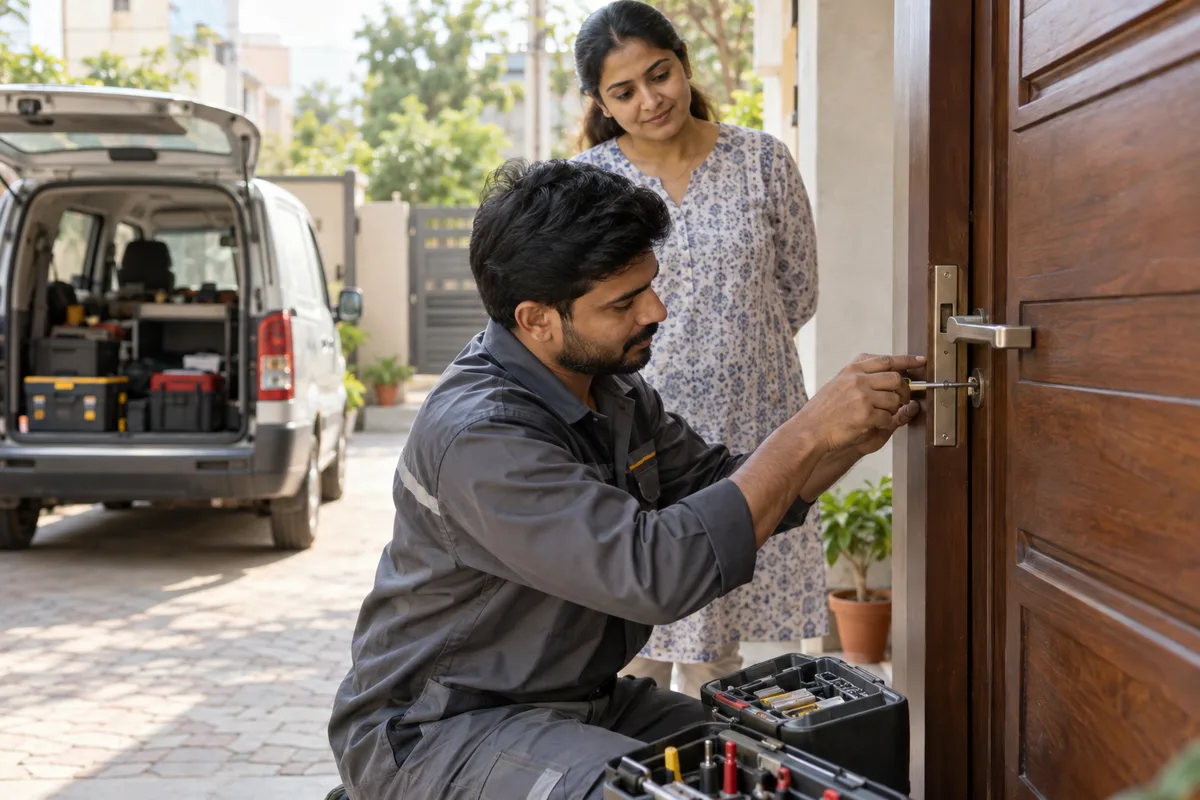
Call generation advertising uses paid placements to encourage buyers to phone your business, with tracking that separates dial clicks from connected conversations. GullySales plans the media, sets up source-specific numbers where available, and connects call records to your team's enquiry outcomes, so spending decisions reflect relevant calls and orders rather than button clicks alone.
Last updated 14 Nov 2026.
For locksmiths
Where it usually goes wrong, and what we would do.
“A tap on the call button is not a conversation”
A locked-out customer taps the number on a small screen, the line rings, and nobody picks up because the technician is under a dashboard on another job. The platform records a click and the owner pays for it. Call generation advertising starts by separating three things: taps, calls that connected, and calls that became a paid visit. Until those three are counted apart, the advertising report says the campaign worked while the job book says the phone stayed quiet.
“The advert runs while the phone is unattended”
Locksmith demand does not follow office hours, and neither does the advert unless someone decides it should. A call-led campaign that keeps running at 3am while the only technician is asleep or mid-job sends the paying customer to voicemail and sends the bill to the owner. The plan has to start from who can answer and when, then switch the advert on only for those windows and name a backup person for the gaps.
“The advert promises an area the van cannot reach”
A locksmith who advertises across a whole city and then quotes a long wait to a caller on the far side loses the call and annoys the caller. Arrival time is the real product on an emergency search. The advert should cover the streets the technician can reach and no others, and the wording should match what the person on the phone will say about arrival, because a mismatch between the two is what customers remember.
“The caller has to trust a stranger before the price matters”
Someone standing outside a locked door at night is worried about two things: whether the person arriving is genuine, and whether the price will change on the doorstep. Aggregator listings and fake local numbers have made customers wary. The first ten seconds of the call, and the line in the advert above it, need to carry verification and a clear call-out explanation, since the customer will not compare three locksmiths before dialling one.
What we do
What we deliver for locksmiths.
The work available for this need. We agree the deliverables and responsibilities for your engagement in writing.
Reachable-area and answering-hours map
A written map of the streets and estates the technician can reach, drawn from where past jobs were actually done, paired with the hours a person can pick up. The owner marks the edges. Advertising is planned inside the map, never outside it, so the advert cannot promise a visit the van cannot make.
Result: Check that every area in the advert appears on the signed map.
Call-led advert set
Search adverts, call-only formats and click-to-call placements, subject to what each platform currently offers and allows locksmith advertisers. The wording names the job, the area and the next step. The owner approves every line, and any verification statement shown is one the owner can document.
Result: Check that every claim in the advert has paper behind it in your own file.
Source-by-source number register
A register of tracking numbers, each tied to one placement and forwarding to the line that is staffed. Test calls from a second phone confirm that each number rings through and appears under the right source. Where the platform or telecom provider does not support a number type, the register says so.
Result: Ring each number from another phone and see it logged under its own source.
Night and overflow routing rules
A written rule for what happens when the first phone is not answered: who gets the ring next, what the caller hears, and when a text or WhatsApp message goes back. The rule names a person rather than a role, so a missed 2am call has an owner.
Result: Let a test call go unanswered and watch it reach the named backup.
Call opening and price-line script
Wording for the first moments of the call: the question about where the caller is standing, the arrival statement, and a plain explanation of the call-out charge versus the job charge. Technicians who answer on the road can read it at a red light or learn it. The owner approves every sentence.
Result: Listen to three real calls and check that the price explanation was given.
Connected-call and outcome report
A report separating taps, connected calls, missed calls, relevant enquiries and paid jobs by source. The job book is the final authority. Calls that were wrong-number, out-of-area or from other locksmiths are shown rather than hidden, and the cost of a paid job by source is shown where the records support it.
Result: Match a sample of reported paid jobs to the entries in your own job book.
How the result is measured
- Dial clicks compared with recorded connected calls
- Missed calls and callback outcomes
- Time taken to answer
Recorded as a baseline before work starts, so every later report has an honest comparison.
Who it is for
This is written for these locksmiths.
- Emergency and 24-hour locksmiths
- Automotive locksmiths and key programming specialists
- Residential lock and security installers
- Commercial and office locksmith services
- Safe installation and repair specialists
- Smart lock and digital security installers
- Society and RWA-contracted locksmiths
Before you decide
Agree the work. Know how to judge it.
Call generation advertising for locksmiths: use these checks to prepare, choose the scope, and review what changes.
Bring the right evidence
Define the organisations or buyers you can serve and the reasons they would consider a conversation. Bring examples of accepted and rejected prospects so the selection rule is visible.
Make the scope clear
Agree the research sources, contact approach, qualification rules, and handover. Clarify which meetings count as accepted and what happens to replies that are not ready to buy.
Check the work in use
Review why a prospect was selected and what was learned from the response. Count held, relevant conversations separately from contacts found, messages sent, or meetings booked.
Know when to change course
If the same objection appears repeatedly, adjust the offer or buyer group before increasing outreach. Respect a request to stop contact and keep the exclusion in the record.
These are discussion points, not a fixed package. GullySales confirms the deliverables, responsibilities, fee, and term in writing after reading your brief and speaking with you.
Before we start
What to have ready before the work starts.
The records, access and decisions this work needs from locksmiths. Anything missing is noted in the written scope, with who will supply it.
- Call log from your main numbers
- The operator or phone provider call history shows how many calls arrived, when, and how many went unanswered. Without it the baseline is a guess, and a campaign cannot be judged fairly against a figure nobody recorded. A screenshot or exported list is enough.
- Your job book with sources
- A record of recent jobs showing the address, the type of work, what was charged and how the customer found you. When the source column is blank, we ask the owner to fill in the last batch of jobs from memory, so that the first report has something honest to compare.
- Who answers, and when
- A plain list of the people able to pick up, their hours, and the phone each uses. Technicians who answer while driving or working need a rule on when to call back instead. Without this list the campaign advertises hours nobody covers, which is the costliest mistake available.
- Verification and identity papers
- Whatever documents show the business and its technicians are genuine: licences, clearance papers, identity cards, company registration. Customers deciding whether to let a stranger in respond to what they can check. If a document is missing, the advert simply makes no verification claim.
- Access to listing and advertising accounts
- Ownership of the Business Profile, the advertising account and the phone number account sits with the owner, with us added as a user. When an agency or an earlier helper holds the login, the first task is getting it back, because a campaign built on someone else's account leaves with them.
How it works
How the call generation advertising work runs
The work itself, in order. How an engagement starts, from your brief to a written scope, is set out on our method page.
- 1
Your phone records and job book
We start with what the business already holds: the call log from the main numbers, the job book, and any notes on where each customer found you. From these we write down how many emergency calls reached a person, how many went unanswered, and what a paid job means in this business. The figures recorded here are the baseline every later result is read against.
- 2
Drawing the service area honestly
The owner and the technicians mark the roads, estates and buildings they can reach without a long wait, using the addresses of real jobs rather than a radius on a map. We also mark the places that look close but take longer, such as gated societies with slow entry. This drawing decides where the advertising is allowed to run.
- 3
Numbers, forwarding and test calls
We set up the source-specific numbers where available and forward them to the staffed line, then ring each one from outside. The missed-call rule is written and the backup person confirms in writing that they accept it. Nothing is printed or published until the number has been tested end to end, including the voice message callers hear when nobody picks up.
- 4
Advert wording and platform checks
We draft the advert text around the job, the area and the arrival step, then check it against the platform's current rules for locksmith advertisers, which differ between platforms and change. The owner supplies the verification documents that any statement relies on. Lines that cannot be backed with paper are removed, however good they sound.
- 5
Launch with the answering rota in place
The advert goes live only for the hours in the answering plan and for the areas on the map. During the first stretch of running we read connected and missed calls together, so a gap in cover shows up as a gap in the register before spending is increased. The owner or a manager confirms whether the callers asked for work the business actually does.
- 6
Reading the result against the first figures
At the review we set connected calls, missed calls, relevant enquiries and paid jobs beside the baseline recorded at the start. We look at which source, area and hour brought paid work and which brought wrong numbers. Spending moves only where the job book supports it, and we say plainly if the evidence is too thin to decide.
Where this fits
Three pieces of sales work, in this order.
This work sits inside sales process design, at stage 1, prospecting and lead generation. The audit comes before it, and sales management keeps it running.
Step 1
Sales audit
Find where deals are being lost and what to fix first.
Start here if you cannot say where orders are lost.
Step 2 · you are here
Sales process design
One written way to sell, from first enquiry to repeat order.
Start here if every salesperson sells differently.
Step 3
Sales management
A target, a review routine and someone who owns the number.
Start here if the team has targets and no routine.
FAQ
Questions owners ask before they call.
Not here? More answers, or ask on WhatsApp.
How is call generation advertising different from ordinary paid search for a locksmith?
Can you promise a number of calls?
What if my technicians cannot answer every call?
Do you record the calls?
Will callers from other locksmith firms or scammers waste my spend?
Is this right for a locksmith who only does planned work?
How much does it cost?
How soon will we see results?
Who will actually do the work?
What do you need from us?

More for locksmiths
Related work to consider.
Closest to this: leads and follow-up
Also for locksmiths
Or start from the overview: sales and marketing for locksmiths.
Your next practical step
Tell us what you are trying to grow, and we will read it before we call.
Eight short steps, mostly taps. Skip anything you would rather answer on the call.