Locksmiths · Buyer persona
Write differently for the panicked lockout call and the upgrade enquiry.
A buyer persona for a locksmith separates the emergency caller, who wants speed and reassurance, from the planned-work customer, who wants proof of quality and past work.
Scope, fee, reporting and term are agreed in writing after we have read your brief and spoken to you.
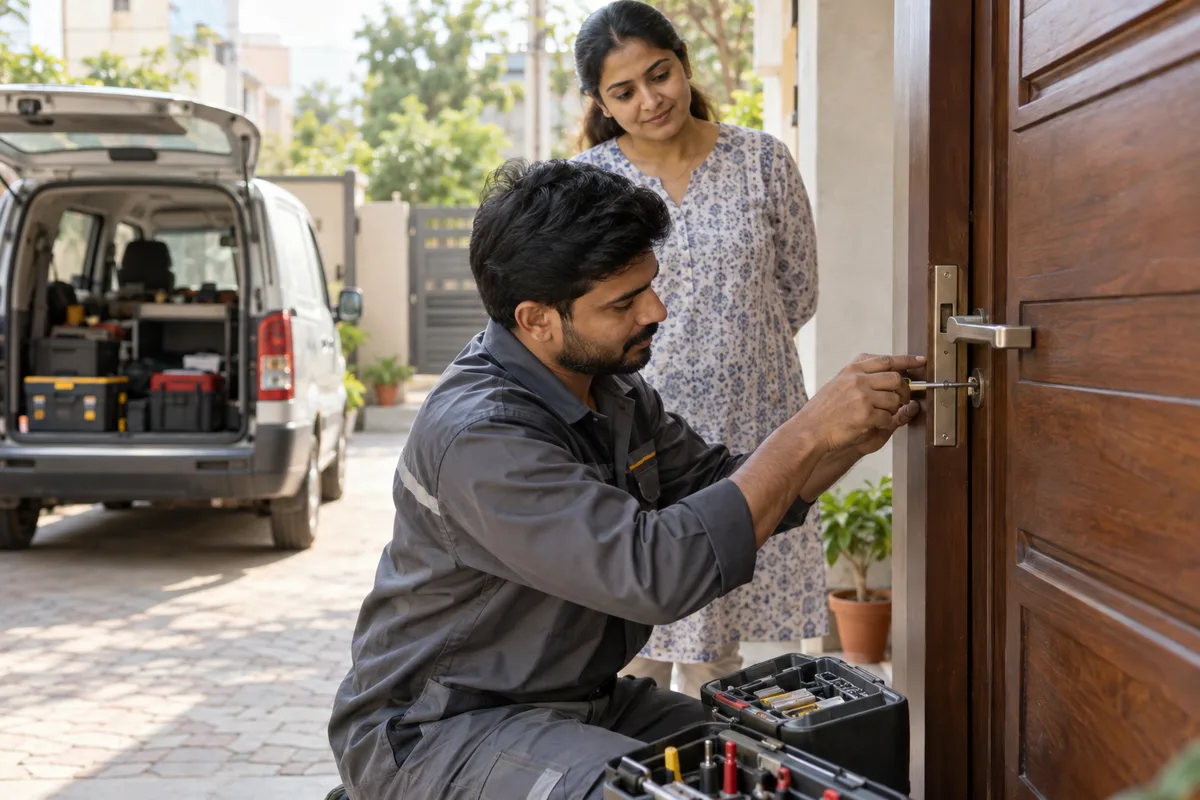
What buyer persona means
A buyer persona is a plain description of the kind of customer who actually buys from you. It includes what they search, what worries them and who else they ask before deciding. GullySales builds this from real enquiries and past sales rather than a generic template, then uses it to write every page and advert.
Last updated 14 Nov 2026.
For locksmiths
Where it usually goes wrong, and what we would do.
“The emergency caller decides on speed and tone”
This buyer wants a confirmed arrival time and a calm, clear answer, not a long explanation of services.
“The upgrade customer decides on proof”
This buyer wants photographs of past digital lock installs and reviews mentioning the same brand or job.
“Commercial clients decide on contracts”
An office or society buyer wants a service agreement and multiple technicians available, not a single-person promise.
What we do
What we deliver for locksmiths.
The work available for this need. We agree the deliverables and responsibilities for your engagement in writing.
An emergency caller persona and tone guide
A short written guide describing what the panicked lockout caller needs to hear, and the calm, direct tone every answer should use.
Result: Whoever answers the phone sounds the same, confident way.
An upgrade buyer persona with proof requirements
A description of the planned-work customer, listing the photos, brands and reviews they check before booking a digital lock or CCTV job.
Result: Content gets built around what this buyer actually wants to see.
A commercial and society client profile
A written profile of the office or society buyer, covering the service agreement and technician availability they expect before signing.
Result: A commercial enquiry gets a proposal built for what they actually need.
Persona-matched page structure
A recommended page structure, an emergency page, an upgrade page and a commercial page, built to match each persona's decision.
Result: Each type of customer finds the page written for them.
How the result is measured
- Enquiry match to persona
- Conversion rate by persona
- Content aligned to persona
Recorded as a baseline before work starts, so every later report has an honest comparison.
A persona card for this customer
Here is a typical card for the new tenant who wants the locks changed after moving in.
A worked example, not a statement about your customers. Compare each line with your call log and reviews, and rewrite what does not fit.
- Who they are
- Typical: a new tenant or buyer who has just taken keys and does not know who else holds a copy. Check against jobs booked soon after a move.
- What starts the search
- Typical: the key handover, a lost spare or a landlord who will not change the lock. Ask what happened that week.
- What worries them
- Typical: a stranger at the door, a higher price quoted on arrival and a lock that breaks soon. Look for these in your price dispute reviews.
- What they compare you with
- Typical: the neighbourhood hardware shop, a number on a pasted sticker and a brand's authorised installer. Ask which they phoned first.
- Who else decides
- Typical: the landlord who must allow the change, and a flatmate who needs a key. Ask who will hold keys and send the quote to the landlord too.
- What makes them say yes
- Typical: a price range on the call, an ID shown at the door and a receipt that names the lock brand. Check which of these your repeat customers mention.
Who it is for
This is written for these locksmiths.
- Emergency and 24-hour locksmiths
- Automotive locksmiths and key programming specialists
- Residential lock and security installers
- Commercial and office locksmith services
- Safe installation and repair specialists
- Smart lock and digital security installers
- Society and RWA-contracted locksmiths
Before you decide
When this may not be the right fit.
- You have handled too few planned jobs to tell an upgrade buyer from a lockout caller, and a persona would repeat what other firms say.
- Your calls are answered on personal phones and not noted, so there is nothing to build a persona from.
Before you decide
Agree the work. Know how to judge it.
Buyer personas for locksmiths: use these checks to prepare, choose the scope, and review what changes.
Bring the right evidence
Write the decision the research must support, such as entering a market or choosing a buyer group. Separate what you know from sales records from what the team currently assumes.
Make the scope clear
Agree which buyers to speak to, which sources to review, and what access you can provide. Include lost enquiries and people who chose another supplier, where they are willing to take part.
Check the work in use
Look for source dates, sample limitations, and evidence that disagrees with the preferred answer. A recommendation should show how it follows from the findings.
Know when to change course
Do not treat a few positive conversations as proof of demand. Test the proposed offer with an actual buying decision before committing to a wider launch.
These are discussion points, not a fixed package. GullySales confirms the deliverables, responsibilities, fee, and term in writing after reading your brief and speaking with you.
Before we start
What to have ready before the work starts.
The records, access and decisions this work needs from locksmiths. Anything missing is noted in the written scope, with who will supply it.
- A list of jobs from the last season
- Personas come from what customers actually bought. A list of jobs with the type, rough locality and who paid is enough, even in a diary. With it we see which kinds of customer dominate. Without it, we write personas from general knowledge, which will not fit your town. With the list we also see which localities and hours the emergency callers come from, which decides where the tone guide needs to be strongest.
- Voice notes or messages from callers
- Real wording beats our paraphrase. WhatsApp messages from customers, with names hidden, show how they phrase urgency and doubt. Screenshots are fine. If you have none, the persona sheets will use our best wording, marked as untested until real messages replace it.
- Photographs of installations you have done
- The upgrade buyer's sheet depends on what proof you can offer. Phone photographs of fitted locks, safes and grilles, with the customer's address left out, show what exists. Missing photos mean the persona names proof as a gap, and the plan includes a photo routine for the next jobs.
- Contact details for one society or office
- To profile a committee-led client, we need one real example: the person who engaged you, what they asked and how they paid. We do not contact them without your approval. If you have no such client yet, the commercial sheet is written as a target profile and labelled so.
- Your view on who you refuse to serve
- A persona includes the customer you would rather not take, such as a caller who cannot prove the door is theirs. Only you can set that boundary. If it is unclear, the phone answers will contradict one another, and the handler will decide each case alone.
How it works
How the buyer persona work runs
The work itself, in order. How an engagement starts, from your brief to a written scope, is set out on our method page.
- 1
Read the notes from past night calls
We start with what you already know: the people who rang from a locked car, a shut flat or a shop shutter. You share your notes, your messages and your memory of who they were. We write down each caller's first words, their mood and what reassured them. These become the raw material for the emergency persona.
- 2
Name the three customers you serve
From your job history we separate the person locked out, the household buying a better lock and the manager who appoints a locksmith for a building. You tell us who is missing from the list. We agree on three personas to write, and you decide whether a fourth, such as a vehicle dealer, deserves its own sheet.
- 3
Write the emergency caller sheet
This sheet covers the caller's state of mind, the questions they ask, the doubts about a stranger arriving and the tone that calms them. We write it in plain words your handler can read at a glance. You check each line against calls you remember, and strike what does not ring true.
- 4
List the proof the upgrade buyer wants
A household choosing a digital lock looks for photos, a verified listing, a named technician and a clear quote. We list what this buyer checks and in what order. You tell us which of these items you can show today and which need to be gathered, such as installation photographs.
- 5
Profile the committee and office client
A society secretary or office administrator buys on contract terms, response arrangements and references from other buildings. We profile this client from the contacts you give us. You tell us who signs, who pays and who complains, so the sheet shows the real decision chain.
- 6
Check the sheets against fresh enquiries
As new calls and quotes arrive, we read them against the sheets and against the call and job record from before the personas were written. We note which persona each enquiry matched and whether the page structure and phone answers changed the outcome. We rewrite whatever sheet the new enquiries contradict.
Where this fits
Three pieces of sales work, in this order.
This work sits inside sales process design, at stage 0, foundation. The audit comes before it, and sales management keeps it running.
Step 1
Sales audit
Find where deals are being lost and what to fix first.
Start here if you cannot say where orders are lost.
Step 2 · you are here
Sales process design
One written way to sell, from first enquiry to repeat order.
Start here if every salesperson sells differently.
Step 3
Sales management
A target, a review routine and someone who owns the number.
Start here if the team has targets and no routine.
FAQ
Questions owners ask before they call.
Not here? More answers, or ask on WhatsApp.
Is a persona worth the effort for a one-person shop?
How does this change our website?
Can one persona guide both our phone answers and our listing?
How do we check a persona when most customers are one-time?
How many people should read the personas?
What if a customer fits none of the personas?
How much does it cost?
How long is the contract?
How soon will we see results?
Who will actually do the work?

More for locksmiths
Related work to consider.
Closest to this: strategy and research
Also for locksmiths
Or start from the overview: sales and marketing for locksmiths.
Your next practical step
Tell us what you are trying to grow, and we will read it before we call.
Eight short steps, mostly taps. Skip anything you would rather answer on the call.