Locksmiths · Public relations
Get known locally as the trustworthy, verified locksmith to call.
Public relations for a locksmith means local coverage or community mentions, such as a feature on security awareness, that builds the trust a stranger needs before letting someone in.
Scope, fee, reporting and term are agreed in writing after we have read your brief and spoken to you.
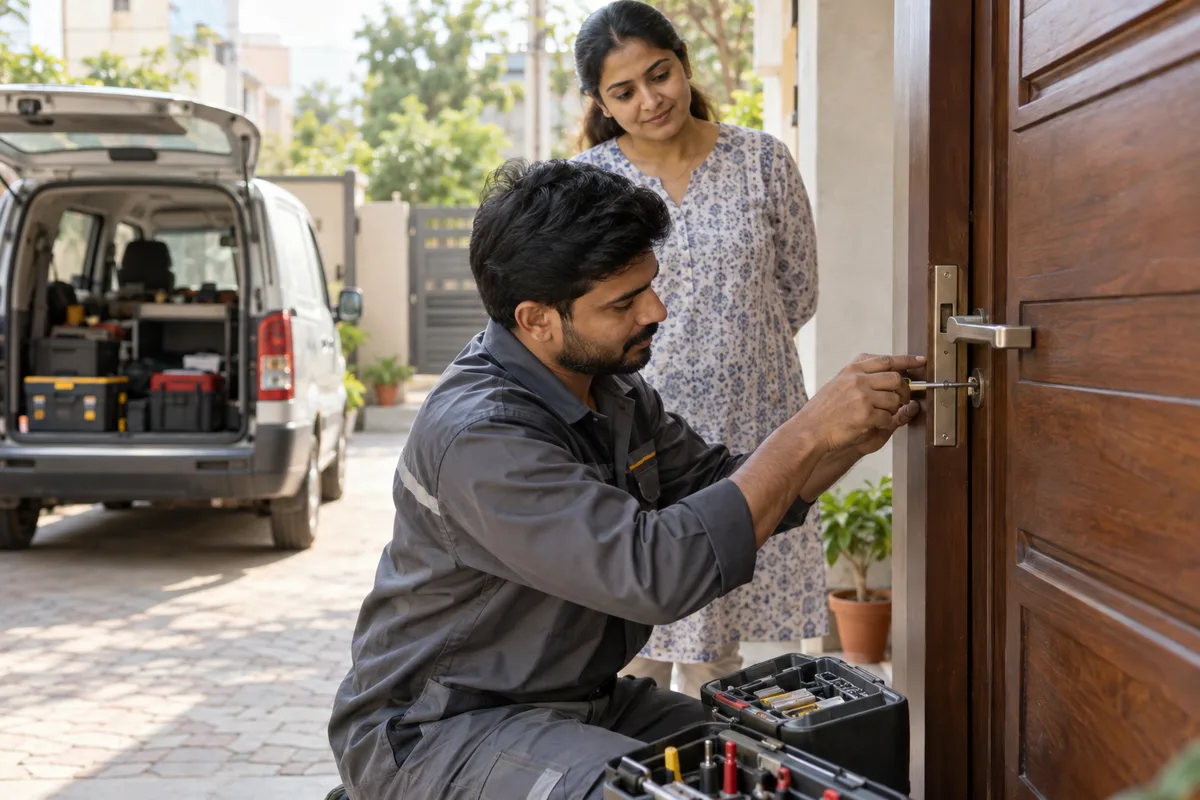
What public relations means
Public relations is getting your business covered by journalists, trade publications or local news, which carries more trust than an advert because a third party is saying it. GullySales pitches your story to the right publications and prepares your team for interviews when coverage is offered.
Last updated 14 Nov 2026.
For locksmiths
Where it usually goes wrong, and what we would do.
“Security awareness stories fit naturally”
A local feature on preventing lockouts or choosing a smart lock reads as useful, not promotional.
“Verification is the strongest angle”
A press mention of formal verification or training addresses trust directly, more than a general profile piece.
“Community safety talks build recognition”
A short talk to a residents' association about home security earns trust that advertising cannot buy as easily.
What we do
What we deliver for locksmiths.
The work available for this need. We agree the deliverables and responsibilities for your engagement in writing.
A local media pitch on security awareness
A pitch to local publications or community pages offering practical advice on preventing lockouts or choosing a smart lock.
Result: The business gets mentioned as a useful local voice, not an advertiser.
A verification-focused press angle
A short pitch highlighting the business's formal verification or training, aimed at outlets covering local trust and safety topics.
Result: A reader sees independent coverage of the trust question, not a claim.
A residents' association talk proposal
A short, practical talk on home security offered to residents' welfare associations and society management committees.
Result: The business becomes a familiar, trusted name before an emergency happens.
A coverage and mentions tracker
A simple record of every press mention, community feature or talk given, kept for use on the website and profile.
Result: Independent coverage is easy to point to when a customer asks about trust.
How the result is measured
- Coverage secured
- Publication reach
- Enquiries after coverage
Recorded as a baseline before work starts, so every later report has an honest comparison.
What is worth telling the press
Security stories a locksmith can offer without teaching a break-in.
- How a customer can verify you
- Publish the steps: a photo ID, a shop address, a written estimate before the work and a receipt. Reporters want this when stories about fake locksmiths come up.
- What to do when locked out
- Offer a tip piece for residents explaining why a genuine locksmith asks for proof that you live there. Warn against anyone who drills first and quotes later.
- A door security talk for a society
- Ask the secretary of an apartment society for a slot on multi-point locks, peepholes and key duplication. Bring two lock samples to show.
- Securing a flat while away
- Offer a note on securing a home before holiday travel and festival trips. Local papers run these just before people leave.
- What the story must not contain
- Do not publish customers' addresses or describe how to open a particular lock. A piece that teaches a break-in will not be printed and harms your name.
- Smart locks and car keys
- Trade or motoring pages may take a story on smart locks or key programming. Name the vehicle models and lock systems only where you actually serviced them.
Who it is for
This is written for these locksmiths.
- Emergency and 24-hour locksmiths
- Automotive locksmiths and key programming specialists
- Residential lock and security installers
- Commercial and office locksmith services
- Safe installation and repair specialists
- Smart lock and digital security installers
- Society and RWA-contracted locksmiths
Before you decide
When this may not be the right fit.
- You have no verification, licence or police clearance you can show, and a story about trust would invite the question.
- You have no safety advice of your own to give, and a press note would be a general piece any locksmith could issue.
Before you decide
Agree the work. Know how to judge it.
Public relations for locksmiths: use these checks to prepare, choose the scope, and review what changes.
Bring the right evidence
Start with a fact a journalist or industry audience could independently check. Gather supporting documents and decide who is authorised to speak for the business.
Make the scope clear
Separate editorial outreach from paid placements and production. Agree the subject, target publications, spokesperson access, and how an inaccurate statement would be corrected.
Check the work in use
Judge the relevance and accuracy of coverage, including where it sends readers. Keep a record of published links and the enquiries that can be traced to them.
Know when to change course
If the story is only an unsupported claim of being the best, develop evidence first. An outreach list does not guarantee editorial coverage.
These are discussion points, not a fixed package. GullySales confirms the deliverables, responsibilities, fee, and term in writing after reading your brief and speaking with you.
Before we start
What to have ready before the work starts.
The records, access and decisions this work needs from locksmiths. Anything missing is noted in the written scope, with who will supply it.
- Proof that you are who you say
- A press note on verification invites checking. Have your business registration or licence papers, your ID and any association membership ready. If papers are missing, we do not pitch the verification angle until they are in order.
- A technician willing to speak
- Editors and societies want a person, not a brand. Choose a technician who speaks clearly and is comfortable in a meeting. If nobody is willing, the plan relies on written notes only, which reach fewer people. The speaker should have given a short talk to even a small group before, or be willing to practise it twice with us. A nervous speaker with notes does better than a fluent one with none.
- Two or three true stories, anonymised
- Examples of fake locksmiths, forced doors or poor locks make a note believable. They must be true and carry no names or addresses. Without them the note reads as advice any shop could give.
- Contacts at one society or paper
- A warm introduction beats a cold message. Tell us of a customer on a resident committee or a person you know at a local paper. With none, we begin cold and set slower expectations.
- Your consent on photographs and quotes
- Pictures of you, your van or your team may be printed. Only you can allow that. Decide before we pitch, because a paper may ask for a photograph within the hour.
How it works
How the public relations work runs
The work itself, in order. How an engagement starts, from your brief to a written scope, is set out on our method page.
- 1
Choose the one security story to tell
We start with a single true topic from your work, such as how to check a stranger's identity at the door or why a weak lock fails. You tell us what you have seen in the neighbourhood, with no names. We draft a short outline of the story and decide who would care to read it. We keep to what you have seen yourself, such as a caller who was nearly cheated by a stranger with a toolbox, so that every line of the story can be defended if a reader asks.
- 2
List the local outlets and groups
We make a list of the local newspapers, community pages, resident association newsletters and radio slots in your area. You tell us which ones you or your customers already follow. Each entry gets a contact route, not a guess. We also note the day each outlet prints its community page and who edits it, because a note sent when the page is already full is read and then dropped.
- 3
Write the verification angle as a short note
The strongest angle is how a resident can tell a genuine locksmith from a fake. We write a short note on it with you, covering what to ask for and what a real technician carries. You confirm each line is something you do yourself. The note tells a resident to ask for a name, a card and a number that matches the van, and to ring the business before opening the door when time allows.
- 4
Draft the residents' association talk
We write a short talk for a society meeting on door safety, with a few slides or a printed sheet. You decide who will deliver it. The talk avoids selling and ends with how to reach you. We rehearse it once with whoever will speak. We also prepare a one-page sheet of door-safety points that the association can print and put on a notice board after the talk.
- 5
Send the pitch and the talk offer
We prepare the messages to editors and association secretaries, and you approve them before they go. You send them, or we send with your agreement. Any request to pay for a column is brought back to you, because that is advertising, not coverage. We keep a copy of every message sent and the reply received, so that a second approach to the same editor refers to the first and does not repeat it.
- 6
Record mentions against the earlier baseline
We keep a sheet of every mention, talk and enquiry that followed, set beside the call and job figures from before. We note which mentions produced a call and which produced only recognition. You see what is worth repeating. We also read whether a mention was followed by a rise in calls from that locality, because a talk in one society can bring work from the next.
Where this fits
Three pieces of sales work, in this order.
This work sits inside sales process design, at stage 1, prospecting and lead generation. The audit comes before it, and sales management keeps it running.
Step 1
Sales audit
Find where deals are being lost and what to fix first.
Start here if you cannot say where orders are lost.
Step 2 · you are here
Sales process design
One written way to sell, from first enquiry to repeat order.
Start here if every salesperson sells differently.
Step 3
Sales management
A target, a review routine and someone who owns the number.
Start here if the team has targets and no routine.
FAQ
Questions owners ask before they call.
Not here? More answers, or ask on WhatsApp.
Is this realistic for a small locksmith?
How is this different from reviews?
A local paper wants us to pay for a security tips column. Is that PR?
Should we post the story on our page or send it to the paper?
Does paying for a column count as coverage?
Can we reuse a news mention on our listing and site?
How much does it cost?
How soon will we see results?
Who will actually do the work?
What do you need from us?

More for locksmiths
Related work to consider.
Closest to this: reputation
Also for locksmiths
Or start from the overview: sales and marketing for locksmiths.
Your next practical step
Tell us what you are trying to grow, and we will read it before we call.
Eight short steps, mostly taps. Skip anything you would rather answer on the call.