Locksmiths · Reputation management
Make sure the review after an emergency call gets a reply.
Reputation management for a locksmith means replying to every review, since a customer choosing between locksmiths at short notice reads recent reviews as the deciding signal.
Scope, fee, reporting and term are agreed in writing after we have read your brief and spoken to you.
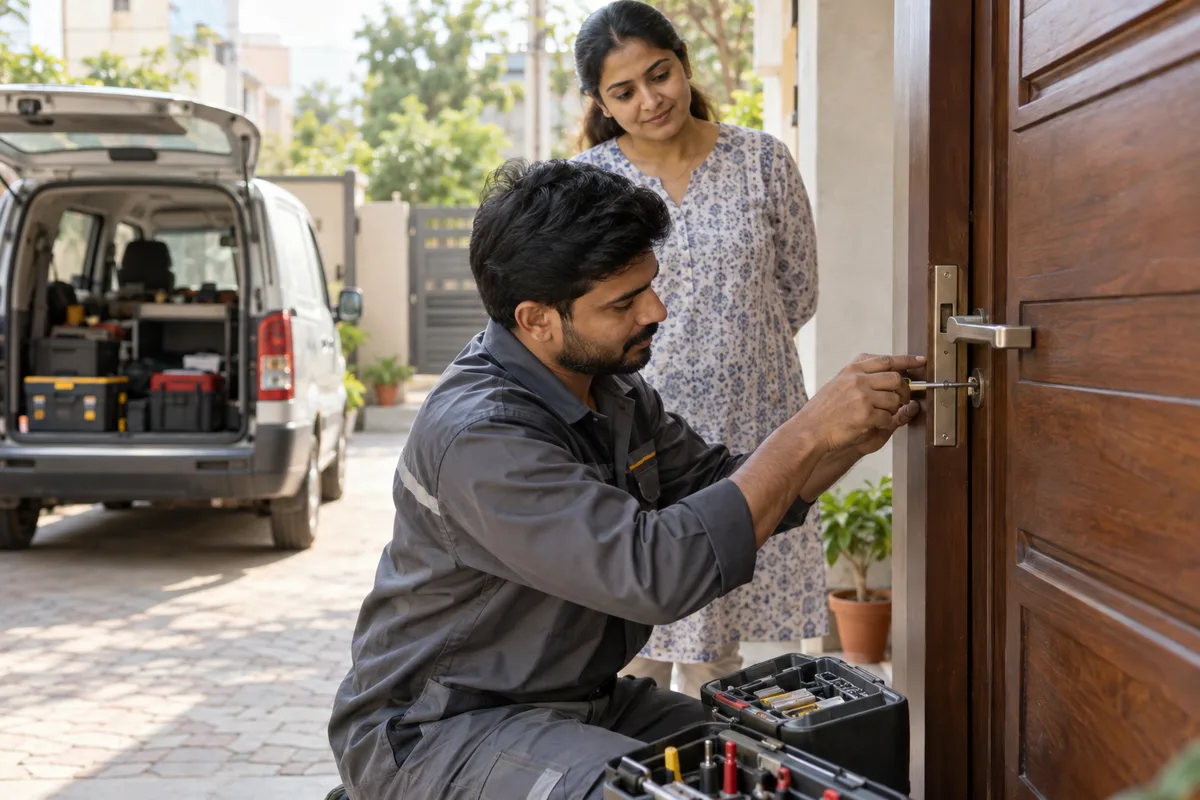
What reputation management means
Reputation management is watching what is said about your business across Google, social media and review sites, and responding to it before it changes a buyer's mind. GullySales monitors mentions, drafts responses to negative reviews and flags recurring complaints back to your team.
Last updated 14 Nov 2026.
For locksmiths
Where it usually goes wrong, and what we would do.
“Recent reviews matter more than old ones”
A customer searching right now checks whether the last few reviews are recent, not the total count.
“Response time gets mentioned naturally”
Asking a happy customer to mention how fast you arrived builds exactly the proof the next caller needs.
“A price dispute needs a calm, factual reply”
Emergency pricing sometimes draws complaints; a clear, specific reply protects trust better than silence.
What we do
What we deliver for locksmiths.
The work available for this need. We agree the deliverables and responsibilities for your engagement in writing.
A review request timed right after the job
A short request sent the same day a job is completed, asking the customer to mention how fast help arrived.
Result: New reviews stay recent enough to matter to the next searcher.
Response templates for every review reply
Ready wording for thanking a positive review and for responding calmly and factually to a complaint or price dispute.
Result: Every review gets an answer, not just the good ones.
A review monitoring routine across platforms
A routine for checking Google, Justdial and any other listing regularly enough that a new review does not sit unanswered for long.
Result: A customer deciding right now sees an active, responsive business.
A price dispute response protocol
A written approach for replying to a pricing complaint, factually and without escalation, agreed in advance rather than improvised.
Result: A dispute gets a measured reply instead of a defensive one.
How the result is measured
- Average rating
- Response time to reviews
- Negative mentions resolved
Recorded as a baseline before work starts, so every later report has an honest comparison.
What to do with each review
How to answer the reviews a lockout, a duplicate key or a safe job brings.
- Praise after a night call-out
- Thank them and name the job, such as a lockout at a flat or a car key. Mention the technician's first name if the customer did. Ask if they want it kept short.
- Price complaint about a late call
- Reply that the call-out charge was quoted on the phone, and say what it covered. Check that your technicians quote before leaving, and note the quote on the job card.
- Damage to a door or lock
- If your work caused it, say so and offer to repair or replace. If the lock was already broken, reply that the technician noted the condition on the job card and share it with the customer.
- Review asking if you are genuine
- Reply with your shop address, the technician's name and how the customer can verify identity. Add a line on the listing that technicians carry an ID and ask the customer for proof of ownership.
- Car key programming that failed
- Say which make and model, and what was tried. Offer a recheck or a refund in line with your stated policy. Write the key type and chip on the job card so the next call starts with the facts.
- A review that appears fake or planted by a rival
- Look up the name and number in your call log. If no job matches, report it through the platform's process and reply once, saying you cannot find a record of a visit.
Who it is for
This is written for these locksmiths.
- Emergency and 24-hour locksmiths
- Automotive locksmiths and key programming specialists
- Residential lock and security installers
- Commercial and office locksmith services
- Safe installation and repair specialists
- Smart lock and digital security installers
- Society and RWA-contracted locksmiths
Before you decide
When this may not be the right fit.
- Nobody can reply to a review within the same working day, and a policy to answer all of them would leave the first dispute open.
- You have no record of the price quoted on the call, so a reply to a price complaint would rest on memory.
- You have very few reviews and no plan to ask for more, so tools to manage them would have nothing to manage.
Before you decide
Agree the work. Know how to judge it.
Reputation management for locksmiths: use these checks to prepare, choose the scope, and review what changes.
Bring the right evidence
Collect recurring public feedback and the internal record of how the issue was handled. Separate factual corrections from genuine complaints that need a response.
Make the scope clear
Agree who checks facts, approves replies, and resolves problems outside marketing. Any request for reviews or testimonials must fit the trade's rules and the customer's permission.
Check the work in use
Read the response from the customer's point of view. It should address the issue without exposing private information or promising an outcome the team cannot provide.
Know when to change course
Do not buy or invent reviews. If the same complaint keeps returning, resolve its cause before publishing more positive material.
These are discussion points, not a fixed package. GullySales confirms the deliverables, responsibilities, fee, and term in writing after reading your brief and speaking with you.
Before we start
What to have ready before the work starts.
The records, access and decisions this work needs from locksmiths. Anything missing is noted in the written scope, with who will supply it.
- Owner access to each review platform
- Replying requires owner login. If a past employee set up a listing, access may be missing. The plan then starts with the claim steps, and replies wait until you can post.
- A record of the disputed jobs
- To answer a price complaint truthfully, we need the job note, the quote given and what was charged. A diary entry is enough. Without it the reply is generic, and a customer sees that.
- Customer contact details for the request
- The review request needs a way to reach the customer, a mobile number from the call. You must hold it lawfully from the job. If numbers are not kept, the plan starts with a note field on each job.
- A person who reads reviews promptly
- Someone must see each review and reply while it is fresh. This may be you or a family member. If no one is named, replies pile up and the pattern of silence tells customers you do not care. They should look at new reviews on the same part of the day, such as after the last job, so that a complaint is answered while the customer still remembers the visit clearly.
- Your stance on refunds and goodwill
- Only the owner can decide when to refund or return and fix. Have the stance ready before the first dispute. Without it, replies stay vague and the complaint stands unanswered.
How it works
How the reputation management work runs
The work itself, in order. How an engagement starts, from your brief to a written scope, is set out on our method page.
- 1
Read every review on every listing
We begin by reading all the reviews you have, on Maps and the directories. You tell us which customers you recognise and which disputes you remember. We sort them into praise, price complaints, arrival complaints and doubts about honesty, so the pattern shows.
- 2
Write the replies for each kind
For each group we write a reply you can adapt: thanks for praise, a calm account for a price dispute, an apology for a late arrival. You read each and cut anything you would not say. The replies never argue or reveal a customer's details. We also write one reply for a review that mentions a technician by name, which thanks the customer, states what the business will check and invites a call, without blaming anyone in public.
- 3
Set the review request for the next morning
The request goes out after the job, in the customer's language, by message with a direct link. You tell us when a customer is relaxed enough to ask. We write the message and agree who sends it, so no customer receives it in the middle of a lockout.
- 4
Agree who watches each platform
We list each place a review can appear and name the person who checks it. You choose that person. We set notifications on your phone so a new review is not missed, and we write what to do when one arrives at night. We write down which platforms matter first in your area, so the person watching does not spend the evening on listings that bring no calls.
- 5
Build the price dispute protocol
When a customer complains about the charge, the reply and any follow-up call follow a set order. We write it with you, using your real call-out policy. You decide when to offer a call back and when to hold firm, and we put it on one page.
- 6
Compare ratings and replies with the start
We read the review count, the average and the reply record against what we noted on day one, together with calls and booked jobs. You see which new reviews mentioned arrival or price, and we adjust the request or the replies.
Where this fits
Three pieces of sales work, in this order.
This work sits inside sales management. A target, a review routine and someone who owns the number.
Step 1
Sales audit
Find where deals are being lost and what to fix first.
Start here if you cannot say where orders are lost.
Step 2
Sales process design
One written way to sell, from first enquiry to repeat order.
Start here if every salesperson sells differently.
Step 3 · you are here
Sales management
A target, a review routine and someone who owns the number.
Start here if the team has targets and no routine.
FAQ
Questions owners ask before they call.
Not here? More answers, or ask on WhatsApp.
How fast should we reply to reviews?
What if a review is unfair?
Customers say locksmiths cheat. How do we use reviews to build trust?
A neighbour asked us to open a door and then complained later. What should we say?
Should we ask for reviews from emergency customers?
What do we do about a review that names a technician?
How much does it cost?
How soon will we see results?
Who will actually do the work?
What do you need from us?

More for locksmiths
Related work to consider.
Closest to this: reputation
Also for locksmiths
Or start from the overview: sales and marketing for locksmiths.
Your next practical step
Tell us what you are trying to grow, and we will read it before we call.
Eight short steps, mostly taps. Skip anything you would rather answer on the call.