Locksmiths · Review generation
Ask before you drive away, because you will never reach them again.
A locksmith gets one chance to ask. The job is paid in cash at the gate, the customer has no account with you and by tomorrow they will not remember your name, so the request has to happen while you are still standing there. GullySales works out the ask, who makes it, and what to do when a customer is too embarrassed to write one.
Scope, fee, reporting and term are agreed in writing after we have read your brief and spoken to you.
What review generation means
Review generation is the routine of asking satisfied customers to leave a Google or platform review at the moment they are happiest, rather than hoping they remember later. GullySales builds the request into your existing follow-up steps and tracks how many turn into a review.
Last updated 14 Nov 2026.
For locksmiths
Where it usually goes wrong, and what we would do.
“There is no customer list to message later”
No booking, no invoice on email, no order history. Unless the number goes down on the job sheet and the ask is made on site, that customer is gone the moment the door shuts.
“Nobody wants to tell the internet they locked themselves out at 2am”
That is why emergency jobs produce so few reviews. Ask them to describe the work instead of the situation: the lock that was fitted, how long it took, that you came out at that hour. The embarrassment goes and the review appears.
“Your written reviews will come from the planned jobs”
A society secretary, an office admin or a builder's site engineer will write one, because their name is on the decision and the relationship continues. The panicked resident at midnight rarely will, and the ask has to be aimed accordingly.
What we do
What we deliver for locksmiths.
The work available for this need. We agree the deliverables and responsibilities for your engagement in writing.
A number and permission captured on the job sheet
The customer's number written down at the time of payment, with a line asking whether you may send them the link, because there is no other record of them.
Result: The emergency customer can still be reached tomorrow.
An ask the technician can make without cringing
Ten words for the technician packing their tools, pointed at the work rather than the lockout, tested on jobs before it goes into the briefing.
Result: The person who did the job makes the ask and means it.
A separate ask for society, office and builder work
A short written request to the secretary or the site engineer once an installation is signed off, since these are the customers who will actually put their name to something.
Result: Your steady reviews come from the jobs that repeat.
Prompts that get the lock and the area named
Two lines suggesting the customer mention the type of work and the locality, so a review reads digital lock fitted in a named area rather than good work.
Result: Reviews carry the words the next caller is searching.
A rule about when not to ask
No ask after a price argument, after a job that ran long, or where the customer is clearly upset, agreed in advance so nobody improvises at the gate.
Result: You stop inviting the reviews you do not want.
New reviews counted by job type
Emergency openings, lock changes, digital lock fittings and society contracts counted separately against the figure recorded before the work began.
Result: You can see which jobs are worth asking after.
How the result is measured
- Reviews received
- Average rating
- Response rate to requests
Recorded as a baseline before work starts, so every later report has an honest comparison.
Asking for reviews the right way
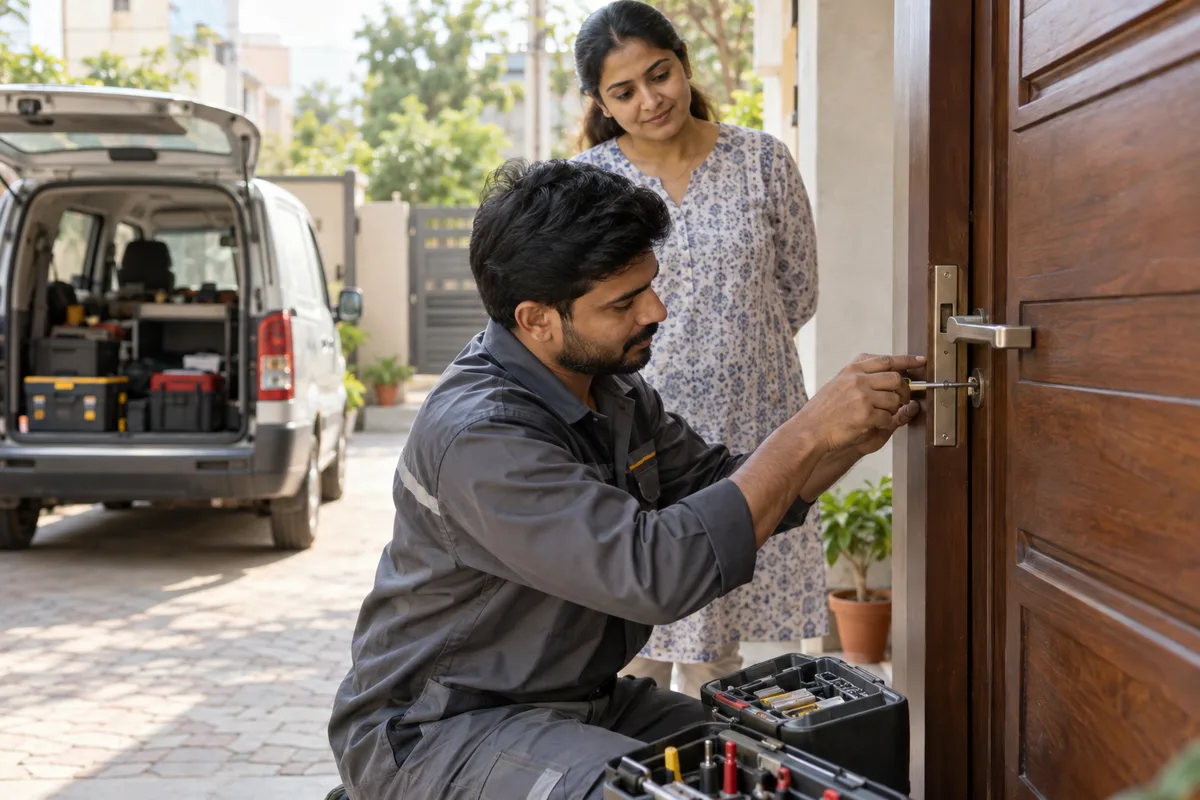
On the doorstep, the ask has to fit between the lock working and the toolbox closing.
- Number before the work
- Write the customer's mobile on the job sheet before you start, not after payment. A cash customer at the gate leaves with no other trace.
- The new key turns
- Ask while the customer is trying the new key in the lock, when relief is highest. One short spoken line, then send the link to their phone before you pick up your tools.
- The technician asks
- The person who stood at the door asks, not the dispatcher. A message later from an office number the customer does not recognise is deleted unread.
- A QR code on the key tag
- Print a code on the receipt or the tag you hand over. The customer who is too embarrassed to type at midnight can write the next morning from the same card.
- RWA and office jobs
- For a society secretary or an office administrator, ask after the invoice is cleared and mention the building and the lock type, so the review reads as a planned job.
- A dispute on the price
- Skip the ask when a customer argued the charge or was distressed. A review given under pressure turns into a complaint.
Who it is for
This is written for these locksmiths.
- Emergency and 24-hour locksmiths
- Automotive locksmiths and key programming specialists
- Residential lock and security installers
- Commercial and office locksmith services
- Safe installation and repair specialists
- Smart lock and digital security installers
- Society and RWA-contracted locksmiths
Before you decide
When this may not be the right fit.
- Your technician rushes away from jobs and has no card or link to give, so an ask built into the visit would not happen.
- You have unresolved price disputes from earlier jobs, and asking for more reviews before you settle them would invite the complaints in public.
- You plan to offer a discount or gift for a review, which breaks platform rules, so check the platform's current rules first.
Before you decide
Agree the work. Know how to judge it.
Review generation for locksmiths: use these checks to prepare, choose the scope, and review what changes.
Bring the right evidence
Collect recurring public feedback and the internal record of how the issue was handled. Separate factual corrections from genuine complaints that need a response.
Make the scope clear
Agree who checks facts, approves replies, and resolves problems outside marketing. Any request for reviews or testimonials must fit the trade's rules and the customer's permission.
Check the work in use
Read the response from the customer's point of view. It should address the issue without exposing private information or promising an outcome the team cannot provide.
Know when to change course
Do not buy or invent reviews. If the same complaint keeps returning, resolve its cause before publishing more positive material.
These are discussion points, not a fixed package. GullySales confirms the deliverables, responsibilities, fee, and term in writing after reading your brief and speaking with you.
How it works
How the review generation work runs
The work itself, in order. How an engagement starts, from your brief to a written scope, is set out on our method page.
- 1
Platform and starting-scope approval
We read your requirements brief and discuss where buyers check your business. You approve the platforms, responsibilities, and written commercial terms before work starts.
- 2
Customer handover decision
Your team walks us through completed work and the available customer records. Together, we select the request point and record the starting review position.
- 3
Message and reply approval
You approve the request wording and who handles complaints. Clinics review privacy boundaries with their own compliance adviser before any patient-facing wording is used.
- 4
Staff handoff and launch
We test the links and brief the people who will ask customers. Requests begin through the agreed channels, with a named contact available when a reply needs facts or approval.
- 5
Results and adjustment decision
We compare requests with reviews received and examine missed requests or unresolved complaints. You agree changes to the handover point or staff responsibility before the procedure changes.
Where this fits
Three pieces of sales work, in this order.
This work sits inside sales process design, at stage 7, after the sale. The audit comes before it, and sales management keeps it running.
Step 1
Sales audit
Find where deals are being lost and what to fix first.
Start here if you cannot say where orders are lost.
Step 2 · you are here
Sales process design
One written way to sell, from first enquiry to repeat order.
Start here if every salesperson sells differently.
Step 3
Sales management
A target, a review routine and someone who owns the number.
Start here if the team has targets and no routine.
FAQ
Questions owners ask before they call.
Not here? More answers, or ask on WhatsApp.
Can we offer money off for a review?
Our technicians will not ask. What do we do?
Customers pay cash and go. Is a QR code on the receipt enough?
Should I ask in Hindi, English or the local language?
How much does it cost?
How long is the contract?
How soon will we see results?
Who will actually do the work?
What do you need from us?
What if we are not happy with the work?

More for locksmiths
Related work to consider.
Closest to this: reputation
Also for locksmiths
Or start from the overview: sales and marketing for locksmiths.
Your next practical step
Tell us what you are trying to grow, and we will read it before we call.
Eight short steps, mostly taps. Skip anything you would rather answer on the call.