Locksmiths · Sales process
A fixed set of steps from the call to a paid, completed job.
A sales process for a locksmith is the fixed steps between a call and a paid job: confirming arrival time, quoting on site, and offering a relevant upgrade afterwards.
Scope, fee, reporting and term are agreed in writing after we have read your brief and spoken to you.
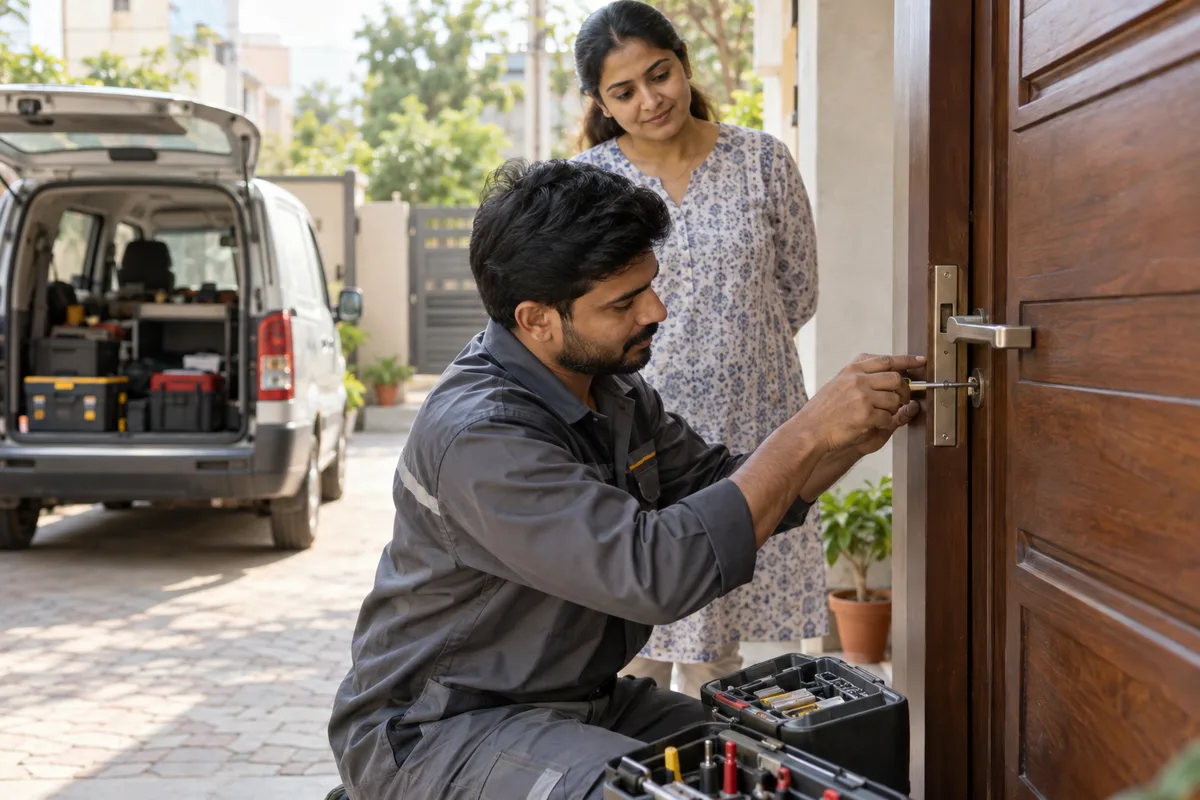
What sales process means
A sales process is the fixed sequence of steps, such as enquiry, site visit, quote and order, that every deal is expected to pass through in the same order. GullySales writes this sequence down for your business and checks that every salesperson actually follows it.
Last updated 14 Nov 2026.
For locksmiths
Where it usually goes wrong, and what we would do.
“Arrival time is confirmed on the call”
Stating a clear window when the call comes in avoids the frustration an open-ended promise creates.
“On-site quoting follows a consistent structure”
A technician trained to explain cost before starting work avoids disputes once the job is done.
“The upgrade offer is a single, brief step”
Right after a lockout is fixed, one mention of a digital lock upgrade, not a sales pitch.
What we do
What we deliver for locksmiths.
The work available for this need. We agree the deliverables and responsibilities for your engagement in writing.
A call script confirming arrival time
A short script for stating a clear arrival window as soon as the call comes in, before any other detail is discussed.
Result: A customer stops wondering how long the wait will be.
An on-site quoting checklist
A simple checklist for explaining cost before starting work, covering parts, labour and any call-out charge.
Result: Fewer jobs end in a dispute over price.
A one-line upgrade offer script
A single, brief line offered right after a lockout is fixed, mentioning a digital lock or security upgrade without turning into a pitch.
Result: The upgrade gets mentioned every time, without feeling pushed.
A step-by-step process card for technicians
A printed or saved card walking a technician through the call, arrival, quote and upgrade steps in order.
Result: A new or junior technician follows the same process from day one.
How the result is measured
- Deals following the process
- Time spent at each step
- Drop-off rate by step
Recorded as a baseline before work starts, so every later report has an honest comparison.
Steps of a sale
Take a lockout or a digital lock enquiry from the call to a paid, finished job in the same order.
- Call and location
- Ask what is locked, the door or lock type, the exact address and a landmark. Write the caller's name on the job sheet before setting off.
- Proof of ownership
- Before opening a house, car or safe, ask for ID showing the address, the RC for a car, or confirmation from a neighbour or the society guard. Note what was shown on the job sheet.
- Call-out charge and work price
- Say the call-out charge on the phone and the work price at the door, before touching the lock. Record both on the job sheet with the customer's yes.
- The job and the old lock
- Show the customer whether the lock was opened without damage or had to be drilled, and hand back the old cylinder. Note the lock brand and model for any later call.
- Payment and receipt
- Take UPI or cash and send a receipt on WhatsApp listing the work done and any warranty on a new lock. Record the payment mode on the job sheet.
Who it is for
This is written for these locksmiths.
- Emergency and 24-hour locksmiths
- Automotive locksmiths and key programming specialists
- Residential lock and security installers
- Commercial and office locksmith services
- Safe installation and repair specialists
- Smart lock and digital security installers
- Society and RWA-contracted locksmiths
Before you decide
When this may not be the right fit.
- Your technicians quote on arrival without a fixed structure, and a written process would be ignored until the owner agrees on what it says.
- You do only lockouts that are paid on the spot, so a longer process for planned jobs would describe work you do not take.
Before you decide
Agree the work. Know how to judge it.
Sales process for locksmiths: use these checks to prepare, choose the scope, and review what changes.
Bring the right evidence
Bring examples of deals that moved forward and deals that stalled. Record what the buyer had actually agreed at each stage rather than relying on the salesperson's confidence.
Make the scope clear
Define the entry and exit rule for each stage, the owner, and the document or decision that moves the deal. Agree how exceptions will be handled before rolling the process out.
Check the work in use
Take a live enquiry through the proposed stages with the team. Two people reviewing the same evidence should place it at the same stage and agree the next action.
Know when to change course
If a stage produces no useful decision or handover, remove it. The process should help someone do the next piece of work, not create administration for its own sake.
These are discussion points, not a fixed package. GullySales confirms the deliverables, responsibilities, fee, and term in writing after reading your brief and speaking with you.
Before we start
What to have ready before the work starts.
The records, access and decisions this work needs from locksmiths. Anything missing is noted in the written scope, with who will supply it.
- A recorded call or an honest recollection
- We need to hear how calls go now. A recording is best, with the caller's consent as the law requires. If none exists, a role play will do. Without it the script is built on our assumptions.
- Your real call-out and lock charges
- Quotes on site follow your own prices. We need them in writing for the common jobs. We do not publish figures here. If prices change case by case, we write the rule instead of the number.
- A technician to test the card
- A process on paper is only a guess. One technician must try the card on live jobs and report what failed. Without a tester, the card reaches everyone untested. The tester should note each moment the card was awkward to follow at the door, with the job type, so we revise the lines that failed and leave the rest alone.
- The upgrade you actually want to sell
- The one-line offer must point at something you fit. Choose which products you will stand behind. If you have none, the plan drops the upgrade line and fixes the quote first.
- A note of past price disputes
- To write the quote checklist, we need examples where the price caused trouble. A few lines each, without names. If none exist, the checklist is shorter and the review adds to it. We use them as the examples in the quote checklist, because a technician remembers a real quarrel better than a general warning about price.
How it works
How the sales process work runs
The work itself, in order. How an engagement starts, from your brief to a written scope, is set out on our method page.
- 1
Listen to a recorded or remembered call
We start by listening to how a call is answered today, from a recording if you have one or a role play if not. You tell us what you say about arrival time and price. We mark where callers hesitate and where the handler guesses. We pay special attention to the first ten seconds, when a caller decides whether the voice on the line sounds like someone who will arrive.
- 2
Write the arrival-time confirmation lines
On the call, the caller needs a clear statement of when someone arrives, without a promise you cannot keep. We draft the lines with you, based on the real distance and your van's position. You tell us what you will not say. The wording goes on a card by the phone. We also write the line for a caller who asks for a firm arrival time you cannot give, so the answer stays honest and the caller is not left with a promise you will break.
- 3
Fix the order of the on-site quote
At the door, the technician looks, names the fault, states the price and asks for agreement before work starts. We write that order as a short checklist. You test it with a technician on the next job and tell us where it did not fit. The checklist also says what to show the customer, such as the worn pin or the broken cylinder, before the figure is spoken, so the price follows a reason they have seen.
- 4
Prepare the one-line upgrade offer
After the job, a technician may mention a stronger lock once. We write the single sentence with you, suited to what was just fitted or opened. You decide when it must not be used, such as with a distressed customer.
- 5
Print the process card for technicians
The call lines, the quote order and the upgrade sentence go on one card that fits a pocket or sits on the dashboard. You check it against how your best technician works. We revise the card until that person agrees it is true. We print it on a plain card that survives a toolbox and a wet hand, with large type for the lines a technician must say word for word.
- 6
Notice what changed in the job record
After the process is in use, we read the call log and job notes against the figures from before. We count calls turned into jobs, disputes at the door and upgrades accepted. You decide which lines of the card to keep or rewrite.
Where this fits
Three pieces of sales work, in this order.
This work sits inside sales process design, at stage 1, prospecting and lead generation. The audit comes before it, and sales management keeps it running.
Step 1
Sales audit
Find where deals are being lost and what to fix first.
Start here if you cannot say where orders are lost.
Step 2 · you are here
Sales process design
One written way to sell, from first enquiry to repeat order.
Start here if every salesperson sells differently.
Step 3
Sales management
A target, a review routine and someone who owns the number.
Start here if the team has targets and no routine.
FAQ
Questions owners ask before they call.
Not here? More answers, or ask on WhatsApp.
Can one technician run this alone?
How do we handle price disputes on site?
Should we tell a caller the full price on the phone before seeing the lock?
What should we write down after each job?
Should the caller be told the price on the phone?
What if a customer refuses the quote at the door?
How soon will we see results?
Who will actually do the work?
What do you need from us?
What if we are not happy with the work?

More for locksmiths
Related work to consider.
Closest to this: sales craft
Also for locksmiths
Or start from the overview: sales and marketing for locksmiths.
Your next practical step
Tell us what you are trying to grow, and we will read it before we call.
Eight short steps, mostly taps. Skip anything you would rather answer on the call.