Pet breeders and kennels · Digital marketing
Make the listing, the pages, the posts and the replies tell one honest story.
Digital marketing for a breeder or kennel is the set of places a family meets the kennel online before a visit: search, the map, social accounts and messages. GullySales plans them to give one consistent picture of how the animals are kept and how to book.
Scope, fee, reporting and term are agreed in writing after we have read your brief and spoken to you.
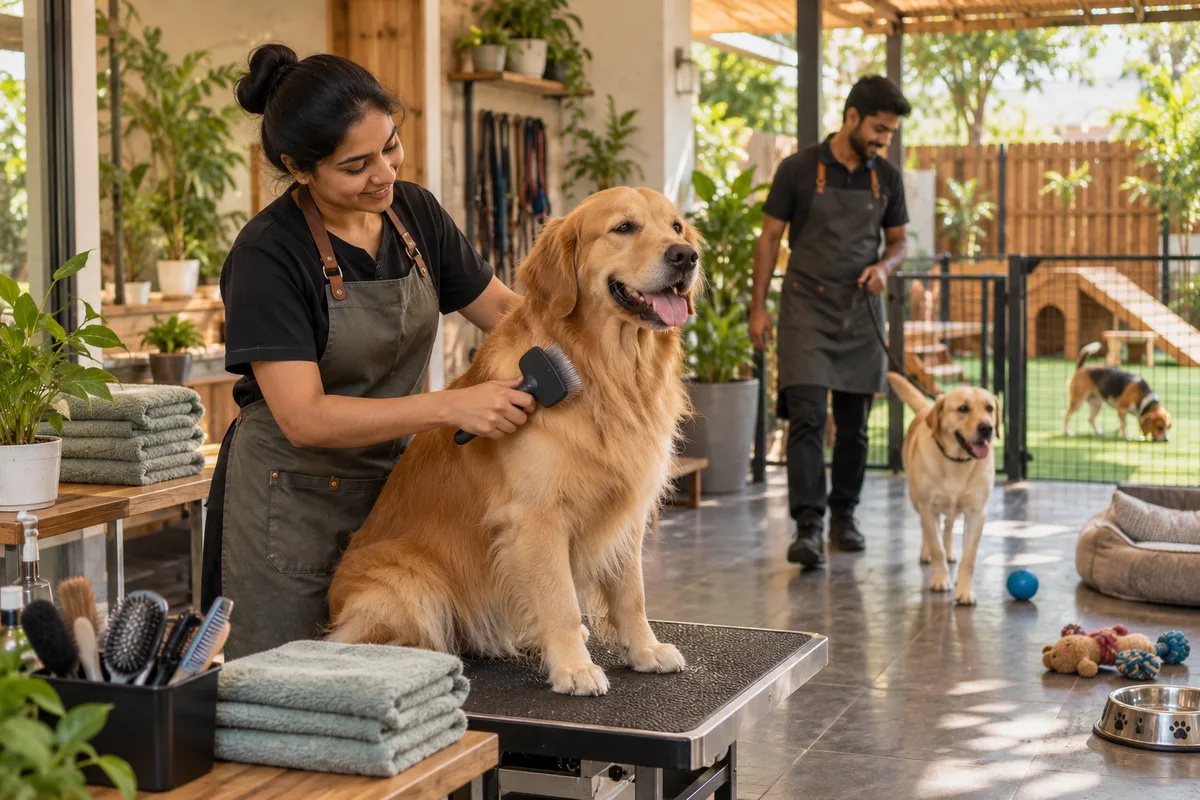
What digital marketing means
Digital marketing is the combined work of search, social media, advertising and website channels running together rather than as separate projects with separate people. GullySales runs these as one connected system so a change in one channel, such as a new offer, is reflected everywhere at once.
Also for pet breeders and kennels
- Buyer persona for pet breeders and kennels
- Lead generation for pet breeders and kennels
- SEO for pet breeders and kennels
- Local SEO for pet breeders and kennels
- Social media marketing for pet breeders and kennels
- Content marketing for pet breeders and kennels
- CRM for pet breeders and kennels
- Follow-up systems for pet breeders and kennels
Sales and marketing for pet breeders and kennels, the overview.
Last updated 14 Nov 2026.
For pet breeders and kennels
Where it usually goes wrong, and what we would do.
“A family checks three places before it writes”
A buyer looks at the map listing, the Instagram account and the website, then messages. If the three show different details, the family suspects a fake. Consistent names, numbers and booking rules keep them reassured.
“Paid advertising for animals needs care”
Platforms have current rules on advertising animals, and state rules on selling them differ. Check both before spending anything. A kennel that cannot clearly explain its registration or licence to a platform should not run advertisements.
“Measure bookings, not likes”
A post with plenty of likes may bring no family. Better measures are enquiries by source, visits made, bookings taken and owners who return. These show which effort is paying for the kennel's time. Write the figures down each time the kennel reviews its effort.
“The kennel is small, and so must the plan be”
Breeders run the kennel and the marketing themselves. A plan with too many channels gets abandoned. Choose few, do them well and keep the routine light enough that it survives a busy litter. A short list the owner can complete beats a long one that is ignored.
What we do
What we deliver for pet breeders and kennels.
The work available for this need. We agree the deliverables and responsibilities for your engagement in writing.
A channel plan for the kennel
A short plan naming the channels that matter, who looks after each and what each is for.
Result: You know where your effort goes.
A fact sheet used everywhere
One page of facts on breeds, papers, visits and bookings, used on every channel.
Result: Every channel says the same thing.
A checklist before any advertisement
A short check of the platform's current rules and your own adviser's advice before an advertisement goes live.
Result: Nothing is published that breaks the rules.
A source and outcome register
A record following each enquiry from source to visit to booking to owner.
Result: You can judge each channel on bookings.
A light routine
A simple schedule of the few tasks that keep the channels alive between litters.
Result: The marketing survives a busy season.
How the result is measured
- Enquiries across channels
- Cost per enquiry overall
- Channel mix by contribution
Recorded as a baseline before work starts, so every later report has an honest comparison.
Searches your buyers type
One honest story should answer these searches wherever a family looks.
- kennel near me with puppies available
- The map listing and a litter page say plainly what is available and what is placed, and both are kept current.
- labrador breeder who allows visits
- A breed page with the visit steps on the first screen, matching what the listing and the replies say.
- kci registered puppy papers explained
- A page explaining what the papers are and which ones the kennel holds, linked from the posts and the replies.
- is this breeder real or fake
- A verification page listing the kennel's one number, handle and map entry, so copied photographs do not confuse a family.
- how to settle a new puppy at home
- A guide for new owners that ties the kennel to the first weeks and sends medical questions to a vet.
- pet boarding at a breeder's kennel
- A separate page for the boarding side, so a family looking for a stay finds the right route and not the puppy page.
Who it is for
This is written for these pet breeders and kennels.
- Dog breeders of Labrador, Golden Retriever, German Shepherd, Beagle and Pug litters
- Breeders of Indian breeds such as Rajapalayam, Mudhol Hound, Kombai and Chippiparai
- Cat breeders of Persian and other pedigree kittens
- Small-scale home breeders with one or two females
- Registered kennels with a boarding or training side
- Aviary and exotic bird breeders, within the rules for each species
- Aquarium and fish breeders supplying shops and hobbyists
- Kennels placing adult dogs and retired breeding animals
Before you decide
When this may not be the right fit.
- The basics are missing, with no map listing, no breed page and no tidy reply routine, so more channels would spread a weak base thinner
- You cannot keep several channels current, and an outdated litter shown on one would mislead a family
- You have no way to record where an enquiry came from, so extra channels would add noise and teach you nothing
Before you decide
Agree the work. Know how to judge it.
Digital marketing for pet breeders and kennels: use these checks to prepare, choose the scope, and review what changes.
Bring the right evidence
Bring a recent won order and an enquiry that went nowhere. Trace how each buyer found you, what they asked, and who handled the next step. A channel list alone will not explain the difference.
Make the scope clear
Choose one offer and one buyer group first. Agree which part needs attention: being found, getting a useful enquiry, or turning an enquiry into an order. Separate recommendations from the work required to carry them out.
Check the work in use
A useful plan names the first change, its owner, the evidence behind it, and the number that will show whether it worked. Ask what has deliberately been left out and why.
Know when to change course
If your team cannot answer the enquiries it already receives, improve that handover before buying more traffic. If the offer itself is unclear, test it with buyers before adding channels.
These are discussion points, not a fixed package. GullySales confirms the deliverables, responsibilities, fee, and term in writing after reading your brief and speaking with you.
Before we start
What to have ready before the work starts.
The records, access and decisions this work needs from pet breeders and kennels. Anything missing is noted in the written scope, with who will supply it.
- Logins to the listing, the site and the page
- All three must be in one place, with the owner's phone available for codes. We cannot compare or correct what a family sees without them. If one is held by a former helper, recovering it comes first and the plan waits.
- A statement of the papers you hold
- List the registration, vet records and sale terms you provide, as they are. The fact sheet and every advertisement draw on this list. Where a paper is promised but not held, it is left out until it exists.
- The hours you can give to marketing
- Say honestly how much time the household can spend on posts, replies and the register. The plan is sized to that. A large plan with no one to run it leaves the channels half used, which families notice.
- A budget decision on paid advertising
- Decide whether you will pay for any advertisement at all, and the limit of what you are willing to risk on it. If the answer is no, the plan relies on the listing, the pages and word of mouth, and that is a sound plan.
- The last litter's enquiry sources
- Write where each family of the last litter came from, as best you know. This is the starting point for the register. If the memory is thin, the register begins now and the first read-out is cautious.
How it works
How the digital marketing work runs
The work itself, in order. How an engagement starts, from your brief to a written scope, is set out on our method page.
- 1
Check the three places a family looks
Before any plan, we look at what a family sees when it searches the kennel's name: the Maps listing, the Instagram page and the website. We note where the facts disagree, such as an address, a phone number or a breed list. You tell us which version is true, and that one becomes the reference.
- 2
Write the kennel's one-page fact sheet
We put the facts on a single sheet: name, address rule, breeds, papers held, visit rule, what you do not do. Every page, post and reply will be written from it. You sign it off, and any claim you cannot prove is removed before it is used.
- 3
Choose the few channels you can keep up
A small kennel cannot feed every channel, so with you we pick the two or three that fit your time: probably the listing, the breed pages and one social account. You choose what to drop. We write the channel plan on one page that the household can read.
- 4
Set the check before any advertisement
We draft a short list to run before anything is published or paid for: does it show a real animal, do the papers match, is it within the platform's current rules, has your own adviser seen the wording. Paid advertising for animals needs care, and the list stops the careless post.
- 5
Start the source and outcome register
A simple sheet records each enquiry, where it came from, whether the family visited and whether it booked. We fill the first rows with you from the last litter. From here, bookings, not likes, are the figures the kennel reads.
- 6
Read the register and adjust the plan
After a litter has passed through, we open the register with you and see which channel brought families who visited and booked, against the figures recorded at the start. You decide what to feed, what to drop and what to leave. No booking or rank is promised.
Where this fits
Three pieces of sales work, in this order.
This work sits inside sales process design, at stage 0, foundation. The audit comes before it, and sales management keeps it running.
Step 1
Sales audit
Find where deals are being lost and what to fix first.
Start here if you cannot say where orders are lost.
Step 2 · you are here
Sales process design
One written way to sell, from first enquiry to repeat order.
Start here if every salesperson sells differently.
Step 3
Sales management
A target, a review routine and someone who owns the number.
Start here if the team has targets and no routine.
FAQ
Questions owners ask before they call.
Not here? More answers, or ask on WhatsApp.
Where should a small breeder start?
Do you run advertisements for us?
Do we need all the channels?
Should every litter have a page of its own?
Do we run advertisements for puppies at all?
How will we know the plan is working if we raise few litters?
How much does it cost?
How long is the contract?
How soon will we see results?
Who will actually do the work?
More for pet breeders and kennels
Related work to consider.
Closest to this: strategy and research
Also for pet breeders and kennels
Or start from the overview: sales and marketing for pet breeders and kennels.
Your next practical step
Tell us what you are trying to grow, and we will read it before we call.
Eight short steps, mostly taps. Skip anything you would rather answer on the call.