Plumbing contractors · Buyer persona
Know who signs the plumbing BOQ and who only calls when water is on the floor.
A buyer persona for a plumbing contractor is a written picture of each person who hires you, from the MEP consultant to the flat owner with a wet ceiling. GullySales builds those pictures from your own jobs and enquiries, so your calls, quotes and pages speak to the right person.
Scope, fee, reporting and term are agreed in writing after we have read your brief and spoken to you.
What buyer persona means
A buyer persona is a plain description of the kind of customer who actually buys from you. It includes what they search, what worries them and who else they ask before deciding. GullySales builds this from real enquiries and past sales rather than a generic template, then uses it to write every page and advert.
Also for plumbing contractors
- Digital marketing for plumbing contractors
- SEO for plumbing contractors
- PPC ads for plumbing contractors
- Lead generation for plumbing contractors
- Reputation management for plumbing contractors
- Local SEO for plumbing contractors
- Branding and identity for plumbing contractors
- Social media marketing for plumbing contractors
Sales and marketing for plumbing contractors, the overview.
Last updated 14 Nov 2026.
For plumbing contractors
Where it usually goes wrong, and what we would do.
“The tower buyer is three people, not one”
A plumbing package for a tower is shaped by the MEP consultant, priced against the builder's purchase team and checked by the site engineer. Each reads your quote for a different fear: a missed drawing, a rate overrun, a leak after handover. One brochure answers none of them.
“The designer buys on finish, not on pipe”
An interior designer hiring for a bathroom cares whether concealed fittings go in without a cracked tile and whether the wall is closed on time for the tiler. A persona for this buyer lists those worries first and the rate last.
“The leak caller is deciding in a hurry and in fear”
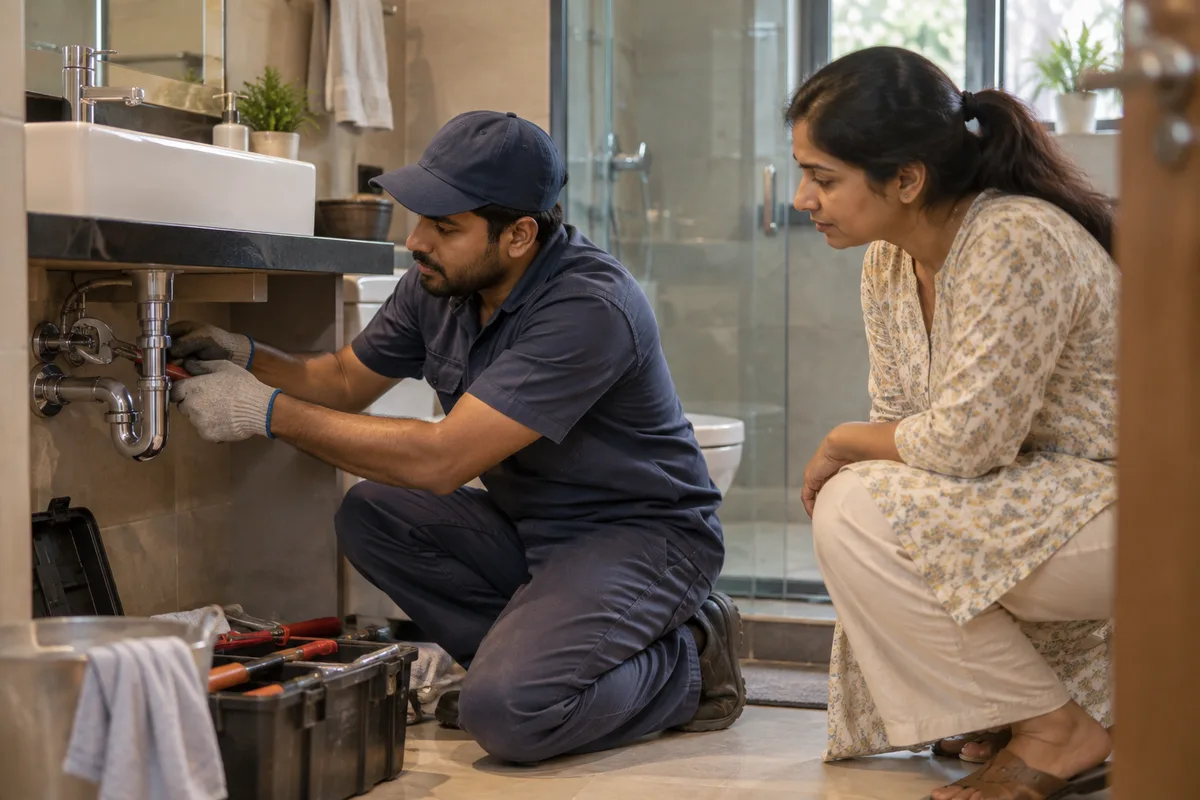
A flat owner with water coming through the ceiling wants someone who picks up, names the likely fault and arrives. They are also afraid of being told the whole bathroom must be broken. The persona records the words they use on the phone.
“The association committee changes every year”
A maintenance contract is judged by a treasurer who wants the lowest rate and a secretary who wants fewer complaints. Both will change. The persona keeps what the building needs, so a new committee reads your service history before the price.
What we do
What we deliver for plumbing contractors.
The work available for this need. We agree the deliverables and responsibilities for your engagement in writing.
Persona sheets from your own jobs
One page for each buyer type, written from the enquiries, quotes and complaints in your records, with the words each buyer actually used.
Result: You can hand a new estimator the sheet and they know who they are talking to.
Decision map for a tower package
A plain chart of who in the builder's and consultant's teams shortlists, prices and approves plumbing work, and what each asks to see.
Result: Your outreach names the right person on the right project.
Questions each persona asks first
A list of the first three questions per buyer, with the answer you give on the phone and the page that backs it up.
Result: Calls open with the answer the buyer was waiting for.
Fears and proof matched side by side
For each persona, the worry that stops the hire and the proof that settles it, such as a pressure-test record or a photographed diagnosis.
Result: Every quote carries the proof its reader needs.
Persona tags on the enquiry log
A field on your enquiry record marking which buyer type each lead is, so quotes and follow-ups are written for them.
Result: You can see which buyer type brings the work you want.
How the result is measured
- Enquiry match to persona
- Conversion rate by persona
- Content aligned to persona
Recorded as a baseline before work starts, so every later report has an honest comparison.
Who is asking
Who signs a plumbing package and who only rings when water is on the floor.
- Project head at a builder
- Wants to know which towers you have plumbed, the pipe system and pressure test you use, and who from your side stays on site until handover.
- MEP consultant
- Wants your pipe sizing method, drawings you accept and the standards you follow, so the package matches the specification before it goes to tender.
- Purchase officer comparing rates
- Wants a BOQ that lines up with the others, a clear scope for what is excluded and past references that can be phoned.
- Homeowner with water through a ceiling
- Wants to know whether the leak is from your work or the flat above, who comes and when, and what the visit will cost before opening a wall.
- Association secretary
- Wants a maintenance scope that sits in the minutes, a record of past visits and a contact who stays when the committee changes.
Who it is for
This is written for these plumbing contractors.
- Plumbing contractors for apartment and villa projects
- Commercial, hospital and hotel plumbing contractors
- Sanitary and bathroom installation specialists
- Drainage, sewer line and STP contractors
- Rainwater harvesting and borewell recharge specialists
- Pump, tank and pressure system installers
- Emergency and repair plumbing services
- Apartment and building maintenance contract providers
Before you decide
When this may not be the right fit.
- You have served only two kinds of customer so far and have no records, so a persona would be a guess.
- You are one person handling every call, so a sheet for each persona would be used by nobody.
- You have not written down which tower or flat each job came from, so you cannot test a persona against real work.
Before you decide
Agree the work. Know how to judge it.
Buyer personas for plumbing contractors: use these checks to prepare, choose the scope, and review what changes.
Bring the right evidence
Write the decision the research must support, such as entering a market or choosing a buyer group. Separate what you know from sales records from what the team currently assumes.
Make the scope clear
Agree which buyers to speak to, which sources to review, and what access you can provide. Include lost enquiries and people who chose another supplier, where they are willing to take part.
Check the work in use
Look for source dates, sample limitations, and evidence that disagrees with the preferred answer. A recommendation should show how it follows from the findings.
Know when to change course
Do not treat a few positive conversations as proof of demand. Test the proposed offer with an actual buying decision before committing to a wider launch.
These are discussion points, not a fixed package. GullySales confirms the deliverables, responsibilities, fee, and term in writing after reading your brief and speaking with you.
Before we start
What to have ready before the work starts.
The records, access and decisions this work needs from plumbing contractors. Anything missing is noted in the written scope, with who will supply it.
- Ten recent jobs with the decision story
- The personas are made from jobs, so bring ten, mixed between towers and repairs. A folder of quotations is enough. Without them the sheets would describe how a buyer is supposed to behave, which rarely matches the person who really rang you.
- Time with the estimator and supervisor
- The people who meet the buyer hold the best evidence. Name the estimator, the supervisor and the phone coordinator and give them time for one conversation each. If one is unavailable, that persona is drawn from the files alone and marked as less certain.
- Permission to speak to a few clients
- A short conversation with a friendly consultant, builder or committee member adds more than any file. Tell us whom you are willing to ask. If you prefer none, the personas rest on your team's memory and are labelled that way.
- The buyer type you want to chase
- Only you can say whether the business should chase towers, bathrooms or maintenance contracts. Bring a view, even a rough one. Otherwise the sheets describe every buyer evenly, and the sales team is left with no priority.
How it works
How the buyer persona work runs
The work itself, in order. How an engagement starts, from your brief to a written scope, is set out on our method page.
- 1
Choose the buyers worth describing
We list every kind of person who has hired you, from the builder's purchase officer to the flat owner, and ask which three or four bring the work you want. You pick the ones to describe first. A persona for a buyer you do not want is a waste of effort. We also note which buyer pays late, because that changes how much effort the sales team should spend on them.
- 2
Pull ten real jobs from the files
We take quotations, tower handover sheets and the repair call log, and for each job note who asked, who decided and who paid. You fill in what the paper does not show. This gives us the facts that every persona is built on, not guesses about a typical customer.
- 3
Interview the people who handled those jobs
We talk to your supervisor, estimator and phone coordinator about what each buyer asked first, what worried them and what finally decided it. You may add a short call with a friendly consultant or committee member. Quotations from these talks stay anonymous in the sheets.
- 4
Read the sheets back to your team
We bring the draft sheets to your team and ask them to mark anything wrong. The estimator corrects the tower buyer, the phone coordinator the leak caller. You decide which corrections stand. The sheets are not final until the people who meet these buyers recognise them.
- 5
Tag the enquiry log with the personas
We add a persona tag to each enquiry line and list where the sheets change what you do: the first question on the phone, the proof sent with a quotation, the page a buyer lands on. You choose which change to make first. The count of tagged enquiries then tells you which buyer you actually serve.
Where this fits
Three pieces of sales work, in this order.
This work sits inside sales process design, at stage 0, foundation. The audit comes before it, and sales management keeps it running.
Step 1
Sales audit
Find where deals are being lost and what to fix first.
Start here if you cannot say where orders are lost.
Step 2 · you are here
Sales process design
One written way to sell, from first enquiry to repeat order.
Start here if every salesperson sells differently.
Step 3
Sales management
A target, a review routine and someone who owns the number.
Start here if the team has targets and no routine.
FAQ
Questions owners ask before they call.
Not here? More answers, or ask on WhatsApp.
We only know two types of customer. Is that enough?
Do we need research or surveys for this?
How do we find out what a builder asks first?
Should the designer and the plumber share one persona?
Can a persona tell us which customers to avoid?
How will we use these sheets after you leave?
How much does it cost?
How long is the contract?
How soon will we see results?
Who will actually do the work?
From the blog
Further reading for plumbing contractors.
 8 min read · 21 Sept 2026How to advertise to contractorsA contractor is on site, on a phone, with one hand free. Settle whether the contractor or the owner chooses your product, because that decides the plan.
 5 min read · 17 Jul 2026Wording a warranty or guarantee that the customer believes and you can keepA plain-words home service warranty template: what is covered, for how long, what is not and how to claim, so customers trust it and crews can honour it.
More for plumbing contractors
Related work to consider.
Closest to this: strategy and research
Also for plumbing contractors
Or start from the overview: sales and marketing for plumbing contractors.
Your next practical step
Tell us what you are trying to grow, and we will read it before we call.
Eight short steps, mostly taps. Skip anything you would rather answer on the call.