Boutique hotels · Hospitality
A boutique hotel is chosen for its story and booked by a single message.
A couple scrolling Instagram on a Sunday sees a 14-room hotel built around an old courtyard, with a plate of breakfast on a cane table and morning light on a wall. They save the post. Three weeks later they plan a long weekend, search the name, and look for a way to book that does not involve a form with fourteen fields.
Scope, fee, reporting and term are agreed in writing after we have read your brief and spoken to you.
In one paragraph
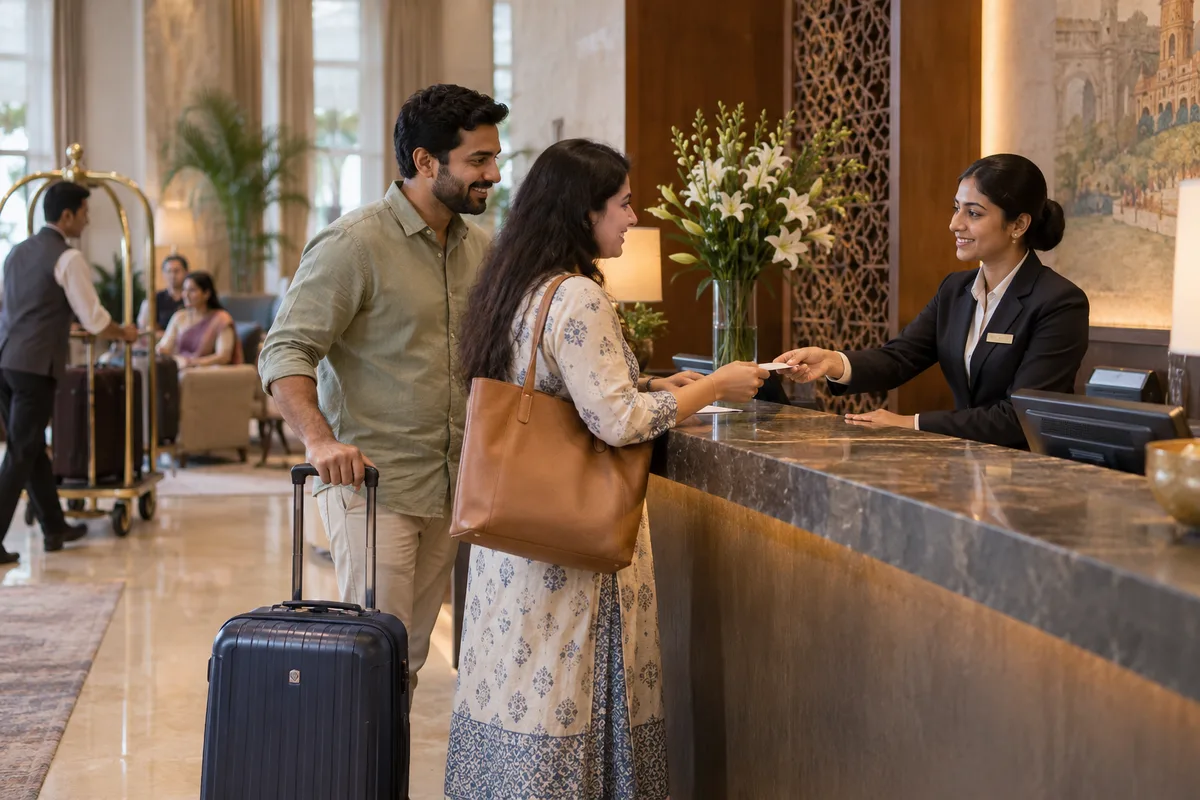
Boutique hotel sales and marketing is how a small, design-led property of ten to thirty rooms reaches travellers who choose a stay for its character. GullySales writes up the building, the host and the neighbourhood, and prepares the Instagram, Google and WhatsApp routes that lead a guest to the hotel's own booking.
A boutique hotel cannot win on rooms or rate. It wins because someone remembers it, and it loses when the booking path is harder than the story was easy. The owner is also the sales team, the host and the person who answers the phone.
Last updated 18 Oct 2026.
How buyers decide
How boutique hotels are chosen.
Guests of a boutique hotel are choosing a place to be, not a place to sleep. They are design-conscious travellers, couples marking an occasion, small family groups, photographers, writers and people on a long weekend from a nearby metro. They find the hotel through Instagram, a travel article, a friend's post or a search for stays in a particular neighbourhood.
They decide on character and trust. They look at the photographs for the real light and real people, read the three most detailed reviews, and then send a question: is the room on the first floor, can we have a quiet table, do you allow a pet. The hotel that replies in the owner's voice, with warmth and specifics, gets the booking.
Price is compared less than at a larger hotel, but a rate that looks out of line with the story will be questioned. Small groups also use a boutique hotel for a shoot, a team offsite or a small wedding, and these enquiries arrive by phone and WhatsApp with real questions about space.
The problem
What usually goes wrong for boutique hotels.
What owners tell us on the first call, in their words.
“We have followers and no bookings”
People like the posts, but there is no route from a photograph to a date and a price, so the interest cools before anyone asks.
“We are too small to be seen on the booking apps”
On a booking app the big chains sit above us, and we pay commission to appear on a later page.
“The story is in the owner's head and not on the site”
Guests ask why the building has that tile or that courtyard, and the website says only a charming boutique stay.
“Every enquiry is a custom question”
Pets, dietary needs, a surprise for a partner, a small shoot. The owner answers all of it between running the property and nothing is written down.
“We cannot price the rooms against our own type”
A 14-room design hotel is not a budget hotel or a five-star, and the rate is set by guesswork against both.
“Weekdays are empty”
The weekends fill on their own, but nobody has offered the property to a team offsite, a writer's retreat or a long-stay remote worker.
What we do
What we do for boutique hotels.
Everything included for boutique hotels.
A story page that reads like the owner talking
A page about the building, why it exists, who looks after it and what a morning there feels like, written from conversations with the owner.
A photograph and short-video brief
A brief for photographs and short videos that show light, people, food and corners, with the booking path in every caption.
A one-tap booking route
A WhatsApp number and a simple enquiry form with dates, guests and a question, which reach the owner's phone and are logged.
An enquiry answer bank
Ready, warm replies to the questions guests keep asking, such as pets, children, dietary needs and surprises, to be edited by the host before sending.
An offsite and retreat page
A page for small teams, writers and photographers with the rooms, the common spaces, the meals and the capacity, and a way to ask about dates.
A press and creator list
A shortlist of travel writers, design publications and creators who cover stays of this kind, with a pitch for each built on one true angle.
How the result is measured
- Enquiries by source, including Instagram and Google
- Direct bookings against commission bookings
- Weekday occupancy and group enquiries
- Time taken to answer a WhatsApp enquiry
- Visits that began with a press piece or a creator's post
- Repeat guests as a share of stays
Recorded as a baseline before work starts, so every later report has an honest comparison.
Every service, written for boutique hotels
Each has its own page: what it involves for boutique hotels, what you get, and what it is measured on.
- Lead generationA boutique hotel gets its leads from people who already half-know the story.
- SEOSearch should find your hotel by what it is, not only by its name.
- Local SEOOn the map, a small hotel is judged by its photographs, its reviews and its answers.
- Social media marketingEvery post should end where a guest can ask for a date.
- Content marketingThe building, the host and the neighbourhood are the content a chain cannot copy.
- Buyer personaA boutique hotel has several kinds of guest, and each reads a different page.
- CRMA hotel that remembers its guests can write to them as people.
- Follow-up systemsThe second message decides more bookings than the first.
- WhatsApp marketingFor a boutique hotel, WhatsApp is the booking desk.
- Digital marketingDigital marketing for a small hotel is a few connected routes, not a long channel list.
- WebsiteA hotel website should feel like the building and book like a message.
Worth a page and a campaign of their own
A story page for the building, the host and the neighbourhood · Instagram posts that end in a booking link or a WhatsApp message · Direct bookings over commission-based apps · Replies in the owner's voice with real detail · Weekday offsites, writers' retreats and small shoots · Reviews from guests who describe what made the stay · Press and travel writer features · A simple price logic against peers
Priority campaigns
Campaigns for what boutique hotels most want to sell.
Each one planned around when your buyers decide, and measured against the baseline.
Long-weekend Instagram campaign
Posts, reels and paid reach aimed at people in the nearest metro, each ending in a message-to-book link.
Team offsite and retreat outreach
Direct messages to HR heads, startup founders and agency owners with a page, a sample day and a capacity note.
Local discovery campaign
Google Maps and local search for stays in the neighbourhood, plus an invitation to locals to try the restaurant or the studio.
Past-guest return campaign
A personal message by WhatsApp or email, drafted for the host to send to a returning guest, with news of what has changed at the property.
Beyond search
Where we reach buyers of boutique hotels, beyond Google.
Search matters, but it is rarely the only way this industry's buyers find a supplier.
Travel writers and design publications
A writer covering restored buildings wants one strong angle, such as the courtyard or the tile, and an invitation you offer at your discretion.
Photographers and creators who stay
Creators whose audience looks like your guests are shortlisted, and the stay terms are written down and kept under your control.
Offsite planners and startup communities
A founder or HR head organising a team trip needs a page, a group rate and a person to message, ahead of any brochure.
Wedding photographers and small event planners
The people who recommend a characterful venue for an intimate celebration hear about your courtyard or terrace from you directly.
Neighbouring cafés, galleries and shops
Your guests walk into the same cafés and galleries each day, so a small recommendation card swapped with each of them, on terms you agree, sends visitors both ways.
Who it is for
This is written for these boutique hotels.
- Design-led city hotels in restored buildings
- Boutique hotels in old town neighbourhoods
- Courtyard and haveli-style small hotels
- Small hotels on a coffee or tea estate
- Beachside boutique hotels in Goa and the coast
- Hill and forest boutique hotels
- Heritage-style small properties run by a family
- Boutique hotels with a restaurant or a studio attached
Not for
It is not the right fit if.
- You want a guaranteed Google ranking or a guaranteed number of leads. Nobody honest can promise either.
- You need enquiries by next week and have nobody to answer them.
- You want posts and reach reported, not enquiries and orders.
How it works
How the work runs for boutique hotels
The work itself, in order. How an engagement starts, from your brief to a written scope, is set out on our method page.
- 1
Time with the host
How the property began, who stays and what guests say over breakfast are heard from the owner first.
- 2
The story, in the host's words
The story page, the captions and the answer bank are drafted from those conversations and checked by the host.
- 3
A shorter path to booking
A WhatsApp-first enquiry route, a Google Business Profile that matches the story and a direct rate replace the long form.
- 4
Putting the story in front of people
Instagram, press, creators and offsite buyers are each tried and compared by the enquiries they bring.
- 5
A way back for past guests
A past-guest list, draft messages in the host's voice and a review request go to guests who loved the stay.
Proof
What happened when owners fixed this.
Real clients, the work we did, and the result as it was recorded. Where no number was recorded, none is claimed.
Hotel Felicity Inn
- Situation
- A traveller compares three hotels on a phone and books one. The website was not built for that.
- What we did
- The site rebuilt around booking
- Photography and one look
- Search work for destination searches
- Content a traveller reads
- Result
- Online bookings increased 35%
- Organic traffic increased 50% within six months
- Positive reviews on Google and TripAdvisor increased 30%
Also worked with
Chord Road Hospital · Curtain Label · Difesa Security Services · Hands On CSR · Implevista · Kambar Group · Kalessi · Kerur Pain Clinic · LL Trust · Lucky Deals · Natural Gases · NavaShakthi Souhardha · NewCom Logistics · Proton Technical Services · SB Engineering · Shakthi Foundation · Shakthi Group · Urbanest · Insyde Studio · Venkateshwara Laser Tech · Vivara Studios
Where this fits
Three pieces of sales work, in this order.
GullySales builds every engagement from three pieces of sales work. This page is not one of them, but the same three steps apply to the business behind it.
Step 1
Sales audit
Find where deals are being lost and what to fix first.
Start here if you cannot say where orders are lost.
Step 2
Sales process design
One written way to sell, from first enquiry to repeat order.
Start here if every salesperson sells differently.
Step 3
Sales management
A target, a review routine and someone who owns the number.
Start here if the team has targets and no routine.
FAQ
Questions boutique hotels ask before they call.
Not here? More answers, or ask on WhatsApp.
We are a small property. How much should we spend on ads?
Do you run our Instagram?
Can influencers fill our rooms?
Our property is in a heritage building. Do rules affect marketing?
Should we list on booking platforms as well as take direct bookings?
How long is the contract?
How soon will we see results?
Who will actually do the work?
What do you need from us?
What if we are not happy with the work?
Part of Hospitality. See the other industries in the sector.
Your next practical step
Tell us what you are trying to grow, and we will read it before we call.
Eight short steps, mostly taps. Skip anything you would rather answer on the call.