Budget hotels · Lead generation
Fill weekday rooms with guests who call you, not guests who find the cheapest app listing.
Lead generation for a budget hotel means getting a traveller who needs a bed tonight, or a group organiser who needs rooms next month, to call or message the desk. GullySales works on the places that traveller looks, the answer they get, and the record of who asked.
Scope, fee, reporting and term are agreed in writing after we have read your brief and spoken to you.
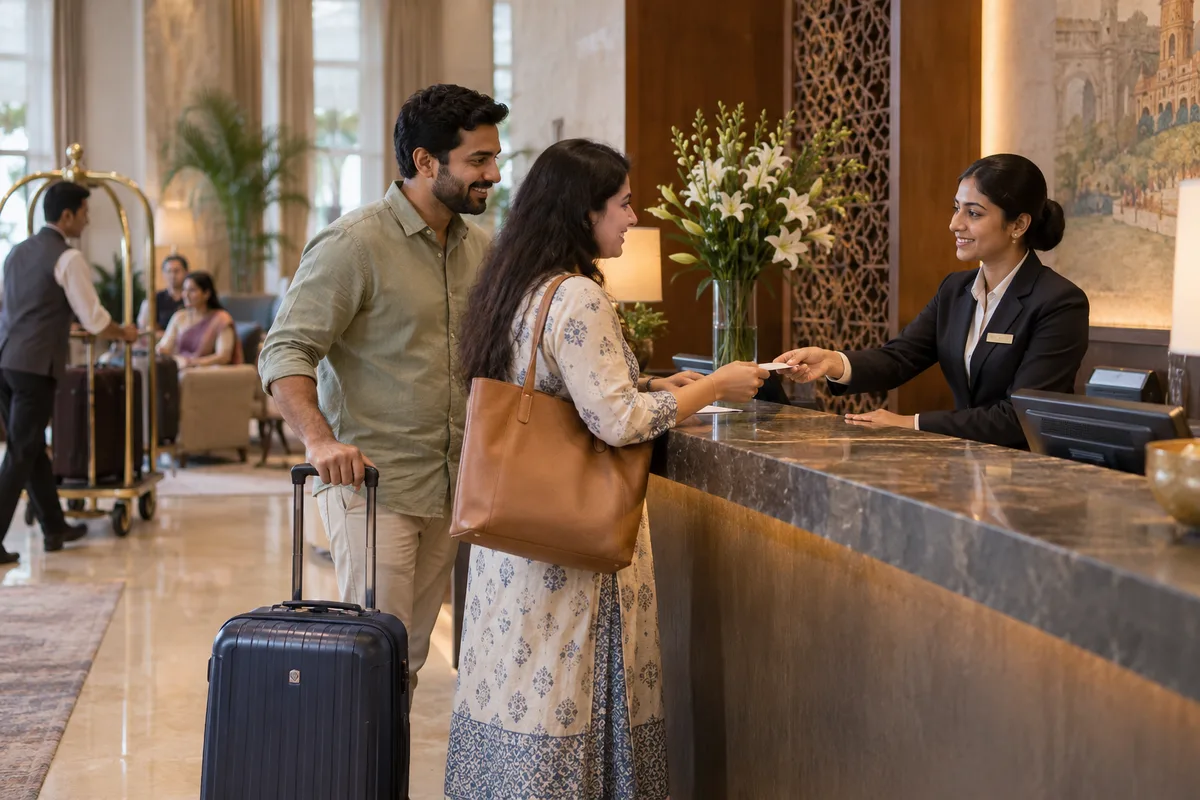
What lead generation means
Lead generation is the combined work of every channel that brings in a new enquiry, whether from search, adverts, referrals or a stall at an exhibition. GullySales runs these channels together and reports the number of enquiries each one produced, not the activity behind it.
Last updated 18 Oct 2026.
For budget hotels
Where it usually goes wrong, and what we would do.
“The guest who needs a room tonight asks one place”
A traveller stepping off a late train types the station name and the word hotel into a phone. The first listing that shows a photograph, a rate and a tap-to-call button gets the enquiry. A hotel with only a name and an address is skipped.
“A hospital family searches by the hospital, not by your name”
The attendant of a patient looks for a stay near a named hospital and a named gate. If your pages never mention that hospital, you are not in the result, however good the rooms are.
“Group organisers never appear in an app”
A coaching centre, a temple trust office or a tour leader books many rooms in one call. They find hotels through other people, so a named contact and a forwardable rate note matter more than a discount.
“An enquiry that nobody writes down is lost twice”
The desk takes a call, the guest says they will confirm later, and nobody records the name. The guest books elsewhere, and the hotel never learns it lost the night.
What we do
What we deliver for budget hotels.
Every deliverable, what it covers for you, and the result it is there to produce. Nothing here is an extra.
A landmark-led enquiry page
A short page for each hospital, station or bus stand near you, giving the walk, the room types and a call button.
Result: Search for the hospital name and see whether your page answers it.
An enquiry register for the desk
One sheet where every call, message and walk-in is noted with date, source, group size and outcome.
Result: At the end of a shift you can count who asked and who booked.
A source question at the desk
A fixed line the receptionist asks each caller: where did you find us.
Result: Each register row carries a source, so you see which channel brings the night.
A group organiser list
Coaching centres, temple trusts, tour operators and transport agents, each with a named contact and a rate note.
Result: One page lists every organiser you have approached and who replied.
A paid search test for station and hospital terms
A small, capped campaign for the landmark searches, switched off if the calls do not come.
Result: The ad account shows calls against spend for each landmark.
How the result is measured
- Enquiries generated
- Cost per enquiry
- Enquiries by source
Recorded as a baseline before work starts, so every later report has an honest comparison.
Who it is for
This is written for these budget hotels.
- Budget hotels near railway stations and bus stands
- Hotels near hospitals and diagnostic centres
- Hotels near markets, mandis and wholesale areas
- Economy hotels on highways
- Budget stays near coaching centres and exam venues
- Pilgrim-town budget hotels
- Family-run hotels with 10 to 30 rooms
- Franchise-style economy hotel brands
How it works
How the lead generation work runs
The work itself, in order. How an engagement starts, from your brief to a written scope, is set out on our method page.
- 1
Understand your capacity
We agree how many enquiries your sales team can actually handle well, so the system is not built to overwhelm it.
- 2
Audit current sources
We check what already brings in enquiries today, even informally, before adding anything new.
- 3
Strategise the channel mix
Content, search and paid channels are chosen based on where your buyers already look.
- 4
Implement capture and follow-up
Pages, forms and a follow-up process are built and connected end to end.
- 5
Measure and optimise
We track enquiry volume and quality and adjust the channel mix to match.
Where this fits
Three pieces of sales work, in this order.
This work sits inside sales process design, at stage 1, prospecting and lead generation. The audit comes before it, and sales management keeps it running.
Step 1
Sales audit
Find where deals are being lost and what to fix first.
Start here if you cannot say where orders are lost.
Step 2 · you are here
Sales process design
One written way to sell, from first enquiry to repeat order.
Start here if every salesperson sells differently.
Step 3
Sales management
A target, a review routine and someone who owns the number.
Start here if the team has targets and no routine.
FAQ
Questions owners ask before they call.
Not here? More answers, or ask on WhatsApp.
Which source should a budget hotel look at first?
Do we need a big advertising budget to start?
How do we know a lead was real?
How long is the contract?
How soon will we see results?
Who will actually do the work?
What do you need from us?
What if we are not happy with the work?
More for budget hotels
Everything else we would do for you.
Closest to this: leads and follow-up
Also for budget hotels
Or start from the overview: sales and marketing for budget hotels.
Your next practical step
Tell us what you are trying to grow, and we will read it before we call.
Eight short steps, mostly taps. Skip anything you would rather answer on the call.