Coffee shops · Local SEO
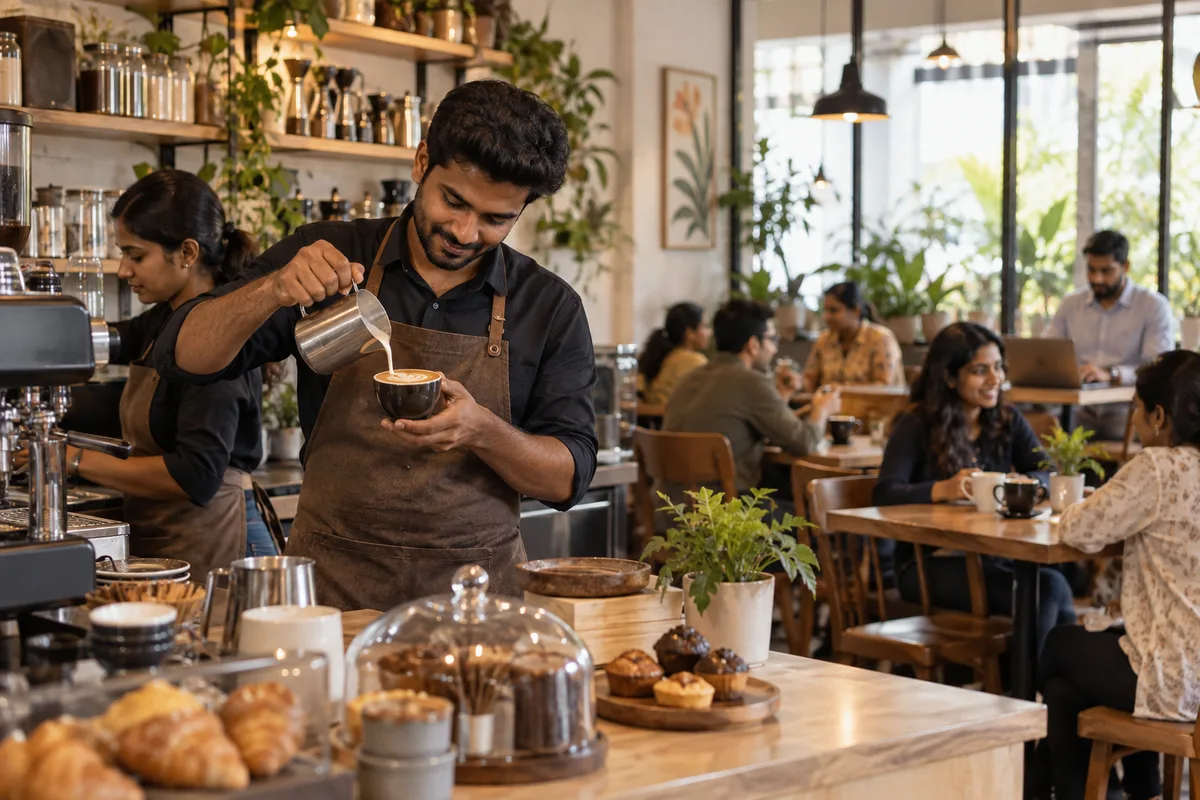
Be the coffee shop that appears when someone walks out of the metro looking for a seat.
Local SEO for a coffee shop is the work of appearing in the map results for the streets around the shop, when a commuter, a remote worker or a visitor searches for coffee within walking distance. GullySales works on the Google profile, the facts on it and the habits that keep it current.
Scope, fee, reporting and term are agreed in writing after we have read your brief and spoken to you.
What local SEO means
Local SEO is the work of making your business show up for searches that name your town or locality, such as a service plus an area name. GullySales sets up locality pages, local citations and map listings so nearby customers find you before a competitor across town.
Last updated 18 Oct 2026.
For coffee shops
Where it usually goes wrong, and what we would do.
“The search is made standing on the pavement”
Someone who types coffee near me is already outside, deciding in seconds. The pack of three results shows a name, a rating and a distance, and the shop that is missing from it is not considered at all.
“Seating is the fact a remote worker needs”
A freelancer wants to know whether there are power sockets, whether Wi-Fi works and whether the shop tolerates a three-hour stay. If the profile says nothing, that person walks to a place that does.
“Hours that are wrong send people away”
A shop listed as closed during its afternoon break, or open when the shutters are down on a holiday, loses the visit and earns an angry review. Special hours need entering before festivals, not after.
“A kiosk near an office has no shopfront to find”
A coffee cart outside a tech park or station moves, shifts hours and has no signboard a stranger can search for. The listing has to give the exact spot, a photograph of the cart and the hours it serves.
What we do
What we deliver for coffee shops.
Every deliverable, what it covers for you, and the result it is there to produce. Nothing here is an extra.
A profile with the right primary type
The business type chosen to match what the shop does, with secondary types for roastery or bakery only where they are true.
Result: The listing appears for the searches that describe the shop.
Seating and workspace facts
Plug points, Wi-Fi, outdoor tables and a note on laptop use, entered in the profile and repeated in the description.
Result: A remote worker can decide from the listing alone.
Photographs of the counter, the room and the shelf
A set that shows the entrance, the seating, the machine and the bags on the shelf, with the signboard visible from the street.
Result: A stranger recognises the door when standing in front of it.
Special hours for festivals and events
A short routine, owned by one person, for updating hours and posting offers before holidays and workshops.
Result: The listing shows today's hours on a holiday.
Replies to reviews in the barista's voice
Plain, specific replies to praise and complaints, including the long wait on a busy Saturday that a review still carries.
Result: A reader sees that someone at the shop answered.
How the result is measured
- Map pack ranking
- Local search visibility
- Enquiries by locality
Recorded as a baseline before work starts, so every later report has an honest comparison.
Who it is for
This is written for these coffee shops.
- Specialty coffee shops with their own roast
- Independent neighbourhood coffee shops
- Coffee kiosks and carts near offices and metro stations
- Roaster-retailers selling beans online and in store
- Coffee shops inside co-working spaces and bookshops
- Chain coffee outlets opening in new cities
- Drive-through and highway coffee stops
- Cold-brew and brew-bar counters
How it works
How the local SEO work runs
The work itself, in order. How an engagement starts, from your brief to a written scope, is set out on our method page.
- 1
Audit every listing
We check the Google Business Profile and directory listings for every branch against what should actually be shown.
- 2
Complete and correct
Profiles are filled in fully and inconsistent details are corrected across every directory found.
- 3
Build location pages
Each branch gets a page written for its own area, not a copy of the head office page with the address changed.
- 4
Set up review handling
A simple process for requesting and responding to reviews is put in place with whoever is closest to the customer.
- 5
Report and adjust
Map actions and enquiries per branch are recorded, and the branches falling behind come first in the next round of work.
Where this fits
Three pieces of sales work, in this order.
This work sits inside sales process design, at stage 1, prospecting and lead generation. The audit comes before it, and sales management keeps it running.
Step 1
Sales audit
Find where deals are being lost and what to fix first.
Start here if you cannot say where orders are lost.
Step 2 · you are here
Sales process design
One written way to sell, from first enquiry to repeat order.
Start here if every salesperson sells differently.
Step 3
Sales management
A target, a review routine and someone who owns the number.
Start here if the team has targets and no routine.
FAQ
Questions owners ask before they call.
Not here? More answers, or ask on WhatsApp.
Do we need a separate profile for each outlet?
Can a coffee kiosk be listed on Google?
Does asking for reviews at the counter work?
How long is the contract?
How soon will we see results?
Who will actually do the work?
What do you need from us?
What if we are not happy with the work?
More for coffee shops
Everything else we would do for you.
Closest to this: search and visibility
Also for coffee shops
Or start from the overview: sales and marketing for coffee shops.
Your next practical step
Tell us what you are trying to grow, and we will read it before we call.
Eight short steps, mostly taps. Skip anything you would rather answer on the call.