Coffee shops · Social media
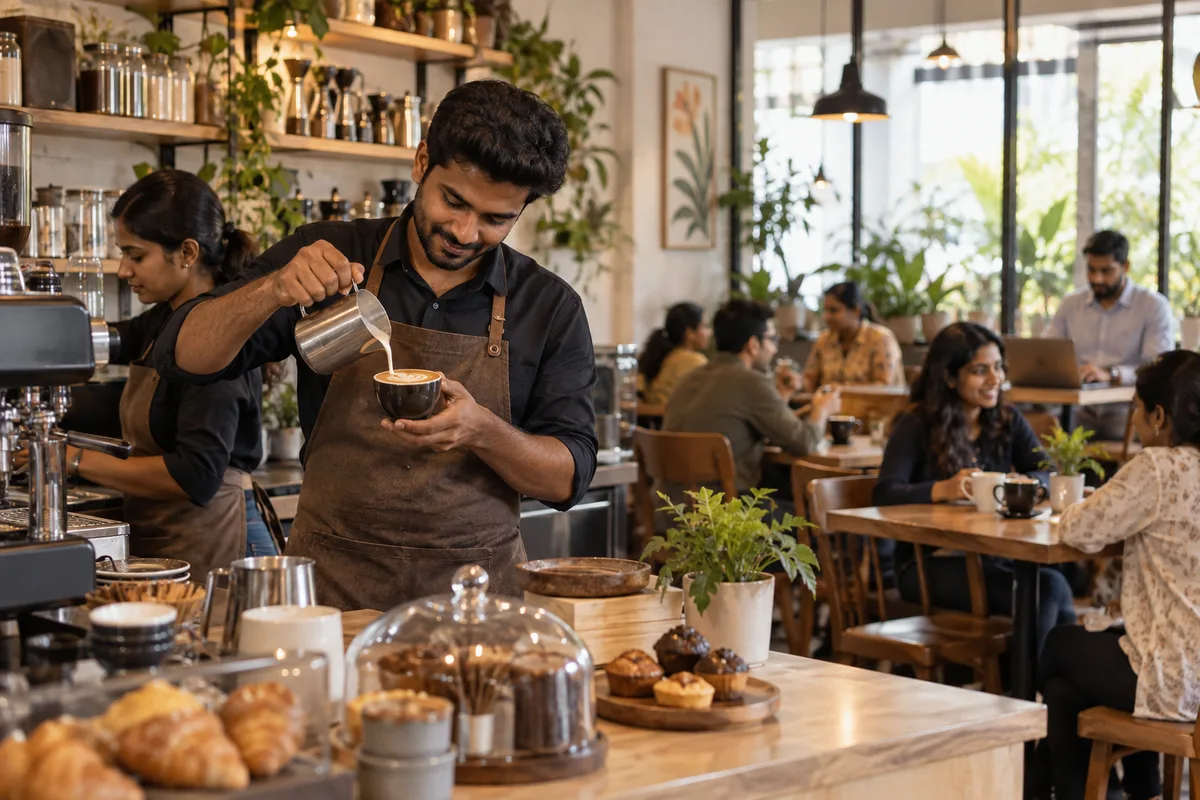
Show the roast, the pour and the people, and let the finished cup be the last frame.
Social media marketing for a coffee shop is the use of Instagram, Facebook and short video to show the shop's character to people nearby and to coffee lovers further away. GullySales works on what the team films, how posts are planned and how the page turns viewers into visitors and bag buyers.
Scope, fee, reporting and term are agreed in writing after we have read your brief and spoken to you.
What social media means
Social media is the ongoing posting your business does on platforms such as Instagram, Facebook and LinkedIn to stay visible to customers and prospects between purchases. GullySales plans a posting calendar, writes captions and designs the images so the page looks active and answers what a visitor would ask.
Last updated 18 Oct 2026.
For coffee shops
Where it usually goes wrong, and what we would do.
“Every cafe photographs the same latte art”
A top-down shot of a cup on a marble table looks like every other account in the city. What differs between shops is the roasting, the people behind the machine and the corner of the room, and those rarely make it to the grid.
“The page is read as a menu and a map”
A first-time visitor opens the profile to see what the place looks like, whether it is open and what to order. A grid of bright pictures with no hours, no bio detail and no link answers none of that.
“Reels reach strangers, stories reach regulars”
A short video of a roast batch or a pour travels to people who do not follow the shop. A story about today's special speaks to those who do. Mixing the two jobs into one post weakens both.
“Food rules apply to what a post claims”
A post about a drink, a bean or an ingredient is advertising. Advertising rules differ by trade and by state, so check with your own adviser before claiming anything about health or origin, and check the platform's current rules.
What we do
What we deliver for coffee shops.
Every deliverable, what it covers for you, and the result it is there to produce. Nothing here is an extra.
A content plan built on the process
A list of repeatable post ideas drawn from the roast, the grind, the pour and the team, with a note on what each is for.
Result: The barista has a ready idea each time the camera comes out.
A short filming guide for the team
Where to stand, which light to use and how long a clip should run, written for a phone and a busy counter, with no studio.
Result: Anyone on shift can shoot a usable clip.
Profile set-up for a first visit
Bio, highlights, hours, directions and the order link arranged so that a stranger knows what to do within a glance.
Result: A visitor can find hours and the bean page from the profile.
A story routine for regulars
A small set of story formats for new lots, today's special and the slow-hour offer, each with a reply route to WhatsApp.
Result: Regulars get a reason to reply and a place to do it.
A comment and message reply guide
Short answers to the questions a coffee shop receives: hours, seating, beans, office orders and events.
Result: Messages get a consistent answer from whoever is holding the phone.
How the result is measured
- Posts published
- Engagement rate
- Enquiries from social profiles
Recorded as a baseline before work starts, so every later report has an honest comparison.
Who it is for
This is written for these coffee shops.
- Specialty coffee shops with their own roast
- Independent neighbourhood coffee shops
- Coffee kiosks and carts near offices and metro stations
- Roaster-retailers selling beans online and in store
- Coffee shops inside co-working spaces and bookshops
- Chain coffee outlets opening in new cities
- Drive-through and highway coffee stops
- Cold-brew and brew-bar counters
How it works
How the social media work runs
The work itself, in order. How an engagement starts, from your brief to a written scope, is set out on our method page.
- 1
Understand your audience and platforms
We identify which platforms your specific buyers actually use and what kind of content they respond to.
- 2
Audit current presence
We review existing pages, past content performance and any gaps in consistency.
- 3
Build the content calendar
A plan is created, balancing genuine value with occasional direct offers.
- 4
Implement and post
Content is created and published consistently on the agreed schedule.
- 5
Measure and optimise
We track enquiries alongside engagement and adjust the content mix based on what actually performs.
Where this fits
Three pieces of sales work, in this order.
This work sits inside sales process design, at stage 0, foundation. The audit comes before it, and sales management keeps it running.
Step 1
Sales audit
Find where deals are being lost and what to fix first.
Start here if you cannot say where orders are lost.
Step 2 · you are here
Sales process design
One written way to sell, from first enquiry to repeat order.
Start here if every salesperson sells differently.
Step 3
Sales management
A target, a review routine and someone who owns the number.
Start here if the team has targets and no routine.
FAQ
Questions owners ask before they call.
Not here? More answers, or ask on WhatsApp.
How often should a coffee shop post?
Should we pay influencers to visit?
Is Facebook still worth using?
How long is the contract?
How soon will we see results?
Who will actually do the work?
What do you need from us?
What if we are not happy with the work?
More for coffee shops
Everything else we would do for you.
Closest to this: content and social
Also for coffee shops
Or start from the overview: sales and marketing for coffee shops.
Your next practical step
Tell us what you are trying to grow, and we will read it before we call.
Eight short steps, mostly taps. Skip anything you would rather answer on the call.