Hotels · Digital marketing
Spend online only where a traveller or a wedding family turns into a booking.
Digital marketing for a hotel covers every online route that brings a guest to a room, a table or a banquet date: search, maps, the OTA listing, social media, messages and the hotel's own site. GullySales works on how those routes connect, and on which of them your records show are bringing bookings.
Scope, fee, reporting and term are agreed in writing after we have read your brief and spoken to you.
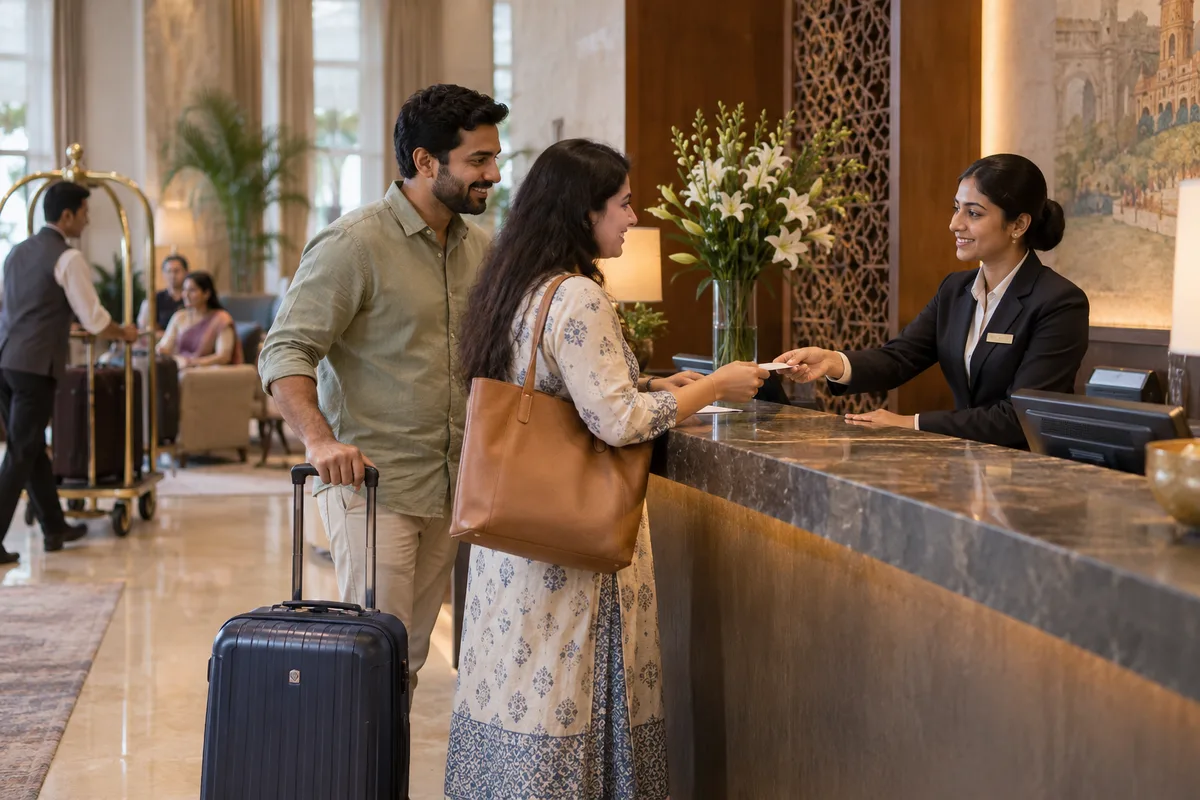
What digital marketing means
Digital marketing is the combined work of search, social media, advertising and website channels running together rather than as separate projects with separate people. GullySales runs these as one connected system so a change in one channel, such as a new offer, is reflected everywhere at once.
Last updated 5 Oct 2026.
For hotels
Where it usually goes wrong, and what we would do.
“The stay is compared online before anyone calls”
Before a call to reception, the traveller has read the OTA reviews, looked at the map and scrolled the photographs. Digital marketing meets the guest at those comparisons, not at an advertisement placed somewhere else.
“OTA spend and direct spend chase the same guest”
Paid placement on an OTA, commission on its bookings and an advertisement for the hotel's own site all reach for one traveller. Without a view of what each costs for a booking, the cheaper door stays under-used and the dearer one keeps its budget.
“Each season changes the job, not only the budget”
A wedding season needs banquet pages and planner outreach. A holiday weekend needs a staycation package for locals. A quiet weekday needs a corporate or long-stay message. One plan running all year serves none of them.
“Reach without a reply wastes the paid click”
An advertisement that leads to a message nobody answers, or a form that lands in a shared inbox, pays for a guest and hands them to a competitor. The reply route belongs to the campaign and is not an afterthought.
What we do
What we deliver for hotels.
Every deliverable, what it covers for you, and the result it is there to produce. Nothing here is an extra.
A map of every online route to a booking
Search, maps, the OTAs, social media, WhatsApp and referral listed with what each costs the hotel and what it brings, drawn from your records.
Result: You see which routes carry the bookings.
A plan for each season of the hotel's year
Wedding season, holiday weekends, corporate budget periods and quiet weekdays, each with its own message, page and offer.
Result: Every period of the year has a stated purpose.
A direct path from advertisement to booking
The advertisement, the landing page and the booking or enquiry step joined so a guest is not dropped on a home page.
Result: A click lands where the guest can act.
A reply route fixed to each channel
A named person and a message routine for every channel an enquiry can arrive on.
Result: No paid enquiry waits for a person to be found.
Tracking for calls, forms, messages and bookings
Counts set up so that a call, a form, a WhatsApp message and a confirmed booking can each be tied back to a route.
Result: You can see which route a booking began on.
Spend read against bookings
What each online route cost, set beside the bookings your records attribute to it, read through with you.
Result: You can move money from a quiet route to a working one.
How the result is measured
- Enquiries across channels
- Cost per enquiry overall
- Channel mix by contribution
Recorded as a baseline before work starts, so every later report has an honest comparison.
Who it is for
This is written for these hotels.
- Business and transit hotels
- Boutique and heritage properties
- Resort and destination hotels
- Budget and mid-market chains
- Banquet and wedding-focused properties
- Serviced apartments and long-stay properties
How it works
How the digital marketing work runs
The work itself, in order. How an engagement starts, from your brief to a written scope, is set out on our method page.
- 1
Understand the objective
We agree the one thing this campaign needs to achieve before choosing any channel.
- 2
Audit available channels
We assess which channels are realistic to run well within the budget and timeline.
- 3
Strategise the central idea
One message and offer is developed that will work across every planned channel.
- 4
Implement across channels
Each channel receives its own adapted version, launched on a shared timeline.
- 5
Measure as one campaign
Results from every channel are combined into a single report against the original objective.
Proof
What happened when owners fixed this.
Real clients, the work we did, and the result as it was recorded. Where no number was recorded, none is claimed.
Hotel Felicity Inn
- Situation
- A traveller compares three hotels on a phone and books one. The website was not built for that.
- What we did
- The site rebuilt around booking
- Photography and one look
- Search work for destination searches
- Content a traveller reads
- Result
- Online bookings increased 35%
- Organic traffic increased 50% within six months
- Positive reviews on Google and TripAdvisor increased 30%
Also worked with
Chord Road Hospital · Curtain Label · Difesa Security Services · Hands On CSR · Implevista · Kambar Group · Kalessi · Kerur Pain Clinic · LL Trust · Lucky Deals · Natural Gases · NavaShakthi Souhardha · NewCom Logistics · Proton Technical Services · SB Engineering · Shakthi Foundation · Shakthi Group · Urbanest · Insyde Studio · Venkateshwara Laser Tech · Vivara Studios
Where this fits
Three pieces of sales work, in this order.
This work sits inside sales process design, at stage 0, foundation. The audit comes before it, and sales management keeps it running.
Step 1
Sales audit
Find where deals are being lost and what to fix first.
Start here if you cannot say where orders are lost.
Step 2 · you are here
Sales process design
One written way to sell, from first enquiry to repeat order.
Start here if every salesperson sells differently.
Step 3
Sales management
A target, a review routine and someone who owns the number.
Start here if the team has targets and no routine.
FAQ
Questions owners ask before they call.
Not here? More answers, or ask on WhatsApp.
Should we cut OTA spend and move everything to our own site?
Which platform matters most for a hotel?
How do we judge whether digital marketing is working?
How much does it cost?
How long is the contract?
How soon will we see results?
Who will actually do the work?
What do you need from us?
What if we are not happy with the work?
From the blog
Further reading for hotels.
 6 min read · 14 Oct 2026Building an off-season plan for a hotel, resort or venueHow to fill the quiet weeks with local residents, corporate meetings and low-cost packages, using a planning sheet that sets the floor price before the offer goes out.
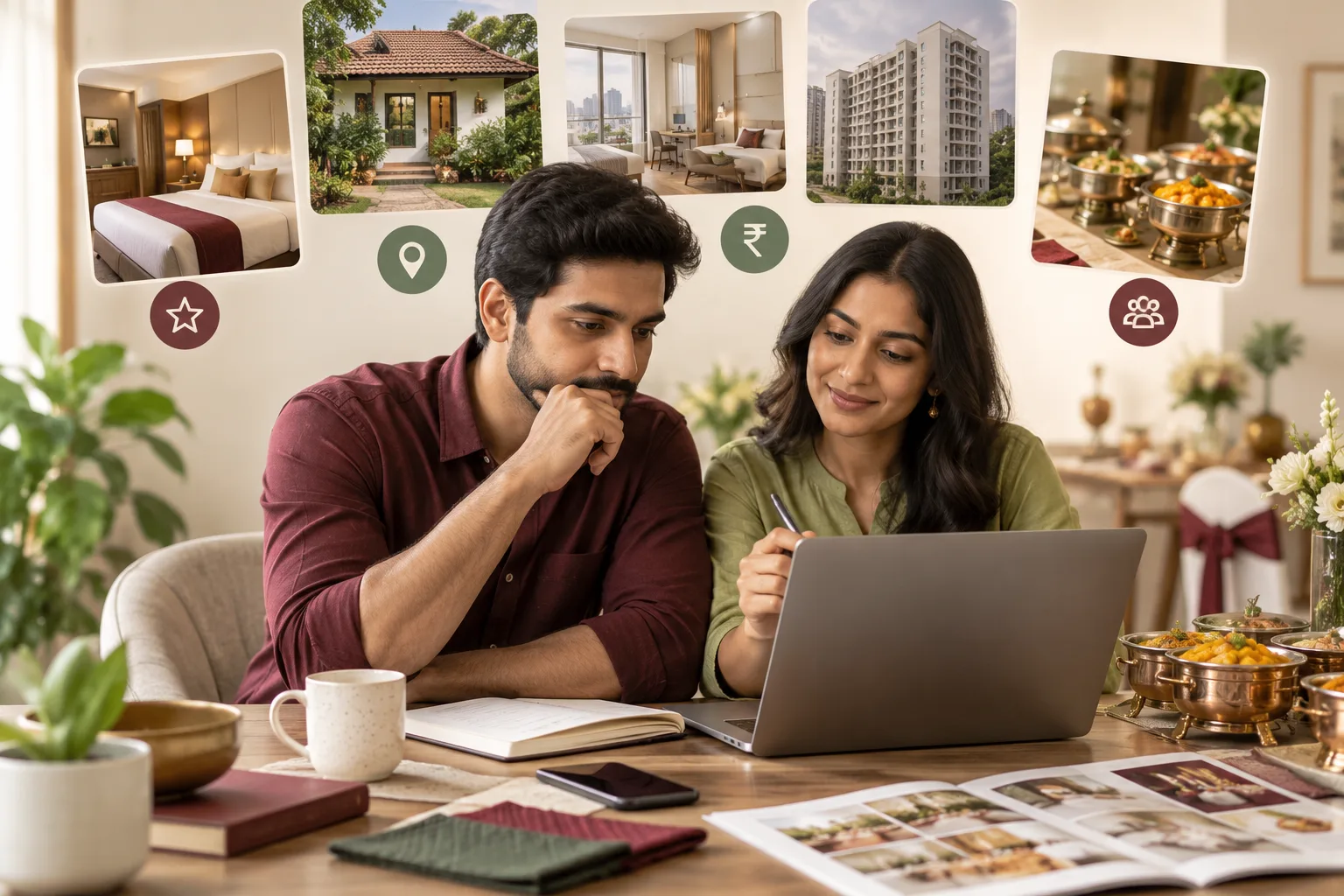 5 min read · 6 Oct 2026What buyers check before they book a stay or a catererGuests, tenants and event families judge hotels, homestays, PGs, serviced apartments and caterers on the same four checks. Here is what each check looks like and how to pass it.
 8 min read · 21 Sept 2026Premium audience advertising strategyNo platform in India sells you verified income. Everything offered as affluence targeting is inference, and the cheapest filter you own is putting the price in the first frame.
More for hotels
Everything else we would do for you.
Closest to this: strategy and research
Also for hotels
Or start from the overview: sales and marketing for hotels.
Your next practical step
Tell us what you are trying to grow, and we will read it before we call.
Eight short steps, mostly taps. Skip anything you would rather answer on the call.