Regional cuisine restaurants · Hospitality
Let people far from home find the taste of home, and let the city find out what it is missing.
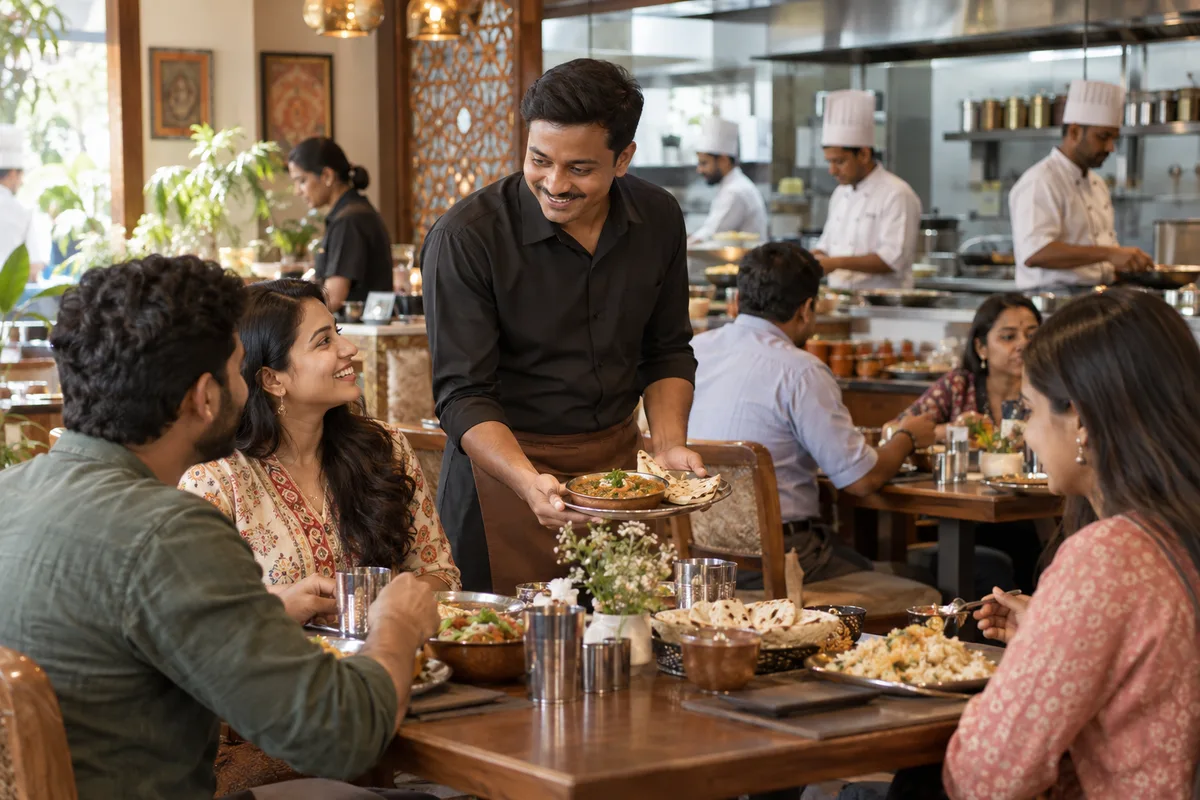
An Andhra software engineer who moved to a new city eight months ago is not looking for a restaurant. The engineer is looking for gongura mutton and a full meal on a banana leaf, the way it is served at home. If your listing says South Indian, they scroll past. If it says Andhra meals, with a photograph of the leaf, the whole flat hears about it.
Scope, fee, reporting and term are agreed in writing after we have read your brief and spoken to you.
In one paragraph
Regional cuisine restaurant marketing makes yours the place for authentic Andhra meals, Malabar biryani, Chettinad curries or Bengali fish. Regional cuisine sales turns migrants, homesick students and curious locals into regulars. GullySales builds search and content around the dishes, the festivals and the communities that already care about your food.
Your restaurant has two audiences: people who miss the food and people who have never had it. The first look for a dish by name. The second need a short, friendly explanation of what to order. The work is to serve both without losing the character that makes the food worth travelling for.
Last updated 18 Oct 2026.
How buyers decide
How regional cuisine restaurants are chosen.
Migrants, students and workers from the region search by dish and by region: Chettinad chicken, Kerala meals, Konkani fish curry, Rajasthani thali, Bengali bhoger khichuri. They trust a restaurant that uses the correct names, spices and serving style.
Locals trying the cuisine rely on reviews that explain what to order and how spicy it will be. A food creator's post or a city guide's list can be the reason for a first visit.
Community associations choose a restaurant for festival gatherings and get-togethers, and one good experience brings the whole association back.
The problem
What usually goes wrong for regional cuisine restaurants.
What owners tell us on the first call, in their words.
“The region is not in the listing”
A genuine Malabar restaurant is listed as Indian or Kerala, so migrants and food seekers searching by region do not find it.
“Newcomers do not know what to order”
A guest unfamiliar with the cuisine does not understand the dish names or the spice levels, and orders the one thing they know.
“Festival seasons arrive without a plan”
Onam, Pongal, Durga Puja, Ugadi and Gudi Padwa are the days the community most wants a proper meal out, and the special menu reaches the community groups after the festival table is already booked elsewhere.
“Authenticity is hard to show”
Customers cannot tell whether the cook is from the region or the ingredients are brought in, and the restaurant has no story page to say.
“Delivery strips out the experience”
A thali or a banana-leaf meal travels poorly, and the delivery listing leaves the restaurant looking like any other.
“Community groups do not know the group menu”
An association secretary hunting for a hall-sized meal finds no group menu or per-plate price on the listing.
What we do
What we do for regional cuisine restaurants.
Everything included for regional cuisine restaurants.
Region-first listing and menu
Listed type, description and menu names that carry the region and the dishes in the right spelling, with a short line explaining each.
Ordering guide for newcomers
A page that suggests what to order first, how spicy each dish is and what to eat with what.
Festival menus and booking pages
Special menus and booking pages for the festivals of the region, drafted ahead and announced to past guests first.
Cook and kitchen story
A page and a short video on where the cook is from, which ingredients are brought in and how the food is made.
Association and group menu pack
A set menu and price for groups of thirty to a hundred, with a WhatsApp enquiry and a booking contact.
Delivery that travels well
Packaging and menu choices for delivery, with descriptions that explain how to eat the dish at home.
How the result is measured
- Searches and calls by region and dish name
- Festival-day covers and pre-bookings
- Association and group bookings
- New guests who mention a creator or guide
- Delivery orders and ratings
- Meal-box subscribers
Recorded as a baseline before work starts, so every later report has an honest comparison.
Every service, written for regional cuisine restaurants
Each has its own page: what it involves for regional cuisine restaurants, what you get, and what it is measured on.
- Lead generationFind the people who miss your region's food before they settle for something close.
- SEOBe the page that answers when someone searches for a dish by its name.
- Local SEOShow up on the map for the neighbourhoods where your region's people live and work.
- Social media marketingPost the plate, the cook and the festival so the community shares you onward.
- Content marketingWrite down what the cook already knows so a stranger can taste it before arriving.
- Buyer personaKnow who walks in for home, who for curiosity and who for the association.
- CRMRemember the association, the festival host and the regular who wants less chilli.
- Follow-up systemsAnswer the festival committee's enquiry properly, then remind the group before the date.
- WhatsApp marketingReach the community where they already forward the festival menu: on WhatsApp.
- Digital marketingPut the region's food in front of its people and its neighbours, in the right order.
- WebsiteGive the cuisine a home on the web that a hungry stranger can read in a glance.
Worth a page and a campaign of their own
Migrants and students from the region · Dish-name and region searches · Festival menus and special meals · Community association gatherings · Tourist and curious local diners · Home-style meal subscriptions · Catering for regional weddings and functions · Food creator and city guide coverage
Priority campaigns
Campaigns for what regional cuisine restaurants most want to sell.
Each one planned around when your buyers decide, and measured against the baseline.
Festival of the region
A menu and a story around the festival, posted to community WhatsApp groups, Instagram and Maps, with pre-booking.
Homesick student drive
A student-priced meal for hostels and shared flats, promoted on campuses and through student communities.
Taste the region
A starter menu for curious locals, with a short guide on what to try, shared through food creators and city guides.
Community gathering programme
A standing offer to associations for their meetings and festivals, with one contact for bookings.
Home-style tiffin and meal box
A home-style meal plan for workers living away from home, ordered by WhatsApp, with the menu and the price per meal set out.
Beyond search
Where we reach buyers of regional cuisine restaurants, beyond Google.
Search matters, but it is rarely the only way this industry's buyers find a supplier.
Regional associations and cultural clubs
The Telugu, Malayali, Bengali, Marathi, Gujarati and other associations whose members live in the city, with a festival menu sent to the committee.
Colleges, hostels and shared-flat networks
Notice boards and groups where students and young workers from the region ask where to eat.
Food creators and city guides
Creators who explain regional food to the city, briefed on the right dishes and spellings and asked to disclose any free meal or payment.
Tour operators and hotel desks
A one-page note for visitors who want the local taste, with directions and what to order.
Cultural festivals and food fairs
Stalls and tie-ins at regional festivals, where the restaurant meets people who already love the food.
Who it is for
This is written for these regional cuisine restaurants.
- Andhra and Telugu meals restaurants
- Kerala and Malabar restaurants
- Chettinad and Tamil restaurants
- Karnataka coastal and Mangalorean restaurants
- Bengali and Odia restaurants
- Gujarati, Rajasthani and Marwari thali restaurants
- Maharashtrian and Kolhapuri restaurants
- Goan, Punjabi, Kashmiri and North-East regional restaurants
Not for
It is not the right fit if.
- You want a guaranteed Google ranking or a guaranteed number of leads. Nobody honest can promise either.
- You need enquiries by next week and have nobody to answer them.
- You want posts and reach reported, not enquiries and orders.
How it works
How the work runs for regional cuisine restaurants
The work itself, in order. How an engagement starts, from your brief to a written scope, is set out on our method page.
- 1
Listen to the food
A conversation with the cook and owner about the dishes, the region and the people who already come, then a read of the reviews.
- 2
Name the cuisine properly
Listing, menu and website use the right region, dish names and spellings so searches find you.
- 3
Teach the newcomer
A short guide, photographs and descriptions turn curious locals into confident orderers.
- 4
Plan the festival year
The festivals and community events that matter to your guests are listed, and a menu and message drafted for each.
- 5
Open the community door
Associations, hostels and groups get a menu, a price and a contact.
Proof
What happened when owners fixed this.
Real clients, the work we did, and the result as it was recorded. Where no number was recorded, none is claimed.
Hotel Felicity Inn
- Situation
- A traveller compares three hotels on a phone and books one. The website was not built for that.
- What we did
- The site rebuilt around booking
- Photography and one look
- Search work for destination searches
- Content a traveller reads
- Result
- Online bookings increased 35%
- Organic traffic increased 50% within six months
- Positive reviews on Google and TripAdvisor increased 30%
Also worked with
Chord Road Hospital · Curtain Label · Difesa Security Services · Hands On CSR · Implevista · Kambar Group · Kalessi · Kerur Pain Clinic · LL Trust · Lucky Deals · Natural Gases · NavaShakthi Souhardha · NewCom Logistics · Proton Technical Services · SB Engineering · Shakthi Foundation · Shakthi Group · Urbanest · Insyde Studio · Venkateshwara Laser Tech · Vivara Studios
Where this fits
Three pieces of sales work, in this order.
GullySales builds every engagement from three pieces of sales work. This page is not one of them, but the same three steps apply to the business behind it.
Step 1
Sales audit
Find where deals are being lost and what to fix first.
Start here if you cannot say where orders are lost.
Step 2
Sales process design
One written way to sell, from first enquiry to repeat order.
Start here if every salesperson sells differently.
Step 3
Sales management
A target, a review routine and someone who owns the number.
Start here if the team has targets and no routine.
FAQ
Questions regional cuisine restaurants ask before they call.
Not here? More answers, or ask on WhatsApp.
We cook for people from our region. Do we need to reach others?
Can you write dish names correctly?
Is it hard to market a thali or a leaf meal on delivery?
Can you reach the community on WhatsApp?
Do you handle catering for regional weddings?
How much does it cost?
How long is the contract?
How soon will we see results?
Who will actually do the work?
What do you need from us?
Part of Hospitality. See the other industries in the sector.
Your next practical step
Tell us what you are trying to grow, and we will read it before we call.
Eight short steps, mostly taps. Skip anything you would rather answer on the call.