Hotels · Branding
Look like the property in the photographs, not a different one.
Branding for a hotel is the consistent look, from the OTA listing to the lobby signage to the banquet brochure. It makes a guest trust that what they booked matches what they will find. GullySales keeps that identity consistent across every booking channel and every printed piece a guest sees on arrival.
Scope, fee, reporting and term are agreed in writing after we have read your brief and spoken to you.
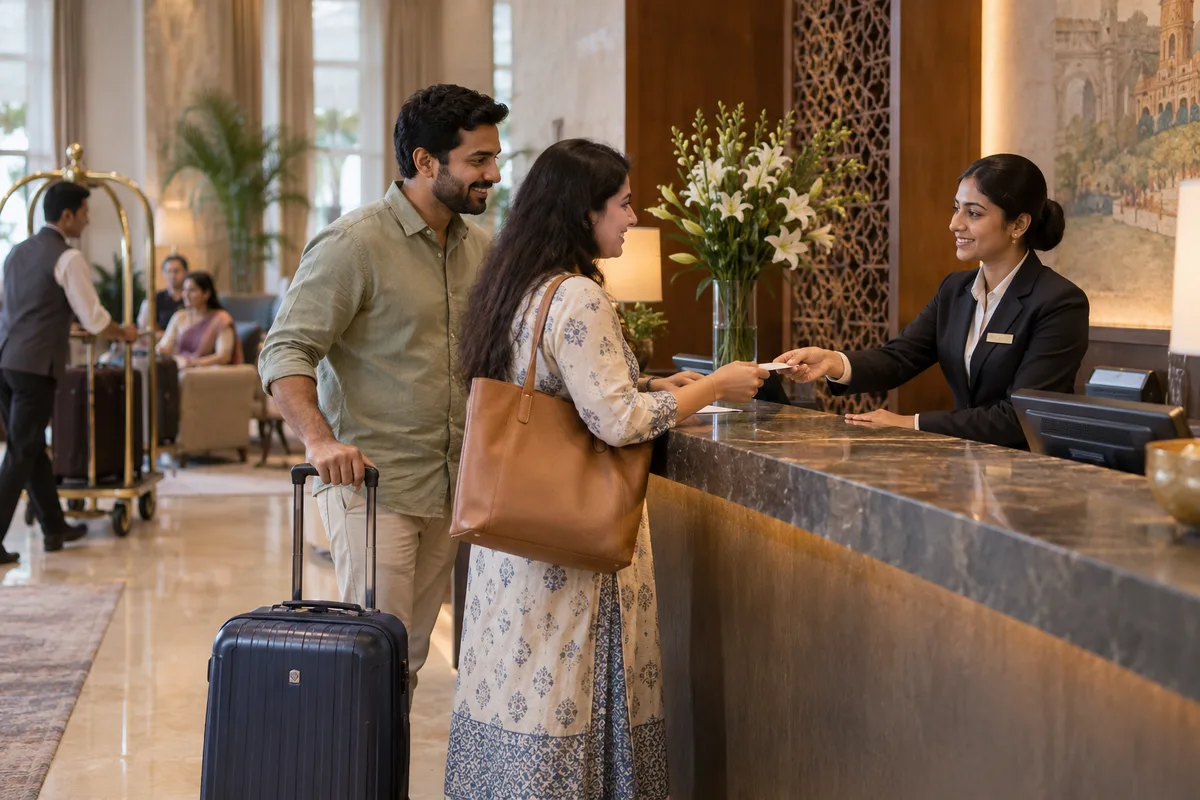
What branding means
Branding is what a customer remembers about your business beyond the product, including your name, colours, tone of voice and what you are known for locally. GullySales sets or corrects this once and applies it consistently across your website, signage and adverts so the business looks like one company everywhere.
Last updated 5 Oct 2026.
For hotels
Where it usually goes wrong, and what we would do.
“The OTA photographs are the brand, whether you planned it or not”
A guest decides what your hotel is from six photographs on a booking app before ever seeing the lobby. Those images need the same lighting and styling as your actual property.
“Banquet branding sells a different guest”
A family choosing a wedding venue looks at decor and space, not room amenities, so the banquet brochure and the room-booking page should not share the same pitch.
“Signage and staff uniforms carry the name after the click”
A guest who books on a bright, modern-looking OTA page and arrives to faded signage feels misled before check-in even starts.
What we do
What we deliver for hotels.
Every deliverable, what it covers for you, and the result it is there to produce. Nothing here is an extra.
Photo brief for every OTA listing
A shot list for rooms, the lobby, banquet hall and F&B outlets, matched across Booking.com, MakeMyTrip and your own website.
Result: A guest sees the same property they booked when they check in.
Banquet brochure separated from the room pitch
A wedding and corporate brochure built around decor, capacity and menus, distinct from the tone used to sell rooms.
Result: A wedding family gets material that speaks to their actual decision.
Signage and uniform check across the property
A walk-through of reception, corridors and staff uniforms against the photographs guests see before booking.
Result: Arrival matches the impression the listing created.
Naming and description consistency across OTAs
One agreed name, tagline and property description applied identically on Booking.com, MakeMyTrip, Google and your website.
Result: Guests recognise the same property on whichever platform they compare.
Identity kit for print at the front desk
Letterheads, banquet quote templates, welcome cards and F&B menus built to one visual standard.
Result: Every printed piece a guest handles looks like it belongs to the same hotel.
How the result is measured
- Recognition in customer feedback
- Consistency across channels
- Repeat enquiries by name
Recorded as a baseline before work starts, so every later report has an honest comparison.
Positioning in one sentence
Fill this sentence in for the property, and the OTA listing, the website and the banquet brochure will describe the same hotel.
- Who it is for, as a guest and a purpose
- Name the guest and the purpose: a sales executive staying two nights near the industrial area, a family on a pilgrimage trip, a wedding party booking a hall. A hotel that is for everyone is nobody's first choice.
- What the property offers, in the guest's words
- Use the things guests search for: near the railway station, with parking, with a banquet hall, with a vegetarian restaurant, with long-stay rooms. Leave out phrases like a home away from home.
- What a guest gets that the nearby property does not
- Choose one that is true on the day: a breakfast that suits early flights, a quiet floor, a banquet that handles the whole function. Check the OTA photographs show the same thing.
- The proof you can show
- Use your own photographs taken in daylight, guest reviews you did not write, and the registrations and approvals you hold. Do not copy another hotel's photographs or rewrite reviews.
- Words every hotel page uses
- Luxury, warm hospitality and unforgettable stay appear on every listing. Replace one with a plain fact, such as a king bed, a work desk, a pure-veg kitchen or a hall that seats a number you can name.
- The name and tagline test
- Check the property name is spelt the same on the OTA listings, Google, the invoice and the signboard. Say it for a taxi driver; if he cannot find you, the name needs a plain descriptor.
Who it is for
This is written for these hotels.
- Business and transit hotels
- Boutique and heritage properties
- Resort and destination hotels
- Budget and mid-market chains
- Banquet and wedding-focused properties
- Serviced apartments and long-stay properties
Not for
It is not the right fit if.
- You want a guaranteed Google ranking or a guaranteed number of leads. Nobody honest can promise either.
- You need enquiries by next week and have nobody to answer them.
- You want posts and reach reported, not enquiries and orders.
How it works
From your first message to the first report.
No open-ended retainer. Every step gives you something in writing.
First
Your brief
You tell us what you need in a few short steps: your business, what you want, where enquiries come from and how they are handled.
After the brief
A conversation and a written scope
We read it, then talk with whoever handles your enquiries. If you want our help, the scope, the fee and the reporting come in writing, and nothing starts before you have read them.
Before work starts
Baseline recorded
Enquiries by source, reply time, conversion and cost per order, written down so every later report has an honest comparison.
After the baseline
The first fix goes live
The fix we agreed to start with is put in place and measured against the baseline, whether that is reply time, a follow-up sequence, the page buyers land on or the handover between marketing and sales.
As agreed
Report against the baseline
What moved, what did not, and what changes next, in plain words. How often you get it is set in writing before work starts.
At renewal
Renew on the numbers
The term ends and you decide whether to continue from the results. The length is agreed in writing before anything starts.
How the branding work runs
- 1
Interview customers and team
We talk to real buyers, won and lost, and to people inside the business who deal with customers daily.
- 2
Review the competitive field
We look at how the nearest competitors present themselves so the position is not accidentally identical.
- 3
Draft the position
A first version of the positioning statement and messaging pillars is written and checked against what customers actually said.
- 4
Test it against real conversations
The draft is tried out in a real sales call or two before it is finalised, since a position that does not survive a real conversation needs rework.
- 5
Hand over the rollout brief
The final position, pillars and not-for list are documented for your team and any agency to apply consistently.
Proof
What happened when owners fixed this.
Real clients, the work we did, and the result as it was recorded. Where no number was recorded, none is claimed.
Hotel Felicity Inn
- Situation
- A traveller compares three hotels on a phone and books one. The website was not built for that.
- What we did
- The site rebuilt around booking
- Photography and one look
- Search work for destination searches
- Content a traveller reads
- Result
- Online bookings increased 35%
- Organic traffic increased 50% within six months
- Positive reviews on Google and TripAdvisor increased 30%
Also worked with
Chord Road Hospital · Curtain Label · Difesa Security Services · Hands On CSR · Implevista · Kambar Group · Kalessi · Kerur Pain Clinic · LL Trust · Lucky Deals · Natural Gases · NavaShakthi Souhardha · NewCom Logistics · Proton Technical Services · SB Engineering · Shakthi Foundation · Shakthi Group · Urbanest · Insyde Studio · Venkateshwara Laser Tech · Vivara Studios
Why us
Why owners pick GullySales over an agency.
Marketing and sales, as one job
Most agencies stop at the enquiry. We also fix what happens after it: the reply, the follow-up, the quote and the CRM.
The person on the first call does the work
No account managers in between. You are never handed to someone you have not met.
A baseline before anything starts
Your numbers are written down on day one, so every later report compares against something honest.
The fee in writing, split three ways
Our time, your media spend and production on separate lines. You always see what goes to us.
No guarantees we cannot keep
The term is agreed in writing and never a default twelve months. We never promise a ranking or a lead count, because nobody controls those.
One office, and we say so
Nagarbhavi, Bengaluru. We work across India by call and WhatsApp and travel when a session needs to be in person.
#257, 3rd floor, Sri Nanjundeshwara Complex, Nagarbhavi 8th Block, Outer Ring Road. How we work.
Your brief
Tell us what you need, and we will read it before we call.
Eight short steps about your business, what you want and who decides. Most questions are a tap, and you can skip any you would rather answer on the call.
FAQ
Questions owners ask before they call.
Not here? More answers, or ask on WhatsApp.
Do we need a full rebrand?
How does this affect our OTA ranking?
Should the banquet hall have a separate brand from the hotel?
Is a separate website worth it when the OTAs already list us?
How soon would we see more direct bookings?
Do we need to advertise?
How much does it cost?
How long is the contract?
Who will actually do the work?
What do you need from us?
From the blog
Further reading for hotels.
 7 min read · 21 Sept 2026How to advertise to luxury buyersAdvertising cannot sell a twenty lakh purchase. Its only job is to earn a private appointment, and most luxury campaigns fail because they are still trying to close.
 5 min read · 6 Oct 2026What buyers check before they book a stay or a catererGuests, tenants and event families judge hotels, homestays, PGs, serviced apartments and caterers on the same four checks. Here is what each check looks like and how to pass it.
 8 min read · 21 Sept 2026Premium audience advertising strategyNo platform in India sells you verified income. Everything offered as affluence targeting is inference, and the cheapest filter you own is putting the price in the first frame.
More for hotels
Everything else we would do for you.
- Content marketing for hotels
- CRM for hotels
- Loyalty programmes for hotels
- Newspaper advertising for hotels
- OTA marketing for hotels
- Outdoor advertising for hotels
- PPC for hotels
- SEO for hotels
- Social media for hotels
- Website design for hotels
- Sales strategy for hotels
- Marketing strategy for hotels
- Buyer journey for hotels
- Follow-up systems for hotels
- Review generation for hotels
- Customer retention for hotels
- Referral marketing for hotels
- WhatsApp marketing for hotels
Or start from the overview: sales and marketing for hotels.
Your next practical step
Tell us what you are trying to grow, and we will read it before we call.
Eight short steps, mostly taps. Skip anything you would rather answer on the call.