Hotels · Newspaper advertising
Print sells the banquet hall, and the booking sites sell the rooms.
Newspaper advertising for a hotel is one insertion in one edition on one morning, bought for a wedding season, a banquet offer, a new property or an event with a date on it. GullySales chooses the edition those families read, and prints a banquet number that reaches a desk which answers it.
Scope, fee, reporting and term are agreed in writing after we have read your brief and spoken to you.
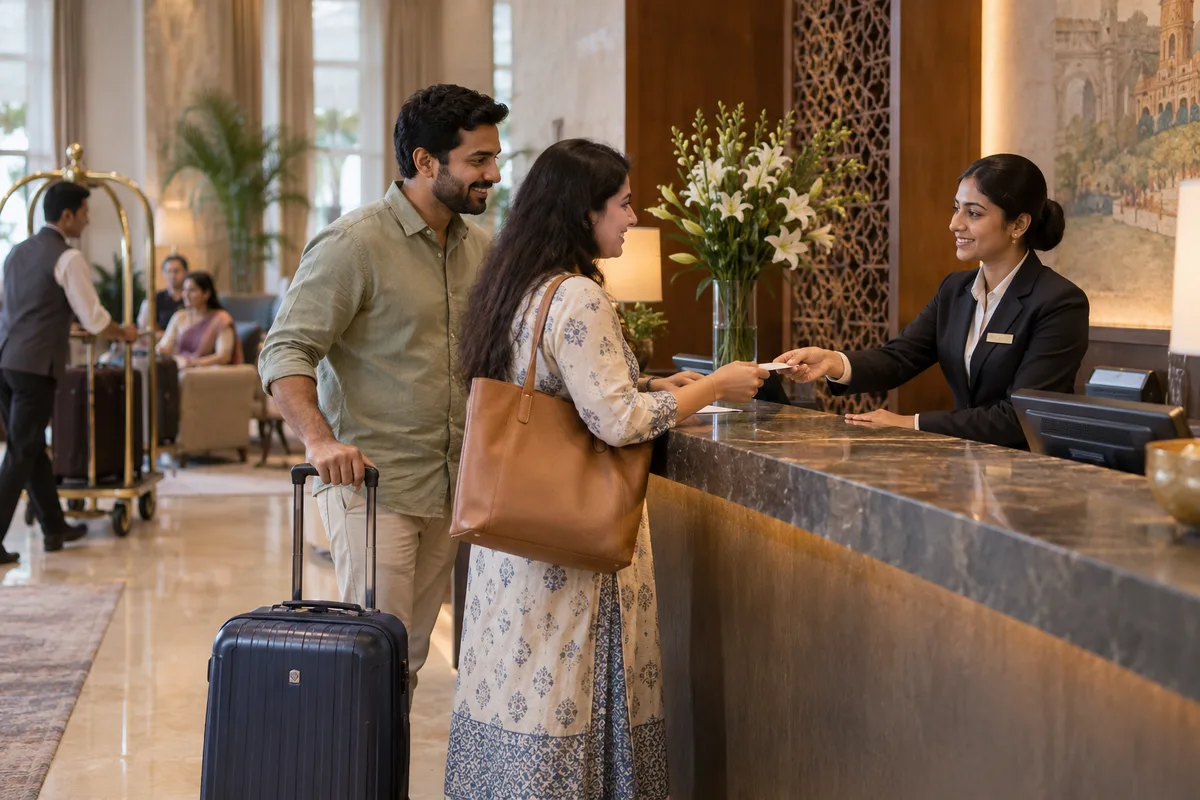
What newspaper advertising means
Newspaper advertising is space in a named edition of a paper on a named day, priced by the column centimetre. GullySales picks the edition and language your buyers actually read, meets the release deadline, and gives the reader somewhere to go.
Last updated 5 Oct 2026.
For hotels
Where it usually goes wrong, and what we would do.
“Rooms go to the booking sites, banquets do not”
A traveller compares properties inside an app, on photographs and a review score. A wedding family reads the paper at home months before the date and then visits two or three halls.
“The season is sold before the season”
Wedding dates come from a calendar the family follows, and the hall is chosen weeks earlier. An advertisement in the week of the muhurtham is an advertisement for next year.
“Dates are what print does best”
A New Year gala, a Sunday brunch launch, a festival buffet. The reader needs to know on a particular morning, and there is a table to be booked that same week.
“The banquet desk is the only report”
Nothing comes back from an insertion on its own. A number printed nowhere else, answered by someone who writes down the function date and the guest count, is the whole measurement.
What we do
What we deliver for hotels.
Every deliverable, what it covers for you, and the result it is there to produce. Nothing here is an extra.
Edition and language plan for the banquet buyer
The city or district editions the families who marry at your kind of property read, and the language that reaches the elders who choose the venue.
Result: Space is bought where the venue decision is actually made.
A calendar built on wedding dates and fixed events
Insertions placed weeks ahead of the dates families are working towards, and on the mornings before a gala or a brunch launch.
Result: The advertisement appears while the hall is still free.
Size, section and position brief
Display or classified display, how many column centimetres, and which page the request goes in for, written on the order rather than assumed.
Result: The advertisement does not land where nobody is looking.
Artwork carrying the facts a family asks for
What the hall seats, parking, whether outside caterers are allowed, and a QR code to photographs of functions already held there.
Result: A family knows whether to call before they call.
A banquet number and a landing page
A line and a short web address used in that insertion alone, with the sales desk logging the function date and the guest count for every call.
Result: Enquiries are counted against the insertion that produced them.
Printed page check and reporting
The page as it ran matched against the booking, then enquiries, venue visits and confirmed functions by insertion, against the baseline.
Result: You know which morning brought the bookings.
How the result is measured
- Insertions published as booked
- Enquiries traced to the print route
- Cost per traced enquiry
Recorded as a baseline before work starts, so every later report has an honest comparison.
How space is bought, and checked
What a banquet manager checks with the paper before a wedding-season advertisement is booked.
- Localities of past function hosts
- Take the home localities of the families who held functions at your hall from the banquet register. Ask the paper which edition covers each and book those.
- Wedding supplement or city page
- Ask whether the paper runs a wedding or festival supplement before the season, and how hotel space there is priced against the city page. Pick the one the elders read.
- Size that keeps the facts readable
- Seating, parking, the caterer policy and the banquet number all need room. Ask for the column centimetres where those lines stay readable and look at the proof at print size.
- Position written on the order
- Ask for a page or position on the order, such as the right-hand side beside a feature. If the paper cannot give it, ask what it offers instead before the booking, not after.
- Gala and brunch dates held
- Before a New Year gala or a brunch launch is advertised, have the booking manager hold the tables and the date. Print should never sell a table that is already gone.
- Questions the banquet desk asks
- Give the desk four questions for every print caller: function date, guest count, vegetarian or non-vegetarian menu, and venue visit day. Write the answers down with the insertion date.
Who it is for
This is written for these hotels.
- Business and transit hotels
- Boutique and heritage properties
- Resort and destination hotels
- Budget and mid-market chains
- Banquet and wedding-focused properties
- Serviced apartments and long-stay properties
Not for
It is not the right fit if.
- You want a guaranteed Google ranking or a guaranteed number of leads. Nobody honest can promise either.
- You need enquiries by next week and have nobody to answer them.
- You want posts and reach reported, not enquiries and orders.
How it works
From your first message to the first report.
No open-ended retainer. Every step gives you something in writing.
First
Your brief
You tell us what you need in a few short steps: your business, what you want, where enquiries come from and how they are handled.
After the brief
A conversation and a written scope
We read it, then talk with whoever handles your enquiries. If you want our help, the scope, the fee and the reporting come in writing, and nothing starts before you have read them.
Before work starts
Baseline recorded
Enquiries by source, reply time, conversion and cost per order, written down so every later report has an honest comparison.
After the baseline
The first fix goes live
The fix we agreed to start with is put in place and measured against the baseline, whether that is reply time, a follow-up sequence, the page buyers land on or the handover between marketing and sales.
As agreed
Report against the baseline
What moved, what did not, and what changes next, in plain words. How often you get it is set in writing before work starts.
At renewal
Renew on the numbers
The term ends and you decide whether to continue from the results. The length is agreed in writing before anything starts.
How the newspaper advertising work runs
- 1
Fix the date first
A launch, an admission window, an opening weekend or a notice. Everything else is planned backwards from that morning.
- 2
Choose edition, language and day
We match the edition to your catchment and the day to the section your buyer opens.
- 3
Decide size, position and the route back
Display or classified display, how many column centimetres, which page we request, and what the reader is told to call or scan.
- 4
Release the artwork early
The file goes to the publication ahead of its deadline, in the format it takes, with the position request on the order.
- 5
Verify what printed
We read the printed page against the booking and raise it if the ad ran small, late or in the wrong section.
- 6
Count what came back
Calls, scans and form fills on the traced route, reported against what that insertion cost.
Proof
What happened when owners fixed this.
Real clients, the work we did, and the result as it was recorded. Where no number was recorded, none is claimed.
Hotel Felicity Inn
- Situation
- A traveller compares three hotels on a phone and books one. The website was not built for that.
- What we did
- The site rebuilt around booking
- Photography and one look
- Search work for destination searches
- Content a traveller reads
- Result
- Online bookings increased 35%
- Organic traffic increased 50% within six months
- Positive reviews on Google and TripAdvisor increased 30%
Also worked with
Chord Road Hospital · Curtain Label · Difesa Security Services · Hands On CSR · Implevista · Kambar Group · Kalessi · Kerur Pain Clinic · LL Trust · Lucky Deals · Natural Gases · NavaShakthi Souhardha · NewCom Logistics · Proton Technical Services · SB Engineering · Shakthi Foundation · Shakthi Group · Urbanest · Insyde Studio · Venkateshwara Laser Tech · Vivara Studios
Why us
Why owners pick GullySales over an agency.
Marketing and sales, as one job
Most agencies stop at the enquiry. We also fix what happens after it: the reply, the follow-up, the quote and the CRM.
The person on the first call does the work
No account managers in between. You are never handed to someone you have not met.
A baseline before anything starts
Your numbers are written down on day one, so every later report compares against something honest.
The fee in writing, split three ways
Our time, your media spend and production on separate lines. You always see what goes to us.
No guarantees we cannot keep
The term is agreed in writing and never a default twelve months. We never promise a ranking or a lead count, because nobody controls those.
One office, and we say so
Nagarbhavi, Bengaluru. We work across India by call and WhatsApp and travel when a session needs to be in person.
#257, 3rd floor, Sri Nanjundeshwara Complex, Nagarbhavi 8th Block, Outer Ring Road. How we work.
Your brief
Tell us what you need, and we will read it before we call.
Eight short steps about your business, what you want and who decides. Most questions are a tap, and you can skip any you would rather answer on the call.
FAQ
Questions owners ask before they call.
Not here? More answers, or ask on WhatsApp.
Will a newspaper insertion fill rooms?
How far ahead of the wedding season should it run?
Can you tell us which bookings came from the paper?
Should the advertisement print the rate per plate?
Can we share the page with a wedding planner or a caterer?
How soon would we see more direct bookings?
Do we need to advertise?
How much does it cost?
How long is the contract?
Who will actually do the work?
From the blog
Further reading for hotels.
 8 min read · 21 Sept 2026How to write an advertorialPaid space that reads like the paper wrote it. That is the whole value and the whole risk, and the label at the top is not negotiable.
 5 min read · 6 Oct 2026What buyers check before they book a stay or a catererGuests, tenants and event families judge hotels, homestays, PGs, serviced apartments and caterers on the same four checks. Here is what each check looks like and how to pass it.
 8 min read · 21 Sept 2026Premium audience advertising strategyNo platform in India sells you verified income. Everything offered as affluence targeting is inference, and the cheapest filter you own is putting the price in the first frame.
More for hotels
Everything else we would do for you.
Closest to this: paid and media
Also for hotels
- Branding for hotels
- Content marketing for hotels
- CRM for hotels
- Loyalty programmes for hotels
- OTA marketing for hotels
- SEO for hotels
- Social media for hotels
- Website design for hotels
- Sales strategy for hotels
- Marketing strategy for hotels
- Buyer journey for hotels
- Follow-up systems for hotels
- Review generation for hotels
- Customer retention for hotels
- Referral marketing for hotels
- WhatsApp marketing for hotels
Or start from the overview: sales and marketing for hotels.
Your next practical step
Tell us what you are trying to grow, and we will read it before we call.
Eight short steps, mostly taps. Skip anything you would rather answer on the call.