Hotels · Connected TV and OTT advertising
Show the resort or the banquet hall on the screen the family watches together.
Connected TV and OTT advertising for a hotel places a short film inside streaming services, on television screens or other devices depending on the booking. GullySales plans the inventory and the area, agrees the viewing terms and frequency limits, and keeps media delivery apart from evidence of bookings.
Scope, fee, reporting and term are agreed in writing after we have read your brief and spoken to you.

What connected TV and OTT advertising means
Connected TV and over-the-top (OTT) advertising places video ads inside streaming services, on television screens or other devices, depending on the booking. GullySales plans the inventory and targeting, agrees viewing standards and frequency limits, and coordinates the buy with the platform or its agency, separating media delivery from evidence of sales.
Also for hotels
- Newspaper advertising for hotels
- Outdoor advertising for hotels
- PPC for hotels
- Google search ad copywriting for hotels
- Display and Performance Max ad copywriting for hotels
- Print advertisement copywriting for hotels
- Ad headline and copy variations for testing for hotels
- Google display and Performance Max creative design for hotels
Sales and marketing for hotels, the overview.
Last updated 14 Nov 2026.
For hotels
Where it usually goes wrong, and what we would do.
“A streaming impression is not a booking”
A hotel that buys video inventory buys exposure in homes, not a reservation. A family may see the film about the lakeside resort, remember the name and book through a search weeks later, or never book at all. Treating completed views as bookings makes the campaign look better than the records can support. The plan must say what will be counted and what will not.
“The device decides what the guest sees”
OTT means streaming, and a booking described that way can be delivered to phones, tablets, laptops or the living-room television. A resort film shot for a large screen loses its lobby and its view on a small one. If the plan depends on television screens, that must be written into the order and checked in the delivery report.
“Geography matters more than the audience label”
A destination resort wants viewers in the cities its guests travel from, not in the town where it stands. A wedding hall wants households near the venue. A platform's audience label is an estimate of a household, not a named guest. The area chosen, and the way it is defined by the platform, should be compared before any money is committed.
“The film has to suit the room and the hall”
A film that mixes rooms, a pool, the restaurant and the banquet hall tries to sell four things in a short slot. A wedding family and a holiday couple want different pictures. A hotel needs a clear choice about which audience the film is for, and claims about views, awards or facilities have to be ones the property can prove.
What we do
What we deliver for hotels.
The work available for this need. We agree the deliverables and responsibilities for your engagement in writing.
Platform and device plan
A proposed list of streaming services, content types and devices, with the reason for each choice and the share intended for television screens. The owner can compare the plan with the guests the hotel wants, such as holiday families or wedding households, before approving anything.
Result: The owner can read which devices and services are in the plan and why.
Area and availability comparison
A written definition of the cities or districts chosen, with the platform's own description of how households are placed there, and the inventory available for the dates the hotel cares about, such as a festival period or the wedding season. Where the platform cannot confirm a figure, the document marks it unconfirmed.
Result: Each area in the plan carries the platform's own definition.
Viewing and verification terms
An agreed definition of a completed view, the screens that count and any independent verification the platform or an outside party offers. The terms are written into the booking, so the hotel does not discover afterwards that the count included a view on a phone left on a table.
Result: The booking states what a counted view is and who verifies it.
Frequency limits
A cap on the number of times the same household sees the film, set within each service. Because limits in one service do not reach another, the plan notes where exposure may overlap. It stops a small group of heavy viewers from absorbing a large share of the hotel's impressions.
Result: The plan names a cap for each service and where overlap remains.
Slot-ready film versions
The hotel's existing film or photographs prepared in the lengths and formats the chosen services accept, with the property's name, the offer and a clear ending. Claims in the film are checked with the owner. Where the hotel has no film, a separate production budget is agreed first.
Result: Each version matches a slot length the booking allows.
Delivery and booking comparison
A comparison of what the platform reports against the hotel's own records, such as direct booking enquiries, banquet quotes and searches for the hotel's name after the campaign ran. It states what the records can and cannot show, and does not credit the film with bookings it cannot prove.
Result: The comparison separates delivery figures from booking records.
How the result is measured
- Impressions served and completed views under the agreed definitions
- Reported household frequency and cross-platform measurement limitations
- Delivery split between television screens and other devices
Recorded as a baseline before work starts, so every later report has an honest comparison.
Who it is for
This is written for these hotels.
- Business and transit hotels
- Boutique and heritage properties
- Resort and destination hotels
- Budget and mid-market chains
- Banquet and wedding-focused properties
- Serviced apartments and long-stay properties
Before you decide
Agree the work. Know how to judge it.
Connected TV and OTT advertising for hotels: use these checks to prepare, choose the scope, and review what changes.
Bring the right evidence
Define the audience, language, geography, and offer. Review the proposed stations, channels, programmes, or screens and the basis of any reach estimate.
Make the scope clear
Agree the spot length, schedule, creative approvals, and delivery records. Confirm current inventory and rates before making a booking decision, including production and adaptation costs.
Check the work in use
Reconcile the delivered schedule with the booking. Compare response during the campaign with the baseline while recording other promotions that could have affected demand.
Know when to change course
If the offer needs a detailed technical explanation, plan where interested buyers can find it. A short broadcast message cannot carry the whole sales conversation.
These are discussion points, not a fixed package. GullySales confirms the deliverables, responsibilities, fee, and term in writing after reading your brief and speaking with you.
Before we start
What to have ready before the work starts.
The records, access and decisions this work needs from hotels. Anything missing is noted in the written scope, with who will supply it.
- Clear aim for the film
- A decision on whether the film sells rooms, the wedding hall, the restaurant or a seasonal package. A film asked to do all four fits none of them. Without this decision, the plan has no audience, and the platform's offer of broad reach decides it for the hotel.
- Existing film or photographs
- Any video already shot, with the rights to use it, or a set of high-quality photographs. Streaming slots need a film in particular lengths. If there is nothing usable, a production decision and budget must come first, and we do not start buying space before then.
- Facts the film will claim
- Facilities, room counts, ratings, offers and dates the film mentions, each with proof held by the hotel. A claim that cannot be supported creates trouble with the platform and with guests. We check every line with the owner before the film goes to the slot.
- Your own booking and enquiry records
- Direct booking records, banquet enquiry logs and the way each guest found you. These are the only evidence of what followed the campaign. If the hotel does not record the source, we agree a simple question for the desk before the film runs, not afterwards.
- Named approver and account holder
- The person who signs the booking and holds the platform account, and the person who approves the film. We prepare documents, but the hotel signs. If no one is named, approvals pass between the owner, the agency and the platform, and the record of what was agreed goes missing.
How it works
How the connected TV and OTT advertising work runs
The work itself, in order. How an engagement starts, from your brief to a written scope, is set out on our method page.
- 1
Objective and budget decision
The first decision belongs to the owner: whether the film is for rooms, the hall or the restaurant, and what budget the hotel can commit. We ask who the buyer is, where they live and what they should do after seeing it. A film for everyone, in every city, does not make a plan.
- 2
Inventory and area approval
We compare the services that carry the audience the hotel wants, the devices they deliver to and the areas they can target. The owner receives a short list with the reasons. The hotel approves the list, and any inventory the platform cannot show in writing is marked as unconfirmed.
- 3
Film and claims approval
We check the film or the photographs against what the property can prove, including facilities, offers and any rating or award mentioned. The owner approves each claim. Where a claim cannot be supported, it is removed. If the film must be made, the production quotation is approved separately before the media plan proceeds.
- 4
Booking and launch handoff
The booking is placed with the platform or its agency in the hotel's name, and the owner or an authorised manager signs. We prepare the order and the viewing terms; the hotel holds the account and the invoice. The baseline figures, such as current direct enquiries and name searches, are recorded before launch.
- 5
Delivery check during the run
While the campaign runs, we compare the delivery report against the order: devices, areas, frequency and completed views. If the report does not match the booking, we raise it with the platform in writing. Any change to the plan returns to the owner for approval first.
- 6
Reading the result against the baseline
Afterwards we set delivery figures beside the hotel's own booking and enquiry records and the baseline taken before launch. The note says what moved, what did not and what else, such as a festival, could explain it. The owner decides whether to repeat, change or stop.
Proof
Published examples of our work.
Real clients and the work recorded for each engagement. These examples may cover related services or industries. They show the method, not a guaranteed result.
Hotel Felicity Inn
- Situation
- A traveller compares three hotels on a phone and books one. The website was not built for that.
- What we did
- The site rebuilt around booking
- Photography and one look
- Search work for destination searches
- Content a traveller reads
- Result
- Online bookings increased 35%
- Organic traffic increased 50% within six months
- Positive reviews on Google and TripAdvisor increased 30%
Also worked with
Chord Road Hospital · Curtain Label · Difesa Security Services · Hands On CSR · Implevista · Kambar Group · Kalessi · Kerur Pain Clinic · LL Trust · Lucky Deals · Natural Gases · NavaShakthi Souhardha · NewCom Logistics · Proton Technical Services · SB Engineering · Shakthi Foundation · Shakthi Group · Urbanest · Insyde Studio · Venkateshwara Laser Tech · Vivara Studios
Where this fits
Three pieces of sales work, in this order.
This work sits inside sales process design, at stage 1, prospecting and lead generation. The audit comes before it, and sales management keeps it running.
Step 1
Sales audit
Find where deals are being lost and what to fix first.
Start here if you cannot say where orders are lost.
Step 2 · you are here
Sales process design
One written way to sell, from first enquiry to repeat order.
Start here if every salesperson sells differently.
Step 3
Sales management
A target, a review routine and someone who owns the number.
Start here if the team has targets and no routine.
FAQ
Questions owners ask before they call.
Not here? More answers, or ask on WhatsApp.
Is connected TV the same as television advertising?
Will this bring bookings for the hotel?
Can we target only wedding families?
Do you make the film?
How much should a hotel spend on streaming ads?
What if the platform's report looks wrong?
How long is the contract?
How soon will we see results?
Who will actually do the work?
What do you need from us?
From the blog
Further reading for hotels.
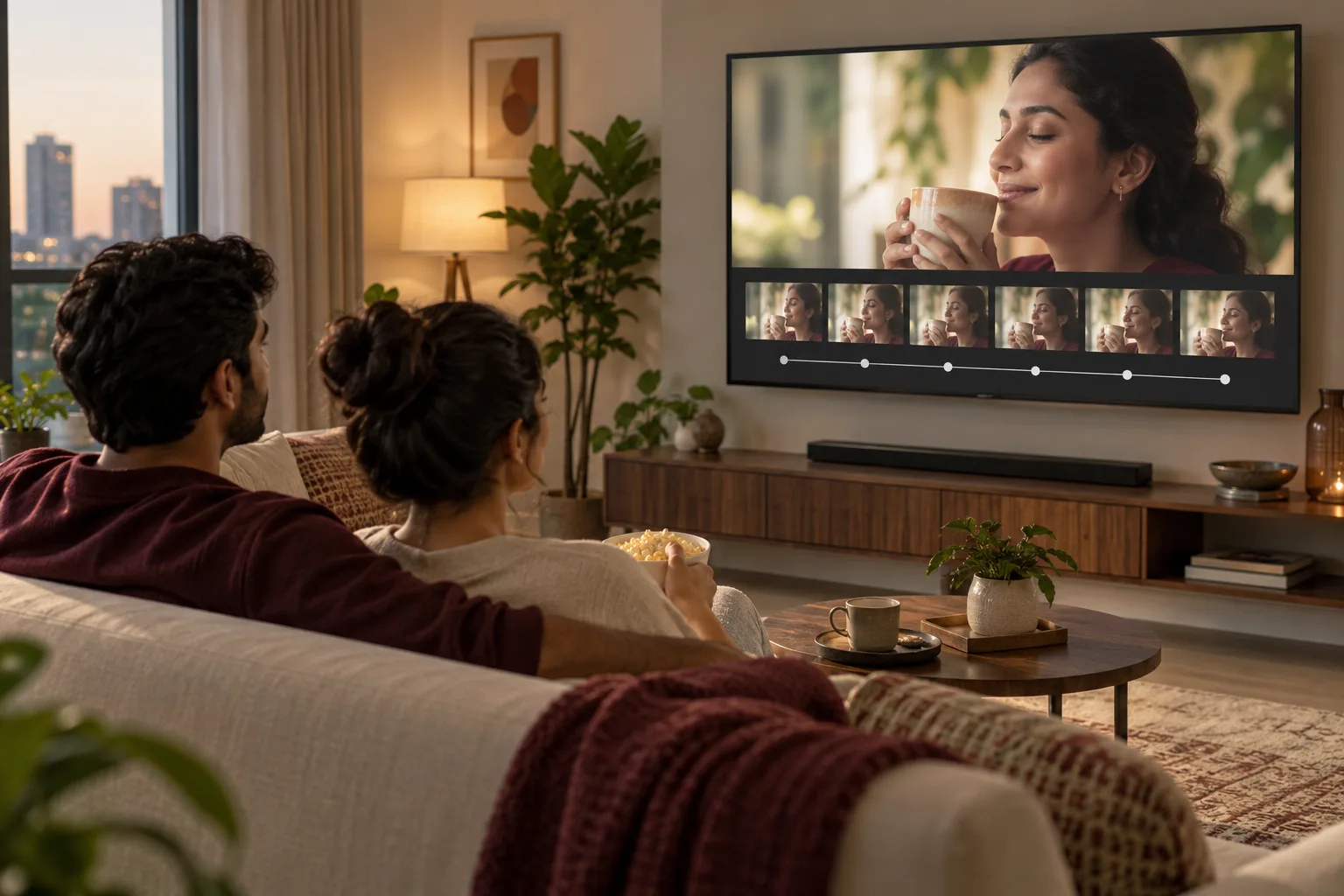 7 min read · 21 Sept 2026How to make an OTT advertisementIt plays on a television, nobody can click it, and the same viewer sees it six times in one evening. That decides almost everything about the film.
 6 min read · 14 Oct 2026Building an off-season plan for a hotel, resort or venueHow to fill the quiet weeks with local residents, corporate meetings and low-cost packages, using a sheet that sets the floor price first.
 5 min read · 6 Oct 2026What buyers check before they book a stay or a catererGuests, tenants and event families judge hotels, homestays, PGs, serviced apartments and caterers on the same checks. What each looks like.
More for hotels
Related work to consider.
Closest to this: paid and media
- Newspaper advertising for hotels
- Outdoor advertising for hotels
- PPC for hotels
- Google search ad copywriting for hotels
- Display and Performance Max ad copywriting for hotels
- Print advertisement copywriting for hotels
- Ad headline and copy variations for testing for hotels
- Google display and Performance Max creative design for hotels
Also for hotels
Or start from the overview: sales and marketing for hotels.
Your next practical step
Tell us what you are trying to grow, and we will read it before we call.
Eight short steps, mostly taps. Skip anything you would rather answer on the call.