Hotels · Corporate photography
Photograph the rooms and the hall as a guest will actually find them.
Corporate photography for a hotel records the property as it is: the rooms, lobby, restaurant, banquet hall and the team at work. GullySales builds the shot list from the questions guests and wedding families ask, agrees consent and access before the shoot, and hands over labelled files for each place they will be used.
Scope, fee, reporting and term are agreed in writing after we have read your brief and spoken to you.
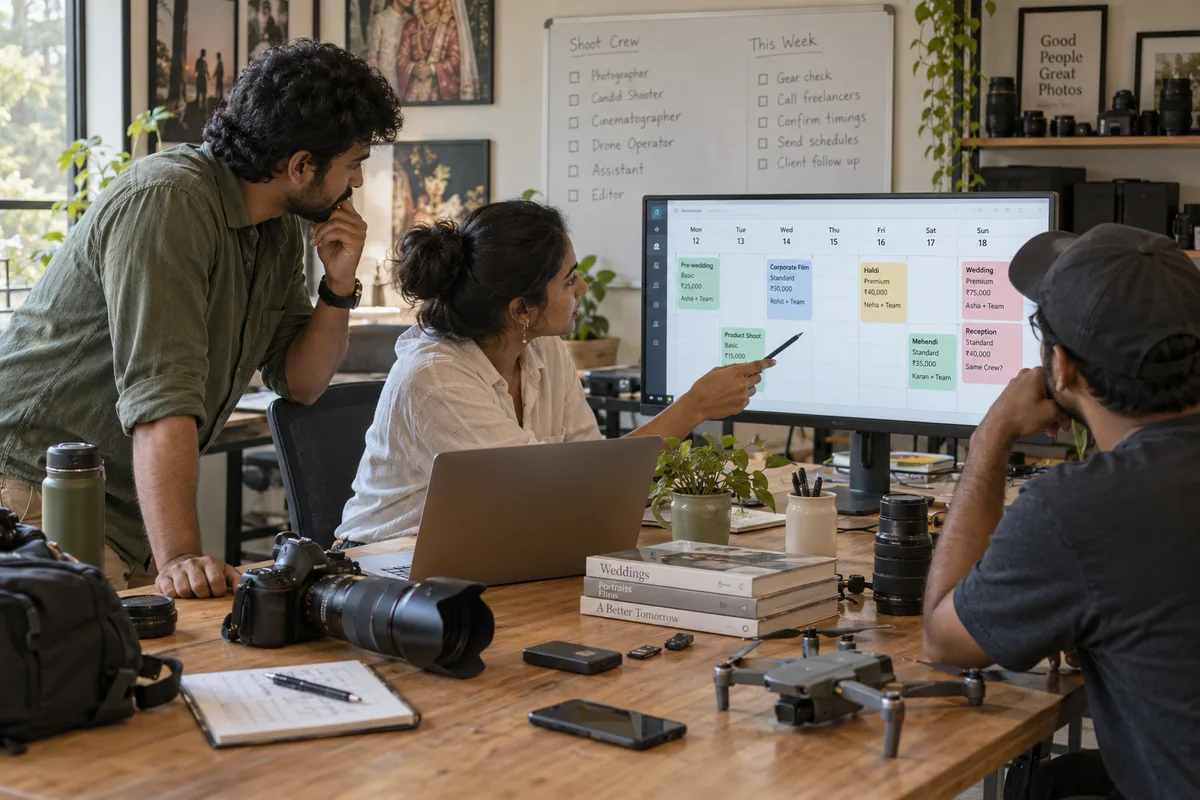
What corporate photography means
Corporate photography records your business as it is: the premises, the team, the work in progress and the equipment in use. GullySales builds the shot list from the questions your buyers ask, agrees consent and site rules before anyone picks up a camera, and hands over named, labelled files for the places each image will appear.
Last updated 14 Nov 2026.
For hotels
Where it usually goes wrong, and what we would do.
“A wedding family wants to see the hall dressed, not empty”
A bare hall hides what a function looks like in it. The shot list asks for the hall set for a reception, a conference and a family lunch, with the stage, seating and entrance shown, so the family can picture their own date without a second visit.
“Rooms are judged on the details a listing hides”
A guest checking a business hotel wants the work desk, the plug points, the bathroom and the view from the window. The images follow what a guest asks on a call, in daylight, with the room as it is cleaned and made, not a staged set.
“Staff and guests in the frame need consent”
A smiling receptionist or a guest at breakfast adds warmth, but each person who is identifiable must agree to where and how long the image will be used. The shoot plan includes a consent form and a quiet area for those who decline.
“One set of images has to serve several places”
The OTA listings, the hotel website, the banquet brochure and the Google profile each have their own image rules. The files are named and cropped for each place, and the team is told to check the platform's current rules before uploading.
What we do
What we deliver for hotels.
The work available for this need. We agree the deliverables and responsibilities for your engagement in writing.
Guest-question shot list
A written list of images by place and purpose: each room type, lobby, corridor, restaurant, kitchen pass where permitted, banquet hall in each set-up and entrance. Your sales head marks which images answer a question guests already ask.
Result: Every image on the list ties to a question from a guest or a wedding family.
Access and house rules sheet
A one-page record of which rooms are free, which areas stay off-limits, guest privacy rules, and what is cleared from view such as screens, documents and room numbers.
Result: The general manager signs it before the shoot.
Consent forms for staff and guests
A form for each person who appears, saying where the image may be used and for how long, with a note that anyone can decline.
Result: Each identifiable person in a published image has a form on file.
Styling checklist for rooms and the hall
A walk-through list for housekeeping and banquet staff covering linen, signage, lighting and furniture, based on the property as a guest finds it.
Result: The image shows the property a guest will walk into.
Labelled image library
Named files grouped by room, outlet and function, with alt text for the website and versions for the OTA listings and brochure.
Result: A staff member can find a hall image by name.
Replacement list for old images
A list of pages and listings still using old or stock images, with the new file to use on each.
Result: You can check each listing against the list.
How the result is measured
- Shot-list images delivered and approved
- Consent forms held for every person in a published image
- Pages still carrying stock images
Recorded as a baseline before work starts, so every later report has an honest comparison.
Who it is for
This is written for these hotels.
- Business and transit hotels
- Boutique and heritage properties
- Resort and destination hotels
- Budget and mid-market chains
- Banquet and wedding-focused properties
- Serviced apartments and long-stay properties
Before you decide
Agree the work. Know how to judge it.
Corporate photography for hotels: use these checks to prepare, choose the scope, and review what changes.
Bring the right evidence
Identify the product, process, or buyer question the images or film must explain. Gather reference material and confirm permission for people, premises, and client work that may appear.
Make the scope clear
Agree the shot list, formats, usage rights, and approval stages before production. Separate filming or photography from editing, animation, and later adaptations.
Check the work in use
Check the finished asset in the place it will be used: a mobile page, presentation, advert, or product listing. Look at crop, captions, sound, and whether the important detail remains clear.
Know when to change course
Do not present an illustration or generated scene as evidence of client work. If a claim needs a real product demonstration, obtain that evidence before using the asset to support it.
These are discussion points, not a fixed package. GullySales confirms the deliverables, responsibilities, fee, and term in writing after reading your brief and speaking with you.
Before we start
What to have ready before the work starts.
The records, access and decisions this work needs from hotels. Anything missing is noted in the written scope, with who will supply it.
- Rooms and the hall free for the shoot
- Name the room types to be shot and the dates when they can be taken out of sale, and tell us when the hall has no function. A marked calendar is enough. Without it, the shoot waits or is limited to spaces that happen to be empty.
- Signed consent from staff and guests
- Short forms signed by any staff member who will appear, and a process for guests if they are to be shown. Without them, nobody appears, and the images show empty rooms with no sense of service.
- A list of old images to be replaced
- A note of which photographs currently sit on the OTAs, the website and the brochure, with the platform's name. A screenshot of each listing is enough. Without it, old pictures stay online beside new ones and guests see two versions of the room. An older brochure photograph is enough to show which images are in use.
- The house rules for access
- Kitchen hygiene rules, security restrictions and the areas that cannot be shown, as agreed with the general manager. Without them, areas are skipped on the day to be safe, and the shot list is shortened. The security head and the executive chef should be told the dates in advance.
- A manager on site during the shoot
- One person with authority to move a guest, release a room or allow a corner of the kitchen to be shown. Without such a person, small decisions stall the photographer and the day is wasted.
How it works
How the corporate photography work runs
The work itself, in order. How an engagement starts, from your brief to a written scope, is set out on our method page.
- 1
Collect the questions guests ask before booking
We sit with the front desk and banquet manager and list what guests ask to see: the size of the room, the bathroom, the view, the breakfast room, the hall with a stage in place, the kitchen. Each question becomes a picture that must exist. You tell us which rooms and areas you want a guest to see and which you would rather not show.
- 2
Walk the property and write the shot list
We walk every area the list names with the general manager, noting light at different hours, what must be moved, and what cannot be photographed. The shot list gives each frame a place, an angle and the time it should be taken. You approve the list, and areas that are not ready are held back instead of rushed.
- 3
Clear consent and house rules before the camera
Staff and guests who may appear sign short consent forms, and the rules for access are written: the kitchen, the security desk, rooms in use, the hall during a function. Check with your own adviser on the wording of consent. Nobody appears who has not agreed, and a booked event is never disturbed. Guests in the house on the day are told beforehand which areas will be closed for a short while, and the front desk has the shot list.
- 4
Style the rooms and the hall, then shoot
On the day a housekeeping lead and the banquet captain style each space with a checklist: linen, lights, curtains, tableware, the stage set in one layout. The photographer shoots in the agreed order. A manager stays with the team so that nothing is moved that should not be, and rooms are returned to service as soon as they are done.
- 5
Select the frames with the manager
From the contact sheet you and the general manager choose the frames that show the property as a guest will find it, and reject any that flatter a room into something it is not. Retouching is limited to dust, wires and exposure. The chosen frames go to a final edit.
- 6
Label the library and mark what to replace
Every image is named by room type, area and use, with the sizes each booking platform asks for. The old images are listed against the new ones so the OTA listings and the website can be updated in one pass. The library is handed over with a note of who may use it.
Proof
Published examples of our work.
Real clients and the work recorded for each engagement. These examples may cover related services or industries. They show the method, not a guaranteed result.
Hotel Felicity Inn
- Situation
- A traveller compares three hotels on a phone and books one. The website was not built for that.
- What we did
- The site rebuilt around booking
- Photography and one look
- Search work for destination searches
- Content a traveller reads
- Result
- Online bookings increased 35%
- Organic traffic increased 50% within six months
- Positive reviews on Google and TripAdvisor increased 30%
Also worked with
Chord Road Hospital · Curtain Label · Difesa Security Services · Hands On CSR · Implevista · Kambar Group · Kalessi · Kerur Pain Clinic · LL Trust · Lucky Deals · Natural Gases · NavaShakthi Souhardha · NewCom Logistics · Proton Technical Services · SB Engineering · Shakthi Foundation · Shakthi Group · Urbanest · Insyde Studio · Venkateshwara Laser Tech · Vivara Studios
Where this fits
Three pieces of sales work, in this order.
This work sits inside sales process design, at stage 1, prospecting and lead generation. The audit comes before it, and sales management keeps it running.
Step 1
Sales audit
Find where deals are being lost and what to fix first.
Start here if you cannot say where orders are lost.
Step 2 · you are here
Sales process design
One written way to sell, from first enquiry to repeat order.
Start here if every salesperson sells differently.
Step 3
Sales management
A target, a review routine and someone who owns the number.
Start here if the team has targets and no routine.
FAQ
Questions owners ask before they call.
Not here? More answers, or ask on WhatsApp.
Can the same photographs be used on every booking site?
Do we need to close rooms or the hall for the shoot?
Will better photographs bring more bookings?
Who owns the photographs afterwards?
Can staff and guests appear in the pictures?
How much does it cost?
How long is the contract?
How soon will we see results?
Who will actually do the work?
What do you need from us?
From the blog
Further reading for hotels.
 6 min read · 14 Oct 2026Building an off-season plan for a hotel, resort or venueHow to fill the quiet weeks with local residents, corporate meetings and low-cost packages, using a sheet that sets the floor price first.
 5 min read · 6 Oct 2026What buyers check before they book a stay or a catererGuests, tenants and event families judge hotels, homestays, PGs, serviced apartments and caterers on the same checks. What each looks like.
 8 min read · 21 Sept 2026Premium audience advertising strategyNo platform in India sells verified income. Affluence targeting is inference, and the cheapest filter you own is putting the price in the first frame.
More for hotels
Related work to consider.
Closest to this: content and social
Also for hotels
Or start from the overview: sales and marketing for hotels.
Your next practical step
Tell us what you are trying to grow, and we will read it before we call.
Eight short steps, mostly taps. Skip anything you would rather answer on the call.