Hotels · Customer experience
Find where a guest or a wedding family is handed between desks and dropped.
Customer experience strategy and journey mapping for a hotel traces what a guest, a wedding family or a corporate travel desk goes through from the first enquiry to the invoice and the next booking, and checks it against guest conversations and your own records. GullySales identifies the gaps between reservations, front desk, kitchen, banquet and accounts, and produces a prioritised plan for your team.
Scope, fee, reporting and term are agreed in writing after we have read your brief and spoken to you.
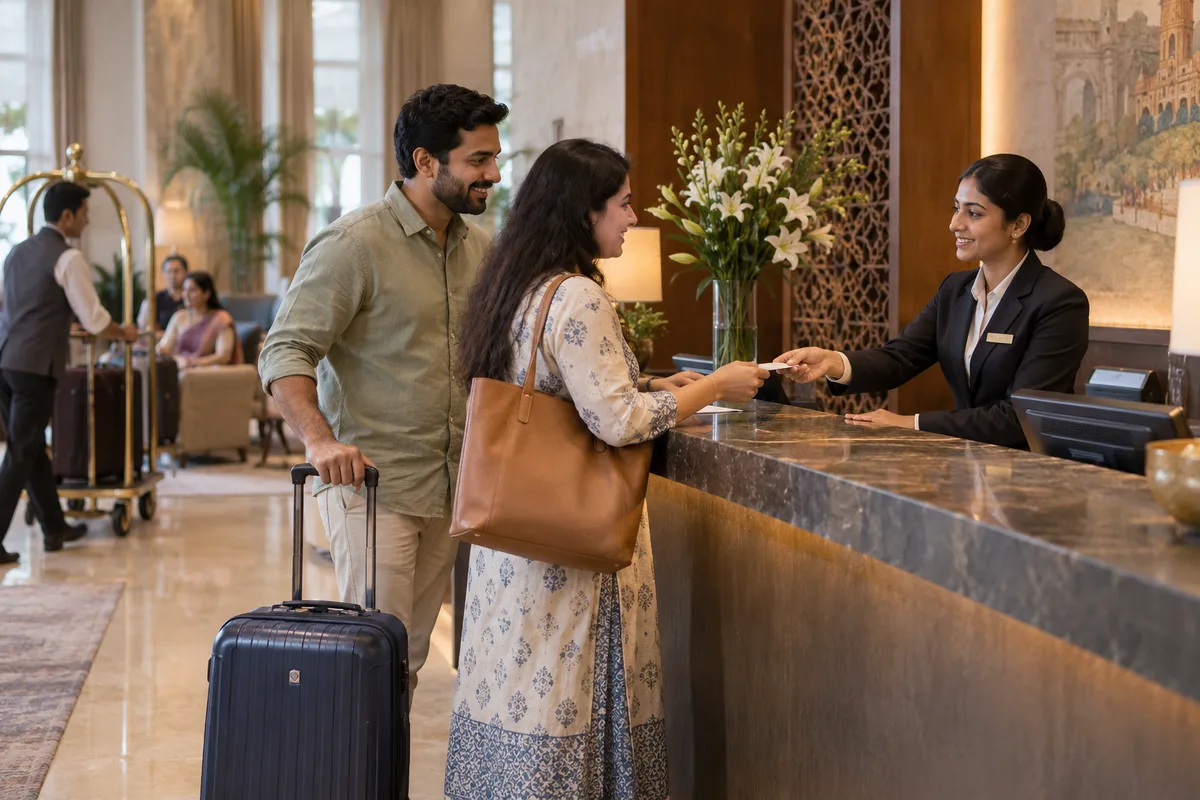
What customer experience means
Customer experience is everything a customer goes through while dealing with your business, from the first call to how a complaint is handled, not just the product itself. GullySales reviews this journey for friction points and fixes the ones that are actually costing you customers.
Also for hotels
- Loyalty programmes for hotels
- Customer retention for hotels
- Referral marketing for hotels
- Complaint and escalation management for hotels
- Customer satisfaction, NPS and feedback programmes for hotels
- Customer service strategy for hotels
- Customer retention and reactivation campaigns for hotels
- Digital customer journey design for hotels
Sales and marketing for hotels, the overview.
Last updated 14 Nov 2026.
For hotels
Where it usually goes wrong, and what we would do.
“Every desk completes its own task”
Reservations confirm the booking, the front desk checks the guest in, housekeeping prepares the room and accounts raises the invoice. Each desk can say its part worked. The guest who asked for a late checkout on the booking site and was asked again at the desk sees one hotel that did not listen. The map follows the guest across the desks, because that is where the hotel's own reports go quiet.
“A wedding is one long journey with a crowd of hands”
The family speaks to a sales executive, tastes the menu with the chef, signs with the manager, hears from the decorator and the banquet captain, and pays through accounts. Each handover repeats the guest count, the date and the dietary needs. When one detail travels badly, the family discovers it on the day of the event. We map the whole sequence, not the sales conversation alone.
“The booking site hides the first touch”
A guest booked through a booking site arrives with preferences the hotel never received, or with a promise made on the listing that the desk has never seen. The hotel meets the guest at the door while the guest feels the conversation started weeks earlier. The map shows what travels from the booking site to the desk, and what has to be asked again.
“Reviews describe the experience after the fact”
A review tells the hotel that check-in was slow or that the hall was not ready, but not which handover failed. Complaints logged at the desk and comments left on booking sites are useful evidence, though they arrive after the stay. This work puts the hotel's own records and fresh guest conversations side by side to find the step that produced them.
What we do
What we deliver for hotels.
The work available for this need. We agree the deliverables and responsibilities for your engagement in writing.
Current journey map for a chosen guest
A map of one agreed guest type, such as a business traveller, a wedding family or a corporate travel desk, with every channel and decision point shown. Your team checks each stage against a recent booking, not against how the process is meant to run on paper.
Result: Each stage on the map can be tied to a real booking your team recognises.
Guest and family conversation findings
Findings from short, courteous conversations with recent guests, wedding families and corporate bookers, arranged with their consent. We record what they remember, what surprised them and where they had to ask twice. Names are kept out of the findings unless a person agrees.
Result: Each finding cites a guest conversation or a record, not an opinion.
Handover review across departments
A review of what moves between reservations, front desk, housekeeping, kitchen, banquet and accounts, and what is lost on the way. It shows which detail the guest repeats, which promise is not recorded and which desk learns something only on the day.
Result: You can name the detail that is lost at each handover on the map.
Intended process against lived process
A comparison of the written booking, check-in and event procedures with what guests and staff describe. Where the hotel's documents say a confirmation is sent and guests say they called to check, the difference is shown beside the evidence for it.
Result: Every gap between paper and practice is shown with its source.
Prioritised improvement plan
A short plan ranked by the harm to the guest and the effort to fix, with a named owner at the hotel for each change. The plan separates changes the front office can make now from those that need a system, a person or a decision from the owner.
Result: Each change on the plan has an owner, a reason and a way to check it.
Experience measures to watch
A small set of measures the hotel already holds or can record cheaply, such as repeated questions at the desk, event-day corrections and complaint types. They are chosen so the next review of the journey compares like with like.
Result: Each measure can be read from a record the hotel already keeps.
How the result is measured
- Customer satisfaction score
- Complaint resolution time
- Repeat business rate
Recorded as a baseline before work starts, so every later report has an honest comparison.
Who it is for
This is written for these hotels.
- Business and transit hotels
- Boutique and heritage properties
- Resort and destination hotels
- Budget and mid-market chains
- Banquet and wedding-focused properties
- Serviced apartments and long-stay properties
Before you decide
Agree the work. Know how to judge it.
Customer experience strategy and journey mapping for hotels: use these checks to prepare, choose the scope, and review what changes.
Bring the right evidence
Map what the customer has been promised and what happens after the order. Gather the questions that repeatedly delay the start of delivery or use.
Make the scope clear
Agree the sales-to-delivery handover, customer responsibilities, and the point at which onboarding is complete. Name the owner of each unresolved dependency.
Check the work in use
Follow a recent customer from order confirmation to their first useful outcome. Check that they received the right instructions and know where to ask for help.
Know when to change course
If the sale includes a promise delivery cannot fulfil, correct the promise and handover. An automated welcome message will not resolve that gap.
These are discussion points, not a fixed package. GullySales confirms the deliverables, responsibilities, fee, and term in writing after reading your brief and speaking with you.
Before we start
What to have ready before the work starts.
The records, access and decisions this work needs from hotels. Anything missing is noted in the written scope, with who will supply it.
- A sample of recent bookings
- Reservation and banquet files for recent stays and events, including at least one that went smoothly and one that went wrong. These let us trace the journey as it happened. Without them, the map would describe how the hotel believes it works, which is the very thing this work is meant to test.
- Complaint and review records
- The desk complaint log, comments from booking sites and any feedback forms the hotel collects. They show where guests felt the gap before the hotel did. If complaints are only remembered and never written down, we say so, and recording them becomes part of the plan.
- Written procedures
- Whatever the hotel has written about booking confirmation, check-in, event preparation and billing, even if it is only a checklist on the wall. We compare these with what guests and staff describe. Without them, we cannot show where practice has drifted from intent.
- Staff willing to speak plainly
- Time from the reservations, front desk, kitchen, banquet and accounts staff who handle the journey. They know where the handover breaks. If conversations are treated as inspections, the answers become polite and the map becomes a drawing of the official process.
- Guests who agree to talk
- A short list of recent guests, wedding families or corporate bookers who have said yes to a conversation. The hotel makes the first request, because a call from an unknown number is rarely answered. If nobody agrees, the map relies on records alone and says that it does.
How it works
How the customer experience work runs
The work itself, in order. How an engagement starts, from your brief to a written scope, is set out on our method page.
- 1
Choose one journey to map
With the owner or general manager, we pick a single guest and a single journey: the wedding family from first call to final invoice, or the business traveller from booking to checkout. Mapping every guest at once produces a drawing nobody uses. The boundaries are written down so the work stays on the guest the hotel needs to understand best.
- 2
Pull recent bookings and complaints
We ask for a sample of recent bookings, banquet files, desk complaints, booking site messages and review comments for that journey. These show what actually happened, in the order it happened. The sample is chosen with your team so that it includes a smooth case, a difficult case and a case that ended in a complaint.
- 3
Speak to guests and staff
We hold short conversations with recent guests or families who agree to talk, and with the staff who handle each handover, from the reservations desk to the banquet captain. We ask what they did, what they were told and what they had to repeat. Guest names stay private unless the guest agrees otherwise.
- 4
Draw the journey as it happened
We draw the stages, the channels and the people involved, then check each one against a booking from the sample. Gaps, repeats and silent stretches are marked on the drawing. Your department heads review the map together, so the picture belongs to the hotel and is not a document written on its behalf.
- 5
Rank the gaps by harm
Each gap is rated by what the guest loses and what the hotel pays for it, in repeated work, corrections on the day, a poor review or a lost repeat booking. We separate a sales follow-up problem from a service or accounts problem, so the hotel does not spend on the wrong department. Rankings are shown with the evidence.
- 6
Read the result against the first record
Before changes are made, we record the repeated questions, event-day corrections and complaint types for the chosen journey. After the plan has been in use through a full booking cycle, we compare the same records. Improvement, no change and results the records cannot show are all reported as they are.
Proof
Published examples of our work.
Real clients and the work recorded for each engagement. These examples may cover related services or industries. They show the method, not a guaranteed result.
Hotel Felicity Inn
- Situation
- A traveller compares three hotels on a phone and books one. The website was not built for that.
- What we did
- The site rebuilt around booking
- Photography and one look
- Search work for destination searches
- Content a traveller reads
- Result
- Online bookings increased 35%
- Organic traffic increased 50% within six months
- Positive reviews on Google and TripAdvisor increased 30%
Also worked with
Chord Road Hospital · Curtain Label · Difesa Security Services · Hands On CSR · Implevista · Kambar Group · Kalessi · Kerur Pain Clinic · LL Trust · Lucky Deals · Natural Gases · NavaShakthi Souhardha · NewCom Logistics · Proton Technical Services · SB Engineering · Shakthi Foundation · Shakthi Group · Urbanest · Insyde Studio · Venkateshwara Laser Tech · Vivara Studios
Where this fits
Three pieces of sales work, in this order.
This work sits inside sales process design, at stage 1, prospecting and lead generation. The audit comes before it, and sales management keeps it running.
Step 1
Sales audit
Find where deals are being lost and what to fix first.
Start here if you cannot say where orders are lost.
Step 2 · you are here
Sales process design
One written way to sell, from first enquiry to repeat order.
Start here if every salesperson sells differently.
Step 3
Sales management
A target, a review routine and someone who owns the number.
Start here if the team has targets and no routine.
FAQ
Questions owners ask before they call.
Not here? More answers, or ask on WhatsApp.
What is the difference between this and the buyer journey work?
Do you speak to our guests directly?
Which journey should we map first for a banquet hotel?
Will the plan include changes to our systems?
How is this different from collecting guest reviews?
Do you carry out the improvements as well?
How much does it cost?
How long is the contract?
How soon will we see results?
Who will actually do the work?
From the blog
Further reading for hotels.
 6 min read · 14 Oct 2026Building an off-season plan for a hotel, resort or venueHow to fill the quiet weeks with local residents, corporate meetings and low-cost packages, using a sheet that sets the floor price first.
 5 min read · 6 Oct 2026What buyers check before they book a stay or a catererGuests, tenants and event families judge hotels, homestays, PGs, serviced apartments and caterers on the same checks. What each looks like.
 8 min read · 21 Sept 2026Premium audience advertising strategyNo platform in India sells verified income. Affluence targeting is inference, and the cheapest filter you own is putting the price in the first frame.
More for hotels
Related work to consider.
Closest to this: customers after the sale
- Loyalty programmes for hotels
- Customer retention for hotels
- Referral marketing for hotels
- Complaint and escalation management for hotels
- Customer satisfaction, NPS and feedback programmes for hotels
- Customer service strategy for hotels
- Customer retention and reactivation campaigns for hotels
- Digital customer journey design for hotels
Also for hotels
Or start from the overview: sales and marketing for hotels.
Your next practical step
Tell us what you are trying to grow, and we will read it before we call.
Eight short steps, mostly taps. Skip anything you would rather answer on the call.