Hotels · Lead generation
Fill rooms and banquet dates from enquiries you can trace to their source.
Lead generation for a hotel is the work of turning a traveller, a wedding family or a corporate travel desk into a named enquiry the sales team can answer. GullySales works on where those enquiries come from, how each one is recorded and who replies to it.
Scope, fee, reporting and term are agreed in writing after we have read your brief and spoken to you.
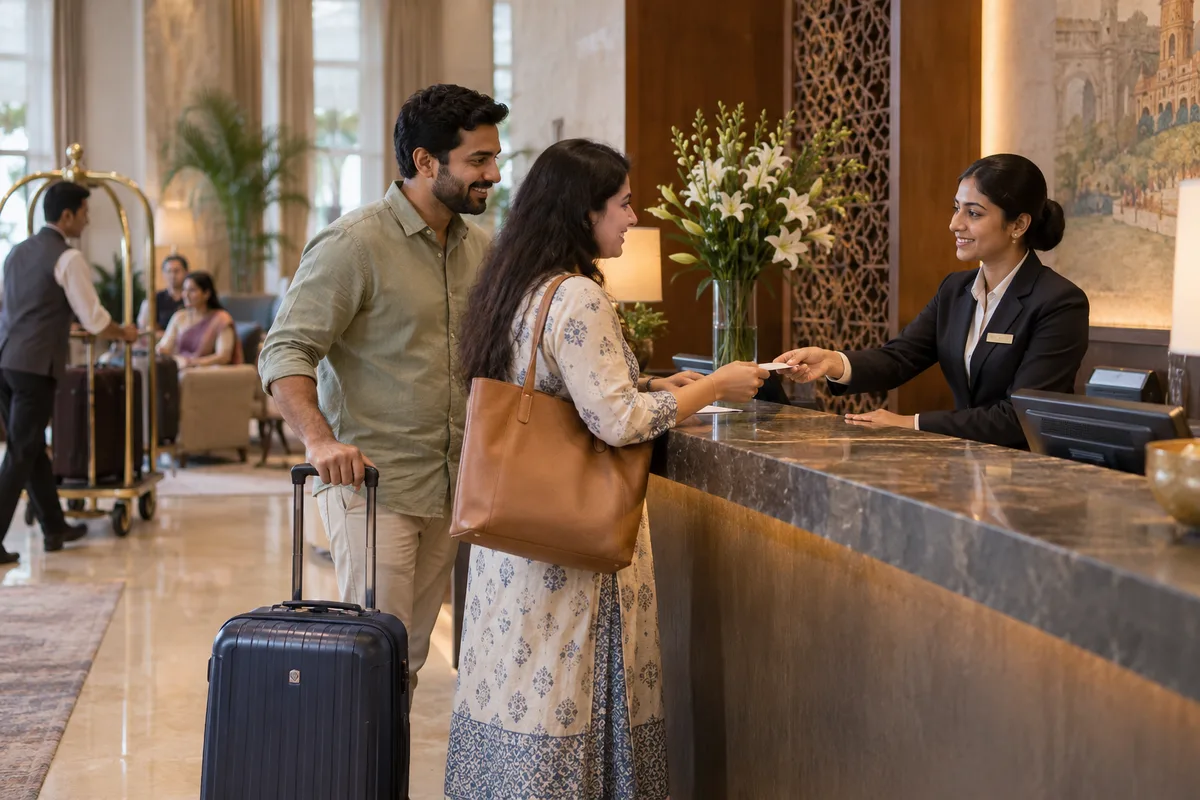
What lead generation means
Lead generation is the combined work of every channel that brings in a new enquiry, whether from search, adverts, referrals or a stall at an exhibition. GullySales runs these channels together and reports the number of enquiries each one produced, not the activity behind it.
Last updated 5 Oct 2026.
For hotels
Where it usually goes wrong, and what we would do.
“A room night and a wedding date are different leads”
A traveller wants a room for a night and decides on a screen. A wedding family wants a hall for a date, visits in person and asks for an itemised quote. A corporate travel desk wants a negotiated rate for the year. One enquiry form for all three loses the detail each one needs.
“The OTA keeps the name of your guest”
When a booking arrives through MakeMyTrip or Booking.com, the platform holds the relationship and you hold a reservation. Part of lead generation is getting a WhatsApp number from that guest at check-in, with their agreement, so the next stay does not pay commission again.
“Enquiries arrive on several doors and are logged on none”
A banquet call lands at the front desk, a message on Instagram, a form on the website, a note from a wedding planner and a walk-in on a Sunday. When every door has its own notebook, nobody can say which one brought the booking, or which deserves the next rupee of spend.
“The planner is a lead source with a memory”
Wedding planners, decorators and travel agents place families and groups at a venue again and again. They remember the hotel that gave a clear quote and a courteous site visit. Treating them as a standing source, with their own rate sheet, gives the sales team a repeat route into bookings.
What we do
What we deliver for hotels.
Every deliverable, what it covers for you, and the result it is there to produce. Nothing here is an extra.
Separate enquiry routes for rooms, banquets and corporate stays
A form, a WhatsApp message and a call script for each buyer, asking for the dates, headcount or rate need that the reply depends on.
Result: Each enquiry arrives with the facts needed to quote.
Source recorded on every enquiry
One field at the front desk, on the website form and in the message tool, naming where the enquiry started.
Result: You can read which source brought last season's bookings.
Guest contact capture for OTA bookings
A check-in step that asks the OTA guest for a WhatsApp number and permission to message about a direct rate next time.
Result: A guest booked through an OTA becomes a contact you can reach.
A source list of planners, agents and travel desks
Local wedding planners, decorators, tour operators and travel agents, each with a rate sheet and venue pack suited to what they sell.
Result: The sales team knows whom to call before a busy period.
A named owner for each enquiry door
One person at the hotel responsible for each route, so a banquet message sent on a holiday is not left for someone to notice.
Result: No enquiry sits without a person answerable for it.
How the result is measured
- Enquiries generated
- Cost per enquiry
- Enquiries by source
Recorded as a baseline before work starts, so every later report has an honest comparison.
What to capture or send
A hotel needs different facts for a room enquiry and for a banquet enquiry.
A room night and a wedding date are different leads. The sheet records the fields each one needs and the door it came through.
- Source door: OTA, direct call, walk-in or planner
- Filled by the person who took the enquiry. Shows which door sent guests who stayed, which the OTA never reveals.
- Banquet date, headcount and function type
- Filled on the first call or chat. Lets the sales manager check hall availability and a menu before the family visits another venue.
- Room nights, rooms and guest purpose
- Filled by the reservation desk. Separates a business stay from a family stay so the right rate and reply go out.
- Planner or decorator who referred the family
- Filled when named. Records the referrer so the property can thank them and see which vendors send weddings.
- Rate quoted and the date of the quote
- Filled by the seller. Stops two staff giving two different figures and lets a follow-up use the same one.
- Guest's phone number and permission to write
- Filled at the desk or on the form. Turns an OTA guest into a contact the property may reach, with their consent.
Who it is for
This is written for these hotels.
- Business and transit hotels
- Boutique and heritage properties
- Resort and destination hotels
- Budget and mid-market chains
- Banquet and wedding-focused properties
- Serviced apartments and long-stay properties
Not for
It is not the right fit if.
- Nobody at the property can answer an enquiry on the day it arrives, so more leads would reach a hall that has already lost the family
- Your front desk does not record where a guest heard of the hotel, so a new lead source could never be traced to a booking
- The hall and rooms are sold out for the coming season, and the enquiries would only be turned away
How it works
How the lead generation work runs
The work itself, in order. How an engagement starts, from your brief to a written scope, is set out on our method page.
- 1
Understand your capacity
We ask how many enquiries your team can answer well, who answers after hours, and what a good enquiry looks like. Without this, the system fills a funnel nobody is watching.
- 2
Audit current sources
We read your call log, WhatsApp chats, enquiry sheet and platform dashboards. The baseline is recorded: enquiries by source, reply time, conversion and cost per order.
- 3
Strategise the channel mix
Search and maps are chosen for people ready to buy, ads for people who are not yet looking, and content and referrals for trust.
- 4
Implement capture and follow-up
Pages, forms, tags, the lead record and the first-reply message are built and tested end to end. We submit test enquiries ourselves before any media money is spent.
- 5
Measure and optimise
Enquiries are traced to source and judged by what became orders, not by volume alone. Channels that fill the sheet with poor enquiries are cut back. How often you are reported to is agreed in writing.
Proof
What happened when owners fixed this.
Real clients, the work we did, and the result as it was recorded. Where no number was recorded, none is claimed.
Hotel Felicity Inn
- Situation
- A traveller compares three hotels on a phone and books one. The website was not built for that.
- What we did
- The site rebuilt around booking
- Photography and one look
- Search work for destination searches
- Content a traveller reads
- Result
- Online bookings increased 35%
- Organic traffic increased 50% within six months
- Positive reviews on Google and TripAdvisor increased 30%
Also worked with
Chord Road Hospital · Curtain Label · Difesa Security Services · Hands On CSR · Implevista · Kambar Group · Kalessi · Kerur Pain Clinic · LL Trust · Lucky Deals · Natural Gases · NavaShakthi Souhardha · NewCom Logistics · Proton Technical Services · SB Engineering · Shakthi Foundation · Shakthi Group · Urbanest · Insyde Studio · Venkateshwara Laser Tech · Vivara Studios
Where this fits
Three pieces of sales work, in this order.
This work sits inside sales process design, at stage 1, prospecting and lead generation. The audit comes before it, and sales management keeps it running.
Step 1
Sales audit
Find where deals are being lost and what to fix first.
Start here if you cannot say where orders are lost.
Step 2 · you are here
Sales process design
One written way to sell, from first enquiry to repeat order.
Start here if every salesperson sells differently.
Step 3
Sales management
A target, a review routine and someone who owns the number.
Start here if the team has targets and no routine.
FAQ
Questions owners ask before they call.
Not here? More answers, or ask on WhatsApp.
Should we spend on advertising before fixing the enquiry routes?
Is an OTA booking a lead or a sale?
How do we know a source was worth the effort?
How do we trace a banquet lead to its source?
How much does it cost?
How long is the contract?
How soon will we see results?
Who will actually do the work?
What do you need from us?
What if we are not happy with the work?
From the blog
Further reading for hotels.
 6 min read · 14 Oct 2026Building an off-season plan for a hotel, resort or venueHow to fill the quiet weeks with local residents, corporate meetings and low-cost packages, using a planning sheet that sets the floor price before the offer goes out.
 5 min read · 6 Oct 2026What buyers check before they book a stay or a catererGuests, tenants and event families judge hotels, homestays, PGs, serviced apartments and caterers on the same four checks. Here is what each check looks like and how to pass it.
 8 min read · 21 Sept 2026Premium audience advertising strategyNo platform in India sells you verified income. Everything offered as affluence targeting is inference, and the cheapest filter you own is putting the price in the first frame.
More for hotels
Everything else we would do for you.
Closest to this: leads and follow-up
Also for hotels
Or start from the overview: sales and marketing for hotels.
Your next practical step
Tell us what you are trying to grow, and we will read it before we call.
Eight short steps, mostly taps. Skip anything you would rather answer on the call.