Paying guest accommodations · Digital customer journey design
A tenant should get the right message at each step, and no reminder for work done.
Digital customer journey design for a PG sets out the WhatsApp messages, emails and forms a person receives between the first enquiry and the day they move out, and what starts and stops each one. GullySales maps the messages the house already sends, writes the sequence and builds it in the tools the PG has.
Scope, fee, reporting and term are agreed in writing after we have read your brief and spoken to you.

What digital customer journey design means
Digital customer journey design sets out the app notifications, WhatsApp messages, emails, and SMS a customer receives between human conversations, including what starts and stops each message. GullySales maps your existing messages, writes the sequences, and builds supported flows in your current tools, with clear points where your sales or service team takes over.
Also for paying guest accommodations
- Churn analysis and reduction for paying guest accommodations
- Customer adoption programmes for paying guest accommodations
- Customer health scoring for paying guest accommodations
- Customer onboarding for paying guest accommodations
- Customer success automation for paying guest accommodations
- Customer support process design for paying guest accommodations
- Renewal management for paying guest accommodations
- Content marketing for paying guest accommodations
Sales and marketing for paying guest accommodations, the overview.
Last updated 14 Nov 2026.
For paying guest accommodations
Where it usually goes wrong, and what we would do.
“The enquiry that gets a rate card and silence”
A student messages about a bed and receives a pasted rate card, then nothing. The next step, a visit, was never offered. A journey sets the first reply, the question about move-in date and room type, and the visit invitation, so the enquiry does not end on a list of prices. The enquirer who gets no visit offer books with the PG that did offer one, even if the room is the same.
“Documents asked for twice”
A tenant sends an identity proof on WhatsApp, and two days later the warden asks again because the first was in another chat. A journey says where documents go, who confirms them and which message stops once they are received. The fix is rarely more reminders; it is one place where each document lives and one person who marks it received.
“Payment reminders after payment”
The advance is paid, but the reminder still goes out, and the guardian calls to ask if it arrived. The rule must read the payment record and stop. Where the record is a hand-written ledger, the first task is a place the message can read. Until a paid advance is recorded where the message tool can see it, a person must stop the reminder by hand, and that step is written down.
“Move-out with no closing steps”
A tenant leaves, and the key, the room check and the deposit settlement are handled in three different chats. A journey lists the steps from notice to settlement, names who sends each message and records when the tenant has confirmed the room is handed back. The handback list also protects the tenant, since the room check and the deposit settlement are recorded in the same place.
What we do
What we deliver for paying guest accommodations.
The work available for this need. We agree the deliverables and responsibilities for your engagement in writing.
A map of the tenant's steps
One page showing enquiry, visit, advance, documents, move-in, stay, notice and move-out, with the message or form at each step and the person who owns it.
Result: The owner can see every message a tenant receives.
First-reply and visit-booking messages
Written replies for the first enquiry, with the questions asked and a visit invitation, ready to send from WhatsApp Business.
Result: Every enquiry gets the same first reply and an offer to visit.
Document and agreement collection
A message and a folder for collecting identity proof, the agreement and the guardian's details, with a note that stops reminders once received.
Result: A tenant is never asked twice for a document already sent.
Booking and move-in confirmations
Confirmations that give the room, the address pin, the arrival instructions and the house rules, drafted once and filled from the register.
Result: A new tenant arrives knowing the room, the door and the rules.
Stop and handover rules
Rules for which events end a message sequence and which replies pass to the warden or owner, such as a payment, a question or a complaint.
Result: A reply from a tenant always reaches a person.
Notice and move-out sequence
The messages from notice to handback, with a checklist for the room and the deposit, and a final message asking how the stay went.
Result: Every move-out closes with a recorded handback.
How the result is measured
- Delivery, reads, and link clicks by channel, treated as activity rather than sales
- Customers completing the intended stage
- Replies handed to the responsible person and time to response
Recorded as a baseline before work starts, so every later report has an honest comparison.
Who it is for
This is written for these paying guest accommodations.
- Boys' and girls' PG accommodations near colleges
- Co-living spaces for working professionals
- PGs near tech parks and business hubs
- PGs near hospitals for patients and attendants
- Furnished single and shared-room PGs
- Multi-property PG chains
Before you decide
Agree the work. Know how to judge it.
Digital customer journey design for paying guest accommodations: use these checks to prepare, choose the scope, and review what changes.
Bring the right evidence
Review repeat orders, inactive customers, and reasons for leaving. Separate a normal buying interval from a customer who stopped because of an unresolved problem.
Make the scope clear
Choose the customer group and the reason to contact them. Agree how complaints, renewal decisions, and additional offers are handled, including when a sales message is inappropriate.
Check the work in use
Track the response through to a retained or repeat order, with discounts and service costs visible. Record why the customer returned rather than crediting every repeat purchase to the campaign.
Know when to change course
If customers leave because delivery is unreliable, fix that before offering a loyalty reward. Repeated promotions can hide the cause without improving the experience.
These are discussion points, not a fixed package. GullySales confirms the deliverables, responsibilities, fee, and term in writing after reading your brief and speaking with you.
Before we start
What to have ready before the work starts.
The records, access and decisions this work needs from paying guest accommodations. Anything missing is noted in the written scope, with who will supply it.
- The messages you send now, as they are
- We need screenshots or copies of real messages, including the ones typed by hand. Without them we rewrite from guesswork, and the new sequence ends up conflicting with what tenants already received. Messages typed late at night differ from those typed in the morning, and the differences are the useful part.
- A single place for tenant records
- Messages can only stop when something changes if there is a record that changes. If payments sit in a notebook, we need a sheet or tool where the status can be set, even a simple one. Even a basic status column, with paid, received and pending, is enough to stop a message at the right moment.
- Consent from tenants and guardians
- Messages to guardians need the tenant's agreement and the guardian's number given willingly. If consent is not recorded, we pause customer messages and build internal steps first. Where a guardian has not agreed to messages, the warden is told to phone, and that route is part of the journey.
- The correct details of rooms and rules
- Room types, what is included, rent terms and house rules are repeated in several messages. If they are out of date, the journey repeats the error at scale, so they must be confirmed first. Errors in a room type or a rule are corrected before the messages are written, not after tenants have read them.
- Access to the WhatsApp Business account
- The owner holds the account and the login. We prepare the messages and settings; the owner signs in, accepts the platform's terms and keeps control. Without access, the work stays on paper. We never ask for a password; the owner signs in, and we prepare the content and the settings.
How it works
How the digital customer journey design work runs
The work itself, in order. How an engagement starts, from your brief to a written scope, is set out on our method page.
- 1
List every message the PG sends now
We collect the messages the owner, warden and staff send across WhatsApp, email and calls, and mark which ones repeat, conflict or are typed by hand each time. The collection shows how the same fact, such as the food timings, appears in three versions in three chats.
- 2
Draw the tenant's path
We lay the messages along the path from enquiry to move-out and find the gaps: steps with no message, and steps with two. A step with no message is a place where tenants wait; a step with two is where they get confused.
- 3
Decide what starts and stops each message
For each message we write the event that starts it and the event that stops it, using only records the tools can read, such as a payment entry or a tick in the register. Where no record exists to stop a message, we add a field in the register, and name who updates it.
- 4
Write the messages in the house's voice
Each message is drafted in plain words, checked by the owner against what is actually true about rent, food and rules, and approved before anything is built. The owner checks each message against what is true in the house, because a message that overstates the room costs a review later.
- 5
Build in the existing tools
We set up what the PG's current tools can support, such as WhatsApp Business replies and a register, and mark where a person must take over. We do not build what the tools cannot keep up; a smaller sequence that runs is better than a larger one that stalls.
- 6
Test with a sample tenant
We walk a sample tenant through the whole path, from enquiry to move-out, and fix messages that fire at the wrong time. We then read the result against the messages recorded at the start. We keep the test notes, so the owner sees which messages needed changing and why.
Where this fits
Three pieces of sales work, in this order.
This work sits inside sales process design, at stage 1, prospecting and lead generation. The audit comes before it, and sales management keeps it running.
Step 1
Sales audit
Find where deals are being lost and what to fix first.
Start here if you cannot say where orders are lost.
Step 2 · you are here
Sales process design
One written way to sell, from first enquiry to repeat order.
Start here if every salesperson sells differently.
Step 3
Sales management
A target, a review routine and someone who owns the number.
Start here if the team has targets and no routine.
FAQ
Questions owners ask before they call.
Not here? More answers, or ask on WhatsApp.
Is this just a set of automatic messages?
Which channels does it cover?
Does a small PG need this?
Can you build it without a CRM?
What if a tenant replies to an automated message?
Do you promise more bookings from the journey?
How much does it cost?
How long is the contract?
How soon will we see results?
Who will actually do the work?
From the blog
Further reading for paying guest accommodations.
 5 min read · 6 Oct 2026What buyers check before they book a stay or a catererGuests, tenants and event families judge hotels, homestays, PGs, serviced apartments and caterers on the same checks. What each looks like.
 7 min read · 21 Sept 2026How to advertise to young professionals in their first earning yearsIncome with no history, a rented room on an eleven-month lease and six friends who decide together. The money is real, the credit check is the hurdle.
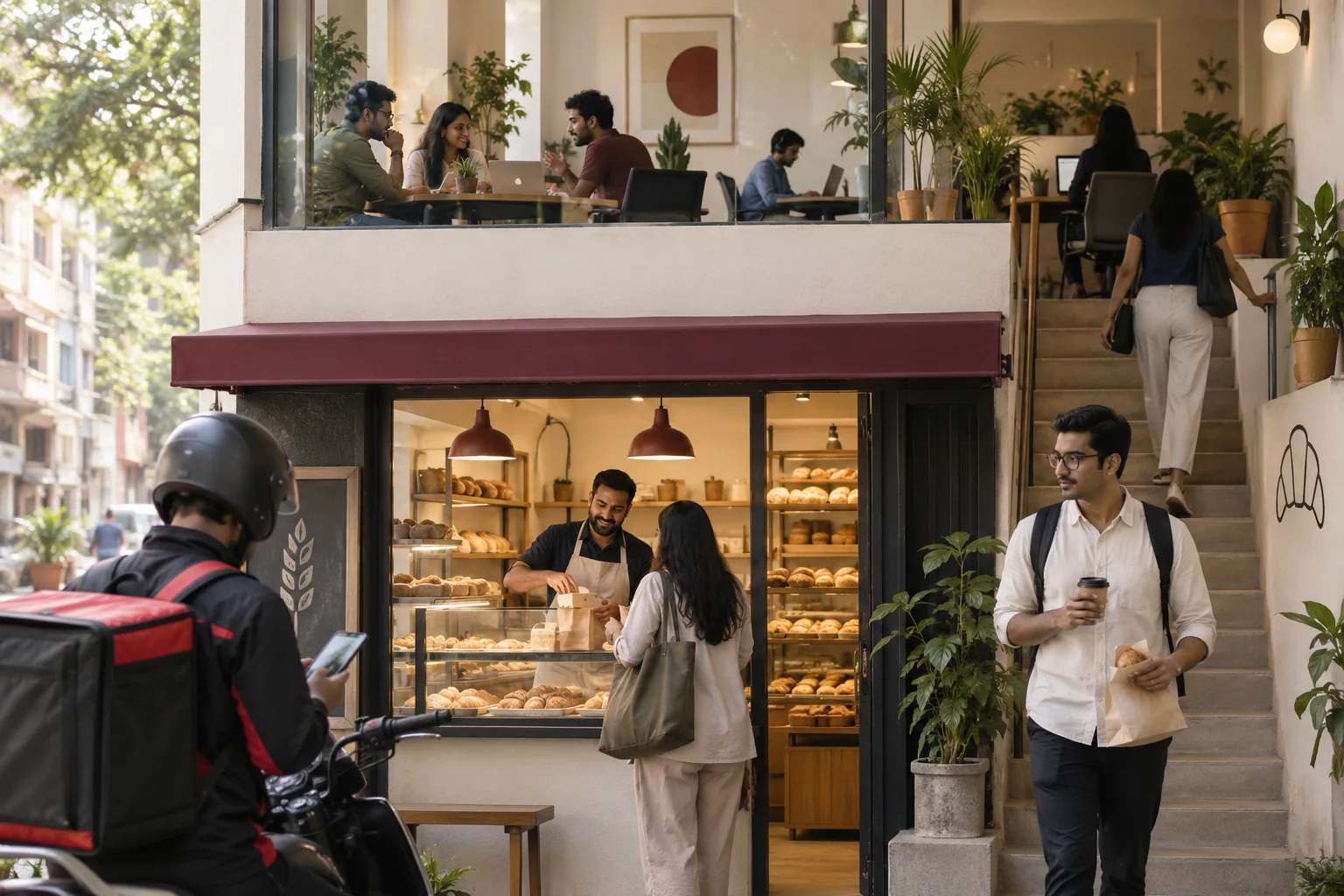 7 min read · 21 Sept 2026How to advertise to startup employeesThere is no tech park to buy. A forty person company sits above a bakery, so the audience is the neighbourhood, the delivery app and the coworking floor.
More for paying guest accommodations
Related work to consider.
Closest to this: customers after the sale
- Churn analysis and reduction for paying guest accommodations
- Customer adoption programmes for paying guest accommodations
- Customer health scoring for paying guest accommodations
- Customer onboarding for paying guest accommodations
- Customer success automation for paying guest accommodations
- Customer support process design for paying guest accommodations
- Renewal management for paying guest accommodations
Also for paying guest accommodations
Or start from the overview: sales and marketing for paying guest accommodations.
Your next practical step
Tell us what you are trying to grow, and we will read it before we call.
Eight short steps, mostly taps. Skip anything you would rather answer on the call.