Restaurants · Corporate photography
Show the dining room, the kitchen pass and the people who serve before guests arrive.
Corporate photography for a restaurant records the place itself: the dining areas, the private room, the kitchen at work and the team on the floor. GullySales writes a shot list from the questions guests ask before booking, agrees consent and kitchen rules in advance, and hands over labelled files for Maps, your website and the party menu.
Scope, fee, reporting and term are agreed in writing after we have read your brief and spoken to you.
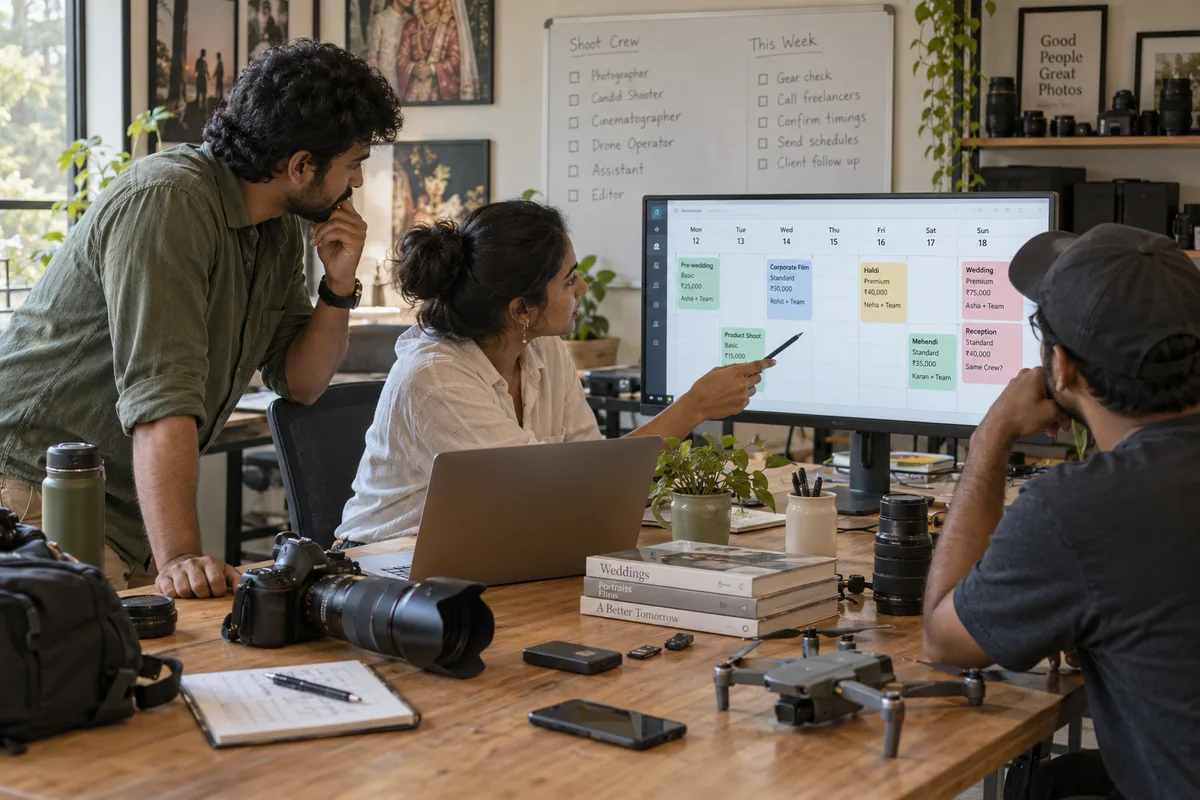
What corporate photography means
Corporate photography records your business as it is: the premises, the team, the work in progress and the equipment in use. GullySales builds the shot list from the questions your buyers ask, agrees consent and site rules before anyone picks up a camera, and hands over named, labelled files for the places each image will appear.
Last updated 14 Nov 2026. Rules for this trade differ by state and professional body, and they change. We describe restrictions in general terms, so check the current position with your own council or adviser before you publish anything.
For restaurants
Where it usually goes wrong, and what we would do.
“Maps photographs show the opening week, not tonight's room”
A guest comparing three places on a phone judges the room from the pictures on the listing. If those show old interiors and a menu that has changed, the guest picks the place whose photographs look like the restaurant today.
“The organiser of a group dinner wants to see the private area”
The person booking a birthday or a kitty party is asking where the group will sit, whether a cake table fits and how loud the room is. A clear set of images of that area, sent on WhatsApp, answers the call before it is made.
“A shoot in service hours disturbs the guests who are paying”
A photographer with lights and a tripod between tables at the dinner rush annoys diners and slows the kitchen. The shoot belongs in the quiet gap before opening, with tables laid and the lights set as they are in service.
“Staff and diners appear in frames nobody approved”
A waiter in the background, a regular at the corner table or a child at a party can end up on a hoarding or a reel. Each person who appears needs to know where the image will run, and guests are kept out of frame unless they agree.
What we do
What we deliver for restaurants.
The work available for this need. We agree the deliverables and responsibilities for your engagement in writing.
Guest-question shot list
A written list of images by area and purpose: entrance, the table you would be seated at, the private room, the live counter, the kitchen pass, the team in uniform. Each line notes which guest question it answers.
Result: You can tick every image against a question guests already ask.
Kitchen and floor rules
A one-page record of hygiene dress, areas that stay closed to cameras, stock, labels and documents to clear from view, and which hours the shoot may use. Your head chef and manager sign it off.
Result: The chef and manager have approved the rules before the camera comes in.
Consent forms for staff and guests
One form for each person who appears, saying where the image may be used and for how long. Staff are told in advance and may decline, and guests who are present are asked before they are included.
Result: Each image with a person in it has a signed form on file.
Labelled image library
Files named by area, dish and intended use, with a note of who appears and what consent covers. Sizes are prepared for Maps, the website, the party menu and delivery listings.
Result: Anyone on the team can find the right image without asking the photographer.
Maps and listing refresh list
A list of the images to upload to your Google listing and aggregator profiles, and the old ones to retire. The owner uploads and keeps the logins.
Result: Your listing shows the restaurant as it looks now.
How the result is measured
- Shot-list images delivered and approved
- Consent forms held for every person in a published image
- Pages still carrying stock images
Recorded as a baseline before work starts, so every later report has an honest comparison.
Who it is for
This is written for these restaurants.
- Family restaurants and multi-cuisine dining
- South Indian vegetarian restaurants and darshinis
- Biryani, kebab and non-vegetarian specialists
- Regional cuisine restaurants
- Casual dining and bar restaurants
- Quick service restaurants and food courts
- Cloud kitchens and delivery-only brands
- Office canteens and food service operators
- Multi-outlet restaurant groups
Before you decide
Agree the work. Know how to judge it.
Corporate photography for restaurants: use these checks to prepare, choose the scope, and review what changes.
Bring the right evidence
Identify the product, process, or buyer question the images or film must explain. Gather reference material and confirm permission for people, premises, and client work that may appear.
Make the scope clear
Agree the shot list, formats, usage rights, and approval stages before production. Separate filming or photography from editing, animation, and later adaptations.
Check the work in use
Check the finished asset in the place it will be used: a mobile page, presentation, advert, or product listing. Look at crop, captions, sound, and whether the important detail remains clear.
Know when to change course
Do not present an illustration or generated scene as evidence of client work. If a claim needs a real product demonstration, obtain that evidence before using the asset to support it.
These are discussion points, not a fixed package. GullySales confirms the deliverables, responsibilities, fee, and term in writing after reading your brief and speaking with you.
Before we start
What to have ready before the work starts.
The records, access and decisions this work needs from restaurants. Anything missing is noted in the written scope, with who will supply it.
- A quiet block of time with the room empty
- The best pictures are taken without guests. Choose a morning or a closed day and hold it for the shoot. If the room cannot be emptied, we limit the work to the kitchen and the table settings. Tell us the day and the hours, and keep the staff roster clear of the usual lunch crowd.
- The private area set as for a party
- Organisers want to see the room as it will be on the day. Lay the table and decor you actually use. Without it, the photograph shows a bare room that does not sell the booking. Include the cake table and the seating plan you offer to organisers.
- Staff consent forms, signed
- People who appear in the library need to agree. Have the forms signed before the shoot, not after, because a photograph approved late is hard to take back once it sits on a listing. Anyone who has not signed is left out of the frame.
- Your kitchen hygiene routine
- The photographs must not suggest anything that is not true. Tell us how the kitchen is set for work and what you do not want shown. We write no hygiene claim in the captions. Also let us know which parts of the kitchen you prefer not to show.
- Access to the Maps and app listings
- New photographs are uploaded to the listings. Provide the logins or the person who holds them. Without access, the library exists but nothing is replaced. Tell us which pictures to remove, and keep copies of the old ones for your own records.
How it works
How the corporate photography work runs
The work itself, in order. How an engagement starts, from your brief to a written scope, is set out on our method page.
- 1
List the questions guests ask about the room
We collect the questions callers and organisers ask: is there a private area, how big is the table, where is the parking, can we see the kitchen. You add the ones you hear. Each question becomes a shot that answers it, which forms the shot list. We keep a log of the questions that come from the private area enquiries, since organisers ask the same ones.
- 2
Walk the premises with the manager
We go through the dining areas, private room, entrance, parking and kitchen pass with you, marking where light falls and which corners look untidy. You decide what may be photographed. We agree the hours and spots before the camera comes out. We photograph the route from the gate to the table, because a guest unsure of the way will not come.
- 3
Fix the rules for kitchen and floor
We write down the kitchen rules for the shoot: hair covered, gloves, clean surfaces, nothing raw on show. You approve. Your chef or kitchen head stays with us to say where the camera may go. The kitchen head also signs off the list of surfaces and equipment that may appear in a frame.
- 4
Collect consent from staff and guests
We prepare a short consent form for staff who will appear and a plan for guests, either a closed session or a card on the table. You collect the signatures. Anyone who declines is kept out of the frame. Guests who object during a service session are left out of the frame and the shot is repeated later.
- 5
Shoot outside service hours where possible
We schedule the main shoot when the room is empty, with a short session during service only for the kitchen at work, and with the guests' consent. You choose the time. The team is not disturbed and paying guests are not photographed. A short session at service time captures the team at work, but only when the manager allows it.
- 6
Label the library and refresh the listings
We name and sort the images by space and use, and prepare the list of listing photographs to replace on Maps and the apps. You approve the selection. The old photographs come off once the new ones are live. The labels carry the space, the use and the date, so a new manager can find the right picture without asking.
Where this fits
Three pieces of sales work, in this order.
This work sits inside sales process design, at stage 1, prospecting and lead generation. The audit comes before it, and sales management keeps it running.
Step 1
Sales audit
Find where deals are being lost and what to fix first.
Start here if you cannot say where orders are lost.
Step 2 · you are here
Sales process design
One written way to sell, from first enquiry to repeat order.
Start here if every salesperson sells differently.
Step 3
Sales management
A target, a review routine and someone who owns the number.
Start here if the team has targets and no routine.
FAQ
Questions owners ask before they call.
Not here? More answers, or ask on WhatsApp.
Is this the same as dish photography for the menu?
Can we claim the kitchen is hygienic in the captions?
Do we have to close for the shoot?
Is this the same as menu photography?
What should a caption say about the kitchen?
How much does it cost?
How long is the contract?
How soon will we see results?
Who will actually do the work?
What do you need from us?
From the blog
Further reading for restaurants.
 6 min read · 21 Sept 2026Radio advertising vs social media advertising: where should your money go?Radio reaches a driver who cannot click. Social reaches a thumb that can. One buys a name people remember, the other buys the enquiry itself.
 7 min read · 21 Sept 2026Local audience targeting strategyThree people are local to you: the one who lives near, the one who works near and the one searching near. The settings that reach each differ.
 6 min read · 21 Sept 2026Influencer marketing vs social media advertising: which one should you pay for?An ad is a message you control, shown to people you choose. A creator post is a recommendation you do not control, shown to people who chose the creator.
More for restaurants
Related work to consider.
Closest to this: content and social
Also for restaurants
Or start from the overview: sales and marketing for restaurants.
Your next practical step
Tell us what you are trying to grow, and we will read it before we call.
Eight short steps, mostly taps. Skip anything you would rather answer on the call.