Heavy equipment and forklift dealers · Branding
Every dealer on the road sells the same iron, so be known for uptime.
Branding for an equipment dealership is what a contractor believes about your service before the need arises. It is the lettered field truck, the technician who answers, and the trade-in number that held up. GullySales settles how the dealership presents itself within the manufacturer rules and puts it on what buyers meet.
Scope, fee, reporting and term are agreed in writing after we have read your brief and spoken to you.
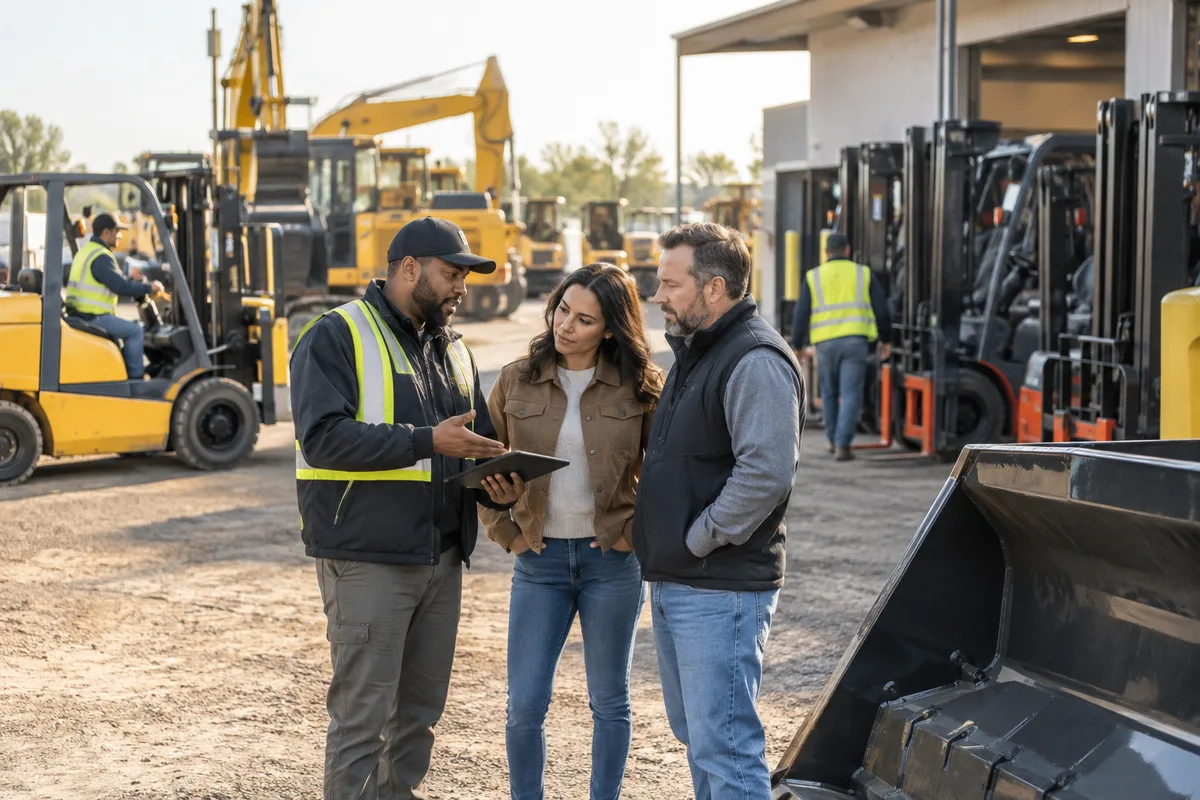
What branding means
Branding is what a customer remembers about your business beyond the product, including your name, colours, tone of voice and what you are known for locally. GullySales sets or corrects this once and applies it consistently across your website, signage and adverts so the business looks like one company everywhere.
Also for heavy equipment and forklift dealers
- SEO for heavy equipment dealers
- PPC ads for heavy equipment dealers
- Lead generation for heavy equipment dealers
- Digital marketing for heavy equipment dealers
- Reputation management for heavy equipment dealers
- Local SEO for heavy equipment dealers
- Social media for heavy equipment dealers
- Content marketing for heavy equipment dealers
Sales and marketing for heavy equipment and forklift dealers, the overview.
Last updated 5 Oct 2026.
For heavy equipment and forklift dealers
Where it usually goes wrong, and what we would do.
“The manufacturer owns half your identity”
Signage, colours and logo use are set by the dealer agreement and checked when you claim co-op. What is left is the part buyers remember.
“A field service truck parks on a jobsite all day”
A crew watches it for eight hours. Lettering, a tidy deck and a technician in a shirt with a name on it does more in your territory than any advertisement.
“The appraisal number is a promise”
A trade-in figure that stands up at inspection is why a contractor calls you for the next machine. A number pulled out of the air ends the relationship at delivery.
What we do
What we deliver for heavy equipment and forklift dealers.
Every deliverable, what it covers for you, and the result it is there to produce. Nothing here is an extra.
A presentation standard for trucks, shop and staff
Vehicle lettering, shirts, identity cards and a rule for how the yard and service bays look before a customer walks in, written down once.
Result: Every contact with the dealership looks like the same company.
The manufacturer brand rules on one sheet
What your programme allows on logo use, model naming and claims, kept where whoever builds an advertisement will read it.
Result: Nothing goes out that has to be redone or gets a co-op claim refused.
A used equipment condition standard
One way of stating hours, wear, service history and known faults on every unit, used on the lot, the listings and the invoice.
Result: Buyers learn that your description matches the machine.
A trade-in appraisal document
The inspection points, the photographs taken and the reasoning behind the number, handed to the customer instead of a figure over the phone.
Result: The trade conversation stops being an argument.
An uptime commitment written in plain words
What happens when a machine goes down, who answers, what the field response arrangement is and what it is not.
Result: The thing you sell on is finally written down.
One delivery and quote pack
The quote, the finance sheet, the warranty summary and the delivery folder produced as one set rather than assembled by each salesman.
Result: A buyer takes home something that looks like a dealership.
How the result is measured
- Recognition in customer feedback
- Consistency across channels
- Repeat enquiries by name
Recorded as a baseline before work starts, so every later report has an honest comparison.
Positioning in one sentence
Fill this sentence in for the dealership, and the yard, the service van and the quote will say the same thing.
- Who it is for, as a contractor or an operator
- Name the buyer and the machine: a road contractor buying a backhoe loader, a warehouse buying forklifts, a farmer buying a compact tractor. Each buyer compares different things.
- What you sell and service, by make and type
- List the makes you are authorised for, new or used, and the service and spares you handle. Use the names buyers use, such as backhoe loader, telehandler, 3-tonne diesel forklift.
- What a buyer gets that the other dealer does not
- Choose one that is true: a service truck on the road, parts in stock for a model, a rental unit while theirs is repaired. It must be something your yard can show, not a promise of uptime.
- The proof you can show
- Show your authorisation letter, photographs of machines with hour readings, service records of machines you sold, and customers who will take a reference call. Be honest about used machine history.
- Words every dealer uses
- Best price, genuine parts and complete support appear on every hoarding. Replace them with the stock of parts you hold, the service area and the makes you serve.
- The name and tagline test
- Check how the dealership name sits beside the maker's name on a board. The maker's rules may decide size and place; your own name still needs to be readable and match your registration.
Who it is for
This is written for these heavy equipment and forklift dealers.
- Full-line construction equipment dealers for a single manufacturer
- Independent used equipment dealers and brokers
- Forklift and material handling dealers running a service fleet
- Compact tractor and agricultural equipment dealers
- Crane, telehandler and aerial lift specialists
- Attachment, tyre and wear parts suppliers
- Dealers running a rental fleet alongside sales
- Single-location dealers competing with a multi-state group
How it works
From your first message to the first report.
No open-ended retainer. Every step gives you something in writing.
First
Your brief
You tell us what you need in a few short steps: your business, what you want, where enquiries come from and how they are handled.
After the brief
A conversation and a written scope
We read it, then talk with whoever handles your enquiries. If you want our help, the scope, the fee and the reporting come in writing, and nothing starts before you have read them.
Before work starts
Baseline recorded
The numbers this work is meant to move, such as enquiries, quotations, orders, visits or renewals, written down so every later report has an honest comparison.
After the baseline
The first fix goes live
The fix we agreed to start with is put in place and measured against the baseline, whether that is a reply, a follow-up, a page, a listing or the handover between marketing and sales.
As agreed
Report against the baseline
What moved, what did not, and what changes next, in plain words. How often you get it is set in writing before work starts.
At renewal
Renew on the numbers
The term ends and you decide whether to continue from the results. The length is agreed in writing before anything starts.
How the branding work runs
- 1
Interview customers and team
We talk to real buyers, won and lost, and to people inside the business who deal with customers daily.
- 2
Review the competitive field
We look at how the nearest competitors present themselves so the position is not accidentally identical.
- 3
Draft the position
A first version of the positioning statement and messaging pillars is written and checked against what customers actually said.
- 4
Test it against real conversations
The draft is tried out in a real sales call or two before it is finalised, since a position that does not survive a real conversation needs rework.
- 5
Hand over the rollout brief
The final position, pillars and not-for list are documented for your team and any agency to apply consistently.
Why us
Why owners pick GullySales over an agency.
Marketing and sales, as one job
Most agencies stop at the enquiry. We also fix what happens after it: the reply, the follow-up, the quote and the CRM.
The person on the first call does the work
No account managers in between. You are never handed to someone you have not met.
A baseline before anything starts
Your numbers are written down on day one, so every later report compares against something honest.
The fee in writing, split three ways
Our time, your media spend and production on separate lines. You always see what goes to us.
No guarantees we cannot keep
The term is agreed in writing and never a default twelve months. We never promise a ranking or a lead count, because nobody controls those.
Hours that fit your day, agreed up front
Which hours we overlap with yours is settled before any work starts, so you know when a reply is coming and when it is not.
#257, 3rd floor, Sri Nanjundeshwara Complex, Nagarbhavi 8th Block, Outer Ring Road. How we work.
Your brief
Tell us what you need, and we will read it before we call.
Eight short steps about your business, what you want and who decides. Most questions are a tap, and you can skip any you would rather answer on the call.
FAQ
Questions owners ask before they call.
Not here? More answers, or ask on WhatsApp.
Can we use the manufacturer logo in our own advertising?
Do we need a new logo?
Should a used machine business carry a different name from the new dealership?
Can we use a maker's photographs and specification sheets?
How much does it cost?
How long is the contract?
How soon will we see results?
Who will actually do the work?
What do you need from us?
What if we are not happy with the work?
More for heavy equipment and forklift dealers
Everything else we would do for you.
Or start from the overview: sales and marketing for heavy equipment and forklift dealers.
Your next practical step
Tell us what you are trying to grow, and we will read it before we call.
Eight short steps, mostly taps. Skip anything you would rather answer on the call.