Heavy equipment and forklift dealers · Content marketing
Write down the answers your salesmen give forty times a week.
Content for an equipment dealership is the plain answer to what a buyer asks before committing. How many hours is too many, what the machine costs to run, whether the attachment fits. GullySales gets those answers out of your service and sales desks and puts them where the searching happens.
Scope, fee, reporting and term are agreed in writing after we have read your brief and spoken to you.
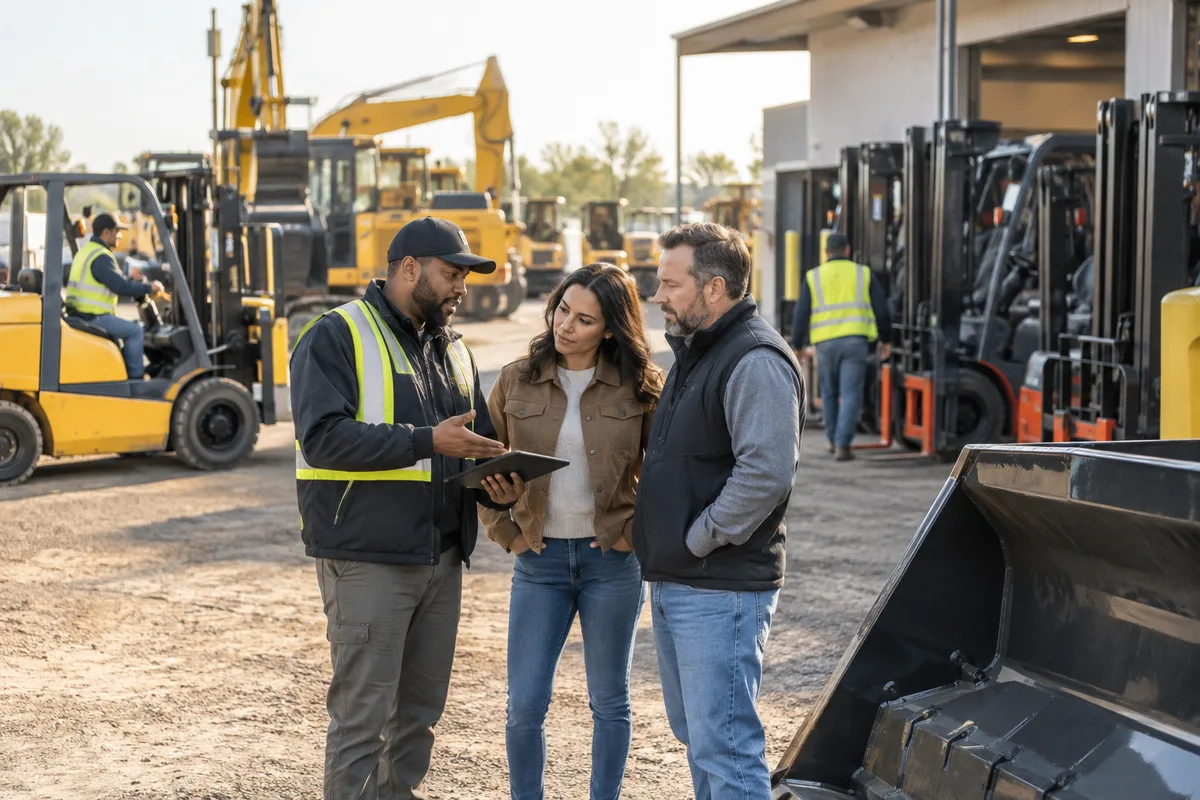
What content marketing means
Content marketing is writing articles, guides and pages that answer the questions buyers search before they are ready to enquire. This makes your business visible and trusted before the first call. GullySales plans this content from the first conversation onward, choosing topics that match real search demand rather than guesses.
Also for heavy equipment and forklift dealers
- Social media for heavy equipment dealers
- SEO for heavy equipment dealers
- PPC ads for heavy equipment dealers
- Lead generation for heavy equipment dealers
- Digital marketing for heavy equipment dealers
- Reputation management for heavy equipment dealers
- Local SEO for heavy equipment dealers
- Branding for heavy equipment dealers
Sales and marketing for heavy equipment and forklift dealers, the overview.
Last updated 5 Oct 2026.
For heavy equipment and forklift dealers
Where it usually goes wrong, and what we would do.
“Hours are the question behind every used enquiry”
A contractor wants to know what 4,000 hours on that model means for that kind of work and what the undercarriage has left. Your service manager answers it daily and nobody wrote it down.
“Attachment fit has one right answer”
A grapple suits one coupler and not another, and the buyer searching for that combination is ready to order. A page per machine and coupler brings orders from outside your radius.
“Transport decides which machine gets bought”
Width, weight and whether a permit is needed change the choice between two models, and the manufacturer brochure never mentions it.
What we do
What we deliver for heavy equipment and forklift dealers.
Every deliverable, what it covers for you, and the result it is there to produce. Nothing here is an extra.
A question list taken from the desks
Two sittings with the sales floor and the service writers, collecting what buyers ask on the phone, ranked by how often it is asked.
Result: The writing starts from real questions rather than keyword tools.
Model pages written for the jobs in your territory
Operating weight, attachment fit, running cost and the work that model actually does in your counties, in plain words rather than copied specification.
Result: Your page answers what the spec sheet leaves out.
Attachment and coupler fit guides
A guide for each compact machine class listing what fits, what needs an adapter and what a used attachment is worth checking for.
Result: Parts and attachment enquiries arrive already specified.
A transport and permit note per machine class
Transport width, weight and the permit question for each size of machine you sell, with what your yard can arrange.
Result: A buyer stops discovering the problem after signing.
Walkaround videos published with the write-up
The video filmed at check-in placed on the machine page and the model page, with the condition notes written beside it.
Result: One filming session feeds the listing, the page and the feed.
A year-end deduction explainer
A page setting out Section 179 in general terms, what a dealer can and cannot tell a buyer, and a plain instruction to confirm it with an accountant.
Result: The fourth quarter question is answered without giving tax advice.
Content reported against parts orders and quotes
Which pages brought enquiries, parts orders and quotes, reported against the baseline recorded before work starts.
Result: Writing stops being an act of faith.
How the result is measured
- Pages published
- Organic traffic
- Enquiries from content pages
Recorded as a baseline before work starts, so every later report has an honest comparison.
Questions buyers ask first
The questions a contractor asks before calling about a machine, and the page that answers each.
- How many hours is too many on a used excavator?
- A guide by machine class: what hours mean, what else to look at (undercarriage, pins, service records), and what you inspect and photograph before listing. Hours alone mislead.
- Will this attachment fit my machine?
- A fit guide per model: coupler type, pin size, hydraulic flow and the machine's rated capacity. Ask the buyer for the serial number before quoting.
- What will it cost to run each hour?
- A running cost page: fuel, wear parts, service intervals, tyres or tracks. Use your own service desk's figures and say what changes them.
- How do I get it to my site?
- A transport note per machine class: weight, trailer type, width and permit questions. State that rules vary by state and that you can arrange delivery.
- Can I finance or lease it?
- A finance page: the documents needed, the lenders you work with, and the rental-purchase option. Point the reader to the next step.
- What service and parts will I get after I buy?
- A support page: parts stock, the area your service van covers, planned maintenance agreements, and what voids the warranty. Contractors buy from the dealer they can reach on a breakdown day.
Who it is for
This is written for these heavy equipment and forklift dealers.
- Full-line construction equipment dealers for a single manufacturer
- Independent used equipment dealers and brokers
- Forklift and material handling dealers running a service fleet
- Compact tractor and agricultural equipment dealers
- Crane, telehandler and aerial lift specialists
- Attachment, tyre and wear parts suppliers
- Dealers running a rental fleet alongside sales
- Single-location dealers competing with a multi-state group
How it works
From your first message to the first report.
No open-ended retainer. Every step gives you something in writing.
First
Your brief
You tell us what you need in a few short steps: your business, what you want, where enquiries come from and how they are handled.
After the brief
A conversation and a written scope
We read it, then talk with whoever handles your enquiries. If you want our help, the scope, the fee and the reporting come in writing, and nothing starts before you have read them.
Before work starts
Baseline recorded
The numbers this work is meant to move, such as enquiries, quotations, orders, visits or renewals, written down so every later report has an honest comparison.
After the baseline
The first fix goes live
The fix we agreed to start with is put in place and measured against the baseline, whether that is a reply, a follow-up, a page, a listing or the handover between marketing and sales.
As agreed
Report against the baseline
What moved, what did not, and what changes next, in plain words. How often you get it is set in writing before work starts.
At renewal
Renew on the numbers
The term ends and you decide whether to continue from the results. The length is agreed in writing before anything starts.
How the content marketing work runs
- 1
Confirm the plan
Topics and formats for the coming month are confirmed against the content strategy.
- 2
Produce and review
Content is written or filmed, then reviewed by someone who knows your trade before it goes out.
- 3
Publish and distribute
Finished content is published to the site and pushed through the channels your buyers actually use.
- 4
Track enquiries
Enquiries are traced back to content where a direct line exists, and reported honestly where it does not.
- 5
Report and adjust
We report results and adjust the next topics based on what actually worked.
Why us
Why owners pick GullySales over an agency.
Marketing and sales, as one job
Most agencies stop at the enquiry. We also fix what happens after it: the reply, the follow-up, the quote and the CRM.
The person on the first call does the work
No account managers in between. You are never handed to someone you have not met.
A baseline before anything starts
Your numbers are written down on day one, so every later report compares against something honest.
The fee in writing, split three ways
Our time, your media spend and production on separate lines. You always see what goes to us.
No guarantees we cannot keep
The term is agreed in writing and never a default twelve months. We never promise a ranking or a lead count, because nobody controls those.
Hours that fit your day, agreed up front
Which hours we overlap with yours is settled before any work starts, so you know when a reply is coming and when it is not.
#257, 3rd floor, Sri Nanjundeshwara Complex, Nagarbhavi 8th Block, Outer Ring Road. How we work.
Your brief
Tell us what you need, and we will read it before we call.
Eight short steps about your business, what you want and who decides. Most questions are a tap, and you can skip any you would rather answer on the call.
FAQ
Questions owners ask before they call.
Not here? More answers, or ask on WhatsApp.
Where would we find the time to write this?
Does any of this sell machines?
Should walkaround videos show a machine's faults?
How do we stop a sold machine's page misleading buyers?
How much does it cost?
How long is the contract?
How soon will we see results?
Who will actually do the work?
What do you need from us?
More for heavy equipment and forklift dealers
Everything else we would do for you.
Closest to this: content and social
Also for heavy equipment and forklift dealers
Or start from the overview: sales and marketing for heavy equipment and forklift dealers.
Your next practical step
Tell us what you are trying to grow, and we will read it before we call.
Eight short steps, mostly taps. Skip anything you would rather answer on the call.