Electroplating and surface finishing units · Sales process
Move a buyer from drawing to trial lot to standing order in steps your staff can repeat.
A sales process for an electroplating unit is the set of steps from a buyer's first drawing to a repeat lot, written so any staff member can run it. GullySales documents the steps your best person already follows and turns them into a routine with an owner for each stage.
Scope, fee, reporting and term are agreed in writing after we have read your brief and spoken to you.
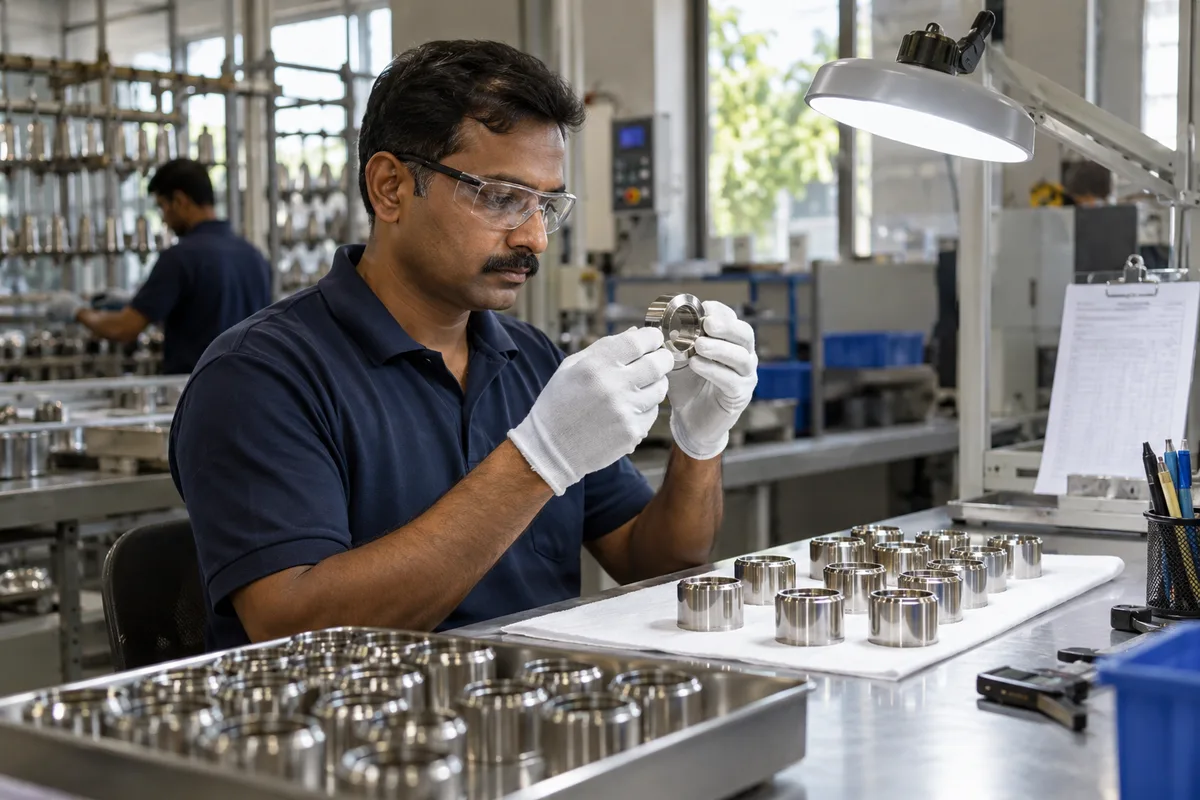
What sales process means
A sales process is the fixed sequence of steps, such as enquiry, site visit, quote and order, that every deal is expected to pass through in the same order. GullySales writes this sequence down for your business and checks that every salesperson actually follows it.
Also for electroplating and surface finishing units
- Sales management for electroplating and surface finishing units
- Sales strategy for electroplating and surface finishing units
- SEO for electroplating and surface finishing units
- Google Ads for electroplating and surface finishing units
- Lead generation for electroplating and surface finishing units
- CRM for electroplating and surface finishing units
- Content marketing for electroplating and surface finishing units
- Email marketing for electroplating and surface finishing units
Sales and marketing for electroplating and surface finishing units, the overview.
Plan the next part of the work
Last updated 21 Nov 2026.
For electroplating and surface finishing units
Where it usually goes wrong, and what we would do.
“Quotes are written from a photo”
A price is given without asking the base material or the tests needed. The lot arrives and the job turns out to be different.
“Nobody owns the sample lot”
The sample is collected by a driver, plated by the shop floor and judged by the buyer. No one in the office knows its status.
“The first lot goes well and then nothing”
A buyer is happy with the sample and never hears about a schedule. The next lot goes to the plater who asked.
What we do
What we deliver for electroplating and surface finishing units.
The work available for this need. We agree the deliverables and responsibilities for your engagement in writing.
A written sales sequence
A one-page sequence from enquiry to standing order, naming who does each step and what is recorded.
Result: Every enquiry follows the same path.
A qualification checklist
Questions to ask before quoting: part, finish, base material, thickness, tests, quantity and delivery location.
Result: Quotes are written for the real job.
A quote template for job work
A quote that states the finish, the basis of pricing, the tests included and the conditions on rejections and rework.
Result: The buyer reads a quote that leaves little to argue about.
A trial-lot and handover routine
A routine for collecting the sample, reporting the result and agreeing the schedule, with the buyer's decision recorded.
Result: A good sample leads to a schedule.
A follow-up routine for quotes
A schedule of calls to buyers who received a quote and did not answer, with a note of what was said.
Result: Quotes stop sitting unanswered.
How the result is measured
- Enquiries with a named owner and next action
- Opportunities meeting the stage evidence
- Time waiting at each decision
- Handovers returned for missing information
Recorded as a baseline before work starts, so every later report has an honest comparison.
Steps of a sale
Name the steps from drawing to standing order and say what each records.
Use the words your own office uses. Each step has one person who owns it.
- Enquiry
- Whoever answers writes down the buyer, the part, the finish and the source. If the drawing came on WhatsApp, save it into the record at once.
- Qualify
- Confirm base material, thickness, tests, quantity and whether collection is practical. Say no to a part that does not fit your tanks, and note the reason.
- Sample and quote
- Collect the sample, plate it and send the quote with the result. A quote with a sample result is easier to accept than a quote from a photo.
- Follow-up
- Call the buyer who has not answered and ask what they found on inspection. Write what they say and the date of the next call.
- Close
- Agree the lot pattern, the price basis and who at the buyer sends the challan. Get the first order as a written purchase order.
- Handover to the line
- Give the supervisor the part, the finish, the tests and the buyer's special instructions. Record the first lot's result and the reply to the buyer.
Who it is for
This is written for these electroplating and surface finishing units.
- Zinc and zinc-nickel platers serving fastener and auto-part makers
- Decorative nickel-chrome platers for bathroom fittings and furniture hardware
- Hard chrome platers for hydraulic rods, rollers and moulds
- Electroless nickel units for engineering and tooling parts
- Anodising and hard anodising units for aluminium parts
- Powder coating and painting lines attached to a plating unit
- Phosphating and black oxide shops for fasteners and tools
- Silver and gold platers for electrical contacts and jewellery
- In-house plating departments that take outside job work
Before you decide
When this may not be the right fit.
- The owner quotes by memory and will not write down the steps, so a process would exist only on paper
- Each trial lot is handled by a different supervisor with no handover, and the steps would break at the first one
Before you decide
Agree the work. Know how to judge it.
Sales process for electroplating and surface finishing units: use these checks to prepare, choose the scope, and review what changes.
Bring the right evidence
Bring examples of deals that moved forward and deals that stalled. Record what the buyer had actually agreed at each stage rather than relying on the salesperson's confidence.
Make the scope clear
Define the entry and exit rule for each stage, the owner, and the document or decision that moves the deal. Agree how exceptions will be handled before rolling the process out.
Check the work in use
Take a live enquiry through the proposed stages with the team. Two people reviewing the same evidence should place it at the same stage and agree the next action.
Know when to change course
If a stage produces no useful decision or handover, remove it. The process should help someone do the next piece of work, not create administration for its own sake.
These are discussion points, not a fixed package. GullySales confirms the deliverables, responsibilities, fee, and term in writing after reading your brief and speaking with you.
Before we start
What to have ready before the work starts.
The records, access and decisions this work needs from electroplating and surface finishing units. Anything missing is noted in the written scope, with who will supply it.
- The last twenty quotations you sent
- Copies of recent quotes, won and lost, with the drawing where you have it. Messy is acceptable. Without them, we write the process from description alone, which misses what really happens. Include a few that were refused or lost, since the difference between a quote that won and one that did not teaches us what the qualification step must catch.
- A list of the buyers who sent repeat lots
- Names of buyers who returned after a sample lot and what the first lot involved. A short note from memory will do. Without it, the sample-lot stage has no evidence of what makes a buyer return. Say also what the first lot was, its size and the finish, because the pattern of how a repeat buyer starts is what the sample-lot step is built to copy.
- Your conditions on rejection and rework
- Write who bears rework cost, how rejections are reported and what the buyer must provide. Plain sentences are enough. If these are unwritten, the quote template carries a gap, and disputes stay verbal. If the unit has lost a buyer over a rework dispute, bring that account too, because it shows which clause was missing when it mattered.
- The time of your best closer
- The person who wins work must be free for a full working session with us. If they are not, we write from the owner's view only, which may differ from what staff actually do. Choose a quiet half day, not a peak hour, so that the person has time to explain a decision and not just to carry it out.
- A decision on small and one-off orders
- Decide the smallest lot you accept and what you do with a single part. This is for the owner. Without it, the qualification step cannot say no, and the process fills with low-value jobs. Tell us also whether you accept parts of unusual shape, because the qualification list must say what you will quote and what you will pass on.
How it works
How the sales process work runs
The work itself, in order. How an engagement starts, from your brief to a written scope, is set out on our method page.
- 1
Sit with the person who wins the work
We spend a day with whoever in the unit wins the work and note, step by step, what they ask a buyer, what they check on the drawing and when they quote. You tell us if this is the way you want every quote handled. We count how many quotes now go out without a drawing. We write down the exact words used when they decline a job, since the refusal is as much a part of the process as the quote.
- 2
Write the stages from drawing to repeat lot
We turn those notes into stages: drawing received, checked, quoted, sample lot, inspection, standing order. You name an owner for each stage. A stage with no owner is where a lot is lost, so the list is not accepted until each has a name. We also note the paper that moves with the lot at each stage, such as the challan, the inspection slip and the invoice, so the stage list matches what the office handles.
- 3
Set the qualification questions before a quote
We write the questions asked before any price goes out: base material, size, finish, thickness, quantity, test needed, delivery place. You decide which answers are essential. A quote from a photograph alone is refused unless the owner chooses otherwise.
- 4
Build the quote template for job work
We prepare a template that states the part, the finish, the lot size, the conditions on rejection and the carriage. You approve every clause. The template makes sure a quote reads the same whoever writes it.
- 5
Run the process on live enquiries with the team
We hand the written process to the office and supervisor and watch them use it on real enquiries for a time. You decide what to change when it slows a quote. Gaps found here are cheaper than gaps found by a buyer.
- 6
Compare quotes, sample lots and repeats with the start
We count quotes that had a complete drawing, sample lots that were followed up and buyers who sent a second lot, against the figures noted at the start. You decide which stage needs more care and which question to add or drop. We keep a note of the changes you make to the stages, so a later review can see which version was in use when a lot was won or lost.
Where this fits
Three pieces of sales work, in this order.
This work sits inside sales process design, at stage 1, prospecting and lead generation. The audit comes before it, and sales management keeps it running.
Step 1
Sales audit
Find where deals are being lost and what to fix first.
Start here if you cannot say where orders are lost.
Step 2 · you are here
Sales process design
One written way to sell, from first enquiry to repeat order.
Start here if every salesperson sells differently.
Step 3
Sales management
A target, a review routine and someone who owns the number.
Start here if the team has targets and no routine.
FAQ
Questions owners ask before they call.
Not here? More answers, or ask on WhatsApp.
Who in a small unit should handle each step?
When should we quote?
What do we do with a buyer who asks only for the lowest rate?
What goes in the note after a buyer's call?
Who in a small unit should own each stage?
Will a written process slow us down?
How much does it cost?
How long is the contract?
How soon will we see results?
Who will actually do the work?
More for electroplating and surface finishing units
Related work to consider.
Closest to this: sales craft
Also for electroplating and surface finishing units
- SEO for electroplating and surface finishing units
- Google Ads for electroplating and surface finishing units
- Lead generation for electroplating and surface finishing units
- CRM for electroplating and surface finishing units
- Content marketing for electroplating and surface finishing units
- Email marketing for electroplating and surface finishing units
Or start from the overview: sales and marketing for electroplating and surface finishing units.
Your next practical step
Tell us what you are trying to grow, and we will read it before we call.
Eight short steps, mostly taps. Skip anything you would rather answer on the call.