Electroplating and surface finishing units · Content marketing
Answer the questions an engineer asks before sending you a drawing.
Content marketing for an electroplating unit means writing and showing the answers to the questions a buyer asks when choosing a plater, from which finish to use to why plating peeled. GullySales turns what your shop floor already knows into pages, short videos and sheets that a purchase head can read before calling.
Scope, fee, reporting and term are agreed in writing after we have read your brief and spoken to you.
What content marketing means
Content marketing is writing articles, guides and pages that answer the questions buyers search before they are ready to enquire. This makes your business visible and trusted before the first call. GullySales plans this content from the first conversation onward, choosing topics that match real search demand rather than guesses.
Also for electroplating and surface finishing units
- Social media marketing for electroplating units
- SEO for electroplating and surface finishing units
- Google Ads for electroplating and surface finishing units
- Lead generation for electroplating and surface finishing units
- CRM for electroplating and surface finishing units
- Email marketing for electroplating and surface finishing units
- Sales process for electroplating and surface finishing units
- Buyer persona for electroplating and surface finishing units
Sales and marketing for electroplating and surface finishing units, the overview.
Last updated 14 Nov 2026.
For electroplating and surface finishing units
Where it usually goes wrong, and what we would do.
“Technical answers stay on the shop floor”
Your supervisor knows why white rust appeared and how to prevent it. A buyer who searches for it finds a chemical supplier's page instead.
“Finish choice is a buyer's real doubt”
A designer has to choose between zinc-nickel and hard chrome for a part. No article from a local plater helps the buyer decide.
“Photos of lots are never shown”
Lots of clean, well-packed parts leave the gate every day. No one photographs them, so the buyer imagines the worst.
What we do
What we deliver for electroplating and surface finishing units.
The work available for this need. We agree the deliverables and responsibilities for your engagement in writing.
A finish-choice guide
A plain guide comparing zinc, zinc-nickel, nickel-chrome, hard chrome and electroless nickel by what the part will face, written by your own team and checked by your technical head.
Result: A designer can decide which finish to ask for.
Fault articles from your own shop floor
Short articles on peeling, blistering, white rust and discolouration, each with the cause and the fix your unit uses.
Result: An engineer with a failed lot finds a plater who understands.
A drawing checklist
A one-page list of what to send a plater: the part, the finish, the base material, the thickness, the tests and the quantity.
Result: Enquiries come with what is needed for a quote.
Photographs and short videos of the line
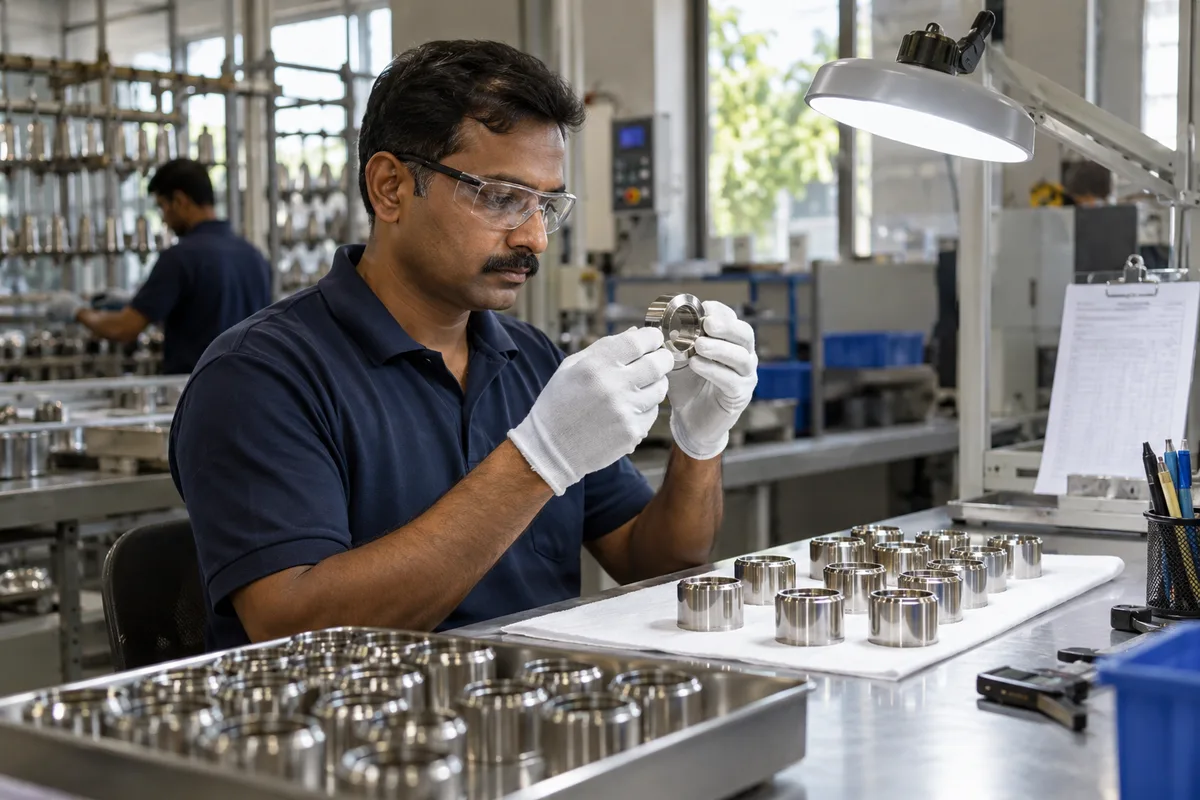
Clean photographs of racks, tanks and packed lots, and short clips of the process, shot on a phone and edited to show what a buyer wants to see.
Result: A buyer sees a real line before visiting.
A content calendar tied to buyer questions
A list of topics taken from the questions your own enquiries ask, so each piece answers something buyers really ask.
Result: Pieces get written for buyers instead of for the search engine.
How the result is measured
- Pages published
- Organic traffic
- Enquiries from content pages
Recorded as a baseline before work starts, so every later report has an honest comparison.
Questions buyers ask first
Write one piece for each doubt a buyer has before calling.
Each row is a question in the buyer's words and the piece that answers it, from early doubt to the decision.
- Which finish stops rust on an outdoor part?
- A guide comparing zinc, zinc-nickel and other finishes by where the part will sit. Say plainly when a finish is not suited, and send the reader to your own team for the final choice.
- Why did my plating peel off?
- An article on preparation, base metal and handling, with the causes your supervisor has seen. Include a photograph of a fault and the correction.
- Yellow or blue passivation?
- A short piece with photographs of both, what each looks like on the part and what buyers specify. Let the drawing decide.
- What should I send a plater?
- A checklist of the drawing, the finish, the base material, the thickness, the tests and the quantity. Offer it as a download and attach it to each reply.
- Can I trust their quality records?
- A page that shows the tests you run, a sample report with the customer's name removed and the consents you hold. Update it when a document is renewed.
- How does the first lot work?
- A walk-through of collecting the sample, plating it, reporting the result and agreeing the schedule. This lowers the buyer's fear of starting.
Who it is for
This is written for these electroplating and surface finishing units.
- Zinc and zinc-nickel platers serving fastener and auto-part makers
- Decorative nickel-chrome platers for bathroom fittings and furniture hardware
- Hard chrome platers for hydraulic rods, rollers and moulds
- Electroless nickel units for engineering and tooling parts
- Anodising and hard anodising units for aluminium parts
- Powder coating and painting lines attached to a plating unit
- Phosphating and black oxide shops for fasteners and tools
- Silver and gold platers for electrical contacts and jewellery
- In-house plating departments that take outside job work
Before you decide
When this may not be the right fit.
- Nobody in the unit can explain a thickness, a salt-spray hour or a bake step in plain words, and articles would be copied from a standard
- You have no inspection records to show, so a technical piece would make claims you cannot support
Before you decide
Agree the work. Know how to judge it.
Content marketing for electroplating and surface finishing units: use these checks to prepare, choose the scope, and review what changes.
Bring the right evidence
Bring questions from sales calls and examples of objections that delay a decision. Choose a subject expert who can check the substance, and identify evidence that can be published.
Make the scope clear
Agree the reader, buying question, format, and distribution route for each piece. Set the approval process and distinguish new research from rewriting material you already have.
Check the work in use
Ask a colleague to use the draft in a real buyer conversation. It should answer the question, support its claims, and make the next step clear without requiring a sales pitch to explain it.
Know when to change course
If the same unanswered question appears in several articles, improve the strongest page before commissioning another. More words are not a substitute for missing evidence.
These are discussion points, not a fixed package. GullySales confirms the deliverables, responsibilities, fee, and term in writing after reading your brief and speaking with you.
Before we start
What to have ready before the work starts.
The records, access and decisions this work needs from electroplating and surface finishing units. Anything missing is noted in the written scope, with who will supply it.
- A list of faults and returns from the floor
- Handwritten is fine: the faults reported, the lots returned and what caused them. Remove buyer names if you wish. Without this, the articles become general and could belong to any plater. Include the faults you fixed without a rejection, because these show care better than a clean record and make better articles than a lucky run.
- Permission rules for photographing customer parts
- State which buyers allow their parts in photographs and which do not. A short list is enough. If unclear, we show only parts without marks, and the proof section is smaller. Where a buyer's logo is visible on a carton or tag, say whether you can cover it, because a photograph that must be cropped hard loses its value as proof.
- Time from the person who runs the baths
- The process chemist or supervisor needs time to talk to us and to review each draft. It cannot be skipped. Without them, we cannot write a finish guide that the shop floor would accept. Tell us in advance which hours the baths are being worked, so our visit does not disturb a loaded line or a rush lot.
- Your standard drawing checklist, if you have one
- Whatever you ask a buyer to send with a drawing: material, size, thickness, test, quantity. An informal list is acceptable. If none exists, we draft one from your quotes and ask you to correct it.
- A phone that takes good photographs
- A recent phone with a clean lens, and someone willing to take photographs at the right moment of each lot. Without it, we depend on a single visit, and fewer lots are recorded.
How it works
How the content marketing work runs
The work itself, in order. How an engagement starts, from your brief to a written scope, is set out on our method page.
- 1
Sit with the supervisor and note the doubts
We spend time with the supervisor and note the questions buyers raise: why zinc flaked, which finish suits a housing, what thickness is realistic. You tell us which answers you are comfortable publishing. The questions become the topic list, and the number of times they reach the unit by phone is the baseline.
- 2
Choose the topics by rejection history
We read your rejection notes and returned lots and pick the faults that taught you something. You decide which ones can be told without naming a buyer. A fault article from your own floor is more believable than a general piece about plating.
- 3
Write the finish-choice guide with a process person
We draft a guide on choosing between finishes for a given part, reading each paragraph aloud to your process person. They correct any line that is chemically wrong. The guide is held back until the person who runs the bath has approved it.
- 4
Photograph and film the line with permission
We plan a short visit to photograph racks, barrels and finished lots and to film a brief process clip. You choose what may be shown and which customers' parts stay out of frame. Anything with a customer mark is covered or left out.
- 5
Publish and give the sales person the link
Each piece is published with a drawing checklist attached, and your salesperson gets the link to use in replies. You tell us which buyers received which piece. A guide nobody sends is never read, so use in conversation is part of the work.
- 6
Count the questions the pages answered
After a period of use we count the enquiries that mention a piece and the drop in questions answered by phone, against the baseline. You decide which pieces to revise and what the next question from the floor should become. We keep the revision list with the dates each piece was checked, so a page about a finish is not left standing after the process changes.
Where this fits
Three pieces of sales work, in this order.
This work sits inside sales process design, at stage 0, foundation. The audit comes before it, and sales management keeps it running.
Step 1
Sales audit
Find where deals are being lost and what to fix first.
Start here if you cannot say where orders are lost.
Step 2 · you are here
Sales process design
One written way to sell, from first enquiry to repeat order.
Start here if every salesperson sells differently.
Step 3
Sales management
A target, a review routine and someone who owns the number.
Start here if the team has targets and no routine.
FAQ
Questions owners ask before they call.
Not here? More answers, or ask on WhatsApp.
Who writes the technical content?
Can staff with no writing skill help?
Should we publish in Kannada, Tamil or Hindi too?
Is video better than text for a plating unit?
Is writing in Hindi or a local language necessary?
How do we avoid giving away our process?
How much does it cost?
How long is the contract?
How soon will we see results?
Who will actually do the work?
More for electroplating and surface finishing units
Related work to consider.
Closest to this: content and social
Also for electroplating and surface finishing units
- SEO for electroplating and surface finishing units
- Google Ads for electroplating and surface finishing units
- Lead generation for electroplating and surface finishing units
- CRM for electroplating and surface finishing units
- Email marketing for electroplating and surface finishing units
- Sales process for electroplating and surface finishing units
Or start from the overview: sales and marketing for electroplating and surface finishing units.
Your next practical step
Tell us what you are trying to grow, and we will read it before we call.
Eight short steps, mostly taps. Skip anything you would rather answer on the call.