Electroplating and surface finishing units · Buyer persona
Know the purchase head you are writing to, and what they will not forgive.
A buyer persona for an electroplating unit is a written picture of the purchase or quality person who sends plating work, covering what triggers a search and what decides a lot. GullySales builds the persona from your own enquiries, and then uses it for pages, quotes and calls.
Scope, fee, reporting and term are agreed in writing after we have read your brief and spoken to you.
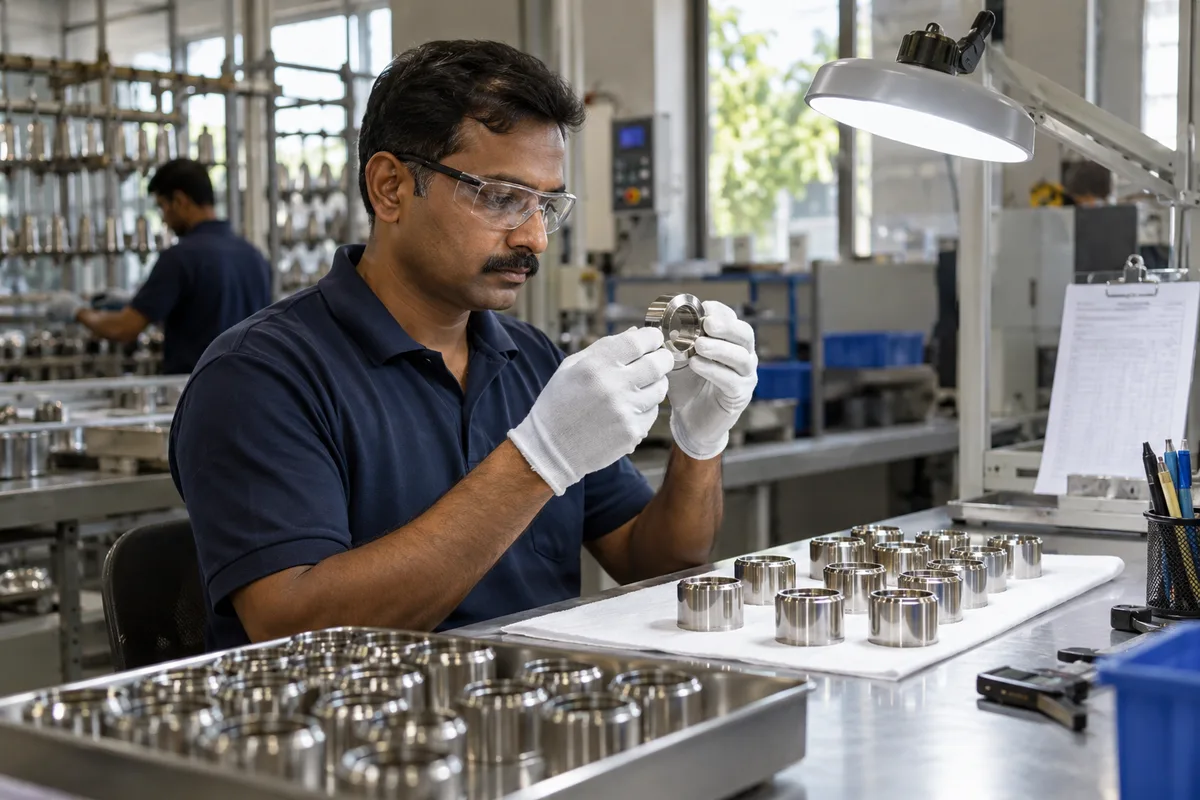
What buyer persona means
A buyer persona is a plain description of the kind of customer who actually buys from you. It includes what they search, what worries them and who else they ask before deciding. GullySales builds this from real enquiries and past sales rather than a generic template, then uses it to write every page and advert.
Also for electroplating and surface finishing units
- Digital marketing for electroplating and surface finishing units
- SEO for electroplating and surface finishing units
- Google Ads for electroplating and surface finishing units
- Lead generation for electroplating and surface finishing units
- CRM for electroplating and surface finishing units
- Content marketing for electroplating and surface finishing units
- Email marketing for electroplating and surface finishing units
- Sales process for electroplating and surface finishing units
Sales and marketing for electroplating and surface finishing units, the overview.
Last updated 14 Nov 2026.
For electroplating and surface finishing units
Where it usually goes wrong, and what we would do.
“The unit writes for the owner of the factory”
Copy speaks to the proprietor. The person who actually sends the lot is a purchase executive or a quality engineer with different worries.
“One persona for every finish”
A buyer of decorative nickel-chrome cares about appearance. A buyer of zinc-nickel for auto parts cares about test reports. One page cannot speak to both.
“The reason for switching is never asked”
Buyers move because of a rejection, a missed delivery or a vendor audit. Platers who never ask do not know what to say.
What we do
What we deliver for electroplating and surface finishing units.
The work available for this need. We agree the deliverables and responsibilities for your engagement in writing.
A persona card for each main buyer
A card for the purchase head of an auto-part maker, for the quality manager of an electrical maker and for the owner of a small machine shop.
Result: Each page and call is written for a real reader.
A question list for customer calls
Questions to ask a few buyers about why they switched plater, what worried them and what finally decided them.
Result: The card rests on what buyers actually said.
A list of triggers
The events that start a search, such as a rejection, a failed audit or a plater who closed, and what each needs from you.
Result: Messages meet the buyer at the moment of need.
A comparison sheet
A short sheet on what buyers compare you with: the incumbent plater, an in-house line or a unit in another area.
Result: You answer the comparison before it is raised.
A persona review against real customers
A check of the card against the buyers who have placed lots, with corrections made where they differ.
Result: The persona changes when your buyers do.
How the result is measured
- Enquiry match to persona
- Conversion rate by persona
- Content aligned to persona
Recorded as a baseline before work starts, so every later report has an honest comparison.
A persona card for this buyer
Fill this card for the buyer who sends you the most plating work.
The answers below are typical for one kind of buyer. Check each against your real customers before you use it.
- Who they are
- Typical: a purchase executive or quality engineer at a tier-two maker of auto or electrical parts, reporting to a plant head. Check this against the last ten buyers who sent lots.
- What starts the search
- Typical: the current plater has missed deliveries, a lot was rejected or an audit asked for approved vendors. Ask each new buyer what happened and note the answer.
- What worries them
- Typical: peeling, rejections coming back at the customer's end, late lots and a unit that cannot show test records. Listen for the word they use first.
- What they compare you with
- Typical: the plater they already use, a unit in a nearby area or their own in-house line. Ask whom they asked for a quote and what that unit offered.
- Who else decides
- Typical: the quality head reviews the sample, production confirms delivery and the owner agrees the rate. Find out who signs off and send the proof to that person.
- What makes them say yes
- Typical: a sample that passes, a report they can attach to their own file and a plant visit that looks orderly. Ask after the first lot what tipped it.
Who it is for
This is written for these electroplating and surface finishing units.
- Zinc and zinc-nickel platers serving fastener and auto-part makers
- Decorative nickel-chrome platers for bathroom fittings and furniture hardware
- Hard chrome platers for hydraulic rods, rollers and moulds
- Electroless nickel units for engineering and tooling parts
- Anodising and hard anodising units for aluminium parts
- Powder coating and painting lines attached to a plating unit
- Phosphating and black oxide shops for fasteners and tools
- Silver and gold platers for electrical contacts and jewellery
- In-house plating departments that take outside job work
Before you decide
When this may not be the right fit.
- You have not spoken to a purchase head or a quality engineer in the past year, and a persona would be guesswork
- The unit takes only walk-in jewellery work and has no purchase departments to describe
Before you decide
Agree the work. Know how to judge it.
Buyer persona for electroplating and surface finishing units: use these checks to prepare, choose the scope, and review what changes.
Bring the right evidence
Write the decision the research must support, such as entering a market or choosing a buyer group. Separate what you know from sales records from what the team currently assumes.
Make the scope clear
Agree which buyers to speak to, which sources to review, and what access you can provide. Include lost enquiries and people who chose another supplier, where they are willing to take part.
Check the work in use
Look for source dates, sample limitations, and evidence that disagrees with the preferred answer. A recommendation should show how it follows from the findings.
Know when to change course
Do not treat a few positive conversations as proof of demand. Test the proposed offer with an actual buying decision before committing to a wider launch.
These are discussion points, not a fixed package. GullySales confirms the deliverables, responsibilities, fee, and term in writing after reading your brief and speaking with you.
Before we start
What to have ready before the work starts.
The records, access and decisions this work needs from electroplating and surface finishing units. Anything missing is noted in the written scope, with who will supply it.
- Past buyers and the jobs they sent
- Names of buyers and the parts or industries they send, from quotes and memory. A rough list does. Without it, the groups would come from our guess. Add the town or industrial area and the rough size of the plant if you know it, because location and size change what a purchase head fears.
- Introductions to four or five buyers
- The owner should ask permission and introduce us to buyers who will talk for a short while. Include one who has stopped ordering. If no one agrees, the cards rest on your team's account alone. Tell the buyers beforehand that a short call is coming and who will make it, so they take it as a courtesy from the unit and not a sales call.
- Notes from any rejection or complaint
- Whatever you wrote down when a lot was rejected or a buyer complained. These reveal what each person fears. Without them, the doubt line on each card is generic. Keep the original messages or call notes if you have them, because the buyer's own words are what we copy into the card.
- A view from the quality inspector
- The inspector who deals with the buyer's quality staff should share what those people check on arrival. Half an hour is enough. If missing, the card for the quality reader is thin. Ask the inspector to bring the buyer's incoming inspection checklist or a photograph of one, as it shows what the buyer's quality person is looking for.
- Buyers you want more of
- Say which buyers you want to attract: the type, size and place. Only the owner can decide. Without it, personas describe those you have, not those you want. Include the industries and the part types, for example brackets, housings or hardware, so the cards cover the buyers you are trying to reach next.
How it works
How the buyer persona work runs
The work itself, in order. How an engagement starts, from your brief to a written scope, is set out on our method page.
- 1
Sort past buyers by the job they send
We group your buyers from quotes and challans by the work they send: automotive fasteners, switchgear housings, tooling, furniture fittings. You tell us which groups pay and repeat. The groups with a shared need become the personas, and the number of accounts in each is noted. We keep a note of buyers who fit two groups, since they show where the cards overlap and where an ad or a page must speak to both.
- 2
Pick the person who actually decides
In each group we ask who sent the drawing, who approved the sample and who paid. You may find that the buyer in the office, the quality inspector and the owner are three different people. Each gets a short card, not a single average buyer.
- 3
Call a few buyers and ask why they switched
We prepare a short call script and you introduce us to chosen buyers, including one who left. We ask what made them leave their last plater and what decided the lot with you. Their own words are kept as the evidence. We ask nothing about the buyer's other suppliers beyond what they choose to say, and we do not approach any plater by name.
- 4
Write the trigger and the doubt for each card
From the calls we write what makes a buyer search for a plater now, such as a rejection, a new part or a closed supplier, and what doubt remains at the quote stage. You correct each card. A card with no trigger is not finished.
- 5
Compare the cards with customers you already have
We check each card against your live accounts. You say whether a real buyer is recognisable in it. Cards that do not fit anyone are merged or dropped, and the survivors are used.
- 6
Apply the cards to pages, quotes and calls
We use each card in the finish pages, the quote note and the first call script, and you assign who applies which. After the next lots we compare sample lots and repeats by card with the counts taken at the start.
Where this fits
Three pieces of sales work, in this order.
This work sits inside sales process design, at stage 0, foundation. The audit comes before it, and sales management keeps it running.
Step 1
Sales audit
Find where deals are being lost and what to fix first.
Start here if you cannot say where orders are lost.
Step 2 · you are here
Sales process design
One written way to sell, from first enquiry to repeat order.
Start here if every salesperson sells differently.
Step 3
Sales management
A target, a review routine and someone who owns the number.
Start here if the team has targets and no routine.
FAQ
Questions owners ask before they call.
Not here? More answers, or ask on WhatsApp.
How many personas does a plating unit need?
How do we test the card against buyers we already have?
How do we use the persona for ads and for staff?
Is a persona only for sales to factories?
Do we need a persona if we only serve three or four big buyers?
Can we use personas for hiring a salesperson?
How much does it cost?
How long is the contract?
How soon will we see results?
Who will actually do the work?
More for electroplating and surface finishing units
Related work to consider.
Closest to this: strategy and research
Also for electroplating and surface finishing units
- SEO for electroplating and surface finishing units
- Google Ads for electroplating and surface finishing units
- Lead generation for electroplating and surface finishing units
- CRM for electroplating and surface finishing units
- Content marketing for electroplating and surface finishing units
- Email marketing for electroplating and surface finishing units
Or start from the overview: sales and marketing for electroplating and surface finishing units.
Your next practical step
Tell us what you are trying to grow, and we will read it before we call.
Eight short steps, mostly taps. Skip anything you would rather answer on the call.