Electroplating and surface finishing units · CRM
Keep every part, finish and buyer in one record, and not in the supervisor's diary.
A CRM for an electroplating unit is a single record of every buyer, part, finish and sample lot, kept so no enquiry depends on memory. GullySales sets up a record that fits job work, with fields for finish, base material and test needs, and trains the office to keep it current.
Scope, fee, reporting and term are agreed in writing after we have read your brief and spoken to you.
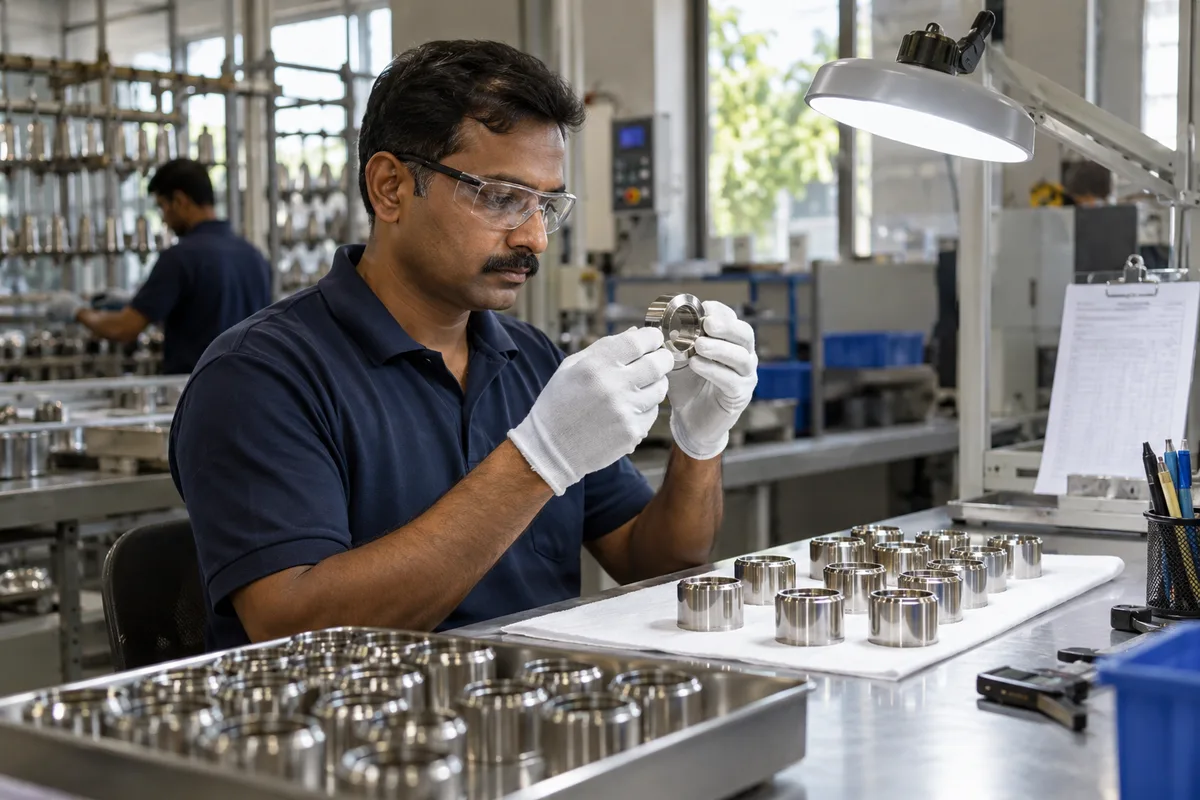
What CRM means
A CRM is the record where every enquiry, call and quote is kept against a customer, replacing separate notebooks, spreadsheets and memory. GullySales sets up or cleans an existing CRM and reports from it by enquiry outcome rather than by activity logged.
Also for electroplating and surface finishing units
- Lead generation for electroplating and surface finishing units
- Follow-up systems for electroplating units
- SEO for electroplating and surface finishing units
- Google Ads for electroplating and surface finishing units
- Content marketing for electroplating and surface finishing units
- Email marketing for electroplating and surface finishing units
- Sales process for electroplating and surface finishing units
- Buyer persona for electroplating and surface finishing units
Sales and marketing for electroplating and surface finishing units, the overview.
Last updated 14 Nov 2026.
For electroplating and surface finishing units
Where it usually goes wrong, and what we would do.
“The drawing and the buyer are in different places”
A drawing is in a WhatsApp chat, the price is in a notebook and the buyer's number is on a visiting card. Nobody can see the whole job.
“Sample lots are forgotten”
A sample is collected, plated and returned. No one asks whether it passed, so the buyer goes elsewhere without a word.
“Repeat buyers are not recognised”
A customer who sent a lot last year calls again and is treated as a new buyer, with the same questions asked again.
What we do
What we deliver for electroplating and surface finishing units.
The work available for this need. We agree the deliverables and responsibilities for your engagement in writing.
A record built around the part
Fields for part name, drawing number, base material, finish, thickness asked and tests required, instead of a general contact list.
Result: Anyone in the office can pick up a buyer's job.
A sample-lot tracker
Each sample is logged with the date collected, the result and the buyer's decision.
Result: No sample lot is left without an answer.
A buyer history
A page per customer showing the parts sent, the lots plated, the rejections and the price asked.
Result: A returning buyer is recognised on the call.
Training for the office staff
A short session and a checklist so the person who answers the phone writes each call into the record.
Result: The record is used from the first week, not left empty.
A reminder list for follow-up
A daily list of buyers whose quote or sample needs a call, in the order of who has waited longest.
Result: The follow-up is on a list, not in a person's head.
How the result is measured
- Enquiries logged in the CRM
- Data completeness
- Reports generated from CRM data
Recorded as a baseline before work starts, so every later report has an honest comparison.
What to record, and when
Write these facts about each buyer at the moment you get them.
A plating record that has the right fields is faster to fill than a notebook. Start with these.
- Part and drawing number
- Record the part name and the drawing or sample reference at the first call. Without it, a quote cannot be written and a repeat lot cannot be matched.
- Finish and base material
- Note the finish asked, such as yellow zinc or hard chrome, and the metal underneath. Preparation differs by metal, so this changes the price and the risk.
- Thickness and tests asked
- Write the thickness the drawing calls for and whether the buyer wants a salt spray or thickness report. These decide whether you can take the job.
- Quantity and lot pattern
- Record the lot size and how frequently the buyer expects to send work. A single lot and a regular schedule are different customers, and they get different quotes.
- Sample lot status and result
- Log when the sample was collected, what you found and what the buyer said. A sample with no result recorded is a lost buyer you have not yet noticed.
- Do you need software yet?
- A shared sheet with the fields above works for a small unit with one or two people answering enquiries. Move to a CRM when several people need the same record at once.
Who it is for
This is written for these electroplating and surface finishing units.
- Zinc and zinc-nickel platers serving fastener and auto-part makers
- Decorative nickel-chrome platers for bathroom fittings and furniture hardware
- Hard chrome platers for hydraulic rods, rollers and moulds
- Electroless nickel units for engineering and tooling parts
- Anodising and hard anodising units for aluminium parts
- Powder coating and painting lines attached to a plating unit
- Phosphating and black oxide shops for fasteners and tools
- Silver and gold platers for electrical contacts and jewellery
- In-house plating departments that take outside job work
Before you decide
When this may not be the right fit.
- The supervisor's diary is the only record and nobody will move it, so a new system would be filled in once and dropped
- Your part numbers and finishes are not named the same way twice, and a record would hold duplicates of the same job
Before you decide
Agree the work. Know how to judge it.
CRM for electroplating and surface finishing units: use these checks to prepare, choose the scope, and review what changes.
Bring the right evidence
List the records your team uses and show how an enquiry becomes an order today. Bring examples of duplicate entries, missing owners, and reports that require manual correction.
Make the scope clear
Agree the stages, required fields, access roles, and integrations before configuring the system. Separate software subscriptions from setup, data work, and training.
Check the work in use
Ask the people who will use the CRM to complete a real handover and find the next action without help. Check that the management report can be traced back to individual records.
Know when to change course
If the process is unclear, buying a more complex CRM adds more places for confusion. Start with the minimum fields and rules the team can use consistently.
These are discussion points, not a fixed package. GullySales confirms the deliverables, responsibilities, fee, and term in writing after reading your brief and speaking with you.
Before we start
What to have ready before the work starts.
The records, access and decisions this work needs from electroplating and surface finishing units. Anything missing is noted in the written scope, with who will supply it.
- The challan book and quotation file
- Bring the recent challans and quotations, paper or scanned. They show how parts are described and priced. Without them, the part fields are guessed and the first import is thin. If challans are kept in different books for different customers, bring each book, since the way parts are named varies between them and the record must cope with that.
- The owner's phone contacts for buyers
- A list of the buyers saved on the owner's phone with the unit or plant. Names and companies are enough. If these stay on the phone, they remain outside the record, and the repeat-buyer history is missing.
- A supervisor willing to enter sample lots
- The supervisor or a quality helper must enter the result of each sample lot. It takes a few lines. If nobody does, the tracker lags the floor, and follow-up calls rely on hearsay. Agree before the first sample lot what the entry looks like, for example result, thickness reading if taken, and the buyer's comment, so each row means the same thing.
- Who has permission to change the record
- Say who can view buyer prices, who can change a stage and who can delete. The owner decides. Without it, access defaults to everyone, and a price seen by the wrong person causes trouble. Decide also whether a buyer's price list may be seen by the shop floor, because the supervisor needs the part but not always the rate.
- One tool the office already uses
- Tell us whether the office works in a spreadsheet, Tally or a phone app, so we choose a record that fits. A simple tool is better than a clever one. If the office will not use the tool, we change the tool. Bring any template the office already prints, such as a quotation or gate pass, since the record should print the same layout and not add a second one.
How it works
How the CRM work runs
The work itself, in order. How an engagement starts, from your brief to a written scope, is set out on our method page.
- 1
Follow a drawing from the phone to dispatch
We trace one real job from the first WhatsApp drawing through the quote, sample lot, inspection and delivery challan, standing with the people who handle each paper. You tell us where information goes missing. The map decides the fields, and we count the jobs now held only in memory. We note which papers travel with the job, such as the inspection slip and the packing note, so the record can point to them later.
- 2
Build the record around the part
We design the record with the part as its centre: drawing number, finish, base material, size, test need, buyer and contact. You and the supervisor test it against three live jobs. A record built around the buyer alone fails when the same buyer sends ten different parts.
- 3
Add the sample-lot tracker
We add a tracker that shows each sample lot's date received, finish applied, inspection result and what the buyer said. You decide who updates it. A sample lot with no row is a lot nobody will follow up, so the supervisor and the office agree who enters what.
- 4
Import buyers from your phone and challans
We load existing buyers from the owner's phone, challan books and portal enquiries into the record, merging duplicates by hand with you. You tell us who is a live buyer and who stopped sending work. A clean first import is preferred over a full one.
- 5
Train the office on a live day
We sit with the office staff for a working day and let them enter real enquiries. We note each place they reach for a notebook. You decide which fields to remove or simplify, since a record that is hard to fill stays empty.
- 6
Compare tracked jobs with the starting count
We count jobs that now have a part record, a sample-lot row and a next-step reminder, against the number held in memory at the start. You decide who reviews the open items and what the reminder list should show each morning.
Where this fits
Three pieces of sales work, in this order.
This work sits inside sales management. A target, a review routine and someone who owns the number.
Step 1
Sales audit
Find where deals are being lost and what to fix first.
Start here if you cannot say where orders are lost.
Step 2
Sales process design
One written way to sell, from first enquiry to repeat order.
Start here if every salesperson sells differently.
Step 3 · you are here
Sales management
A target, a review routine and someone who owns the number.
Start here if the team has targets and no routine.
FAQ
Questions owners ask before they call.
Not here? More answers, or ask on WhatsApp.
Is a spreadsheet enough for a plating unit?
What if the supervisor will not update the record?
What do we do with WhatsApp chats about a job?
Who owns the data if we change the CRM later?
Can the record store drawings and test reports?
What if the owner prefers the notebook?
How much does it cost?
How long is the contract?
How soon will we see results?
Who will actually do the work?
More for electroplating and surface finishing units
Related work to consider.
Closest to this: leads and follow-up
Also for electroplating and surface finishing units
- SEO for electroplating and surface finishing units
- Google Ads for electroplating and surface finishing units
- Content marketing for electroplating and surface finishing units
- Email marketing for electroplating and surface finishing units
- Sales process for electroplating and surface finishing units
- Buyer persona for electroplating and surface finishing units
Or start from the overview: sales and marketing for electroplating and surface finishing units.
Your next practical step
Tell us what you are trying to grow, and we will read it before we call.
Eight short steps, mostly taps. Skip anything you would rather answer on the call.