Electroplating and surface finishing units · Search engine optimisation
Be the page a buyer finds when they search for one finish by name.
SEO for an electroplating unit means a buyer who types zinc plating job work or hard chrome plating service finds a page for exactly that finish. GullySales writes one page per finish and per industrial area you serve, and records which of them bring a call.
Scope, fee, reporting and term are agreed in writing after we have read your brief and spoken to you.
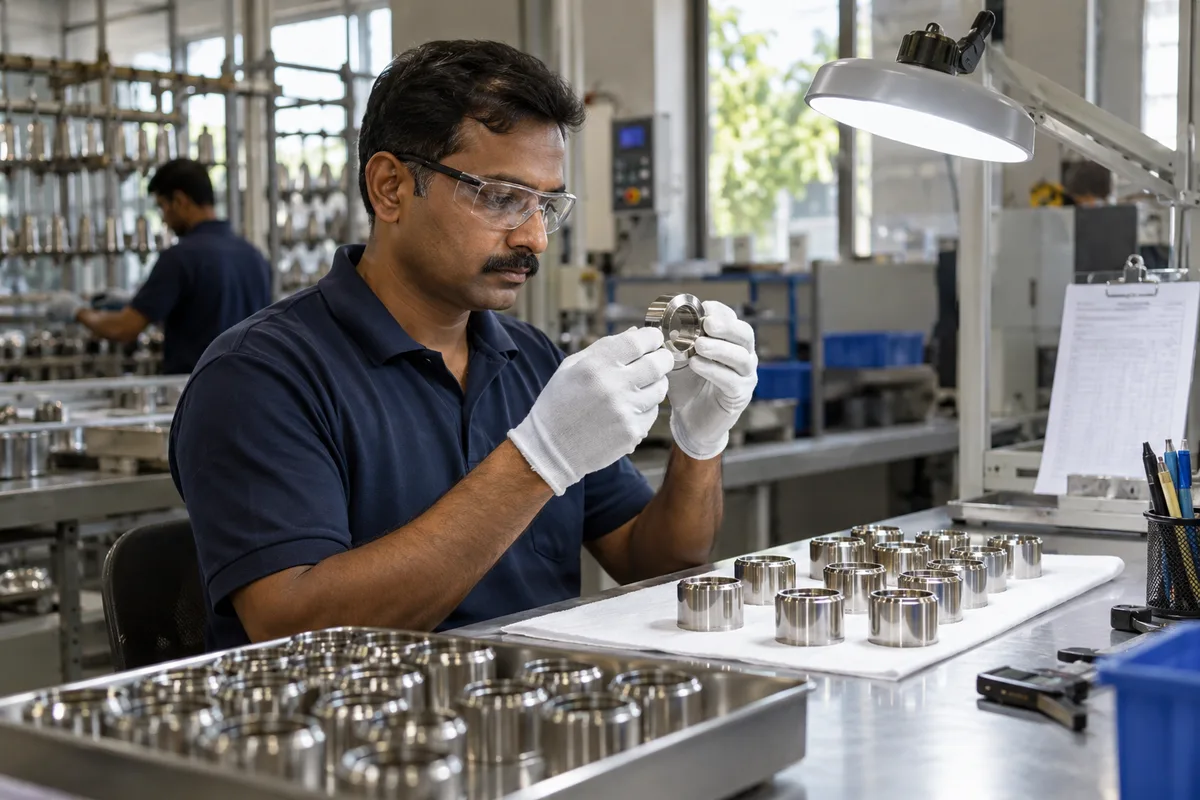
What search engine optimisation means
Search engine optimisation (SEO) is the work of getting your website to appear when a buyer searches Google for what you sell. GullySales builds pages around real search terms, fixes technical issues that block ranking, and tracks which searches actually bring enquiries.
Also for electroplating and surface finishing units
- Website development for electroplating and surface finishing units
- Local SEO for electroplating units
- Google Ads for electroplating and surface finishing units
- Lead generation for electroplating and surface finishing units
- CRM for electroplating and surface finishing units
- Content marketing for electroplating and surface finishing units
- Email marketing for electroplating and surface finishing units
- Sales process for electroplating and surface finishing units
Sales and marketing for electroplating and surface finishing units, the overview.
Last updated 14 Nov 2026.
For electroplating and surface finishing units
Where it usually goes wrong, and what we would do.
“One page that says plating and surface treatment”
A buyer searches for one finish on one base material. A single services page lists everything and ranks for none of it.
“The area you sit in is never written down”
A purchase head wants a plater near their factory. If the page never says Peenya, Jigani or Bommasandra, they do not find you for those searches.
“The part size and tank limit are missing”
A buyer with a long shaft or a bulky casting needs to know it fits before calling. Pages that do not say so waste both people's time.
What we do
What we deliver for electroplating and surface finishing units.
The work available for this need. We agree the deliverables and responsibilities for your engagement in writing.
A page per finish
Zinc, zinc-nickel, nickel-chrome, hard chrome, electroless nickel, anodising and powder coating each get their own page with base materials, tank limits and tests.
Result: A buyer's search lands on the page that answers it.
Pages for the industrial areas you serve
A short page for each area where your collection van goes, with the finishes you run and the way lots reach you.
Result: A buyer in Bommasandra finds a unit that states it serves Bommasandra.
A page for each base material
Mild steel, stainless steel, brass, aluminium and zinc die castings need different preparation. A page for each states what you do.
Result: A buyer with an unusual metal finds out it is welcome.
Answers to the questions that cause rejections
Short articles on peeling, white rust, blistering and passivation colour, written from the problems your own shop floor has fixed.
Result: Engineers who search for a fault find a unit that explains it.
Search records by page
A record of which page brought a call or WhatsApp drawing, so you see which finish search is paying.
Result: You know which pages to improve first.
How the result is measured
- Ranking positions
- Organic traffic
- Enquiries from organic search
Recorded as a baseline before work starts, so every later report has an honest comparison.
Searches your buyers type
Match each search a buyer types to a page that answers it.
Check each search against your own site. If no page answers it, a buyer who typed it never reaches you.
- zinc plating job work near me
- Needs a zinc page that names your industrial area, the passivation colours you run and the biggest part your barrel or rack takes.
- hard chrome plating for hydraulic rods
- Needs a page with the rod diameters and lengths your tank takes, grinding after plating if you offer it, and a note on repair of worn rods.
- anodising job work for aluminium parts
- Needs a page that states colours, whether you do hard anodising and whether the parts are plated on racks. Add photographs of finished lots.
- electroless nickel plating service
- Needs a page for the engineering buyer: base metals accepted, uniform coating on complex shapes and the thickness reading you can report.
- plating with test report
- Needs a proof page showing which tests you run in-house, which you send out and the sample of a report you can share without a customer's name.
- powder coating near Jigani
- Needs a page for each area you serve, with the colour range, the oven size and a photograph of a typical lot. Keep the area name in the heading.
Who it is for
This is written for these electroplating and surface finishing units.
- Zinc and zinc-nickel platers serving fastener and auto-part makers
- Decorative nickel-chrome platers for bathroom fittings and furniture hardware
- Hard chrome platers for hydraulic rods, rollers and moulds
- Electroless nickel units for engineering and tooling parts
- Anodising and hard anodising units for aluminium parts
- Powder coating and painting lines attached to a plating unit
- Phosphating and black oxide shops for fasteners and tools
- Silver and gold platers for electrical contacts and jewellery
- In-house plating departments that take outside job work
Before you decide
When this may not be the right fit.
- Your unit has not decided which finishes it will take for job work, so pages would promise tanks you do not run
- Nobody can read a drawing and reply to an enquiry within the day, so searchers who find you would go to the next plater
Before you decide
Agree the work. Know how to judge it.
SEO for electroplating and surface finishing units: use these checks to prepare, choose the scope, and review what changes.
Bring the right evidence
Bring the pages for the products or services you want to sell, the search queries available in your reports, and examples of enquiries from search. Separate branded searches from buyers discovering you for the first time.
Make the scope clear
Agree which pages and technical fixes come first, who can publish changes, and who supplies subject knowledge. Link search work to a relevant enquiry route on each priority page.
Check the work in use
Follow the trail from a relevant query to its landing page and then to an enquiry. Review whether those enquiries fit your offer, alongside indexing and search visibility.
Know when to change course
A ranking movement alone is not a buying signal. If traffic grows but relevant enquiries do not, revisit page intent and the offer before producing more pages.
These are discussion points, not a fixed package. GullySales confirms the deliverables, responsibilities, fee, and term in writing after reading your brief and speaking with you.
Before we start
What to have ready before the work starts.
The records, access and decisions this work needs from electroplating and surface finishing units. Anything missing is noted in the written scope, with who will supply it.
- A written list of finishes and tank limits
- For each finish, write the largest part the tank takes, the base metals accepted and whether it runs on rack or barrel. A supervisor's handwritten note is acceptable. Without limits, pages promise work the shop must refuse, and buyers who send an oversized part are disappointed.
- Three months of enquiry messages and calls
- Collect the WhatsApp drawings, portal enquiries and the call register for recent months, with buyer names hidden if you wish. They show the words buyers use and the finishes they ask for. If none are kept, the search-term list is thinner and relies on what we find elsewhere.
- Owner login for the website and the domain
- The domain and hosting account should be in the unit's name, and we need the login or a way to recover it. If a vendor holds it, we plan its return first. Without control of the site, new pages cannot be published.
- Test reports you may describe publicly
- Choose coating thickness reports, salt spray reports or adhesion tests that you are allowed to mention, with customer names removed. A scan will do. If no report can be shown, the page states only the checks you carry out, and the proof section is shorter.
- A person who knows the process to review
- The supervisor or process chemist must read each draft and mark technical errors. Half an hour per page is enough. If nobody is free, nothing technical is published, because a plating page with a wrong finish description loses a purchase head's trust at once.
How it works
How the search engine optimisation work runs
The work itself, in order. How an engagement starts, from your brief to a written scope, is set out on our method page.
- 1
List finishes against tanks that are free
We start in the shop with the supervisor, listing each finish you run, the tank or line it sits on and the part sizes the tank takes. You tell us which finishes you want more work for and which you would refuse. That list decides which pages are written first, and the number of calls now recorded for each finish is the figure we read later.
- 2
Collect the searches buyers actually type
We read your recent IndiaMART enquiries, WhatsApp messages and rejection notes for the words buyers use: zinc yellow passivation, hard chrome, black oxide, anodising for aluminium housings. You correct our understanding of each term. The result is a search-term list built from purchase heads, not from a chemical supplier's catalogue.
- 3
Settle the industrial areas you will serve
We mark on a map the industrial estates and towns from which you collect and deliver, and you tell us how far a part can travel before it stops being worth your van. The pages for areas are planned only where you will really send a vehicle, and no area is named just to look big.
- 4
Write one finish page beside the supervisor
We draft each finish page with the supervisor reading over the text: base materials accepted, part sizes, racking or barrel, tests you can show. You decide which test reports may be described. Any line the supervisor will not stand behind is struck out before the page is shown to anyone.
- 5
Photograph lots and attach the captions
We photograph finished lots on the rack or in the tray with a paper tag, and caption each with the finish, base material and type of part. You confirm the customer's name is hidden unless the buyer has agreed. Photographs without captions are left out, since a search engine cannot read them.
- 6
Count calls by page against the starting figure
After the pages are published we match calls and drawings to the page that the buyer came from and compare them with the call count recorded for each finish at the start. You decide which finish pages to deepen, which to merge and which finish needs a new page, from the enquiries counted.
Where this fits
Three pieces of sales work, in this order.
This work sits inside sales process design, at stage 1, prospecting and lead generation. The audit comes before it, and sales management keeps it running.
Step 1
Sales audit
Find where deals are being lost and what to fix first.
Start here if you cannot say where orders are lost.
Step 2 · you are here
Sales process design
One written way to sell, from first enquiry to repeat order.
Start here if every salesperson sells differently.
Step 3
Sales management
A target, a review routine and someone who owns the number.
Start here if the team has targets and no routine.
FAQ
Questions owners ask before they call.
Not here? More answers, or ask on WhatsApp.
Should we have one page for every finish?
Is a blog worth writing for a plating unit?
Can we copy text from a chemical supplier's brochure?
Whose name should the website and its login be in?
Can search bring us only the finishes we want to run?
What happens to the old pages written by our previous vendor?
How much does it cost?
How long is the contract?
How soon will we see results?
Who will actually do the work?
More for electroplating and surface finishing units
Related work to consider.
Closest to this: search and visibility
Also for electroplating and surface finishing units
- Google Ads for electroplating and surface finishing units
- Lead generation for electroplating and surface finishing units
- CRM for electroplating and surface finishing units
- Content marketing for electroplating and surface finishing units
- Email marketing for electroplating and surface finishing units
- Sales process for electroplating and surface finishing units
Or start from the overview: sales and marketing for electroplating and surface finishing units.
Your next practical step
Tell us what you are trying to grow, and we will read it before we call.
Eight short steps, mostly taps. Skip anything you would rather answer on the call.