Electroplating and surface finishing units · Website
Build a site that tells a purchase head what your line takes and proves it.
Website development for an electroplating unit means building pages that state the finishes, the part sizes and the test proof a buyer looks for before calling. GullySales plans the site around finishes and buyers, shows the line honestly and puts a form that asks for the drawing on every page.
Scope, fee, reporting and term are agreed in writing after we have read your brief and spoken to you.
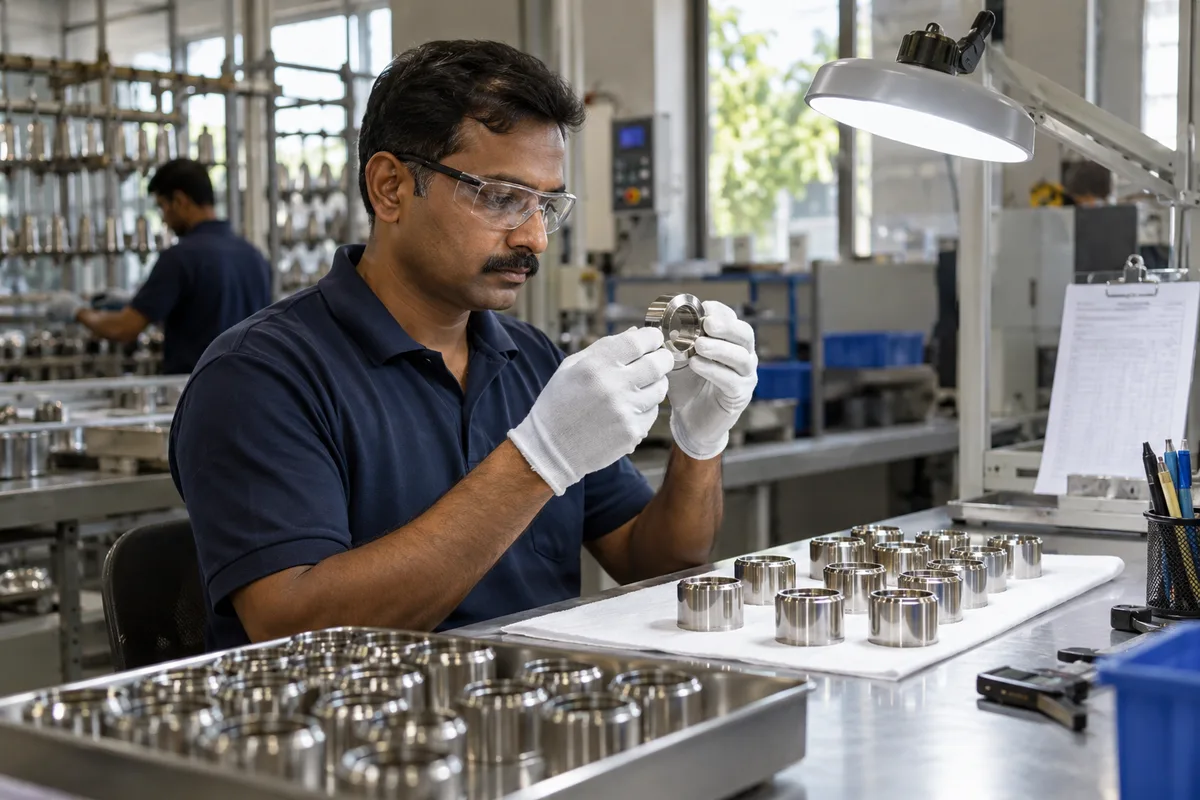
What website means
A website is the page a customer lands on after searching, clicking an advert or scanning a code, and it decides whether they call or leave. GullySales builds and maintains sites that load quickly, explain the offer plainly and make the enquiry form or phone number easy to find.
Also for electroplating and surface finishing units
- SEO for electroplating and surface finishing units
- Local SEO for electroplating units
- Google Ads for electroplating and surface finishing units
- Lead generation for electroplating and surface finishing units
- CRM for electroplating and surface finishing units
- Content marketing for electroplating and surface finishing units
- Email marketing for electroplating and surface finishing units
- Sales process for electroplating and surface finishing units
Sales and marketing for electroplating and surface finishing units, the overview.
Last updated 14 Nov 2026.
For electroplating and surface finishing units
Where it usually goes wrong, and what we would do.
“The site is a brochure with no capacity”
It says quality plating at competitive rates. A buyer needs the finishes, the base metals and the largest part you take.
“Proof is hidden”
Test capability and consents are not on the site. A vendor-approval engineer cannot check them and moves on.
“The form asks for the wrong thing”
A contact form with a name and a message gives you nothing to quote on. A form that asks for the part and the drawing saves two calls.
What we do
What we deliver for electroplating and surface finishing units.
The work available for this need. We agree the deliverables and responsibilities for your engagement in writing.
A site map built around finishes
A plan for the home page, a page for each finish, pages for the industries you serve and a proof page.
Result: A buyer finds their finish in two clicks.
Photographs of the line and lots
A set of clear photographs of racks, tanks, packed lots and the gate, taken on a working day.
Result: The site shows a real unit.
A proof page
A page with test capability, sample report format, consents you hold and the standards customers ask for.
Result: A vendor-approval engineer finds proof without asking.
A drawing-friendly enquiry form
A form that asks for part, finish, base material, quantity and file upload, and sends the answer to the enquiry record and to WhatsApp.
Result: An enquiry arrives with enough detail to quote.
A phone-first layout
A site that works on a mobile phone with a call button and a WhatsApp button, because purchase staff browse from the shop floor.
Result: A buyer on a phone can reach you in one tap.
Ownership in your name
The domain, hosting and logins held by the company, with a note of who maintains the site.
Result: The site stays yours if a vendor changes.
How the result is measured
- Page load time
- Bounce rate
- Enquiries from the website
Recorded as a baseline before work starts, so every later report has an honest comparison.
What the page must show
Put these on the site before a vendor-approval engineer asks.
A buyer of plating checks a few things before calling. Show each one plainly.
- Finishes and base materials
- List every finish you run and the metals each is done on. A buyer with brass or a die casting must see it named, so they know they can send it.
- Largest part your tanks take
- State the length, diameter or rack size limit in the units your buyers use. A buyer with a long shaft will not call to ask if the page is silent.
- Tests and records you can show
- Say which tests you run in-house and which you arrange outside, and show a sample report with the customer's name removed. Do not claim a test you do not offer.
- Consents and compliance held
- Name the consents your unit holds from the pollution control board, only if you hold them, and say how to ask for copies. Update the page when a renewal comes.
- Where you are and how lots reach you
- Give the industrial area, a map link and how you collect and return lots. A buyer wants to know whether your van comes to their gate.
- A form that asks for the drawing
- Ask for the part, finish, base material, quantity and a file or photo. Send each submission to the enquiry record, not only to one inbox.
Who it is for
This is written for these electroplating and surface finishing units.
- Zinc and zinc-nickel platers serving fastener and auto-part makers
- Decorative nickel-chrome platers for bathroom fittings and furniture hardware
- Hard chrome platers for hydraulic rods, rollers and moulds
- Electroless nickel units for engineering and tooling parts
- Anodising and hard anodising units for aluminium parts
- Powder coating and painting lines attached to a plating unit
- Phosphating and black oxide shops for fasteners and tools
- Silver and gold platers for electrical contacts and jewellery
- In-house plating departments that take outside job work
Before you decide
When this may not be the right fit.
- You have no photographs of your tanks, parts or inspection area and will not take any, so the site would look empty
- The unit's name, address or approvals are about to change, and a site would be rebuilt almost at once
Before you decide
Agree the work. Know how to judge it.
Website development for electroplating and surface finishing units: use these checks to prepare, choose the scope, and review what changes.
Bring the right evidence
List the pages that support a buying decision and the actions visitors must complete. Keep examples of failed forms, unclear product information, and questions your team answers repeatedly.
Make the scope clear
Agree the page list, content ownership, integrations, and who controls the domain and hosting. Include redirects and existing search traffic in a redesign brief, before changing addresses.
Check the work in use
Complete a real enquiry journey on a phone and a laptop. Check that the confirmation appears, the enquiry reaches the right person, and tracking records the action once.
Know when to change course
If visitors can enquire but the team does not follow up, start with the sales handover. A larger website will not resolve that delay.
These are discussion points, not a fixed package. GullySales confirms the deliverables, responsibilities, fee, and term in writing after reading your brief and speaking with you.
Before we start
What to have ready before the work starts.
The records, access and decisions this work needs from electroplating and surface finishing units. Anything missing is noted in the written scope, with who will supply it.
- Domain and hosting accounts in the unit's name
- We need to know who registered the domain and who holds the hosting login. If it is a former vendor, ask for transfer now. Without ownership, the site stays on an address you do not control. If the domain is in a vendor's name, send us a copy of the renewal mail, which shows who the registrant is and when it expires.
- Test reports and certificates you may show
- Scans of reports, quality certificates or customer approvals, with customer names hidden where needed. Any readable scan will do. If nothing can be shown, the proof page lists the checks you make and is shorter. If an old report mentions another buyer's part number, we hide it, and you confirm that the buyer has no objection to the report being shown.
- Photographs of the line, the lots and the gate
- Clear pictures taken in daylight, with no customer marks. Phone photographs are fine. Without them, stock images would stand in, and they would tell a buyer nothing about your unit.
- A list of finishes with part-size limits
- For each finish, the base metals, the largest part and the lot sizes. A supervisor's note is acceptable. Without limits, pages state nothing the buyer can check, and the form attracts wrong parts. Include whether you take parts that need masking or special racking, which a buyer will want to know before sending a drawing.
- A person to approve the technical text
- The supervisor or process chemist must read the text of each page. They need not write. If no one approves, pages go live with technical errors, which a purchase head spots at once.
How it works
How the website work runs
The work itself, in order. How an engagement starts, from your brief to a written scope, is set out on our method page.
- 1
List what a purchase head checks before calling
We write down, with you, the questions a purchase head asks before sending a drawing: which finishes, what size, what proof, where you are. You add the ones your buyers ask. The site is planned to answer these in order, and we count the calls now taken for basic questions.
- 2
Build the sitemap around finishes
We draw the pages as one for each finish, one for proof, one for the line and one for contact, not a general home page with a list. You approve it on paper. The structure follows how a buyer searches, not how the unit describes itself. We keep the home page short and let the finish pages carry the detail, so a buyer who knows the finish goes straight to it.
- 3
Gather the proof and photograph the line
We collect test reports you may show, certificates and photographs of racks, barrels and lots. You choose what is displayed and cover customer marks. A site with no proof reads like any other, so the proof page is built first.
- 4
Draft the enquiry form that asks for the drawing
We write a form that asks for the drawing, material, size, finish and quantity, and sends them to your WhatsApp and mail. You test it with an actual drawing. A form that asks for a name and a message loses the information that a quote needs.
- 5
Try the test site on a phone
We open the test site on the phones of the office and the supervisor, in the yard where the signal is weak. You decide what to cut so it loads. Launch waits for a drawing to be sent from a phone and received on the first try.
- 6
Hand over logins and read enquiries against the start
We put the domain, hosting and analytics in your name and show the office how to read the enquiry report. After launch we compare form submissions, calls and WhatsApp drawings with the count taken at the start, and you decide which pages to add.
Where this fits
Three pieces of sales work, in this order.
This work sits inside sales process design, at stage 1, prospecting and lead generation. The audit comes before it, and sales management keeps it running.
Step 1
Sales audit
Find where deals are being lost and what to fix first.
Start here if you cannot say where orders are lost.
Step 2 · you are here
Sales process design
One written way to sell, from first enquiry to repeat order.
Start here if every salesperson sells differently.
Step 3
Sales management
A target, a review routine and someone who owns the number.
Start here if the team has targets and no routine.
FAQ
Questions owners ask before they call.
Not here? More answers, or ask on WhatsApp.
Is a listing on IndiaMART enough instead of our own site?
Do we need Kannada or Tamil pages?
Does the site need to work well on a mobile phone?
Who must own the domain and hosting account?
Is an online marketplace profile enough?
Do we need a page in a local language?
How much does it cost?
How long is the contract?
How soon will we see results?
Who will actually do the work?
More for electroplating and surface finishing units
Related work to consider.
Closest to this: search and visibility
Also for electroplating and surface finishing units
- Google Ads for electroplating and surface finishing units
- Lead generation for electroplating and surface finishing units
- CRM for electroplating and surface finishing units
- Content marketing for electroplating and surface finishing units
- Email marketing for electroplating and surface finishing units
- Sales process for electroplating and surface finishing units
Or start from the overview: sales and marketing for electroplating and surface finishing units.
Your next practical step
Tell us what you are trying to grow, and we will read it before we call.
Eight short steps, mostly taps. Skip anything you would rather answer on the call.