Electroplating and surface finishing units · Social media
Show the finish on the part, and let a buyer see your line is run with care.
Social media for a plating unit means short posts and videos that show finished parts, the shop floor and the testing, in front of manufacturers who rarely post themselves. GullySales plans what to show, on which platform, and how a comment becomes a drawing request.
Scope, fee, reporting and term are agreed in writing after we have read your brief and spoken to you.
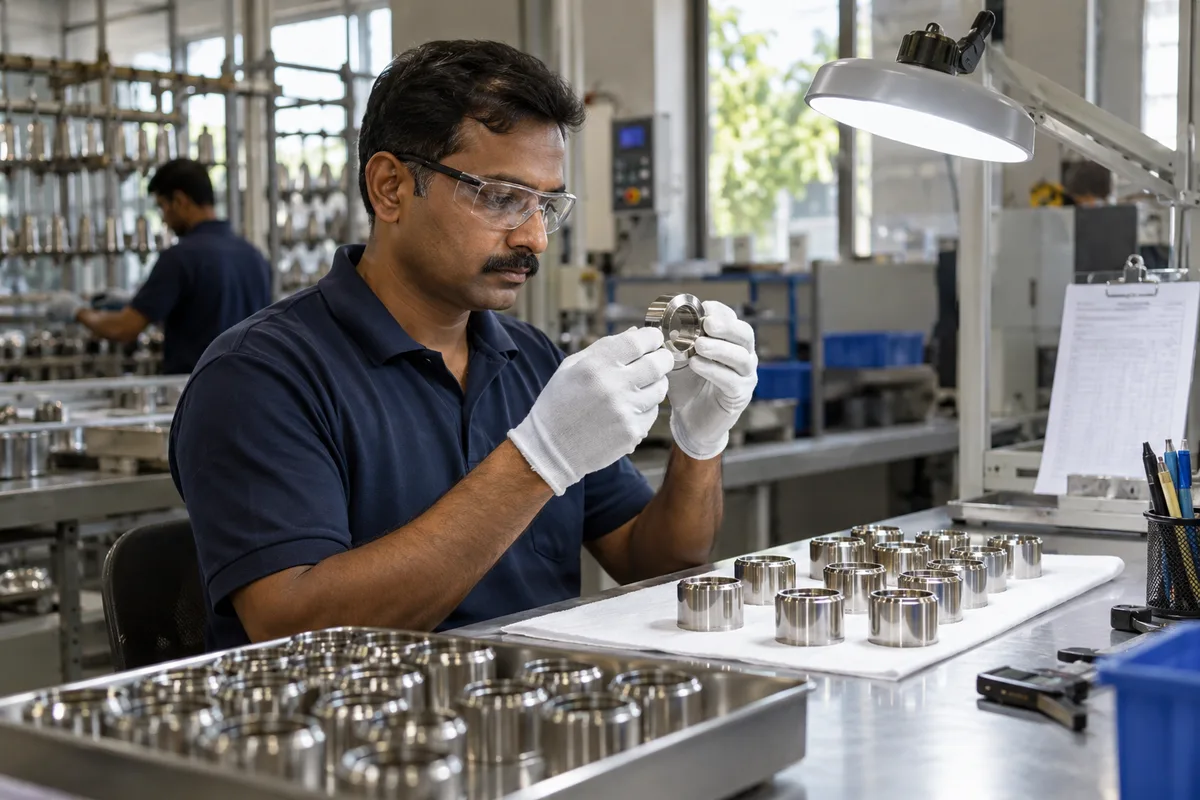
What social media means
Social media is the ongoing posting your business does on platforms such as Instagram, Facebook and LinkedIn to stay visible to customers and prospects between purchases. GullySales plans a posting calendar, writes captions and designs the images so the page looks active and answers what a visitor would ask.
Also for electroplating and surface finishing units
- Content marketing for electroplating and surface finishing units
- SEO for electroplating and surface finishing units
- Google Ads for electroplating and surface finishing units
- Lead generation for electroplating and surface finishing units
- CRM for electroplating and surface finishing units
- Email marketing for electroplating and surface finishing units
- Sales process for electroplating and surface finishing units
- Buyer persona for electroplating and surface finishing units
Sales and marketing for electroplating and surface finishing units, the overview.
Last updated 14 Nov 2026.
For electroplating and surface finishing units
Where it usually goes wrong, and what we would do.
“A plated part is easier to judge on a photograph than a paragraph”
A bright nickel-chrome handle or an even black oxide bolt shows quality in a glance. A buyer scrolling LinkedIn or Instagram stops on a clean photograph of work and passes over a general claim about plating.
“Engineers follow process videos”
A short clip of a rack going into a tank or a salt spray chamber being loaded shows the care that a drawing cannot. People in quality and purchase teams watch these, save them and send them on to colleagues.
“The comment is a lead only if someone answers it”
A fastener maker comments asking whether you do yellow passivation. If the reply comes late, from nobody in particular, the thread dies. One named person should own comments and messages.
“A customer's part is not yours to post”
Showing a buyer's component without consent can break a confidentiality understanding. The safe habit is to post parts that carry no marking, or to ask in writing before anything goes up.
What we do
What we deliver for electroplating and surface finishing units.
The work available for this need. We agree the deliverables and responsibilities for your engagement in writing.
A plan for what the unit shows
A list of posts built from real work: finished lots, rack loading, thickness checks and a before-and-after on a worn part.
Result: The owner knows what to photograph on the shop floor each day.
LinkedIn and Instagram profiles
Profiles that state the finishes, the industrial area and the way to send a drawing, with a link to the right page.
Result: A buyer who finds the profile knows what you plate and how to reach you.
A short video format
A repeatable shape for a clip of a few seconds: the part, the process, the test, the result.
Result: The team can record a video without a script or a studio.
A consent note for customer parts
A one-page note that says what may be posted, what needs written permission and what is never shown.
Result: Nobody on the floor has to guess before posting.
A comment and message routine
A named person answers comments, moves drawings to WhatsApp and logs the enquiry with its source.
Result: Each social enquiry appears in your enquiry record with its finish.
How the result is measured
- Posts published
- Engagement rate
- Enquiries from social profiles
Recorded as a baseline before work starts, so every later report has an honest comparison.
Posts and pieces to plan
What a plating unit can post that a buyer will read.
- Before and after on a customer-approved part
- A photograph pair, with the finish named and nothing about the buyer's name or drawing, shot only after the customer agrees to its being shown.
- A tank line walk-through
- A short video from the pretreatment to the final rinse, with the owner naming each step. Cover the machine nameplates and anything proprietary.
- Salt-spray and thickness checks
- A photograph of the test panel or the thickness gauge reading, with a caption saying what was checked and by whom. Post only readings you hold records for.
- Rejected lot, explained
- A plain post on a common cause, such as poor pretreatment or a burnt edge, and what the unit does to avoid it. It shows control without naming a customer.
- Finish explained in one image
- Zinc, zinc-nickel, black oxide and anodising shown on one sample card, with the use of each in a sentence.
- Festival and shutdown notices
- A simple post telling buyers when the line is closed and when it reopens, so the purchase team plans the lot around it.
Who it is for
This is written for these electroplating and surface finishing units.
- Zinc and zinc-nickel platers serving fastener and auto-part makers
- Decorative nickel-chrome platers for bathroom fittings and furniture hardware
- Hard chrome platers for hydraulic rods, rollers and moulds
- Electroless nickel units for engineering and tooling parts
- Anodising and hard anodising units for aluminium parts
- Powder coating and painting lines attached to a plating unit
- Phosphating and black oxide shops for fasteners and tools
- Silver and gold platers for electrical contacts and jewellery
- In-house plating departments that take outside job work
Before you decide
When this may not be the right fit.
- Nobody on the staff can photograph a part or answer a comment, and a page would show unanswered questions
- Your customers' drawings are under a confidentiality agreement and you cannot show finished parts, so there is little to post
Before you decide
Agree the work. Know how to judge it.
Social media marketing for electroplating units: use these checks to prepare, choose the scope, and review what changes.
Bring the right evidence
Review the posts that produced useful conversations, not only the ones with the most views. Gather buyer questions and decide which team member can contribute credible material.
Make the scope clear
Choose the audience and channel before setting a posting volume. Agree who supplies material, approves posts, and handles messages, including complaints or questions the agency cannot answer.
Check the work in use
Follow a post through to the profile, website, and response. A useful report explains the quality of conversations and enquiries, alongside reach and engagement.
Know when to change course
If publishing takes time away from unanswered buyer messages, fix the response routine first. Do not expand to another channel without a clear reason for being there.
These are discussion points, not a fixed package. GullySales confirms the deliverables, responsibilities, fee, and term in writing after reading your brief and speaking with you.
Before we start
What to have ready before the work starts.
The records, access and decisions this work needs from electroplating and surface finishing units. Anything missing is noted in the written scope, with who will supply it.
- Admin access to existing social pages
- Logins or admin rights for any page carrying the unit's name. They may have been made by a relative. If none exist, we open new ones in the unit's name. If a relative or former vendor controls the page, ask for the admin role to be added to the owner's account before we begin, so that nothing depends on a favour.
- A list of customers who allow their parts shown
- Names of buyers who have said yes, in writing or by message. A message is enough. Without any, we show your own test pieces and the line only. A buyer's silence is not consent, so a message that says yes is worth keeping in the record beside the post it covers.
- A phone and someone to photograph lots
- A phone with a clean lens and a person who photographs finished lots, racks and checks. Without it, the post bank is filled with stock images that mean nothing. Ask them to include a coin or a ruler for scale and a paper tag with the finish written on it, so each photograph explains itself.
- The name of the person who answers comments
- One person who watches the page and moves enquiries to WhatsApp. If no one is named, comments pile up, and the buyer who asked a question never hears back. Decide what that person may answer alone, such as stock of a finish or location, and what must wait for the owner, such as price.
How it works
How the social media work runs
The work itself, in order. How an engagement starts, from your brief to a written scope, is set out on our method page.
- 1
Pick two profiles where engineers look
We ask you which platforms your buyers use and look at what rival units post. You decide where the unit shows up, a company page for engineers and one for pictures. The number of followers from the buyers' companies at the start is counted.
- 2
Walk the line for a week of ideas
We walk the line with the supervisor and note what photographs well: a rack loaded, a thickness check, a finished lot, a bath being topped up. You say what must not be shown. The result is a bank of ideas drawn from your floor. We add the processes that are routine for you but strange to a buyer, such as a hot-dip bath, a salt spray check or a final packing, because these are what an engineer finds interesting.
- 3
Agree consent for customer parts
We draft a short note asking a buyer if their plated part may appear without their name. You send it to the ones you know. A part shown without consent is not posted, because a buyer who sees their drawing online will stop sending work. If a buyer does not reply, the part stays out of the post bank and we use your own test pieces instead.
- 4
Write captions with the quality person
We write each caption in plain words and read it with the person who knows the process. You strike any claim you cannot prove. A caption says what was done and what was checked, nothing about being the best.
- 5
Set up the comment and message routine
We decide who replies to a comment, how a request is moved to WhatsApp and where the drawing goes. You name the person. A comment unanswered for long is worse than no post. We also agree how an enquiry that arrives as a comment is moved to the shared number, and who tells the buyer that the reply is coming from a new place.
Where this fits
Three pieces of sales work, in this order.
This work sits inside sales process design, at stage 0, foundation. The audit comes before it, and sales management keeps it running.
Step 1
Sales audit
Find where deals are being lost and what to fix first.
Start here if you cannot say where orders are lost.
Step 2 · you are here
Sales process design
One written way to sell, from first enquiry to repeat order.
Start here if every salesperson sells differently.
Step 3
Sales management
A target, a review routine and someone who owns the number.
Start here if the team has targets and no routine.
FAQ
Questions owners ask before they call.
Not here? More answers, or ask on WhatsApp.
Do industrial buyers use social media at all?
We have no one to run this. What is the minimum?
Can we post a customer's plated part without asking?
Does a plating unit need a page on every platform?
What is the minimum effort that still works?
Can we post a video of the shop floor?
How much does it cost?
How soon will we see results?
Who will actually do the work?
What do you need from us?
More for electroplating and surface finishing units
Related work to consider.
Closest to this: content and social
Also for electroplating and surface finishing units
- SEO for electroplating and surface finishing units
- Google Ads for electroplating and surface finishing units
- Lead generation for electroplating and surface finishing units
- CRM for electroplating and surface finishing units
- Email marketing for electroplating and surface finishing units
- Sales process for electroplating and surface finishing units
Or start from the overview: sales and marketing for electroplating and surface finishing units.
Your next practical step
Tell us what you are trying to grow, and we will read it before we call.
Eight short steps, mostly taps. Skip anything you would rather answer on the call.