Electroplating companies · Search engine optimisation
Be the plating page that appears when an engineer searches for the finish.
SEO for a plating house means writing the pages that match what a quality engineer types when a part needs a coating. GullySales works on finish pages, the technical detail that sits on them and the structure that lets search engines read them.
Scope, fee, reporting and term are agreed in writing after we have read your brief and spoken to you.
What search engine optimisation means
Search engine optimisation (SEO) is the work of getting your website to appear when a buyer searches Google for what you sell. GullySales builds pages around real search terms, fixes technical issues that block ranking, and tracks which searches actually bring enquiries.
Also for electroplating companies
- Local SEO for electroplating companies
- Website for electroplating companies
- Lead generation for electroplating companies
- Social media marketing for electroplating companies
- Content marketing for electroplating companies
- Buyer personas for electroplating companies
- CRM for electroplating companies
- Follow-up systems for electroplating companies
Sales and marketing for electroplating companies, the overview.
Last updated 14 Nov 2026.
For electroplating companies
Where it usually goes wrong, and what we would do.
“Engineers search by finish and by part”
The searcher types zinc plating for fasteners, hard chrome for shafts or nickel plating for electrical parts. A single page called Our Services matches none of them. Each finish needs its own page, named in the way the buyer would say it.
“Thin pages lose to a directory”
A one-paragraph description of zinc plating cannot beat a listing site that has pages for every finish. The plating page needs the substance a quality person looks for: metals plated, thickness range, passivate options, rack or barrel, and the tests you run.
“Photographs without words say nothing to a search engine”
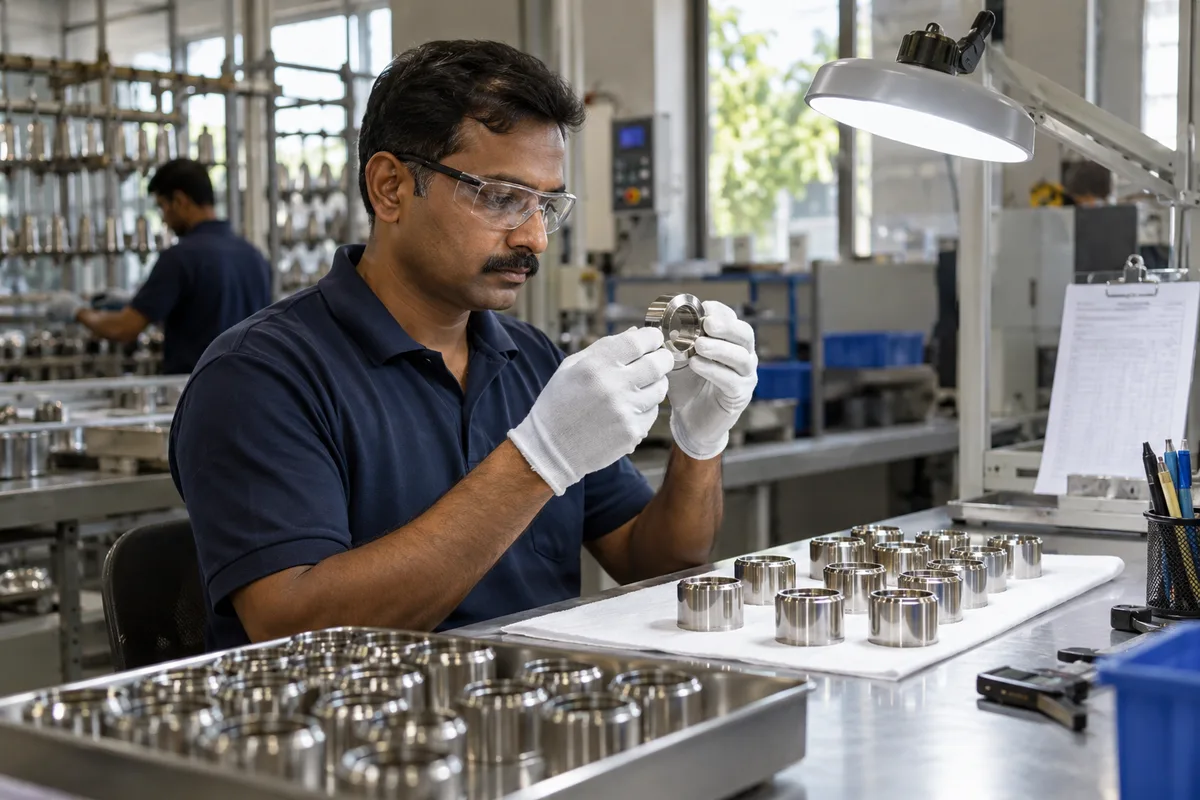
A clean shot of a plated lot carries no text for a crawler. Captions, file names and a paragraph beside the image tell search what the picture shows and tell the buyer which part and finish it is.
“Search brings the nearby buyer first”
Parts move in batches and collection is frequent, so the buyer looks for a plater close by. Your area and industrial estate should appear on the page in plain words, so that location and finish are read together.
What we do
What we deliver for electroplating companies.
The work available for this need. We agree the deliverables and responsibilities for your engagement in writing.
Keyword map by finish
A list of the searches each plating type attracts, matched to one page each.
Result: Each search has one page, so pages do not compete.
Finish pages written with your quality person
Each page covers metals, thickness range, passivate colours, rack or barrel and test records, checked by the person who owns them.
Result: Every technical line on a page can be traced to your plant.
Image and caption clean-up
Plant and part photographs given descriptive names, captions and alternative text.
Result: Your photographs work as part of the page, not decoration.
Page structure and speed check
Headings, internal links and loading behaviour reviewed in Google Search Console and the page tools.
Result: You can see which pages Google has read and which it has not.
Search enquiry tracking
Forms and click-to-call set up to record which page produced the enquiry.
Result: You know which finish pages are earning quotations.
How the result is measured
- Ranking positions
- Organic traffic
- Enquiries from organic search
Recorded as a baseline before work starts, so every later report has an honest comparison.
Searches your buyers type
What an engineer searches for a plater, and the page that meets it.
- zinc nickel plating for automotive fasteners
- A finish page naming the process, the base metals, the salt-spray specification you test to and the part sizes your line takes.
- electroless nickel plating on aluminium
- A page for the process with the pretreatment steps named, the thicknesses offered and photographs of finished parts.
- barrel plating job work
- A page on barrel capacity, the part sizes it suits, and what the unit does to prevent nesting and scratching.
- copper tin plating for electrical terminals
- A page for electrical parts with the plating thickness range, the solderability or conductivity needs it serves and the inspection done.
- chrome plating thickness test report
- A proof page that shows a sample report, with the customer's details removed, and explains how thickness is checked.
- how to avoid hydrogen embrittlement after plating
- A technical article from the process owner on baking and the parts at risk. It earns the click of a quality engineer.
Who it is for
This is written for these electroplating companies.
- Zinc and zinc-nickel plating for fasteners and automotive parts
- Decorative and hard chrome plating
- Nickel plating for engineering and electrical components
- Copper and tin plating for electrical and electronics parts
- Barrel plating for small parts
- Rack plating for larger components
- Plating on aluminium and castings
- In-house plating units that accept outside work
Before you decide
When this may not be the right fit.
- The unit has no written process or test record to put on the page, and the text would be a list of claims
- You want a first-page place by a set date, and nobody can promise one
Before you decide
Agree the work. Know how to judge it.
SEO for electroplating companies: use these checks to prepare, choose the scope, and review what changes.
Bring the right evidence
Bring the pages for the products or services you want to sell, the search queries available in your reports, and examples of enquiries from search. Separate branded searches from buyers discovering you for the first time.
Make the scope clear
Agree which pages and technical fixes come first, who can publish changes, and who supplies subject knowledge. Link search work to a relevant enquiry route on each priority page.
Check the work in use
Follow the trail from a relevant query to its landing page and then to an enquiry. Review whether those enquiries fit your offer, alongside indexing and search visibility.
Know when to change course
A ranking movement alone is not a buying signal. If traffic grows but relevant enquiries do not, revisit page intent and the offer before producing more pages.
These are discussion points, not a fixed package. GullySales confirms the deliverables, responsibilities, fee, and term in writing after reading your brief and speaking with you.
Before we start
What to have ready before the work starts.
The records, access and decisions this work needs from electroplating companies. Anything missing is noted in the written scope, with who will supply it.
- Access to the site and the search accounts
- We need the website admin and the Search Console account in the company's name. If a developer holds them, arrange the transfer before we start. Without access we cannot measure or publish, and the plan waits. Note also whether the pages are built on a platform you can edit yourself, because that decides whether corrections can be made the day an error is found.
- A list of standards your customers quote
- Collect the standards named in drawings and orders, such as those for zinc thickness or nickel adhesion. A page of notes will do. Without them, the pages talk of quality in general terms and miss the numbers an engineer searches.
- Photographs of the line and the finished lots
- Taken in daylight, with racks, barrels and tags visible and customer marks covered. Phone pictures are enough. Without them the pages carry no proof, and a thin page loses to a directory.
- The quality person's time for review
- Your quality head or process chemist needs to read every draft and mark errors. A fixed hour per page works. Without this, we publish only what you have already put in writing, and the pages are thinner. Fix the hour in advance, so that the review is part of the working week and does not wait for a quiet afternoon that never arrives.
- A decision on which finishes to push
- Say which finishes have free capacity and which are best left alone. Only the owner can decide. If it is open, we begin with the finish that has the highest number of existing enquiries, and the page order may not match your plans.
How it works
How the search engine optimisation work runs
The work itself, in order. How an engagement starts, from your brief to a written scope, is set out on our method page.
- 1
List every coating a quality engineer names
We start from your quotations and rejection papers and list the coatings, standards and base metals that engineers name when they ask: zinc with passivate, electroless nickel, bright nickel chrome, tin, copper. You tell us which you run and which you only subcontract. That list is the vocabulary of the keyword map.
- 2
Find what the pages now say and miss
We read the pages you have and the directory listings carrying your name, and compare them with the coating list. You confirm which statements are true. Pages that mention plating in general terms, or a finish you no longer run, are marked for rewriting before new ones are added. We also note any page that ranks only for the unit's own name, since it shows how little a stranger has to find.
- 3
Write each finish page with the quality person
We sit with your quality person and write one page per finish covering the base metals taken, the process, the checks and the tests, in the order a buyer reads them. You approve the technical lines. A page that your quality person would not sign is not published.
- 4
Caption photographs and clean the structure
We rename the photographs, write captions that name the finish and part type, and tidy page titles, headings and links. You choose which photographs may be public and which carry a customer mark that must be covered. A photograph with no words around it gives a search engine nothing.
- 5
Publish in order and watch enquiries by page
We publish the finish pages in the order you decide, starting with the finish you want more of, and record the enquiries that reach each page. You see which page a buyer arrived on. Pages are not all released together, so the effect of each one is visible.
- 6
Compare enquiries by page with the starting count
We compare enquiries arriving from search, by page and by finish, with the counts taken before the work. You decide which pages to extend with more technical detail, which to merge and where nearby-buyer searches need a separate page.
Where this fits
Three pieces of sales work, in this order.
This work sits inside sales process design, at stage 1, prospecting and lead generation. The audit comes before it, and sales management keeps it running.
Step 1
Sales audit
Find where deals are being lost and what to fix first.
Start here if you cannot say where orders are lost.
Step 2 · you are here
Sales process design
One written way to sell, from first enquiry to repeat order.
Start here if every salesperson sells differently.
Step 3
Sales management
A target, a review routine and someone who owns the number.
Start here if the team has targets and no routine.
FAQ
Questions owners ask before they call.
Not here? More answers, or ask on WhatsApp.
Can you promise a first-page ranking?
Do we need a page for every metal?
Can a plater rank for a customer's standard by name?
Should every metal and finish get its own page?
Why did a directory page appear above our own website?
Should we write about each customer standard separately?
How much does it cost?
How long is the contract?
How soon will we see results?
Who will actually do the work?
More for electroplating companies
Related work to consider.
Closest to this: search and visibility
Also for electroplating companies
Or start from the overview: sales and marketing for electroplating companies.
Your next practical step
Tell us what you are trying to grow, and we will read it before we call.
Eight short steps, mostly taps. Skip anything you would rather answer on the call.