Electroplating companies · Website
Build a plating website that a quality engineer can check in a few minutes.
A website for a plating house is the place a buyer goes to confirm finishes, range, process control and location before sending a part. GullySales plans, writes and builds pages around that checking, with your quality person approving the technical content.
Scope, fee, reporting and term are agreed in writing after we have read your brief and spoken to you.
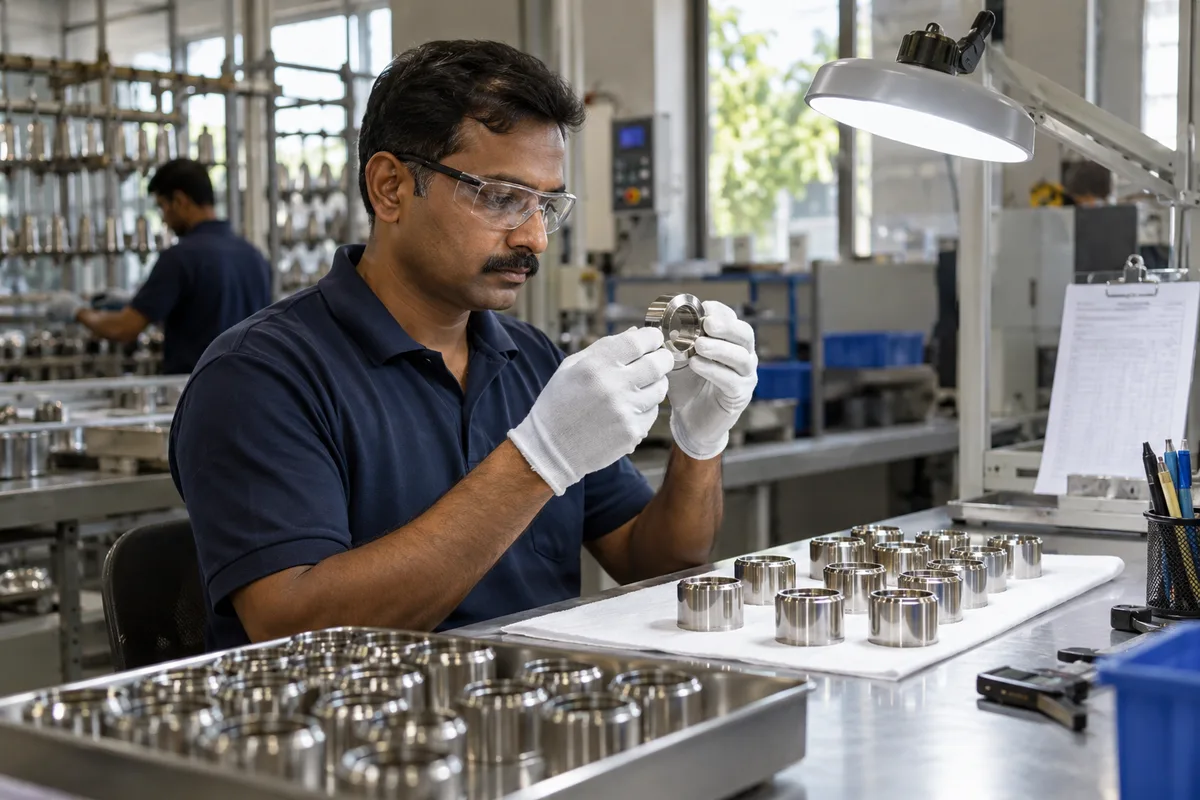
What website means
A website is the page a customer lands on after searching, clicking an advert or scanning a code, and it decides whether they call or leave. GullySales builds and maintains sites that load quickly, explain the offer plainly and make the enquiry form or phone number easy to find.
Also for electroplating companies
- SEO for electroplating companies
- Local SEO for electroplating companies
- Lead generation for electroplating companies
- Social media marketing for electroplating companies
- Content marketing for electroplating companies
- Buyer personas for electroplating companies
- CRM for electroplating companies
- Follow-up systems for electroplating companies
Sales and marketing for electroplating companies, the overview.
Last updated 14 Nov 2026.
For electroplating companies
Where it usually goes wrong, and what we would do.
“The buyer opens it to verify, not to browse”
An engineer given your name by a peer checks the site for finishes, thickness range, tests and plant photographs. A site that opens on a slogan and hides the services forces a search that visitors will not make.
“A downloadable pack beats a brochure page”
A buyer building an approval file wants documents. A page that offers the process notes, test record samples and a vendor questionnaire answer in one place saves the exchange of messages and shows you are prepared for scrutiny.
“The enquiry form decides the quality of the lead”
A form with name and message gives you a vague request. A form that asks for finish, part, quantity and a drawing upload gives you something to quote. Fewer fields suit a callback, but a quote request needs detail.
“A site must work on the phone”
Engineers open a link on a mobile in the plant or on the road. Large tap targets, readable tables of finishes and click-to-call matter more than animation. Test every page on a phone before publishing.
What we do
What we deliver for electroplating companies.
The work available for this need. We agree the deliverables and responsibilities for your engagement in writing.
Site map around finishes and proof
Pages for each finish, the process, quality records, the plant and contact, planned together.
Result: A buyer finds each answer in one step.
Finish pages with technical detail
Metals, thickness range, passivate options, rack or barrel and tests, checked by your quality person.
Result: Content matches what your plant does.
Proof pack download page
A page that offers process notes, sample records and a questionnaire for request.
Result: A buyer can start an approval file straight away.
Specification-led enquiry form
A form asking for finish, part, quantity and drawing, with a callback option.
Result: Enquiries arrive ready to quote.
Mobile and speed testing
Every page tested on phones and checked for loading behaviour.
Result: The site works where engineers use it.
Analytics and search set-up
Google Analytics and Google Search Console connected and checked.
Result: You can see how buyers reach and use the site.
How the result is measured
- Page load time
- Bounce rate
- Enquiries from the website
Recorded as a baseline before work starts, so every later report has an honest comparison.
Searches your buyers type
What a quality engineer looks for on a plating website, and the page that holds it.
- plating process and test capability
- A capability page listing the baths, the part sizes, the thickness range and the tests done in the unit's own lab.
- download plating company profile
- A proof pack download with the certificates held, the equipment list and a sample inspection report, for the purchase file.
- zinc plating specification salt spray hours
- A finish page stating the standards the unit works to and what it tests, with a sample record.
- plating company contact and location
- A contact page with the address, the gate, the map pin and the hours, readable on a phone.
- send drawing for plating quote
- An enquiry form that asks for the drawing, base metal, coating, thickness and quantity, with an upload field.
- industries served by the plating unit
- A page naming industries such as automotive, electrical and tooling, without naming any customer.
Who it is for
This is written for these electroplating companies.
- Zinc and zinc-nickel plating for fasteners and automotive parts
- Decorative and hard chrome plating
- Nickel plating for engineering and electrical components
- Copper and tin plating for electrical and electronics parts
- Barrel plating for small parts
- Rack plating for larger components
- Plating on aluminium and castings
- In-house plating units that accept outside work
Before you decide
When this may not be the right fit.
- The unit has no certificates, test records or photographs it can show, and the site would hold only claims
- The company name or premises are due to change, and the site would be rebuilt almost at once
Before you decide
Agree the work. Know how to judge it.
Website for electroplating companies: use these checks to prepare, choose the scope, and review what changes.
Bring the right evidence
List the pages that support a buying decision and the actions visitors must complete. Keep examples of failed forms, unclear product information, and questions your team answers repeatedly.
Make the scope clear
Agree the page list, content ownership, integrations, and who controls the domain and hosting. Include redirects and existing search traffic in a redesign brief, before changing addresses.
Check the work in use
Complete a real enquiry journey on a phone and a laptop. Check that the confirmation appears, the enquiry reaches the right person, and tracking records the action once.
Know when to change course
If visitors can enquire but the team does not follow up, start with the sales handover. A larger website will not resolve that delay.
These are discussion points, not a fixed package. GullySales confirms the deliverables, responsibilities, fee, and term in writing after reading your brief and speaking with you.
Before we start
What to have ready before the work starts.
The records, access and decisions this work needs from electroplating companies. Anything missing is noted in the written scope, with who will supply it.
- Company-held domain and hosting credentials
- The registrar and hosting details, with the login. If a developer holds them, begin the transfer. The new site cannot go live on an address you do not control. Also note the mail accounts tied to the domain, since the site's contact form will send to one of them.
- The documents for the proof pack
- Test reports, certificates, an equipment list and a description of your inspection. Scans are enough. Without them, the pack is empty and the site loses its main asset. Mark the expiry date of each certificate, because a buyer who sees an expired certificate trusts the rest of the page less.
- Photographs of the line, lots and testing
- Clear daylight pictures with customer marks covered. Phone quality works. Without them, the site shows stock images that every plater uses. Include a picture of the testing corner with the instrument in use, as it shows the check being done and not only described.
- Your limits on part size and finishes
- A list of finishes with the largest part, base metals and lot sizes. The supervisor can write it. Without limits, the site invites parts you must decline. State also the base metals you refuse, such as certain alloys, since a buyer wants to know early whether the part can be taken.
- A person to approve the technical text
- The quality person or chemist reads every page before release. An hour per batch is enough. If no one can, the site carries only text you have already written. Fix a date for the review in advance, so that the launch is not held up by a text waiting in someone's inbox.
How it works
How the website work runs
The work itself, in order. How an engagement starts, from your brief to a written scope, is set out on our method page.
- 1
Write what a quality engineer checks first
We list with your quality person what an engineer wants to confirm before sending a part: finishes, base metals, part size, tests, certificates and location. You add what your buyers have asked. The site is planned to answer these in order, and the calls taken for such questions are counted. We also read the audit papers from your customers, if you can share them, as they show the questions a supplier is asked in writing.
- 2
Build the sitemap around finishes and proof
We draw the pages, with one for each finish, a proof pack page, a page for the line and a contact page. You approve it on paper. The design follows how a buyer verifies a supplier. We plan the proof pack page to be the busiest, so it sits one click from every page and from the home page.
- 3
Gather the proof pack for download
We collect the documents that go in the pack: test reports, certificates, the finish list, the equipment list and the inspection routine, and make them one file. You decide what is shared openly and what only on request. We label each document with its date and the standard it covers, so a buyer can tell a current report from an old one.
- 4
Write finish pages with the quality person
We draft each finish page, covering base metals, the process, the checks and the part limits, and the quality person corrects it. A technical error on a finish page loses an engineer at once, so no page is published unread. We also mark any figure that comes from a customer's specification and not from your own test, so the page does not claim more than you checked.
- 5
Build the enquiry form around the specification
We design a form that asks for the specification, drawing, quantity and test, and sends it to your mail and WhatsApp. You test it with a real drawing. The form decides the quality of the lead. We add a short note that says what happens next after the form is sent, so the buyer knows who will reply and what will be asked.
- 6
Test on phones and compare with the start
We test speed and layout on the phones your buyers use, launch, and count form submissions, pack downloads and calls against the figures taken before. You decide which pages to add and which questions the form should ask next. We hand over the logins and a one-page guide, so that the office can change a phone number or a certificate without waiting for us.
Where this fits
Three pieces of sales work, in this order.
This work sits inside sales process design, at stage 1, prospecting and lead generation. The audit comes before it, and sales management keeps it running.
Step 1
Sales audit
Find where deals are being lost and what to fix first.
Start here if you cannot say where orders are lost.
Step 2 · you are here
Sales process design
One written way to sell, from first enquiry to repeat order.
Start here if every salesperson sells differently.
Step 3
Sales management
A target, a review routine and someone who owns the number.
Start here if the team has targets and no routine.
FAQ
Questions owners ask before they call.
Not here? More answers, or ask on WhatsApp.
What must a plating website show?
Can we show customer names?
What must a plating website show to be believed?
Can the site name our customers?
Should the proof pack be open or on request?
What should the site say about the effluent plant?
How much does it cost?
How long is the contract?
How soon will we see results?
Who will actually do the work?
More for electroplating companies
Related work to consider.
Closest to this: search and visibility
Also for electroplating companies
Or start from the overview: sales and marketing for electroplating companies.
Your next practical step
Tell us what you are trying to grow, and we will read it before we call.
Eight short steps, mostly taps. Skip anything you would rather answer on the call.