Food processing companies · Lead generation
Find the brands, caterers and exporters who buy your pulp, paste or powder in bulk.
Lead generation for a food processor means finding the businesses that buy ingredients by the drum, the sack or the tonne, and getting a sample request from them. GullySales works on where those buyers look, what they are told first and how each request is recorded.
Scope, fee, reporting and term are agreed in writing after we have read your brief and spoken to you.
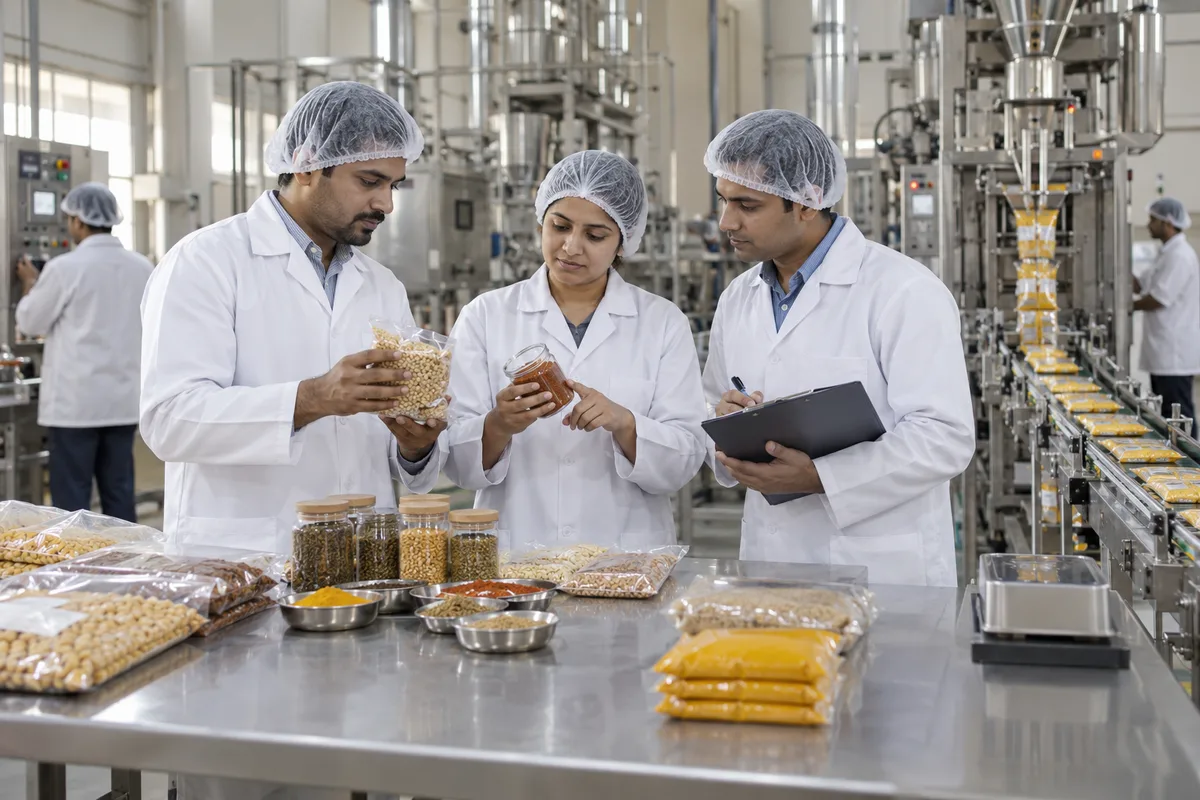
What lead generation means
Lead generation is the combined work of every channel that brings in a new enquiry, whether from search, adverts, referrals or a stall at an exhibition. GullySales runs these channels together and reports the number of enquiries each one produced, not the activity behind it.
Last updated 13 Nov 2026.
For food processing companies
Where it usually goes wrong, and what we would do.
“Buyers are businesses, not shoppers”
A sauce brand, a bakery chain or a hotel group wants a named supplier with a spec sheet, not a slogan. Leads for a processor come from search, marketplace listings, introductions and direct approach to chosen segments, and each source needs its own handling.
“The enquiry names the product and nothing else”
A message that says only the product name and a quantity gives you little to price on. Without the end use, pack type and delivery place, the first reply becomes a string of questions and the buyer wanders off to a supplier who asked them once.
“Season stock needs a list before the season ends”
Pulp or powder made in the harvest months has to be sold across the year. Units that start looking for buyers when the godown is full are late. A list of buyers by product, built while the plant is running, makes the off-season sale possible.
“Brokers hand over orders, not buyer details”
A broker who brings an order keeps the name of the buyer's purchase head. When the broker moves on, so does the relationship. Every lead that comes through a third party should be recorded with whatever buyer detail you are given.
What we do
What we deliver for food processing companies.
The work available for this need. We agree the deliverables and responsibilities for your engagement in writing.
Segment-wise target lists
Lists of brands, caterers, bakeries and exporters matched to each product you make, checked for a real purchasing contact.
Result: You can see which buyer types are being approached for which product.
Product enquiry pages
Pages for pulp, paste, powder or flour that ask the buyer for end use, quantity and pack type before the form is sent.
Result: The buyer's end use, quantity and pack are already there when you quote.
Marketplace listing rewrite
Listings on bulk trade marketplaces rewritten with the specification a quality team scans for, and a first reply that asks for use and quantity.
Result: Replies to marketplace enquiries start from a fixed, useful message.
Sample request routine
A short form and a fixed set of questions before a sample leaves the plant, so the request is qualified and logged.
Result: Every sample dispatched has a named buyer and purpose on record.
Source tagging
Each enquiry is marked with where it came from: search, listing, broker, outreach or referral.
Result: The record shows which source produced samples and orders.
How the result is measured
- Enquiries generated
- Cost per enquiry
- Enquiries by source
Recorded as a baseline before work starts, so every later report has an honest comparison.
What to capture or send
What to record when a bulk buyer asks about pulp, paste or powder.
- Product, grade and pack size
- Record exactly which pulp, paste or powder and in what pack. A brand buyer asking for a 200 kg drum and a caterer asking for a 5 kg pouch are different orders.
- Annual use and first order size
- Ask how much the buyer expects to use over the year and what the trial lot is. It tells you whether to treat the enquiry as a customer or a one-off.
- End product it goes into
- Ice cream, sauce, bakery filling or ready mix. The use decides which specification and documents the buyer's quality team will ask for.
- Sample already sent by a rival
- A buyer who has tested another supplier compares you against it. Note which one, so your reply answers the real comparison.
- Source of the enquiry
- Marketplace, search, broker or referral. Over a season it shows which source brought buyers who ordered a second time.
Who it is for
This is written for these food processing companies.
- Fruit pulp and puree processors for juice, ice cream and bakery buyers
- Tomato, chilli and vegetable paste and sauce base processors
- Spice grinding and blending units supplying brands and caterers
- Dehydrated onion, garlic and vegetable powder makers
- Cut, washed and packed vegetable suppliers to hotels and quick commerce
- Pulse milling and grain cleaning units selling to brands and wholesalers
- Cashew, groundnut and dry fruit processors
- Contract processors and co-packers who make products under another brand
Not for
It is not the right fit if.
- You have no spare stock or capacity to supply a new buyer this season, so a sample would raise a hope you cannot meet.
- Your whole output is committed to one buyer by contract, so new enquiries would only produce refusals.
- No one on the team can read a buyer's specification sheet, so enquiries would be answered with the wrong grade.
Before you decide
Agree the work. Know how to judge it.
Lead generation for food processors: use these checks to prepare, choose the scope, and review what changes.
Bring the right evidence
Define the organisations or buyers you can serve and the reasons they would consider a conversation. Bring examples of accepted and rejected prospects so the selection rule is visible.
Make the scope clear
Agree the research sources, contact approach, qualification rules, and handover. Clarify which meetings count as accepted and what happens to replies that are not ready to buy.
Check the work in use
Review why a prospect was selected and what was learned from the response. Count held, relevant conversations separately from contacts found, messages sent, or meetings booked.
Know when to change course
If the same objection appears repeatedly, adjust the offer or buyer group before increasing outreach. Respect a request to stop contact and keep the exclusion in the record.
These are discussion points, not a fixed package. GullySales confirms the deliverables, responsibilities, fee, and term in writing after reading your brief and speaking with you.
Before we start
What to have ready before the work starts.
The records, access and decisions this work needs from food processing companies. Anything missing is noted in the written scope, with who will supply it.
- The enquiry notebook for the last season
- Pages of calls, chats and visiting cards are enough, in any state of tidiness. They show who asked for what and who went quiet. Without them, the target lists begin from our own research on the sector, and the plan says plainly that it has no history of your buyers behind it.
- Current spec sheets for each product
- Every product you want to sell needs a sheet with grade, moisture or size range, pack and shelf life as your lab records it. The quality team signs it off. If a sheet is missing, the enquiry page for that product waits, because a lead who asks for the spec and gets none leaves.
- A statement of capacity you can commit to
- Say how much of each product the plant can supply to a new buyer without hurting existing ones, and in which months. A rough figure is acceptable if you stand by it. When it is missing, we limit the plan to products the plant head confirms are free, and avoid promising supply.
- Names of brokers who hold your buyers
- List the traders and brokers who bring you orders and say which of them share the buyer's name. We do not approach buyers behind a broker without your word. When the list is vague, broker-held orders stay out of the lead log and are marked as the broker's.
How it works
How the lead generation work runs
The work itself, in order. How an engagement starts, from your brief to a written scope, is set out on our method page.
- 1
Sort last season's enquiries by buyer type
We start with the enquiry notebook, the WhatsApp chats and the broker calls from the last season, and sort every name into bakery, ice cream, caterer, brand, exporter or trader. You tell us which of them ever reached a second order. That sort shows who your plant already suits, and the segment-wise target lists are drawn from it rather than from a general directory.
- 2
Read what the plant can supply without strain
Before we look for buyers, we sit with the plant head and write down the pack sizes, the capacity you are willing to commit, the lines that run only in season and the grades you cannot make. You decide which products are open to new buyers. A lead for something you cannot make on time costs more than it earns.
- 3
Rewrite the listing and enquiry page together
We open your marketplace listing and your product pages next to the spec sheets that the quality team holds, and correct each line so the grade, the pack and the minimum order match the plant. You approve the words. The enquiry page then asks the buyer for the product, the quantity and the end use, which saves a second call.
- 4
Run a test sample request from the front door
A member of our team sends a mock sample request through the listing, the website and the WhatsApp number, and we watch who answers, how long the reply takes in your own judgement and what is written in the log. You see the gaps on a printed sheet. The sample request routine is then corrected before real buyers use it.
- 5
Read sources against the starting enquiry count
We compare the tagged enquiries with the count recorded before the work began, by source: listing, website, broker, referral and exhibition. We note which source produced a sample request and which produced a repeat order. You decide where to put effort next, and which segment list needs a second pass.
Where this fits
Three pieces of sales work, in this order.
This work sits inside sales process design, at stage 1, prospecting and lead generation. The audit comes before it, and sales management keeps it running.
Step 1
Sales audit
Find where deals are being lost and what to fix first.
Start here if you cannot say where orders are lost.
Step 2 · you are here
Sales process design
One written way to sell, from first enquiry to repeat order.
Start here if every salesperson sells differently.
Step 3
Sales management
A target, a review routine and someone who owns the number.
Start here if the team has targets and no routine.
FAQ
Questions owners ask before they call.
Not here? More answers, or ask on WhatsApp.
Should we chase every bulk enquiry?
Can lead generation work if we sell mostly through brokers?
Do we need a website to find buyers?
Should we reply with a price at once?
Should we pay a directory to list our unit?
Who writes to the buyers we find?
How long is the contract?
How soon will we see results?
Who will actually do the work?
What do you need from us?
More for food processing companies
Related work to consider.
Closest to this: leads and follow-up
Also for food processing companies
Or start from the overview: sales and marketing for food processing companies.
Your next practical step
Tell us what you are trying to grow, and we will read it before we call.
Eight short steps, mostly taps. Skip anything you would rather answer on the call.