Food processing companies · Search engine optimisation
Be the supplier a buyer finds when they search for the exact ingredient they need.
SEO for a food processor means appearing when a purchase manager or product developer searches for a specific ingredient, grade or pack. GullySales works on product pages, the words buyers use and the documents that make a quality team trust the listing.
Scope, fee, reporting and term are agreed in writing after we have read your brief and spoken to you.
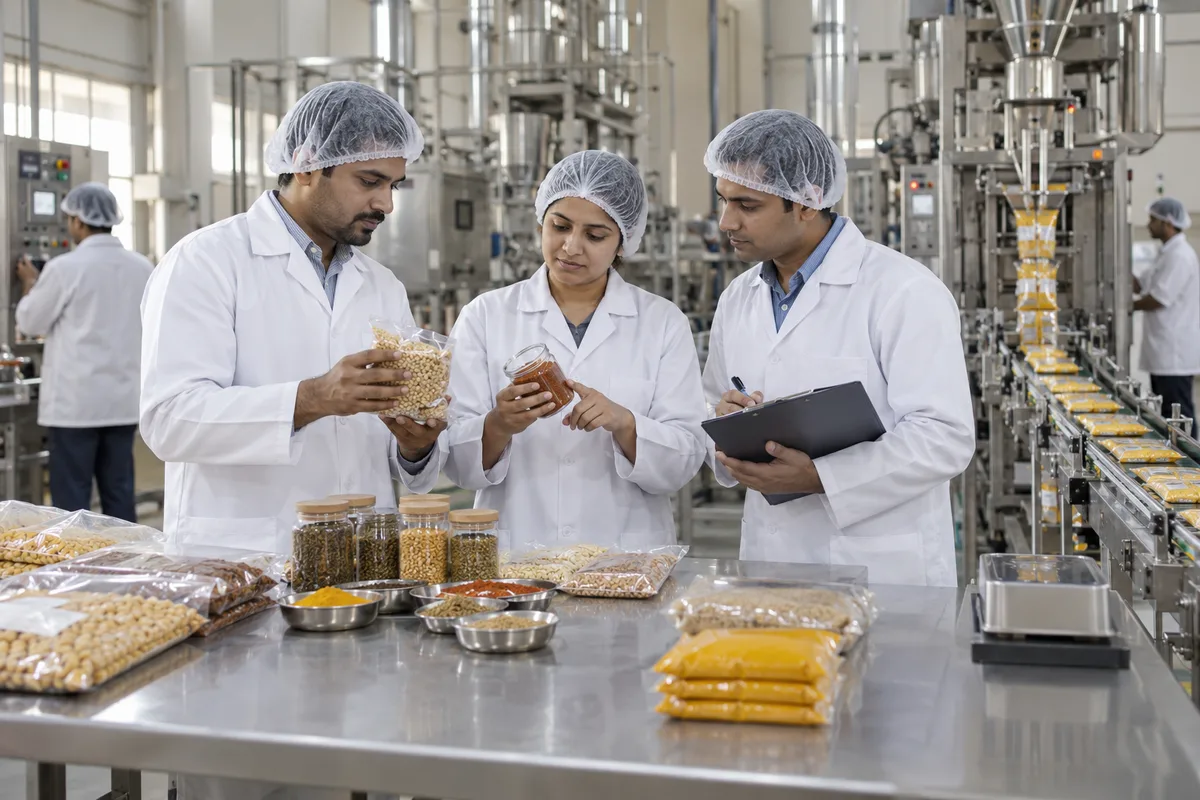
What search engine optimisation means
Search engine optimisation (SEO) is the work of getting your website to appear when a buyer searches Google for what you sell. GullySales builds pages around real search terms, fixes technical issues that block ranking, and tracks which searches actually bring enquiries.
Last updated 13 Nov 2026.
For food processing companies
Where it usually goes wrong, and what we would do.
“Buyers search by specification”
A product developer types the ingredient with a grade, a brix level, a mesh size or a pack format. Pages that say only that you make pulp or spices do not match the search. Pages that name the variety, form and use do.
“Product names differ by region and trade”
A chilli may be called by a local name in one state and an export name in another, and a buyer abroad uses a third. Pages should carry the names a buyer is likely to type, in plain words, without stuffing them into every line.
“A spec sheet is content too”
Quality teams open a downloadable specification before they write to you. If the sheet is an image or sits behind a phone message, search engines and buyers both miss it. A readable page with a downloadable file serves both.
“Ranking is not in your hands”
Search positions move and nobody can promise a place. What you control is the clarity of each page, the documents behind it and whether an enquiry from it is answered well.
What we do
What we deliver for food processing companies.
The work available for this need. We agree the deliverables and responsibilities for your engagement in writing.
Product and ingredient pages
One page for each product, with variety, form, pack sizes, shelf life as you state it, uses and a link to the specification.
Result: Each product you make has a page a buyer can land on.
Keyword research by buyer language
A list of the terms buyers use for your products in India and abroad, drawn from search tools and enquiry messages.
Result: You can see the terms each page is written for.
Technical clean-up
Page titles, headings, image names, speed and mobile layout checked and corrected where they hold the site back.
Result: The site passes a basic technical review.
Document pages
Licence, test report and specification files placed on readable pages instead of buried in images.
Result: A buyer can find proof without asking for it.
Search result tracking
A record of which pages get visits and which of those visits become enquiries.
Result: You see which pages bring enquiries, not only visits.
How the result is measured
- Ranking positions
- Organic traffic
- Enquiries from organic search
Recorded as a baseline before work starts, so every later report has an honest comparison.
Searches your buyers type
What a buyer types when looking for a bulk ingredient, and the page that answers it.
- mango pulp manufacturer in India
- A product page for the pulp with variety, pack sizes, Brix range if you test for it and a sample request form. Name the plant location, since buyers shortlist by distance.
- dehydrated onion powder supplier
- A page listing the forms you make: flakes, granules and powder, with mesh sizes and pack weights. Add the documents a buyer's quality team asks for.
- tomato paste for sauce makers
- A page written for sauce and ketchup makers, with the solids you supply, drum sizes and shelf life as tested. A buyer reads this before asking for a quote.
- spice powder contract manufacturer
- A contract processing page. State what you grind and blend for other brands, the minimum batch and the packing formats, with a form asking for the buyer's own specification.
- cut vegetables supplier for hotels
- A supply page for hotel and catering buyers listing the cuts, pack weights and delivery cities, with a contact for a trial order.
Who it is for
This is written for these food processing companies.
- Fruit pulp and puree processors for juice, ice cream and bakery buyers
- Tomato, chilli and vegetable paste and sauce base processors
- Spice grinding and blending units supplying brands and caterers
- Dehydrated onion, garlic and vegetable powder makers
- Cut, washed and packed vegetable suppliers to hotels and quick commerce
- Pulse milling and grain cleaning units selling to brands and wholesalers
- Cashew, groundnut and dry fruit processors
- Contract processors and co-packers who make products under another brand
Not for
It is not the right fit if.
- Your product names and specifications are not fixed, so pages would be rewritten after every batch change.
- You sell only to one buyer who never searches online, so no page would be found by a new customer.
- Your documents and test reports are not ready to share, so a page promising them would send buyers away.
Before you decide
Agree the work. Know how to judge it.
SEO for food processing companies: use these checks to prepare, choose the scope, and review what changes.
Bring the right evidence
Bring the pages for the products or services you want to sell, the search queries available in your reports, and examples of enquiries from search. Separate branded searches from buyers discovering you for the first time.
Make the scope clear
Agree which pages and technical fixes come first, who can publish changes, and who supplies subject knowledge. Link search work to a relevant enquiry route on each priority page.
Check the work in use
Follow the trail from a relevant query to its landing page and then to an enquiry. Review whether those enquiries fit your offer, alongside indexing and search visibility.
Know when to change course
A ranking movement alone is not a buying signal. If traffic grows but relevant enquiries do not, revisit page intent and the offer before producing more pages.
These are discussion points, not a fixed package. GullySales confirms the deliverables, responsibilities, fee, and term in writing after reading your brief and speaking with you.
Before we start
What to have ready before the work starts.
The records, access and decisions this work needs from food processing companies. Anything missing is noted in the written scope, with who will supply it.
- A spec sheet for each product you sell
- The sheet should carry the figures your lab records, with the date and the signature of the quality head. It is the page's core. If one is missing, we write a short description from your words and mark the page as awaiting a document.
- A certificate of analysis from a recent batch
- A buyer's quality team asks for one, and a page that shows a typical sample earns trust. Remove the buyer's name if it appears. When none is available, the page says the certificate is sent on request.
- A copy of the current food licence
- The licence copy shows the unit is registered. Check that it is valid before it goes online. If it is being renewed, we hold the licence page, and name no licence number in running text.
- Names a trader or broker uses for the product
- Brokers know what buyers call a grade. Give us a short list of these names. Without it, the word list rests on your own naming, and a buyer who uses another name will not find the page.
- Photographs of the plant and the packed product
- Clean, plain photographs of the line, the packing and the storage show a quality team a real unit. Phone images are acceptable. If none exist, we plan a photo day, and the pages carry text until then.
How it works
How the search engine optimisation work runs
The work itself, in order. How an engagement starts, from your brief to a written scope, is set out on our method page.
- 1
Collect the words buyers use for each product
We read your enquiry messages, broker calls and spec sheets, and list the names buyers use for the same product: regional names, trade names, grade names and pack names. A purchase manager in Mumbai and a product developer in Chennai may ask for the same thing differently. You mark the names your plant recognises, and those become the keyword research by buyer language.
- 2
Audit the product pages and the technical set-up
We open every product page on a phone and on a laptop and note slow pages, missing titles, pages with no spec and broken links. A page that does not load in a plant town on a weak connection is read as a missing page. You see a printed list, ranked by what a buyer would notice first.
- 3
Agree who supplies each spec and certificate
A product page is only as good as the document behind it. We list the spec sheet, the certificate of analysis, the licence copy and the pack photographs for each product, and name the person in your plant who supplies each. You decide which documents may be public and which are sent on request.
- 4
Write the product and ingredient pages with the lab
We draft a page for each product that your plant makes in volume, using the spec sheet for every figure and the lab head to read each claim. Nothing is written about what a product does for a health condition. You approve the pages before publication, and a technical reviewer signs each one.
- 5
Publish the document pages and check the links
Spec sheets and licence copies are published as pages a search engine can read, not buried in a form. We test every link from a phone, make sure the downloads open, and match the titles to the phrases found earlier. You decide the order in which products go live.
- 6
Read the search record against the enquiry log
We take the search positions and visits recorded before the work and compare them with the enquiries tagged after. We look at which pages a buyer opened before sending a sample request. Ranking is not in our hands, so we report what moved, and you decide which pages to extend.
Where this fits
Three pieces of sales work, in this order.
This work sits inside sales process design, at stage 1, prospecting and lead generation. The audit comes before it, and sales management keeps it running.
Step 1
Sales audit
Find where deals are being lost and what to fix first.
Start here if you cannot say where orders are lost.
Step 2 · you are here
Sales process design
One written way to sell, from first enquiry to repeat order.
Start here if every salesperson sells differently.
Step 3
Sales management
A target, a review routine and someone who owns the number.
Start here if the team has targets and no routine.
FAQ
Questions owners ask before they call.
Not here? More answers, or ask on WhatsApp.
Will SEO get our pulp and powder pages onto page one?
Must each product we sell have a page of its own?
Can we write about FSSAI on our pages?
How do we show food safety on the page without making a claim we cannot back?
Can search bring us buyers outside India?
How many products should get a page first?
How much does it cost?
How long is the contract?
How soon will we see results?
Who will actually do the work?
More for food processing companies
Related work to consider.
Closest to this: search and visibility
Also for food processing companies
Or start from the overview: sales and marketing for food processing companies.
Your next practical step
Tell us what you are trying to grow, and we will read it before we call.
Eight short steps, mostly taps. Skip anything you would rather answer on the call.