Food product manufacturers · Product packaging copywriting
Write the pack so the shopper and the shopkeeper read the same thing.
Packaging copywriting for a food maker is the writing on a pouch, jar, carton or tin: the name line, the flavour and variant lines, the directions for use and the space around the declarations the law requires. GullySales writes panel by panel from your brief and your approved facts, and hands your designer a copy deck.
Scope, fee, reporting and term are agreed in writing after we have read your brief and spoken to you.

What product packaging copywriting means
Product packaging copywriting is the writing for the front, sides, back and inner parts of a pack: the product name line, benefit lines, usage directions and the wording around the mandatory declarations. GullySales writes it panel by panel against your brief and hands you a copy deck your designer and printer can work from.
Also for food product manufacturers
- Product branding for food product manufacturers
- Crisis communications for food product manufacturers
- Brand architecture for food product manufacturers
- Product packaging and box design for food product manufacturers
- Marketplace listing and A+ content design for food product manufacturers
- SEO for food product manufacturers
- PPC ads for food product manufacturers
- Lead generation for food product manufacturers
Sales and marketing for food product manufacturers, the overview.
Last updated 14 Nov 2026. Rules for this trade differ by state and professional body, and they change. We describe restrictions in general terms, so check the current position with your own council or adviser before you publish anything.
For food product manufacturers
Where it usually goes wrong, and what we would do.
“The pack is read at the counter, not on a shelf alone”
A packet of masala or a jar of pickle is picked up, turned over and put back by a shopkeeper before a shopper ever sees it. On a quick commerce screen the front panel shrinks to a thumbnail. The copy has to work in both places: a name line that survives being small, and a back panel that answers the question a distributor asks when the distributor lifts the pack. Writing for only one of those readers leaves the other guessing.
“Claims on food packs carry real risk”
Words such as natural, pure, homemade, no preservatives, high protein or good for digestion look harmless in a draft and become a problem on a printed run. Food labelling is regulated, and the wording of claims differs by product and by market. A copywriter who invents a flattering line puts the whole print order at risk. The safer habit is to list every claim, hold the evidence for it and let your own regulatory adviser approve it before it reaches the artwork.
“One brand, a dozen variants, and the copy drifts”
A spice maker with a dozen blends, or a snack brand with six flavours and three pack sizes, ends up with a dozen designers and a dozen versions of the same sentence. The chilli blend says serve hot on one pouch and serve warm on the next. Directions use different units. A range copy deck, written once and kept in a single table, stops that drift before a new flavour joins the shelf.
“Regional language is part of the pack, not an afterthought”
Shoppers in a district buy the pack they can read and trust. A name line that works in English can read oddly in Tamil, Malayalam, Kannada or Hindi, and a literal translation of a usage direction can change its meaning. Where a pack carries two languages, the space, the order and the weight of each have to be planned with the writing, so neither language is squeezed into whatever room the designer has left.
What we do
What we deliver for food product manufacturers.
The work available for this need. We agree the deliverables and responsibilities for your engagement in writing.
A pack copy brief
One page that names the product, the shopper, the shopkeeper, the distributor and the shelf or screen where the pack will be seen. It records the one thing the front panel must say before the pack is turned over. You approve it before any panel is written, so the writing starts from agreed facts.
Result: You hold a signed-off brief that your designer and printer can also read.
A panel map of the pack
A simple diagram of every printed surface of the pouch, carton or jar wrap, with the job of each panel and the order in which a shopper reads them. Space for the licence number, the nutrition table, the ingredients and the batch details is marked as reserved, with the wording left to your adviser.
Result: Each surface has a named job and a marked space for every required declaration.
Front panel lines
The product name line, the descriptor, the variant line and one or two benefit lines, offered as a short set of options. A line that makes a claim about taste, origin, health or ingredients is flagged on the sheet, so your adviser sees it before you choose.
Result: A shortlist of front panel lines with every claim marked for review.
Side and back panel copy
Directions for use, storage advice, a short story of the maker and the contact line, written in parts that can be scanned in a shop. Recipes, serving suggestions and cooking steps are written in plain words that a first-time buyer can follow without a second reading.
Result: Directions and storage lines that a first-time buyer can follow at home.
A range copy deck
Every flavour, size and blend in a single table, with the name, descriptor, directions and variant line side by side. A change made to a shared line is made once and carried across the range, so a new flavour joins the shelf with wording that already matches.
Result: One table that lists the wording of every variant in the range.
A claims and approval sheet
Each statement on the pack, the evidence you hold for it and the person who approves it. Lines with no evidence are reworded or held back. The sheet becomes the record you show a distributor, a retail chain buyer or an inspector who asks why the pack says what it says.
Result: A written record of every claim, its evidence and its approver.
How the result is measured
- Packs where the product name and use are readable from the front panel
- Claims on the pack that have a named evidence file
- Variants whose wording matches the range copy deck
Recorded as a baseline before work starts, so every later report has an honest comparison.
Who it is for
This is written for these food product manufacturers.
- Spice, masala and blended powder makers
- Pickle, chutney and preserve manufacturers
- Namkeen, snack and savoury makers
- Sweets and traditional confectionery producers
- Ready-to-cook and instant mix brands
- Millet, health food and organic brands
- Flour mills and grain processors
- Beverage, juice and syrup makers
- Private label and contract food manufacturers
- Food exporters and merchant exporters
Before you decide
Agree the work. Know how to judge it.
Product packaging copywriting for food product manufacturers: use these checks to prepare, choose the scope, and review what changes.
Bring the right evidence
Bring questions from sales calls and examples of objections that delay a decision. Choose a subject expert who can check the substance, and identify evidence that can be published.
Make the scope clear
Agree the reader, buying question, format, and distribution route for each piece. Set the approval process and distinguish new research from rewriting material you already have.
Check the work in use
Ask a colleague to use the draft in a real buyer conversation. It should answer the question, support its claims, and make the next step clear without requiring a sales pitch to explain it.
Know when to change course
If the same unanswered question appears in several articles, improve the strongest page before commissioning another. More words are not a substitute for missing evidence.
These are discussion points, not a fixed package. GullySales confirms the deliverables, responsibilities, fee, and term in writing after reading your brief and speaking with you.
Before we start
What to have ready before the work starts.
The records, access and decisions this work needs from food product manufacturers. Anything missing is noted in the written scope, with who will supply it.
- The current pack or a sample
- We need to hold the pack, or at least see clear photographs of every face. The words already printed show what shoppers have learnt to expect, what the licence line looks like and which lines you want kept. Without it, we write against a description and miss the details.
- Your licence and label details
- Have the licence details, the net quantity format, the batch coding method and the nutrition and ingredient format your adviser has set. We reserve space for them and never write them. When they are missing, the panel map has gaps that appear late, when the printer asks.
- A list of variants and sizes
- A plain list of every flavour, blend and pack size you sell now, plus the ones planned. The copy deck is built from it. If a new variant arrives after the deck is finished, it can be added, but a missing size that the printer already holds can cause mismatched lines.
- The person who approves claims
- Name the adviser or the regulatory consultant who reviews wording for you, and tell them to expect the claims sheet. Pack copy that waits for an approver who has not been told is the commonest reason a print date slips and the artwork gets rushed.
- Three distributor or shopkeeper voices
- Ask three buyers who handle your product how they ask for it and what they tell a shopper. Their words show the name that is already in use, the objection that comes up at the counter and the question the pack should answer. Without them, the copy comes from the maker's view only.
How it works
How the product packaging copywriting work runs
The work itself, in order. How an engagement starts, from your brief to a written scope, is set out on our method page.
- 1
Collect the pack and the facts
We ask for the current pack, the product sample, the recipe summary you are happy to share and the licence details. We read the pack the way a shopkeeper would, then note where the wording on the pack differs from what your sales team says when they explain the product on a visit.
- 2
Hear how the shelf describes it
We ask your distributors and field team how the retailer names the product across the counter. Food brands are asked for by a nickname, a colour or a flavour, not the printed name. That spoken name can belong on the front panel, and we list it before drafting anything.
- 3
Agree the claims you can stand behind
Together we list every statement the pack could carry and sort it into three piles: facts you can show, lines that need your adviser's approval, and lines we leave out. Nothing about health, ingredients or origin is written until the pile it belongs to is clear.
- 4
Draw the panel map with the designer
We take the dieline or the pouch template from your packaging supplier and mark the reading order, the declarations and the space available for each language. If the space cannot hold the words, the map says so now, before design starts.
- 5
Write the panels and the range deck
We write the front, side and back panels in a few options, then lay every variant out in the copy deck. You choose the lines, and we trim them to fit the panel sizes the printer works with, so the words do not shrink on press.
- 6
Proof the artwork against the deck
When your designer returns artwork, we compare it word for word with the approved deck and list the differences. We read the result against the brief recorded at the start, so the print file carries the agreed wording and not a late edit.
Where this fits
Three pieces of sales work, in this order.
This work sits inside sales process design, at stage 1, prospecting and lead generation. The audit comes before it, and sales management keeps it running.
Step 1
Sales audit
Find where deals are being lost and what to fix first.
Start here if you cannot say where orders are lost.
Step 2 · you are here
Sales process design
One written way to sell, from first enquiry to repeat order.
Start here if every salesperson sells differently.
Step 3
Sales management
A target, a review routine and someone who owns the number.
Start here if the team has targets and no routine.
FAQ
Questions owners ask before they call.
Not here? More answers, or ask on WhatsApp.
Will you decide what legal declarations go on our food pack?
Can you write health or ingredient claims such as no preservatives?
Do you write in regional languages for our district packs?
We already have a designer. Where does copy fit with them?
How do you keep a range of flavours consistent?
Does better pack copy raise our sales?
How much does it cost?
How long is the contract?
How soon will we see results?
Who will actually do the work?
From the blog
Further reading for food product manufacturers.
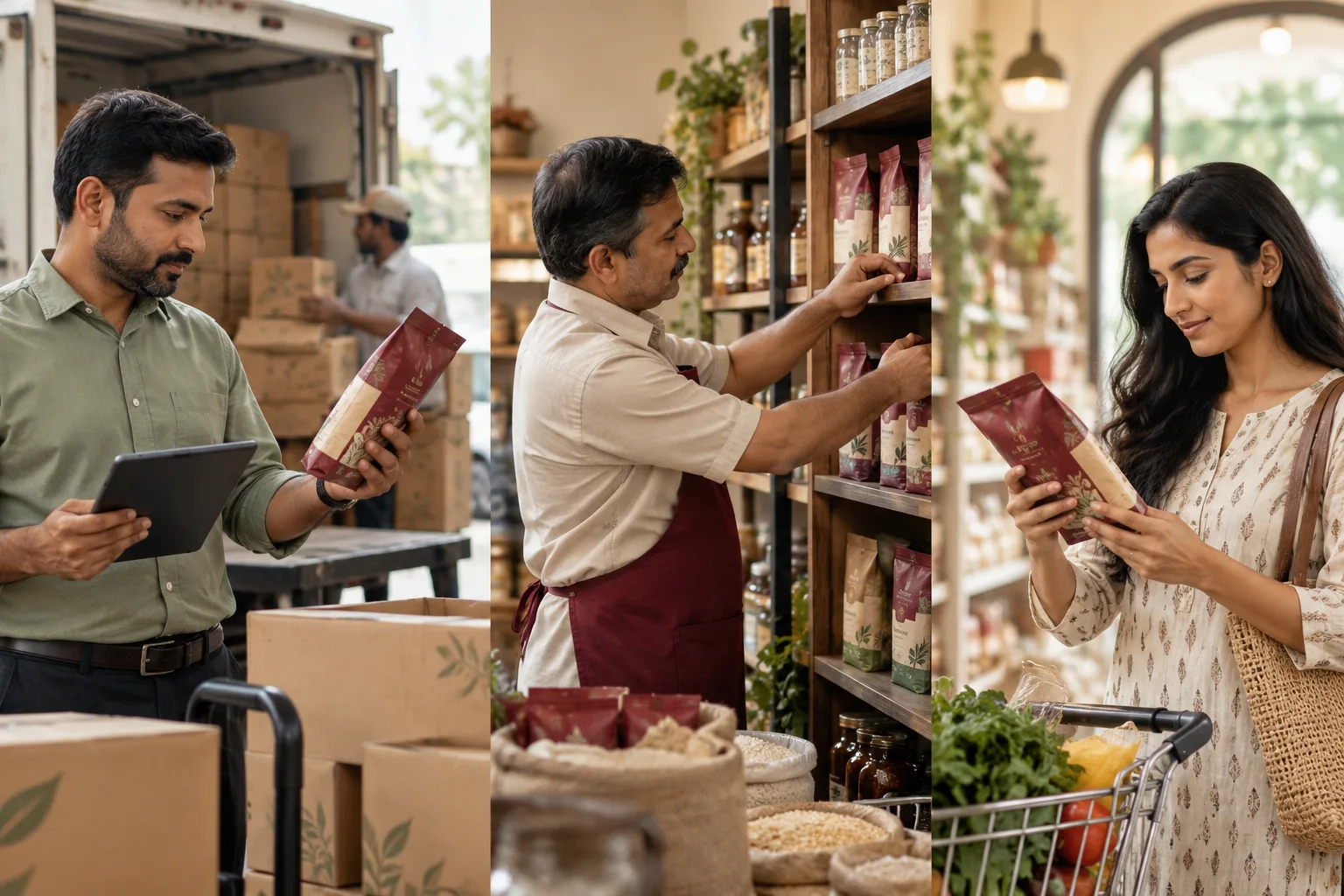 5 min read · 6 Oct 2026How food brands win the trade and the shopperA food or household brand is chosen twice, by the distributor or retailer who stocks it and by the shopper who picks it up. What each buyer checks.
 6 min read · 21 Sept 2026TV advertising vs OTT advertising: what are you actually buying?Television sells slots against ratings and prices in the wastage. OTT sells impressions to chosen people and charges for the choosing.
 8 min read · 21 Sept 2026How to advertise to distributorsDistributors decide on investment, margin and territory. Put those in the advertisement and the enquiries you get come from people who can sign.
More for food product manufacturers
Related work to consider.
Closest to this: brand and design
Also for food product manufacturers
Or start from the overview: sales and marketing for food product manufacturers.
Your next practical step
Tell us what you are trying to grow, and we will read it before we call.
Eight short steps, mostly taps. Skip anything you would rather answer on the call.