Garment manufacturers · Buyer persona
Write down who signs off the order: the founder, the merchandiser or the agent.
A buyer persona for a garment unit describes the person who sends the tech pack, the person who approves the sample and the person who agrees the rate, who are rarely the same. GullySales builds one persona for each buyer type you want more of, from your own enquiry and order records.
Scope, fee, reporting and term are agreed in writing after we have read your brief and spoken to you.
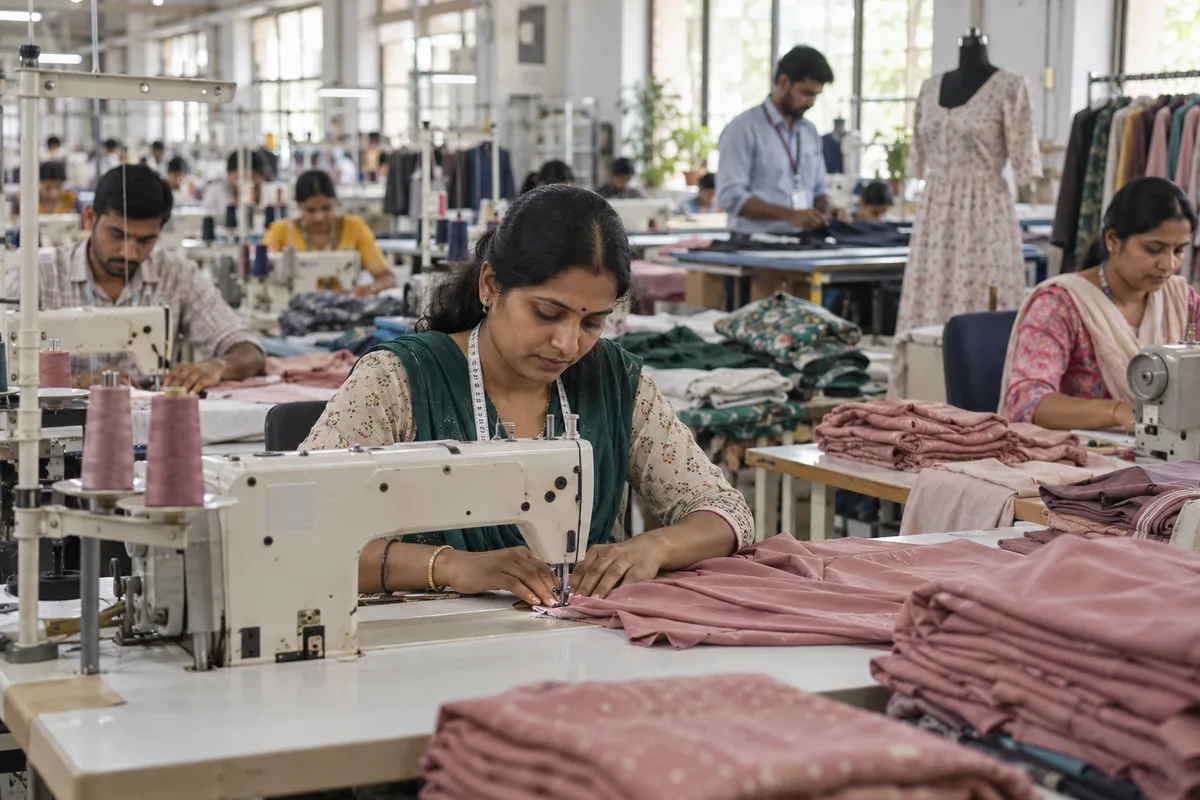
What buyer persona means
A buyer persona is a plain description of the kind of customer who actually buys from you. It includes what they search, what worries them and who else they ask before deciding. GullySales builds this from real enquiries and past sales rather than a generic template, then uses it to write every page and advert.
Also for garment manufacturers
- Digital marketing for garment manufacturers
- SEO for garment manufacturers
- PPC ads for garment manufacturers
- Lead generation for garment manufacturers
- Reputation management for garment manufacturers
- Local SEO for garment manufacturers
- Branding for garment manufacturers
- Social media marketing for garment manufacturers
Sales and marketing for garment manufacturers, the overview.
Last updated 5 Oct 2026.
For garment manufacturers
Where it usually goes wrong, and what we would do.
“The D2C founder buys on risk, not on rate”
A first-time brand owner has money in the fabric and a launch date on the calendar. The founder asks who will answer a message at night, whether a trial lot is allowed and what happens when a sample comes back wrong. Price comes after that comfort.
“The merchandiser carries the file but not the decision”
A sourcing merchandiser at a retailer compares five units on a sheet, then takes a shortlist to a manager. Material written for the merchandiser has to be easy to paste into that sheet: product types, machines, minimum order quantity, certificates held.
“The buying agent protects a relationship, not your unit”
An agent places work with units that have never embarrassed them in front of a brand. The agent reads delay, a wrong trim or a failed audit as a personal risk, so the persona is built around what keeps the agent's name safe.
“The corporate buyer wants a date and a logo that holds”
The person ordering event T-shirts or uniforms is an admin or marketing executive, not an apparel professional. They fear a wrong size run and a print that fades. Plain words about sizes, proofs and dispatch matter more than fabric terms.
What we do
What we deliver for garment manufacturers.
Every deliverable, what it covers for you, and the result it is there to produce. Nothing here is an extra.
One persona for each buyer type you want
A written profile of the D2C founder, the retail merchandiser, the agent or the corporate buyer, chosen from the product types you want to make more of.
Result: You know which buyer each page and message is written for.
A record of who sent the last orders
A sheet built from past enquiries and orders showing who first wrote in, who approved the sample and who agreed the rate, for each buyer.
Result: The persona rests on your own buyers, not on a guess.
The worries each persona carries
A list for each buyer of what they check before replying, what makes them drop a unit and what they ask for at sampling.
Result: Replies answer the worry that is actually stopping the order.
The questions each persona asks first
The opening questions on minimum order quantity, fabric sourcing, sampling and payment terms, written the way each buyer asks them.
Result: Your team can answer a new enquiry in the buyer's own terms.
Persona notes for website, outreach and IndiaMART replies
Short notes your merchandisers and the sales owner can keep beside the phone, saying what to lead with for each persona.
Result: Every reply sounds like it was written for that buyer.
How the result is measured
- Enquiry match to persona
- Conversion rate by persona
- Content aligned to persona
Recorded as a baseline before work starts, so every later report has an honest comparison.
Who is asking
Who signs off a garment order, and what each wants answered first.
- D2C founder placing a first order
- Wants to know the minimum per style, the sample charge and whether the factory will make a small run. Worried about quality drifting after the sample.
- Merchandiser at an established label
- Wants a costing against the tech pack, the fabric source and the dates for each stage. Carries the file but waits for a manager's approval.
- Buying agent with several clients
- Wants to know capacity by product, the compliance certificates held and whether the unit will quote through the agent without going around.
- Corporate or uniform buyer
- Wants size collection, a repeat-order process and a fabric that holds its colour. Compares the sample with the one from the previous supplier.
- Sourcing office of a foreign retailer
- Wants audit status, the packing and labelling standards the unit can meet and a sample sent with the correct documents.
Who it is for
This is written for these garment manufacturers.
- Knitwear and T-shirt manufacturers
- Woven shirt and trouser manufacturers
- Women's ethnic wear manufacturers
- Kids' wear manufacturers
- Export-oriented garment units
- Private label and contract manufacturers for D2C brands
- Corporate, promotional and uniform garment makers
- Activewear and athleisure manufacturers
- Job work and CMT units
Not for
It is not the right fit if.
- You do not yet know who placed your last orders, so a persona would be written from guesses rather than from your own invoices.
- The unit makes for one buyer only and has no plan to look for another, so personas would describe people you will not meet.
- Nobody on the team will use the notes in replies and outreach, and a persona kept in a drawer changes nothing.
How it works
How the buyer persona work runs
The work itself, in order. How an engagement starts, from your brief to a written scope, is set out on our method page.
- 1
Understand the current view
We start with how your team currently describes the customer, since the gap between belief and reality is the finding itself.
- 2
Audit past enquiries and sales
We look at recent enquiries and closed deals to see who actually bought, not who was assumed to buy.
- 3
Interview customers and staff
Structured conversations with recent buyers, held as talk about the last purchase and not a questionnaire. We ask what happened before they called, who else was involved and what they compared. Customers agree before we contact them, and their answers are reported without names.
- 4
Build the personas
Findings are written into short, usable persona documents rather than a long report.
- 5
Apply to your marketing
We show where each persona should change a page, an ad or a script you already have. The sales team reads the drafts and says which ring true. A persona they do not recognise is rewritten.
Where this fits
Three pieces of sales work, in this order.
This work sits inside sales process design, at stage 0, foundation. The audit comes before it, and sales management keeps it running.
Step 1
Sales audit
Find where deals are being lost and what to fix first.
Start here if you cannot say where orders are lost.
Step 2 · you are here
Sales process design
One written way to sell, from first enquiry to repeat order.
Start here if every salesperson sells differently.
Step 3
Sales management
A target, a review routine and someone who owns the number.
Start here if the team has targets and no routine.
FAQ
Questions owners ask before they call.
Not here? More answers, or ask on WhatsApp.
How many personas does a garment unit need?
We sell through an agent. Why write a persona for the brand?
Can a persona be written without buyer interviews?
What do first-time D2C founders worry about that established labels do not?
How much does it cost?
How long is the contract?
How soon will we see results?
Who will actually do the work?
What do you need from us?
What if we are not happy with the work?
From the blog
Further reading for garment manufacturers.

More for garment manufacturers
Everything else we would do for you.
Closest to this: strategy and research
Also for garment manufacturers
Or start from the overview: sales and marketing for garment manufacturers.
Your next practical step
Tell us what you are trying to grow, and we will read it before we call.
Eight short steps, mostly taps. Skip anything you would rather answer on the call.