Industrial equipment manufacturers · Customer testimonials
Let a plant engineer say what the machine did after the engineers left.
A customer testimonial for an equipment maker is a short, approved quote or video in which a plant describes how the machine, the installation and the service worked for them. GullySales chooses the plants with your team, interviews the plant engineer, prepares the account in their own words, and places the approved version where a buyer will read it.
Scope, fee, reporting and term are agreed in writing after we have read your brief and spoken to you.

What customer testimonials means
Customer testimonials are short, approved quotes or videos in which real customers describe their experience of a product or service, giving prospective buyers evidence for a purchase decision. GullySales selects relevant customers with your team, interviews them, prepares the testimonial in their own words, and matches the approved version to the sales conversation or page where it belongs.
Also for industrial equipment manufacturers
- Account whitespace and contract expansion analysis for industrial equipment manufacturers
- Customer advocacy and proof marketing for industrial equipment manufacturers
- Customer advocacy programmes for industrial equipment manufacturers
- Customer onboarding implementation assurance for industrial equipment manufacturers
- B2B customer reference programme for industrial equipment manufacturers
- Strategic account management for industrial equipment manufacturers
- Answer engine optimisation for industrial equipment manufacturers
- Branding for industrial equipment manufacturers
Sales and marketing for industrial equipment manufacturers, the overview.
Last updated 14 Nov 2026.
For industrial equipment manufacturers
Where it usually goes wrong, and what we would do.
“Praise for the company answers no buyer's question”
A line saying the supplier was professional and responsive says nothing to a plant engineer weighing two pumps. They want to know whether the machine held its rated duty, whether spares arrived when a seal failed, and whether the installation team left the floor clean. A useful testimonial answers one of those. The interview is built around the doubt a prospect actually has.
“The best remarks are made on the phone and lost”
A maintenance head tells your service engineer that the unit ran through the busiest season without a stoppage. The remark is repeated at lunch and never recorded. Asking the same person to sit down and write a testimonial adds a task to their day and produces a sentence of thanks. An interview captures the specific remark while they are willing to say it.
“Naming a plant without permission costs the next order”
An engineer sees their plant's name in your brochure and the first they hear of it is from a competitor. Large buyers have rules on who may mention them, and a purchase head can be embarrassed. Each testimonial needs a record of who approved which wording, with which name and logo, and where it may appear, plus a clear way to withdraw it.
“A quote lives in a drawer and never reaches the proposal”
A good quote on pump reliability sits on a web page while the proposal for a pump buyer carries none. The salesperson cannot remember where the quote is, or whether the customer agreed to its use in a proposal. Matching each approved quote to a document and a buyer concern means the right one arrives at the right desk.
What we do
What we deliver for industrial equipment manufacturers.
The work available for this need. We agree the deliverables and responsibilities for your engagement in writing.
Plant shortlist matched to buyer doubts
A list drawn from your installed base and your service records, set against the questions buyers ask: running reliability, spare availability, installation conduct, training. Your account owner checks the relationship and whether a request is appropriate for each plant at present.
Result: Each plant on the shortlist is linked to a named buyer doubt and a named account owner.
Invitation message
A short note, ready for you to send by email or WhatsApp, explaining who will talk to the plant engineer, what the interview covers and how the answers may be used. It says plainly that declining changes nothing about service. You approve the message before it goes.
Result: The plant knows the purpose and the permitted use before agreeing to an interview.
Interview guide for the plant engineer
Questions on what the plant was trying to fix, why they chose your machine, how installation and training went, and what has happened since. The guide asks about the experience and does not feed the engineer an answer. You check that the questions match a real prospect doubt.
Result: The guide can be read against a prospect's objection and shows which question answers it.
Written quote or short video
An edited quote, or a short recording made on the plant's own floor if they agree, built from what the engineer said. The engineer reads the finished version and can change or strike any line. Editing never alters the meaning of what was said.
Result: The plant engineer has seen and approved the exact words or film before anything is published.
Approval and consent record
A record of the approved version, how the plant is to be named, whether a logo may be used, where it may appear and the date of approval. It also holds the route for a withdrawal request. Each published item can be checked against its permission.
Result: For any published testimonial, you can open its permission and see what was agreed.
Placement and sales handover plan
Each approved testimonial is matched to a machine page, a quotation template, a dealer pack or a proposal section. Your sales engineers receive the asset with its limits, such as no use in a sector the plant competes in, so the right version is sent.
Result: A salesperson can name which testimonial goes with which machine and which buyer concern.
How the result is measured
- Customers approached and participation agreed
- Testimonials with complete written approval
- Priority buyer concerns covered by approved testimonials
Recorded as a baseline before work starts, so every later report has an honest comparison.
Who it is for
This is written for these industrial equipment manufacturers.
- CNC machine and precision equipment manufacturers
- Industrial pump and compressor manufacturers
- Packaging machinery manufacturers
- Conveyor and material handling equipment makers
- Motor and drive manufacturers
- Custom fabrication and job-work manufacturers
- Export-oriented industrial equipment makers
- Spare parts and after-sales service providers
Before you decide
Agree the work. Know how to judge it.
Customer testimonials for industrial equipment manufacturers: use these checks to prepare, choose the scope, and review what changes.
Bring the right evidence
Collect recurring public feedback and the internal record of how the issue was handled. Separate factual corrections from genuine complaints that need a response.
Make the scope clear
Agree who checks facts, approves replies, and resolves problems outside marketing. Any request for reviews or testimonials must fit the trade's rules and the customer's permission.
Check the work in use
Read the response from the customer's point of view. It should address the issue without exposing private information or promising an outcome the team cannot provide.
Know when to change course
Do not buy or invent reviews. If the same complaint keeps returning, resolve its cause before publishing more positive material.
These are discussion points, not a fixed package. GullySales confirms the deliverables, responsibilities, fee, and term in writing after reading your brief and speaking with you.
Before we start
What to have ready before the work starts.
The records, access and decisions this work needs from industrial equipment manufacturers. Anything missing is noted in the written scope, with who will supply it.
- Your installed plants and their account owners
- We cannot choose a plant without knowing who runs which machine and who looks after the relationship. Send the list with the machine, the date of commissioning and the account owner. Missing owners mean the invitation might arrive from a stranger.
- Service records for the plants considered
- Before inviting a plant, you need to know whether it had a recent breakdown, a delayed spare or an open claim. These records stop us approaching a plant at the wrong moment, and they let us check each statement a plant makes against what actually happened.
- The questions buyers ask you before they buy
- Bring the last few quotations and the notes from plant visits. The doubts raised there decide which testimonials are worth making. Without them the interview drifts into general praise, which no prospect uses.
- A named person who will approve the final wording
- Someone on your side, such as the sales head, signs off each testimonial before it leaves for the plant and again before publication. A missing approver is where a quote is left half finished, so name one person and a stand-in.
- A decision on photographs and filming on the floor
- Some plants forbid cameras near certain processes, and some machines are covered by customer confidentiality. Tell us what you may show, what the plant may refuse, and who gives the safety briefing for a visit. We work within the plant's rules on filming and photography.
How it works
How the customer testimonials work runs
The work itself, in order. How an engagement starts, from your brief to a written scope, is set out on our method page.
- 1
Start from the buyer's doubt
We read your last few lost and won quotations and note what buyers asked before deciding: service response, spare delivery, running cost, installation. Those questions set the topics, so the testimonials are chosen to answer a doubt your team already meets.
- 2
Choose the plants with your account owners
From your installed list, your sales head and service lead pick plants with settled machines and a good working relationship. Plants with open complaints, a recent dispute or a delicate ownership structure are left out. Your account owner confirms each approach.
- 3
Send the invitation and agree the use
The account owner sends the approved invitation and answers any question about how the account will be used. If the plant agrees only to a private quote and not a name, that is recorded, and the testimonial is prepared without a name. A refusal is closed politely and recorded.
- 4
Interview the plant engineer
The interview is held at the plant's convenience, by phone, video or on the floor, with the engineer who actually works with the machine. The aim is the specific remark: what failed before, what changed, what the operators said. We take notes and, with consent, record the audio.
- 5
Draft, send for approval and revise
We prepare the quote or the video edit, check each claim against your service records, and send it to the engineer. Any change they ask for is made. A line you cannot support from your own records, or a claim about performance the plant cannot back, is removed.
- 6
Place it and read the result
The approved testimonial goes to its agreed page, brochure or proposal, and your sales engineers are shown how to use it. At the end we check where each testimonial appears against the placement plan and against the buyer doubts recorded at the start.
Proof
Published examples of our work.
Real clients and the work recorded for each engagement. These examples may cover related services or industries. They show the method, not a guaranteed result.
Burhani Hydroline
- Situation
- The website was dated. Menus were hard to follow, pages were slow, and it did not work properly on a phone, which is where a buyer looks first.
- What we did
- Research before design
- Wireframes and prototypes
- The full product catalogue
- An online checkout
- Result
- No numbers were recorded for this engagement. The work is described in full in the case study.
Also worked with
Chord Road Hospital · Curtain Label · Difesa Security Services · Felicity Inn · Hands On CSR · Implevista · Kambar Group · Kalessi · Kerur Pain Clinic · LL Trust · Lucky Deals · Natural Gases · NavaShakthi Souhardha · NewCom Logistics · Proton Technical Services · SB Engineering · Shakthi Foundation · Shakthi Group · Urbanest · Insyde Studio · Venkateshwara Laser Tech · Vivara Studios
Where this fits
Three pieces of sales work, in this order.
This work sits inside sales process design, at stage 4, presentation and proposal. The audit comes before it, and sales management keeps it running.
Step 1
Sales audit
Find where deals are being lost and what to fix first.
Start here if you cannot say where orders are lost.
Step 2 · you are here
Sales process design
One written way to sell, from first enquiry to repeat order.
Start here if every salesperson sells differently.
Step 3
Sales management
A target, a review routine and someone who owns the number.
Start here if the team has targets and no routine.
FAQ
Questions owners ask before they call.
Not here? More answers, or ask on WhatsApp.
Do you write the testimonial for the plant to sign?
What if a plant will give a quote but not its name?
Can we offer something in return for a testimonial?
How is this different from a case study?
Where would a testimonial actually be used?
What if a plant later asks us to take the testimonial down?
How much does it cost?
How long is the contract?
How soon will we see results?
Who will actually do the work?
From the blog
Further reading for industrial equipment manufacturers.
 6 min read · 10 Oct 2026How manufacturers can generate enquiries from relevant business buyersRelevant RFQs come from buyers who can verify you: real specifications on product pages, matching listings and a quick way to screen requests.
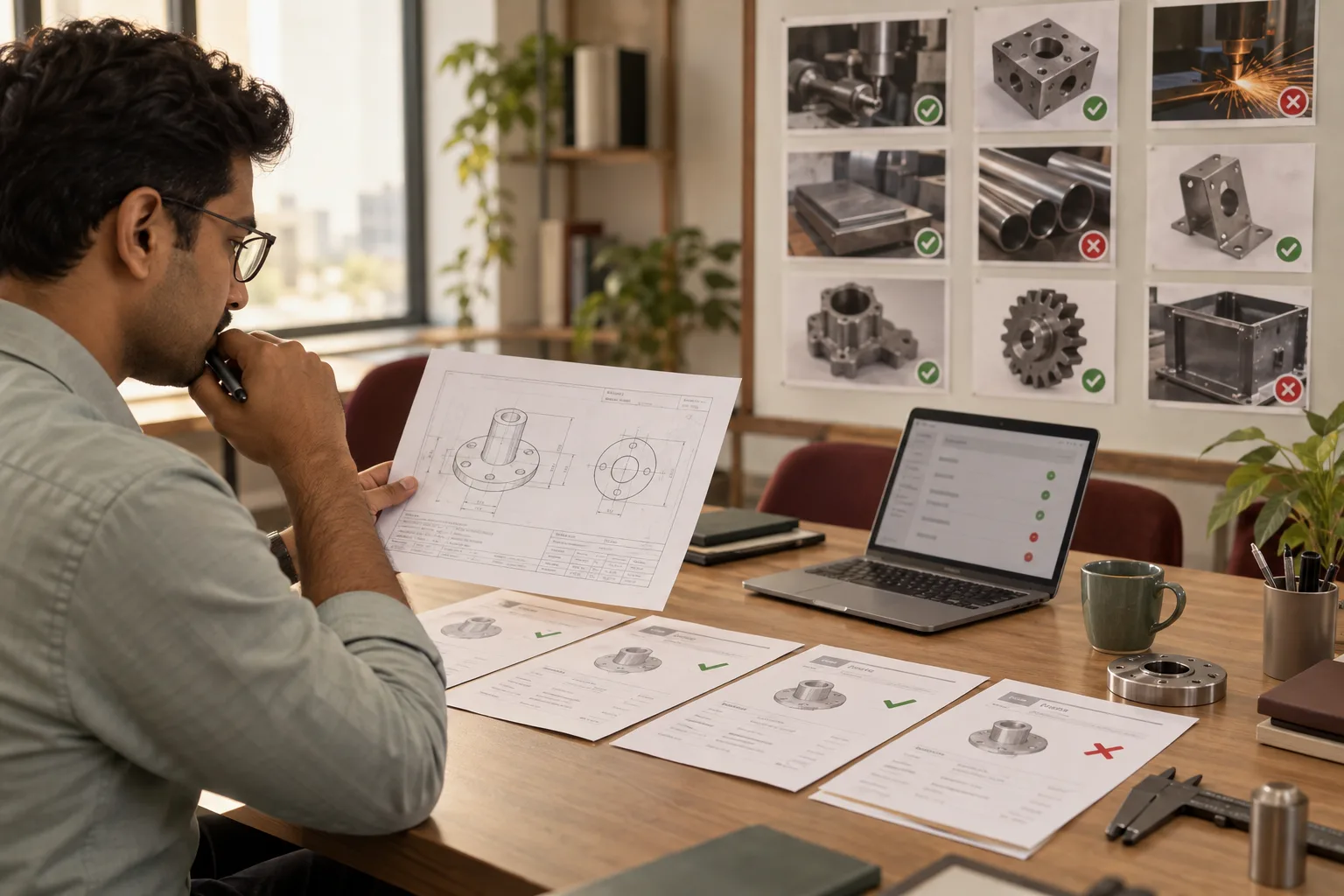 6 min read · 6 Oct 2026How industrial buyers decide which unit gets the RFQWhat industrial buyers check before sending an RFQ, across nine manufacturing trades, and where a unit drops off the shortlist.
 7 min read · 21 Sept 2026How to advertise to plant headsPlant heads can block a purchase but rarely sign one. Learn why breakdown searches, estate media and a trial offer reach them better than brand ads.
More for industrial equipment manufacturers
Related work to consider.
Closest to this: customers after the sale
- Account whitespace and contract expansion analysis for industrial equipment manufacturers
- Customer advocacy and proof marketing for industrial equipment manufacturers
- Customer advocacy programmes for industrial equipment manufacturers
- Customer onboarding implementation assurance for industrial equipment manufacturers
- B2B customer reference programme for industrial equipment manufacturers
- Strategic account management for industrial equipment manufacturers
Also for industrial equipment manufacturers
- Answer engine optimisation for industrial equipment manufacturers
- Branding for industrial equipment manufacturers
- Content marketing for industrial equipment manufacturers
- Digital marketing for industrial equipment manufacturers
- Email marketing for industrial equipment manufacturers
- Google Business Profile management for industrial equipment manufacturers
Or start from the overview: sales and marketing for industrial equipment manufacturers.
Your next practical step
Tell us what you are trying to grow, and we will read it before we call.
Eight short steps, mostly taps. Skip anything you would rather answer on the call.