Industrial equipment manufacturers · Lead generation
Bring in RFQs for the specifications you can actually fulfil well.
Lead generation for an industrial manufacturer means attracting RFQs for the specifications and sectors you serve well, rather than generic enquiries outside your capability.
Scope, fee, reporting and term are agreed in writing after we have read your brief and spoken to you.
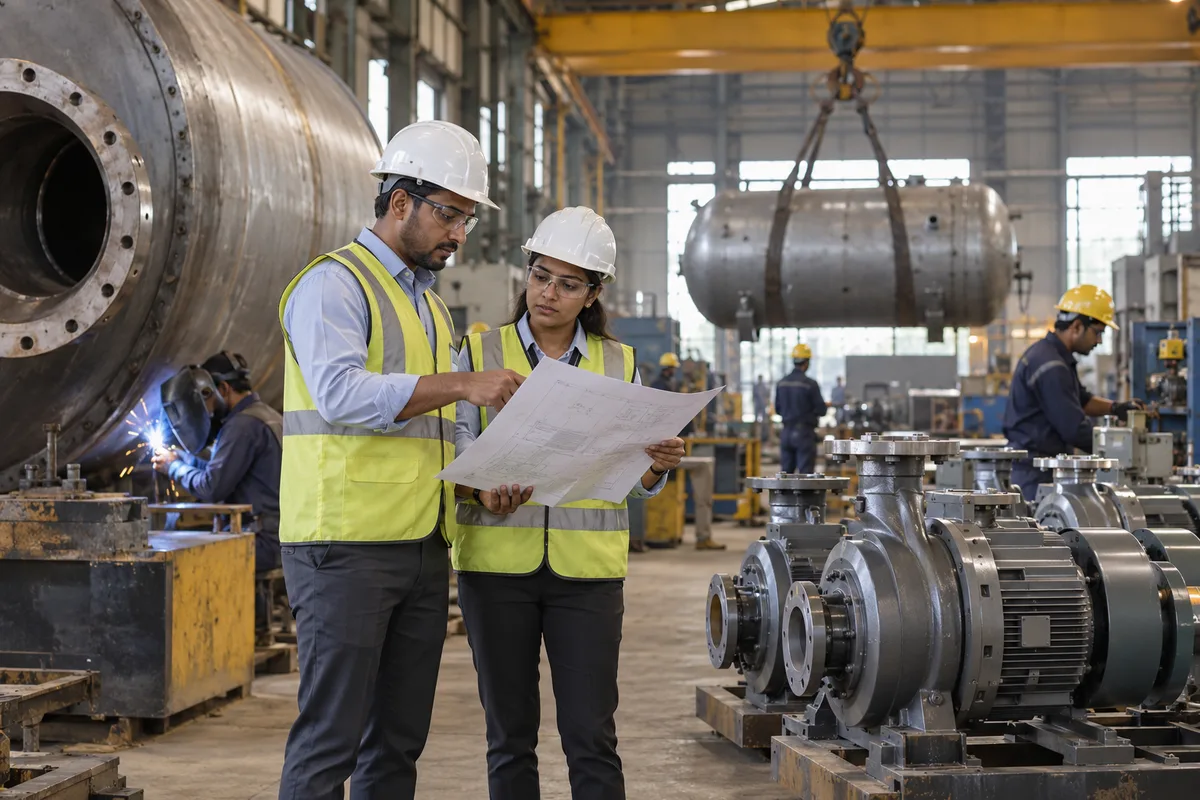
What lead generation means
Lead generation is the combined work of every channel that brings in a new enquiry, whether from search, adverts, referrals or a stall at an exhibition. GullySales runs these channels together and reports the number of enquiries each one produced, not the activity behind it.
Also for industrial equipment manufacturers
- CRM for industrial equipment manufacturers
- Follow-up systems for industrial equipment manufacturers
- Answer engine optimisation for industrial equipment manufacturers
- Branding for industrial equipment manufacturers
- Content marketing for industrial equipment manufacturers
- Digital marketing for industrial equipment manufacturers
- Email marketing for industrial equipment manufacturers
- Google Business Profile management for industrial equipment manufacturers
Sales and marketing for industrial equipment manufacturers, the overview.
Last updated 5 Oct 2026.
For industrial equipment manufacturers
Where it usually goes wrong, and what we would do.
“Specification targeting filters better than broad targeting”
Content built around specific capacities and certifications attracts buyers more likely to convert.
“Trade show follow-up is a source often wasted”
Contacts collected at exhibitions frequently go unfollowed, losing enquiries that already showed real interest.
“Export enquiries need their own approach”
International buyers search and evaluate differently, often through trade platforms rather than local search.
What we do
What we deliver for industrial equipment manufacturers.
Every deliverable, what it covers for you, and the result it is there to produce. Nothing here is an extra.
Specification-targeted landing pages
Pages built around specific capacities and certifications, designed to attract RFQs from buyers likely to convert.
Result: Enquiries arrive already matched to what you can actually supply.
Trade show contact follow-up process
A written process for following up every contact collected at an exhibition within your own working week.
Result: An exhibition contact who already showed interest is not left unfollowed.
Export enquiry capture and routing
A separate enquiry path for international buyers, routed to whoever handles export documentation and terms.
Result: An export enquiry reaches the person equipped to answer it.
Directory and paid presence for priority categories
Directory listings and, where useful, paid placement built around the machine categories worth the spend.
Result: Visibility is added where it is most likely to bring a real RFQ.
RFQ volume and source report
A report against your baseline showing RFQ volume, source and category.
Result: The owner sees which category and channel are producing enquiries.
How the result is measured
- Enquiries generated
- Cost per enquiry
- Enquiries by source
Recorded as a baseline before work starts, so every later report has an honest comparison.
Where enquiries come from
The places an equipment maker's enquiries arrive, and what to record at each.
- RFQ through the website
- Record the company, the machine, the capacity and the country or state. Ask for the application and the material handled, as these decide the specification.
- IndiaMART or directory enquiry
- Log the buyer, the product and the quantity. Ask whether a drawing exists, and whether the buyer is an end user, a trader or an engineer.
- Exhibition lead card
- Write the visitor, the plant and the machine discussed on the card the same evening. Send the technical sheet and set a date to call.
- Export enquiry by email
- Record the country, the voltage, the certification and the Incoterm asked for. Reply with your standards and the shipping terms, and log the buyer.
- Spares enquiry quoting a serial number
- Match the serial number to the machine, the sale date and the customer. A spares order is also a service enquiry, so check the machine's age and offer a visit.
- Channel partner or OEM buyer's request
- Note the partner, the product and the volume. Confirm who the end user is and the territory, so two partners do not quote the same plant.
Who it is for
This is written for these industrial equipment manufacturers.
- CNC machine and precision equipment manufacturers
- Industrial pump and compressor manufacturers
- Packaging machinery manufacturers
- Conveyor and material handling equipment makers
- Motor and drive manufacturers
- Custom fabrication and job-work manufacturers
- Export-oriented industrial equipment makers
- Spare parts and after-sales service providers
Not for
It is not the right fit if.
- Your sales engineers cannot quote the specifications you are about to attract, so the RFQs would be turned down.
- Nobody triages the shared inbox, so a new source would just feed the same pile.
- You want volume at any price, but this work narrows the enquiries to those you can fulfil.
How it works
How the lead generation work runs
The work itself, in order. How an engagement starts, from your brief to a written scope, is set out on our method page.
- 1
Understand your capacity
We ask how many enquiries your team can answer well, who answers after hours, and what a good enquiry looks like. Without this, the system fills a funnel nobody is watching.
- 2
Audit current sources
We read your call log, WhatsApp chats, enquiry sheet and platform dashboards. The baseline is recorded: enquiries by source, reply time, conversion and cost per order.
- 3
Strategise the channel mix
Search and maps are chosen for people ready to buy, ads for people who are not yet looking, and content and referrals for trust.
- 4
Implement capture and follow-up
Pages, forms, tags, the lead record and the first-reply message are built and tested end to end. We submit test enquiries ourselves before any media money is spent.
- 5
Measure and optimise
Enquiries are traced to source and judged by what became orders, not by volume alone. Channels that fill the sheet with poor enquiries are cut back. How often you are reported to is agreed in writing.
Proof
What happened when owners fixed this.
Real clients, the work we did, and the result as it was recorded. Where no number was recorded, none is claimed.
Burhani Hydroline
- Situation
- The website was dated. Menus were hard to follow, pages were slow, and it did not work properly on a phone, which is where a buyer looks first.
- What we did
- Research before design
- Wireframes and prototypes
- The full product catalogue
- An online checkout
- Result
- No numbers were recorded for this engagement. The work is described in full in the case study.
Also worked with
Chord Road Hospital · Curtain Label · Difesa Security Services · Felicity Inn · Hands On CSR · Implevista · Kambar Group · Kalessi · Kerur Pain Clinic · LL Trust · Lucky Deals · Natural Gases · NavaShakthi Souhardha · NewCom Logistics · Proton Technical Services · SB Engineering · Shakthi Foundation · Shakthi Group · Urbanest · Insyde Studio · Venkateshwara Laser Tech · Vivara Studios
Where this fits
Three pieces of sales work, in this order.
This work sits inside sales process design, at stage 1, prospecting and lead generation. The audit comes before it, and sales management keeps it running.
Step 1
Sales audit
Find where deals are being lost and what to fix first.
Start here if you cannot say where orders are lost.
Step 2 · you are here
Sales process design
One written way to sell, from first enquiry to repeat order.
Start here if every salesperson sells differently.
Step 3
Sales management
A target, a review routine and someone who owns the number.
Start here if the team has targets and no routine.
FAQ
Questions owners ask before they call.
Not here? More answers, or ask on WhatsApp.
How many RFQs should a manufacturer expect monthly?
Will RFQs come from our own site, or do we still need the directories?
An enquirer asks for a drawing before telling us the application. Do we send it?
How do we tell a trader's RFQ from an end user's?
How much does it cost?
How long is the contract?
How soon will we see results?
Who will actually do the work?
What do you need from us?
What if we are not happy with the work?
From the blog
Further reading for industrial equipment manufacturers.
 7 min read · 27 Aug 2024How to generate B2B leadsB2B leads come from a named list of companies and the two people inside each one. Reach them by search, direct outreach and a phone call, then qualify before sales ever sees them.
 8 min read · 25 Jun 2024Digital marketing strategy for manufacturing companiesA manufacturer's strategy is to be findable for the specification, credible to a purchase manager, and fast at the RFQ.
 7 min read · 9 Apr 2024How to generate industrial leadsIndustrial buyers search by application and judge you on specification. Publish both, get on the vendor list before the requirement exists, and learn to spot the enquiry that only wants a third quotation.
More for industrial equipment manufacturers
Everything else we would do for you.
Closest to this: leads and follow-up
Also for industrial equipment manufacturers
- Answer engine optimisation for industrial equipment manufacturers
- Branding for industrial equipment manufacturers
- Content marketing for industrial equipment manufacturers
- Digital marketing for industrial equipment manufacturers
- Email marketing for industrial equipment manufacturers
- Google Business Profile management for industrial equipment manufacturers
Or start from the overview: sales and marketing for industrial equipment manufacturers.
Your next practical step
Tell us what you are trying to grow, and we will read it before we call.
Eight short steps, mostly taps. Skip anything you would rather answer on the call.