Industrial equipment manufacturers · Follow up systems
Chase every quotation until the buyer says yes, says no, or says why not.
A follow-up system for an industrial equipment maker is the set of rules for who contacts a buyer after an RFQ, a quotation, an exhibition meeting or a service visit, and what is said each time. GullySales writes those rules with your sales head, prepares the messages, and sets reminders in your CRM so no open quotation goes quiet by accident.
Scope, fee, reporting and term are agreed in writing after we have read your brief and spoken to you.

What follow up systems means
A follow-up system is the set routine for calling, messaging or emailing an enquiry more than once, since most buyers do not decide on the first conversation. GullySales sets the number and timing of follow-ups so an undecided buyer keeps hearing from you until they decide either way.
Also for industrial equipment manufacturers
- Lead generation for industrial equipment manufacturers
- CRM for industrial equipment manufacturers
- Answer engine optimisation for industrial equipment manufacturers
- Branding for industrial equipment manufacturers
- Content marketing for industrial equipment manufacturers
- Digital marketing for industrial equipment manufacturers
- Email marketing for industrial equipment manufacturers
- Google Business Profile management for industrial equipment manufacturers
Sales and marketing for industrial equipment manufacturers, the overview.
Last updated 5 Oct 2026.
For industrial equipment manufacturers
Where it usually goes wrong, and what we would do.
“A quotation sent is not a quotation read”
The mail goes to a plant engineer who forwards it to a purchase head who is travelling. Without a call to confirm it arrived and was understood, a quote can sit unopened while a rival's engineer visits the plant.
“Silence after a quote has several causes”
The budget may be pending, the machine may be on hold, the buyer may have chosen a rival, or the mail may be lost. A follow-up that asks one plain question separates these cases, and your team can then act on the real one.
“Exhibition contacts cool fastest”
A visitor who stood at the stand and described a plant requirement is a warm enquiry only while the memory lasts. A visiting card without a written note of the machine discussed gives the caller nothing specific to say.
“Service visits are follow-up moments”
After a commissioning or a breakdown call, the engineer on site hears about the next line, the old machine and the neighbouring plant. If that remark stays in a notebook, the referral and the repeat order go unheard.
What we do
What we deliver for industrial equipment manufacturers.
Every deliverable, what it covers for you, and the result it is there to produce. Nothing here is an extra.
Follow-up rules for each stage
A written rule for each pipeline stage naming who contacts the buyer, by which channel, and what the message must contain.
Result: Every open RFQ has an owner and a next step on record.
Message set for calls, email and WhatsApp
Short scripts and mail templates for confirming receipt, checking understanding of the quotation, asking about the decision date and closing a file politely.
Result: Your engineers send consistent messages without writing each from scratch.
Exhibition follow-up sheet
A card-capture sheet that records the visitor, the plant, the machine discussed and the promised next step, with the follow-up message ready for each.
Result: Each contact from a fair is called with something specific to say.
Lost-order question and reason log
A short, courteous question put to buyers who go elsewhere, and a log of the reasons they give, grouped by machine and sector.
Result: The sales head sees why orders are lost, in the buyer's words.
Post-commissioning and AMC touchpoints
Reminders prepared after delivery, commissioning and each service visit, asking about running experience, spares and the next requirement.
Result: A satisfied plant is asked about its next need at the right moment.
Follow-up report against the baseline
A view of open quotations by age and owner, and the replies received, set against the position recorded before work started.
Result: A manager sees which quotations are stalling and who holds them.
How the result is measured
- Follow-up completion rate
- Average number of follow-ups before close
- Enquiries closed after repeat follow-up
Recorded as a baseline before work starts, so every later report has an honest comparison.
What to capture or send
The moments around a machine quotation that need a note, a message or a call.
- Quotation sent
- Log the revision, price basis, delivery term and the people it went to. Then confirm by a call that it arrived, because a forwarded mail can sit unread.
- Technical query from the buyer
- Record the question, who answered and the date. Reply with the document or the answer attached, so the buyer holds one clear reply.
- Budget approval pending
- Note the committee or the month the buyer named for approval, and set a call to match. Ask about the approval and not about your own quotation.
- Exhibition visitor
- Enter the requirement they described the same day, with the sales engineer's note, and send a short message tied to that requirement while the stand visit is fresh.
- Commissioning visit
- The service engineer notes any second line or old machine the plant mentioned, and passes it to sales with the date of the conversation.
- Order lost
- Ask the buyer which factor decided it and record the answer. A rival's local service or a certificate you lack tells you what to fix.
Who it is for
This is written for these industrial equipment manufacturers.
- CNC machine and precision equipment manufacturers
- Industrial pump and compressor manufacturers
- Packaging machinery manufacturers
- Conveyor and material handling equipment makers
- Motor and drive manufacturers
- Custom fabrication and job-work manufacturers
- Export-oriented industrial equipment makers
- Spare parts and after-sales service providers
Not for
It is not the right fit if.
- Nobody keeps a record of what was quoted, so a chase would start without figures.
- Your sales engineers believe a call after a quotation is pushy, and that view needs a conversation before any rule.
- You cannot meet the delivery dates you quote, and a reminder would invite a complaint.
How it works
How the follow up systems work runs
The work itself, in order. How an engagement starts, from your brief to a written scope, is set out on our method page.
- 1
Measure today's reply time
From your recent enquiries, we set the time each arrived against its first reply, using the call log, chats, form entries and portal panel. We also count the follow-ups each one got.
- 2
Agree targets and the sequence
We set reply targets and the follow-up sequence with your team, based on its real hours and workload.
- 3
Write the templates and first-call questions
The first reply, the quote follow-up and the last attempt are written in your voice and loaded as quick replies. The first-call questions are agreed with your best salesperson.
- 4
Set ownership, tasks and alerts
Named owners, cover for leave and CRM or sheet tasks go live. App alerts, such as IndiaMART's, are switched on for the right phones.
- 5
Track and adjust
Reply time and follow-up completion are reported against the baseline, and the routine is changed where it is not kept. How often you are reported to is agreed in writing.
Proof
What happened when owners fixed this.
Real clients, the work we did, and the result as it was recorded. Where no number was recorded, none is claimed.
Burhani Hydroline
- Situation
- The website was dated. Menus were hard to follow, pages were slow, and it did not work properly on a phone, which is where a buyer looks first.
- What we did
- Research before design
- Wireframes and prototypes
- The full product catalogue
- An online checkout
- Result
- No numbers were recorded for this engagement. The work is described in full in the case study.
Also worked with
Chord Road Hospital · Curtain Label · Difesa Security Services · Felicity Inn · Hands On CSR · Implevista · Kambar Group · Kalessi · Kerur Pain Clinic · LL Trust · Lucky Deals · Natural Gases · NavaShakthi Souhardha · NewCom Logistics · Proton Technical Services · SB Engineering · Shakthi Foundation · Shakthi Group · Urbanest · Insyde Studio · Venkateshwara Laser Tech · Vivara Studios
Where this fits
Three pieces of sales work, in this order.
This work sits inside sales process design, at stage 2, qualification. The audit comes before it, and sales management keeps it running.
Step 1
Sales audit
Find where deals are being lost and what to fix first.
Start here if you cannot say where orders are lost.
Step 2 · you are here
Sales process design
One written way to sell, from first enquiry to repeat order.
Start here if every salesperson sells differently.
Step 3
Sales management
A target, a review routine and someone who owns the number.
Start here if the team has targets and no routine.
FAQ
Questions owners ask before they call.
Not here? More answers, or ask on WhatsApp.
How do we follow up without irritating a purchase head?
Who should own follow-up, the sales engineer or a coordinator?
Is WhatsApp acceptable for following up industrial buyers?
What happens to quotations that stay silent for a long time?
How much does it cost?
How long is the contract?
How soon will we see results?
Who will actually do the work?
What do you need from us?
What if we are not happy with the work?
From the blog
Further reading for industrial equipment manufacturers.
 6 min read · 6 Oct 2026How industrial buyers decide which unit gets the RFQIndustrial buyers send the drawing to the units they can verify, then favour the first usable quote. This post lists what they check across nine manufacturing trades and where a unit drops off the shortlist.
 7 min read · 28 Jul 2026How to convert IndiaMART leads into ordersIndiaMART leads convert when you reply within minutes, qualify with one question, send a real quotation and follow up for weeks. How to handle enquiries, buy leads and the lead manager.
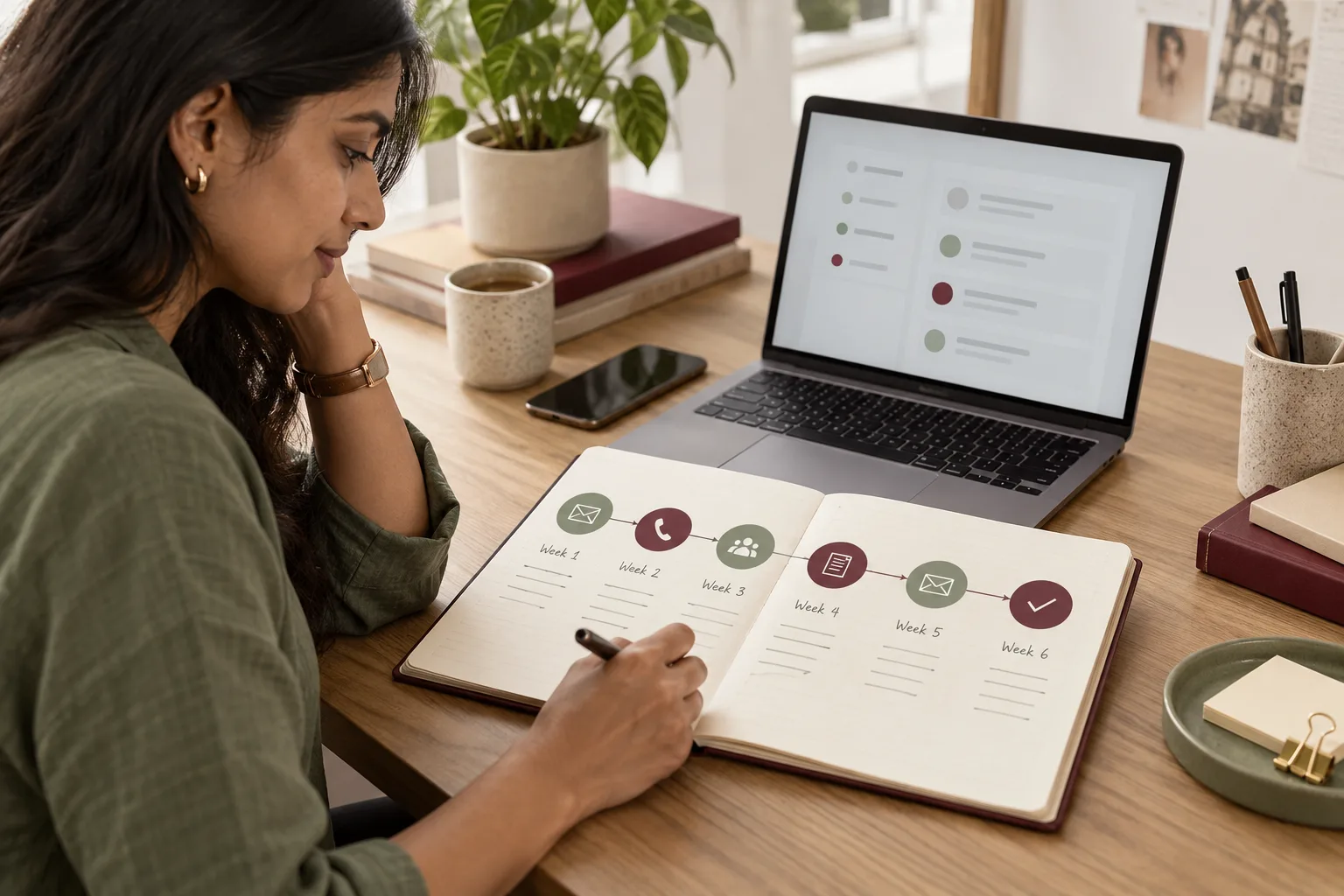 7 min read · 11 Feb 2025How to design a B2B follow-up sequenceA B2B follow-up sequence is a written plan of contacts over four to six weeks where each touch carries something new and the last one closes the file politely.
More for industrial equipment manufacturers
Everything else we would do for you.
Closest to this: leads and follow-up
Also for industrial equipment manufacturers
- Answer engine optimisation for industrial equipment manufacturers
- Branding for industrial equipment manufacturers
- Content marketing for industrial equipment manufacturers
- Digital marketing for industrial equipment manufacturers
- Email marketing for industrial equipment manufacturers
- Google Business Profile management for industrial equipment manufacturers
Or start from the overview: sales and marketing for industrial equipment manufacturers.
Your next practical step
Tell us what you are trying to grow, and we will read it before we call.
Eight short steps, mostly taps. Skip anything you would rather answer on the call.