Industrial equipment manufacturers · Sales presentation and demo improvement
The demo that wins a plant is run around the line it is meant to fix.
Sales presentation and demo improvement for an equipment maker is a rebuild of how the team presents a machine, runs a trial or hosts a factory visit. GullySales reads recent decks, trial notes and visit routines against what each buyer asked, then writes the running order, scripts and checklists around the buyer's production problem.
Scope, fee, reporting and term are agreed in writing after we have read your brief and spoken to you.
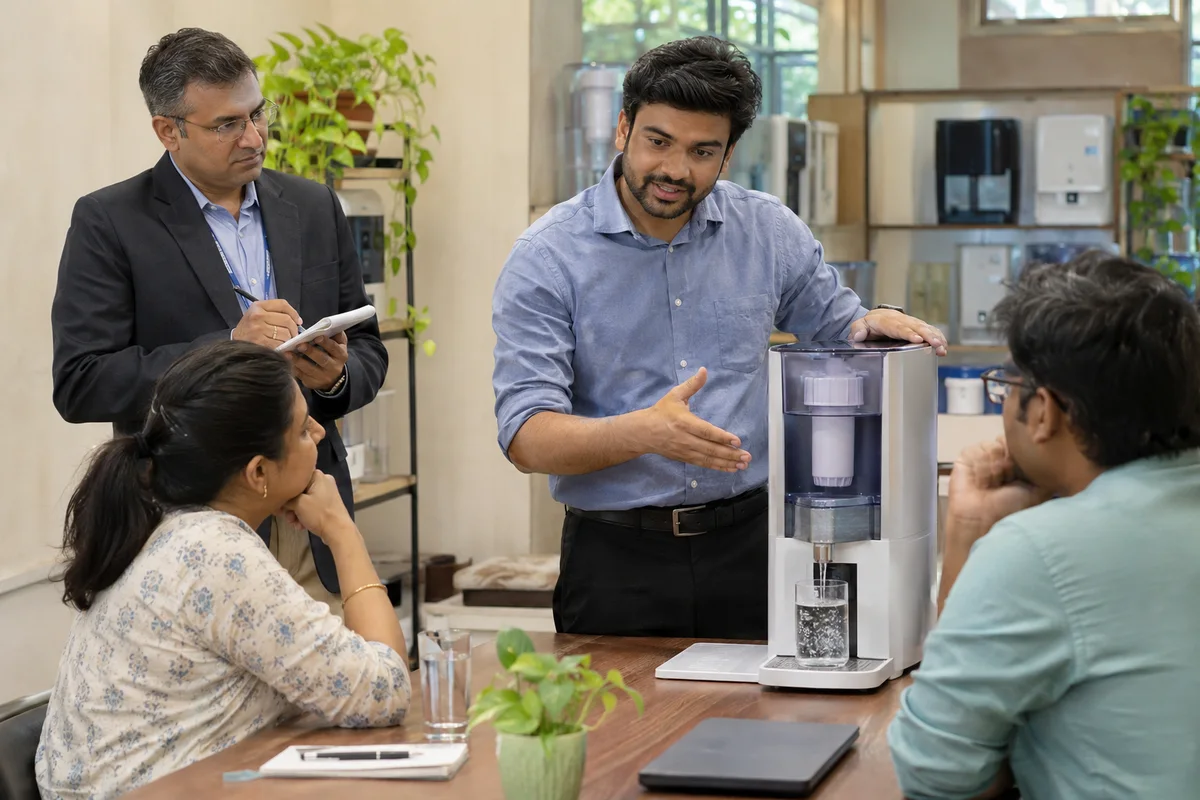
What sales presentation and demo improvement means
Sales presentation and demo improvement is a review and rebuild of how your team presents and demonstrates in front of buyers, whether on a site visit, a screen share or a showroom floor. GullySales reads your recent decks and demos against what each buyer asked, then rewrites the structure, scripts and checks around the buyer's problem.
Also for industrial equipment manufacturers
- Sales management for industrial equipment manufacturers
- Sales metrics for industrial equipment manufacturers
- Sales strategy for industrial equipment manufacturers
- Sales training for industrial equipment manufacturers
- Consultative selling implementation for industrial equipment manufacturers
- Sales discovery process design for industrial equipment manufacturers
- Sales manager training for industrial equipment manufacturers
- Sales margin improvement for industrial equipment manufacturers
Sales and marketing for industrial equipment manufacturers, the overview.
Last updated 14 Nov 2026.
For industrial equipment manufacturers
Where it usually goes wrong, and what we would do.
“The deck opens with the factory, not the problem”
A plant engineer who requested a quotation for a conveyor sits through company history, an infrastructure tour and a client logo slide before reaching the one capacity figure they wanted. By then the procurement head has left the room.
“Two buyers sit in the room and get one talk”
The engineer wants tolerance, power rating and changeover time. The procurement head wants terms, spares and service response. A single presentation answers neither fully, and each leaves believing the other half was the weak part.
“The demo machine is not the machine on order”
A showroom unit runs a clean sample at ideal settings. The buyer's material, shift pattern and operator skill are different. When the trial leaves out the buyer's own sample, the demo proves the machine works and nothing about whether it works here.
“Nothing is recorded after the visit”
The team returns from a factory visit with impressions and no notes on what the buyer asked, what stayed unanswered and who needs to approve. The follow-up quotation is then written from memory, and the open question stays open.
What we do
What we deliver for industrial equipment manufacturers.
The work available for this need. We agree the deliverables and responsibilities for your engagement in writing.
Meeting review notes
A reading of recent decks, trial reports and visit notes beside each buyer's RFQ, marking where a question went unanswered.
Result: The owner sees exactly where past presentations lost the room.
Problem-first running order for each machine type
A written sequence that starts with the buyer's stated line problem, shows the machine against it, and ends on the decision and next step.
Result: Every presentation opens with the buyer's own requirement.
Separate engineer and procurement versions
Two shorter structures drawn from one deck: technical fit for the plant engineer, terms, spares and service for the purchase head.
Result: Each decision-maker hears the part that settles their question.
Trial and demo script with the buyer's own sample
A step-by-step script for a machine trial that includes the buyer's material, the settings used and the readings both sides note.
Result: A trial result can be quoted back to the buyer in the buyer's own terms.
Visit and dispatch checklist
A list covering sample stock, demo unit condition, drawings, safety induction, visitor passes and the person who greets the buyer.
Result: Nothing is missing when the buyer arrives.
After-visit feedback form
One page the rep fills in the same day: questions asked, what was shown, what is unresolved, who decides, agreed next step.
Result: The follow-up quotation is written from a record, not from memory.
How the result is measured
- Demos and presentations reviewed against the buyer's questions
- Buyer questions answered during the demo
- Equipment and sample checks completed before meetings
Recorded as a baseline before work starts, so every later report has an honest comparison.
Who it is for
This is written for these industrial equipment manufacturers.
- CNC machine and precision equipment manufacturers
- Industrial pump and compressor manufacturers
- Packaging machinery manufacturers
- Conveyor and material handling equipment makers
- Motor and drive manufacturers
- Custom fabrication and job-work manufacturers
- Export-oriented industrial equipment makers
- Spare parts and after-sales service providers
Before you decide
Agree the work. Know how to judge it.
Sales presentation and demo improvement for industrial equipment manufacturers: use these checks to prepare, choose the scope, and review what changes.
Bring the right evidence
Bring questions from sales calls and examples of objections that delay a decision. Choose a subject expert who can check the substance, and identify evidence that can be published.
Make the scope clear
Agree the reader, buying question, format, and distribution route for each piece. Set the approval process and distinguish new research from rewriting material you already have.
Check the work in use
Ask a colleague to use the draft in a real buyer conversation. It should answer the question, support its claims, and make the next step clear without requiring a sales pitch to explain it.
Know when to change course
If the same unanswered question appears in several articles, improve the strongest page before commissioning another. More words are not a substitute for missing evidence.
These are discussion points, not a fixed package. GullySales confirms the deliverables, responsibilities, fee, and term in writing after reading your brief and speaking with you.
Before we start
What to have ready before the work starts.
The records, access and decisions this work needs from industrial equipment manufacturers. Anything missing is noted in the written scope, with who will supply it.
- Recent decks and presentation files
- We need to see what your team really shows. Include the version used on the last visits. If each engineer uses their own, bring all of them, along with the datasheets and drawings pasted into them, since a figure that changed between versions is exactly what we look for.
- Trial and demonstration records
- Any report of a trial, with the sample, the settings and the result, helps us write the trial script. Photographs are fine. Without records, the script is built from what engineers remember.
- A demo machine or a clear description of it
- Tell us what machine buyers see when they visit and whether it matches the machine they order. If they differ, say how. This sets what must be said at the beginning of every demonstration.
- Buyer samples you can use for trials
- A trial on the buyer's own material persuades more than a standard one. Tell us whether you are able to ask for samples, and how you handle confidentiality. If you cannot, trials use standard samples.
- Permission to sit in on a meeting
- We learn more by listening to a real meeting. Ask a buyer's permission for us to attend, or have a colleague note the meeting. If neither is possible, we review the materials only, and the notes on how the meeting actually went are left thinner and marked so.
How it works
How the sales presentation and demo improvement work runs
The work itself, in order. How an engagement starts, from your brief to a written scope, is set out on our method page.
- 1
Collect the decks and the trial notes
We ask for the presentation decks, trial reports, visit schedules and any notes sent after a visit to a buyer. We list who was in the room and what they asked. Your sales head tells us which meetings led to orders and which did not. The material is the base of the review. Where a deck was rebuilt for each meeting, we collect every version, since the changes show what the engineer thought the buyer cared about.
- 2
Set what was shown beside what was asked
For each meeting we compare the content of the deck or the demonstration with the buyer's own request. A deck that opens with the factory history while the buyer asked about cycle time is marked. We write short review notes on each meeting for the sales head, listing what the buyer asked, what was shown in answer and what was shown that nobody had asked about. The pattern across meetings is clearer than any single case.
- 3
Rebuild the running order
For each machine type we write a running order that starts with the buyer's production problem, then shows the machine, then the proof, then the commercial terms. Your engineer checks every technical statement. The order is a plan that the presenter may adapt, not a script.
- 4
Write separate engineer and purchase versions
When two people attend, they need different things. The plant engineer version goes into duty, tolerances and service. The purchase head version covers delivery, terms and total cost. The same machine facts appear in both, and we check that no number differs between them. A difference between what the engineer and the purchase head are told is the first thing a joint meeting exposes, and it damages both versions.
- 5
Plan the trial with the buyer's own sample
We write the trial script to use the buyer's own material or part, with what is measured and what is agreed beforehand. The demo machine is compared with the machine that will be supplied, and any difference is stated at the start. The buyer receives the trial result in writing, with the settings used and anything that did not meet the buyer's need, because a trial that hides a shortfall is remembered when the machine arrives. Where the demo machine differs from the one on order, the difference is stated before the trial starts. We also write a checklist for hosting a buyer at the works, covering who meets them, the safety rules and what is kept private, and one for the machine on dispatch day when a buyer comes to inspect it. Your plant head approves both, and strikes out any area that a visitor must not enter, such as a bay where another customer's job is being built.
- 6
Practise one meeting and start the feedback form
A salesperson and an engineer present to colleagues using the new order, and we comment. We then set up the short feedback form to be filled after each meeting. The sales head reviews the first forms and decides what to change. The form asks four plain questions: who attended, what they asked, what was promised and what happens next. Forms left blank after several meetings tell us the form is too long, and we shorten it.
Proof
Published examples of our work.
Real clients and the work recorded for each engagement. These examples may cover related services or industries. They show the method, not a guaranteed result.
Burhani Hydroline
- Situation
- The website was dated. Menus were hard to follow, pages were slow, and it did not work properly on a phone, which is where a buyer looks first.
- What we did
- Research before design
- Wireframes and prototypes
- The full product catalogue
- An online checkout
- Result
- No numbers were recorded for this engagement. The work is described in full in the case study.
Also worked with
Chord Road Hospital · Curtain Label · Difesa Security Services · Felicity Inn · Hands On CSR · Implevista · Kambar Group · Kalessi · Kerur Pain Clinic · LL Trust · Lucky Deals · Natural Gases · NavaShakthi Souhardha · NewCom Logistics · Proton Technical Services · SB Engineering · Shakthi Foundation · Shakthi Group · Urbanest · Insyde Studio · Venkateshwara Laser Tech · Vivara Studios
Where this fits
Three pieces of sales work, in this order.
This work sits inside sales process design, at stage 1, prospecting and lead generation. The audit comes before it, and sales management keeps it running.
Step 1
Sales audit
Find where deals are being lost and what to fix first.
Start here if you cannot say where orders are lost.
Step 2 · you are here
Sales process design
One written way to sell, from first enquiry to repeat order.
Start here if every salesperson sells differently.
Step 3
Sales management
A target, a review routine and someone who owns the number.
Start here if the team has targets and no routine.
FAQ
Questions owners ask before they call.
Not here? More answers, or ask on WhatsApp.
We sell mostly from drawings and datasheets. Is there a demo to improve?
Can you design a showroom or a demo unit?
Will the team be trained as well?
Can you build a showroom or a demonstration unit for us?
Will the team be trained to use the new order?
How much does it cost?
How long is the contract?
How soon will we see results?
Who will actually do the work?
What do you need from us?
From the blog
Further reading for industrial equipment manufacturers.
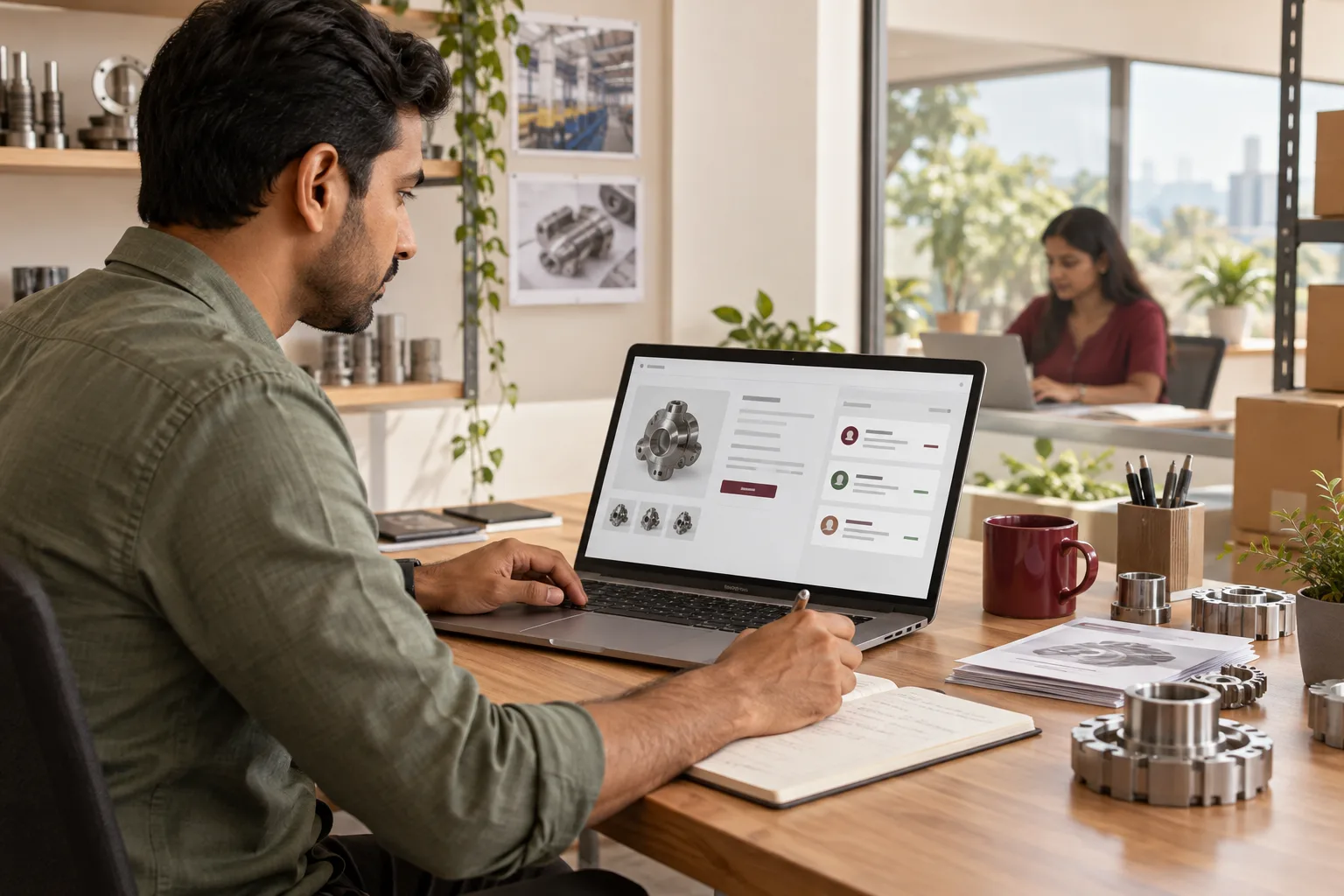 6 min read · 10 Oct 2026How manufacturers can generate enquiries from relevant business buyersRelevant RFQs come from buyers who can verify you: real specifications on product pages, matching listings and a quick way to screen requests.
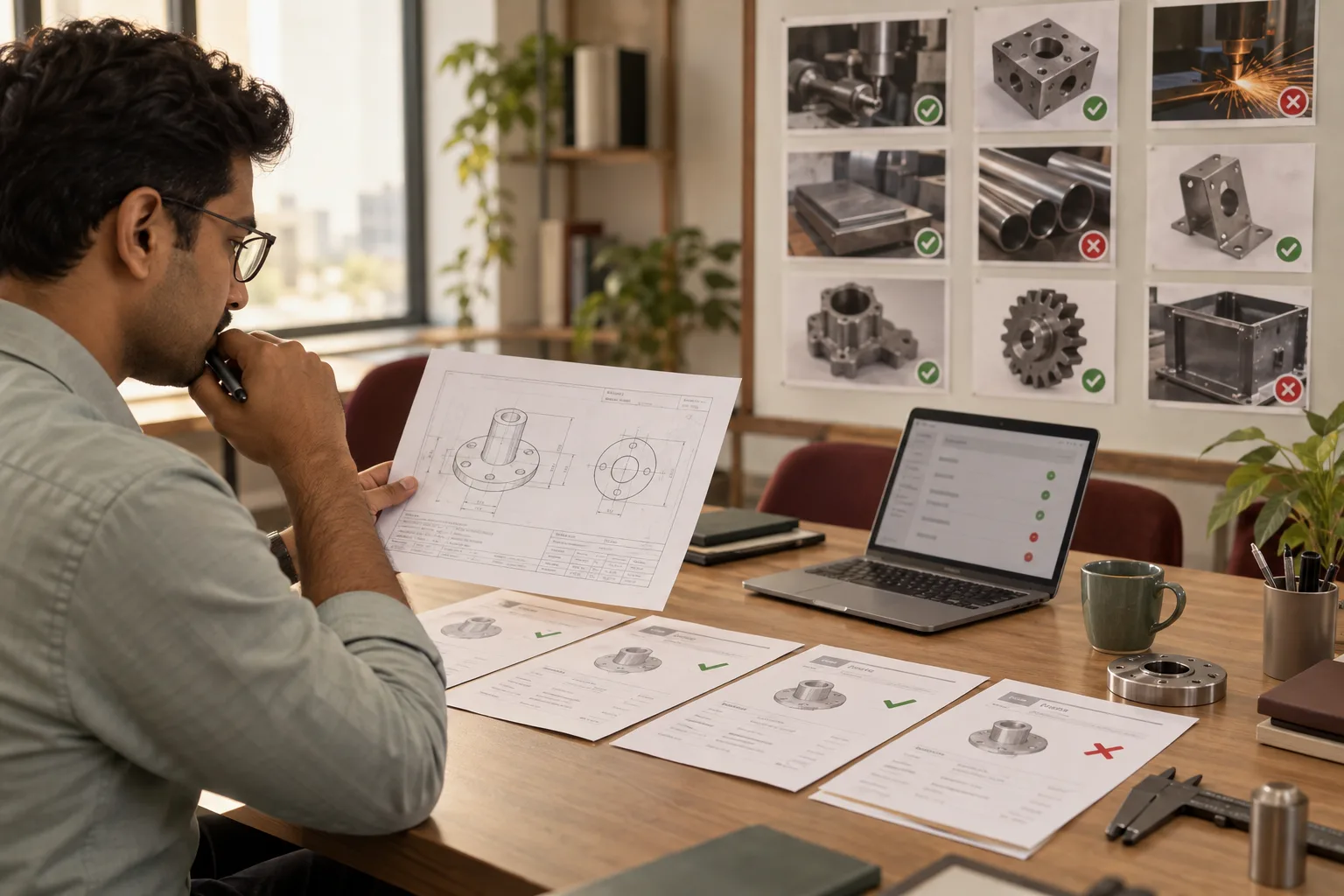 6 min read · 6 Oct 2026How industrial buyers decide which unit gets the RFQWhat industrial buyers check before sending an RFQ, across nine manufacturing trades, and where a unit drops off the shortlist.
 7 min read · 21 Sept 2026How to advertise to plant headsPlant heads can block a purchase but rarely sign one. Learn why breakdown searches, estate media and a trial offer reach them better than brand ads.
More for industrial equipment manufacturers
Related work to consider.
Closest to this: sales craft
- Sales management for industrial equipment manufacturers
- Sales metrics for industrial equipment manufacturers
- Sales strategy for industrial equipment manufacturers
- Sales training for industrial equipment manufacturers
- Consultative selling implementation for industrial equipment manufacturers
- Sales discovery process design for industrial equipment manufacturers
- Sales manager training for industrial equipment manufacturers
- Sales margin improvement for industrial equipment manufacturers
Also for industrial equipment manufacturers
- Answer engine optimisation for industrial equipment manufacturers
- Branding for industrial equipment manufacturers
- Content marketing for industrial equipment manufacturers
- Digital marketing for industrial equipment manufacturers
- Email marketing for industrial equipment manufacturers
- Google Business Profile management for industrial equipment manufacturers
Or start from the overview: sales and marketing for industrial equipment manufacturers.
Your next practical step
Tell us what you are trying to grow, and we will read it before we call.
Eight short steps, mostly taps. Skip anything you would rather answer on the call.