Material handling equipment manufacturers · Lead generation
Reach the plant engineer while the bay is still being measured.
Lead generation for a material handling maker means finding the factories, warehouses and consultants that have a load to move and no supplier yet. GullySales works on the pages, estate visit lists and consultant introductions that bring those enquiries in, each one noted by equipment type and load.
Scope, fee, reporting and term are agreed in writing after we have read your brief and spoken to you.
What lead generation means
Lead generation is the combined work of every channel that brings in a new enquiry, whether from search, adverts, referrals or a stall at an exhibition. GullySales runs these channels together and reports the number of enquiries each one produced, not the activity behind it.
Also for material handling equipment manufacturers
- CRM for material handling equipment makers
- Follow-up systems for material handling makers
- SEO for material handling equipment makers
- Social media for material handling makers
- Content marketing for material handling makers
- Buyer personas for material handling makers
- WhatsApp marketing for material handling makers
- Digital marketing for material handling makers
Sales and marketing for material handling equipment manufacturers, the overview.
Plan the next part of the work
Last updated 21 Nov 2026.
For material handling equipment manufacturers
Where it usually goes wrong, and what we would do.
“An enquiry names a problem, not a product”
A stores head does not type the word hoist. The search describes lifting a casting without a forklift, or stacking drums in a narrow aisle. Pages written around the problem and the load meet the buyer earlier than a product list does.
“New plants are specified before they are built”
Layout designers and project consultants choose the lifting gear while the shed is still a drawing. A maker missing from their shortlist meets the plant after the equipment is decided. Reaching them is separate work from reaching the maintenance head.
“Repeat customers hide a thin pipeline”
Orders from the same factories keep the workshop busy and cover the fact that no new site has asked in a long while. Counting enquiries by source shows how much of the work rests on a few customers.
“A visit is an investment, so qualify first”
Sending an engineer to measure a bay costs a working day. Asking for the load, span, lift height and the name of whoever approves the purchase, before anyone travels, separates a live requirement from a price check.
What we do
What we deliver for material handling equipment manufacturers.
The work available for this need. We agree the deliverables and responsibilities for your engagement in writing.
Equipment and load enquiry pages
One page for each equipment type, with a short form that asks for the load, span or lift height.
Result: Each enquiry arrives with the figures an engineer needs to quote.
Estate visit lists
Industrial estates near each works, listed with the factory types that use your equipment.
Result: A visit plan names the factories and the person to ask for.
Consultant and developer pack
A short pack of installations, loads and drawings for layout designers and warehouse developers.
Result: A specifier has something to forward to the client.
Pre-visit questions
A checklist of load, span, duty and decision-maker, asked before an engineer travels.
Result: Visits are booked against a named buyer.
Enquiry source log
A sheet that records where each enquiry came from, by equipment type.
Result: The owner sees which source brings new sites rather than repeat ones.
How the result is measured
- Relevant enquiries by source
- Duplicate and unsuitable enquiries
- Time to the first response
- Accepted enquiries reaching an agreed next step
Recorded as a baseline before work starts, so every later report has an honest comparison.
What to capture or send
The details that turn a loose enquiry into a layout worth visiting.
- Load to be lifted or moved
- Weight and the largest single piece. The load decides whether a hoist, a stacker or a crane is even the right product.
- Span, lift height and travel length
- The bay dimensions in metres. Without them the visit has no purpose, because the layout depends on these three figures.
- Duty cycle: lifts or moves per shift
- A crane used a few times a shift and one working every minute are different machines. Record the answer so the quote is for the right duty.
- Site type and what is stored or made
- A cold store, a foundry and a pharma warehouse have different floors, ceilings and safety needs. One line on the site saves a wasted trip.
- Who approves and when the bay is ready
- The name or role of the person who signs and the date the shed or building will be handed over. It tells you whether the enquiry is live.
Who it is for
This is written for these material handling equipment manufacturers.
- EOT crane, gantry and jib crane makers
- Hoist and winch makers
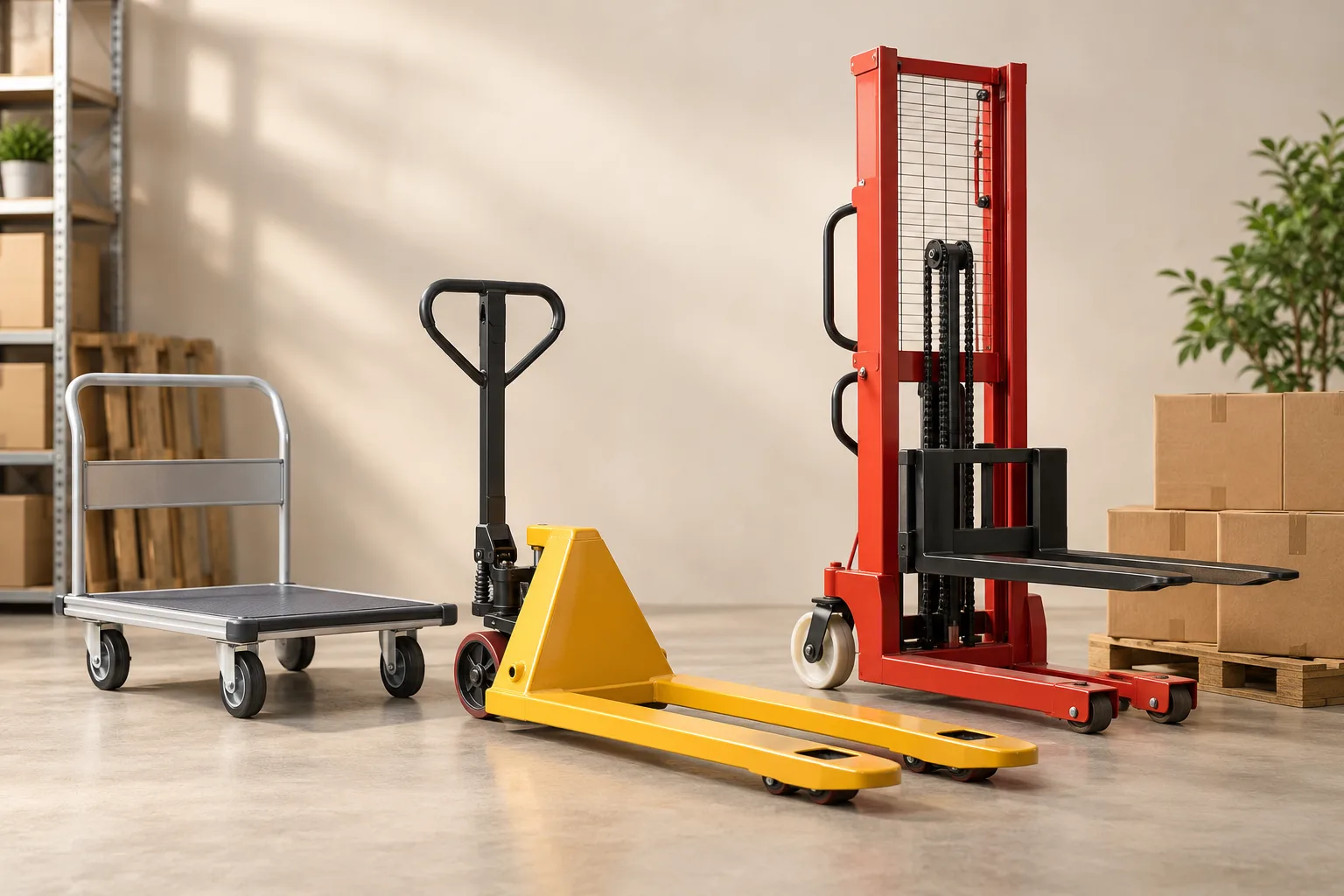
- Stacker, pallet truck and trolley manufacturers
- Conveyor and roller track makers for factory lines
- Racking, platform and storage equipment makers
- Forklift attachment and special lifting tackle makers
- Dock leveller, lift table and tail-lift makers
- Makers who combine new supply with crane inspection and AMC
Before you decide
When this may not be the right fit.
- Your engineers are booked on current commissioning, so more site visits would be promised and then postponed.
- You cannot yet produce a general arrangement drawing from the enquiry data, so a lead would wait while someone works one out.
- You have no list of the equipment you will not make, so enquiries would arrive for lifts outside your range.
Before you decide
Agree the work. Know how to judge it.
Lead generation for material handling makers: use these checks to prepare, choose the scope, and review what changes.
Bring the right evidence
Define the organisations or buyers you can serve and the reasons they would consider a conversation. Bring examples of accepted and rejected prospects so the selection rule is visible.
Make the scope clear
Agree the research sources, contact approach, qualification rules, and handover. Clarify which meetings count as accepted and what happens to replies that are not ready to buy.
Check the work in use
Review why a prospect was selected and what was learned from the response. Count held, relevant conversations separately from contacts found, messages sent, or meetings booked.
Know when to change course
If the same objection appears repeatedly, adjust the offer or buyer group before increasing outreach. Respect a request to stop contact and keep the exclusion in the record.
These are discussion points, not a fixed package. GullySales confirms the deliverables, responsibilities, fee, and term in writing after reading your brief and speaking with you.
Before we start
What to have ready before the work starts.
The records, access and decisions this work needs from material handling equipment manufacturers. Anything missing is noted in the written scope, with who will supply it.
- The quotation register for the last two years
- A list of quotations with customer, equipment, date and outcome shows which buyers turn into orders. A bound register or a sheet will do. Without it the baseline starts on the day we begin, and the sorting of sources relies on your sales engineer's memory.
- Load and span ranges you can build
- A one-page statement of the capacities and duties that your works can fabricate and test stops enquiry pages from naming equipment you cannot deliver. Rough ranges are fine. Without the page, we ask on every enquiry and the pages stay general.
- A sales engineer who can visit a site
- Visits are the heart of this work, so a person who can travel and read a bay for loads and clearances must be named. Part-time is acceptable. If nobody is free, the plan trims visits and relies on drawings and phone calls.
- Reference sites that agree to be named
- A consultant or buyer looks for plants like theirs, so we need installations whose owners allow the name. A written message is enough. Without any, pages describe the type of site without naming it and carry less weight.
- Your current brochures and drawing sheets
- The pack you hand a buyer shows how you present your equipment now. Old files are acceptable. If none exist, we draft a first pack from your drawings with your engineer and you approve before it leaves the office.
How it works
How the lead generation work runs
The work itself, in order. How an engagement starts, from your brief to a written scope, is set out on our method page.
- 1
Fix the equipment lines you want orders for
We begin with you and your works head, choosing which hoists, stackers, conveyors or lifts you want more enquiries for, and which loads and spans you can really build. You decide where the shop floor has capacity. What exists afterwards is a short list of equipment lines, each with the load range and site type it suits, which sets what the enquiry pages will name.
- 2
Sort last year's quotations by how they began
We open the quotation register and the enquiry book with your sales engineer and mark how each order or lost quotation began: a visit, a consultant's list, a trade fair card or a phone call. You tell us which ones were real needs. Afterwards you hold a baseline of sources, kept as the figures we read the new work against.
- 3
Write the questions asked before a site visit
With your sales engineer we draft the few questions that separate a real load from a price check: the weight, the span, the duty, the building and the date the plant needs it. You approve the wording. The result is a short enquiry form and call sheet that save a visit for the buyer who has a bay and a budget.
- 4
Compile the list of estates and projects to watch
We build a list of industrial estates, new plant announcements and consultants whose drawings carry lifting equipment, drawing on public notices and your own contacts. You strike out those you will not travel to. Afterwards your team holds a visit list sorted by place, and a consultant pack is ready to leave at each office.
- 5
Send test enquiries through the whole route
We submit enquiries as a plant engineer, a consultant and a casual price-seeker, and watch where each is logged, who replies and what is sent. Your sales engineer corrects the replies. Afterwards the route has been proved, and the enquiry log shows the source of each message.
- 6
Read enquiries against last year's sources
After the pages are live and visits have been made, we sit with your sales head and read the enquiry log by source against the baseline from the quotation register. You decide which sources to feed next. We report quotations raised and visits made, and promise no orders.
Where this fits
Three pieces of sales work, in this order.
This work sits inside sales process design, at stage 1, prospecting and lead generation. The audit comes before it, and sales management keeps it running.
Step 1
Sales audit
Find where deals are being lost and what to fix first.
Start here if you cannot say where orders are lost.
Step 2 · you are here
Sales process design
One written way to sell, from first enquiry to repeat order.
Start here if every salesperson sells differently.
Step 3
Sales management
A target, a review routine and someone who owns the number.
Start here if the team has targets and no routine.
FAQ
Questions owners ask before they call.
Not here? More answers, or ask on WhatsApp.
Do ads come before pages for our hoists and stackers?
How do we tell a real enquiry from a price check?
Should we visit every site that sends an enquiry?
How do we find plants that are being built?
Who should call back when an enquiry arrives from a new plant?
How do we keep a consultant's specification enquiry from being lost?
How long is the contract?
How soon will we see results?
Who will actually do the work?
What do you need from us?
More for material handling equipment manufacturers
Related work to consider.
Closest to this: leads and follow-up
Also for material handling equipment manufacturers
Or start from the overview: sales and marketing for material handling equipment manufacturers.
Your next practical step
Tell us what you are trying to grow, and we will read it before we call.
Eight short steps, mostly taps. Skip anything you would rather answer on the call.