Material handling equipment manufacturers · Manufacturing
A plant manager with a load to move calls the supplier who has already explained how.
The stores head at a pump factory in Coimbatore is tired of three men lifting castings by hand and asks the maintenance man to find someone who makes a jib crane.
Scope, fee, reporting and term are agreed in writing after we have read your brief and spoken to you.
In one paragraph
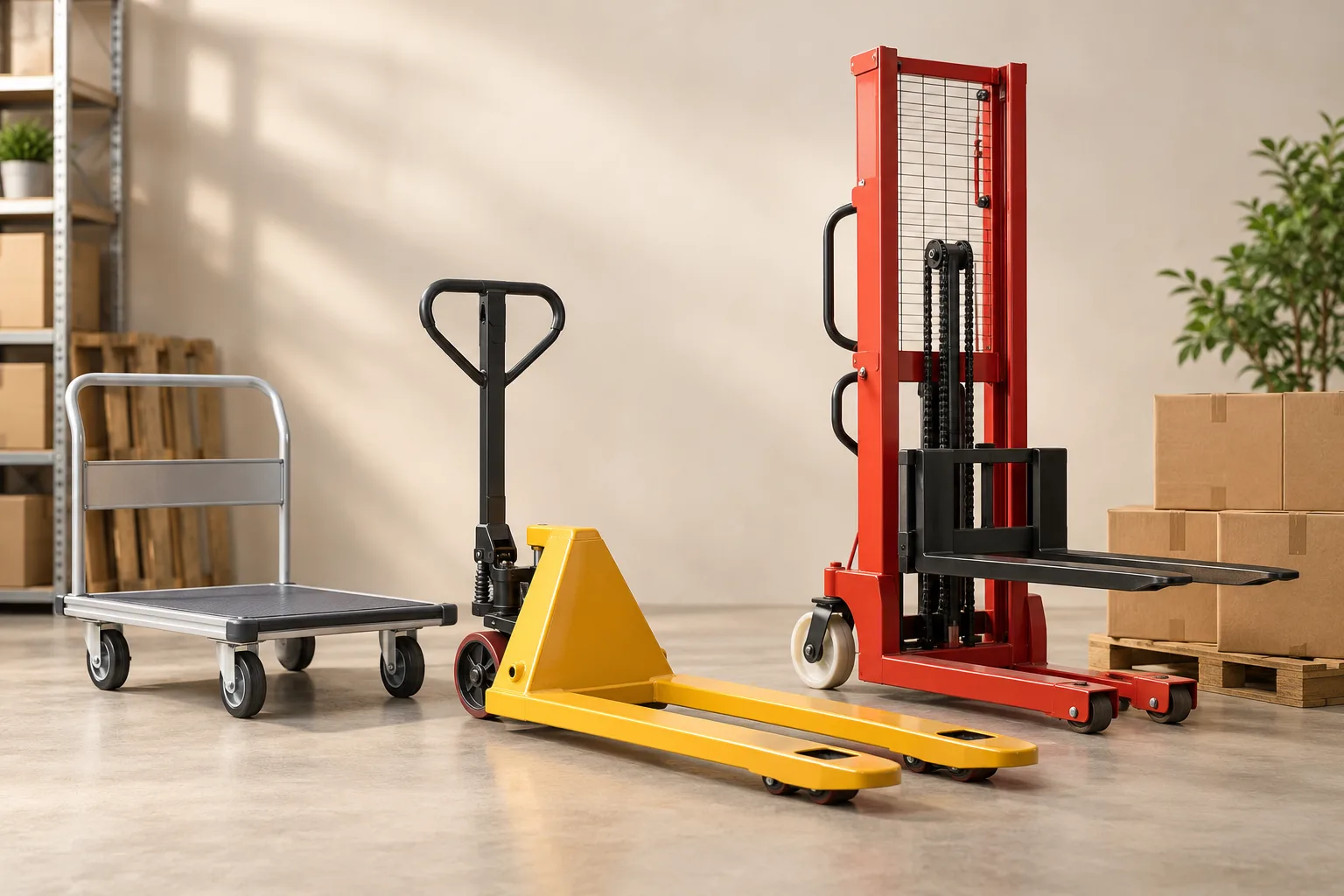
Material handling equipment manufacturers make the cranes, hoists, stackers, trolleys, pallet trucks and lifting gear that move loads in factories and warehouses. Marketing makes the maker known to plant engineers, warehouse operators and project consultants. Sales turns a site visit into a layout, a quotation and an order with after-sales cover.
The maintenance man searches, calls two firms and invites the one that answers to measure the bay. The maker who arrives with a sketch on the first visit has a head start over one who promises to send a drawing later.
Material handling is a sale of solutions to a floor plan. The buyer describes a problem, the maker visits, and a layout and a price follow. A maker in Ahmedabad, Pune, Chennai, Faridabad or Bengaluru may build sound cranes, conveyors and stackers yet depend on repeat customers and an agent or two, while a new plant or warehouse that needs the equipment does not come across the maker.
Last updated 14 Nov 2026.
How buyers decide
How material handling equipment manufacturers are chosen.
Plant engineers, maintenance heads and warehouse managers raise the need. They look for a nearby maker who can visit, draw the layout, state the safe working load and give a drawing the purchase team can approve. Price is compared, but the maker who visited and understood the bay is trusted more than one who sent a catalogue.
Project consultants, plant layout designers and warehouse developers also specify equipment. For cranes and lifting gear, buyers expect a statutory test and inspection by a competent person, under rules that differ by state and are checked by the buyer's safety officer. A maker who can explain that process clearly, and who offers annual maintenance, is easier to choose.
The problem
What usually goes wrong for material handling equipment manufacturers.
Common situations to check against your own enquiry records.
“Our repeat customers keep us busy but new plants do not know us”
Orders come from the same ten factories, and when one of them slows down so do we.
“A site visit and layout take days and some go nowhere”
The engineer travels, measures and draws, and the buyer then uses the drawing to get a cheaper quote elsewhere.
“Our website lists equipment without showing where it works”
A warehouse manager searching for a stacker or a conveyor sees a product photo, but not the kind of site, the load or the lift height we have handled.
“Quotes go out and the buyer's silence is never followed up”
A crane quote worth several lakhs sits in the purchase manager's inbox with no call after it.
“After-sales contracts are sold by chance”
Cranes and hoists need inspection and repair, but we hear from the customer only when something fails, the worst moment to start a conversation.
What we do
What we do for material handling equipment manufacturers.
Possible deliverables for material handling equipment manufacturers. Your written scope confirms what is included.
A page for each equipment type by application
Pages for EOT cranes, jib cranes, stackers, conveyors and lift tables, each describing the loads, spans and industries handled, with site photos and the test and inspection process.
A site visit checklist and layout sheet
A standard list of questions for the first visit and a layout format that records bay length, load, duty cycle and power, so the quotation can be written from the sheet.
A consultant and warehouse developer pack
A capability document for layout designers, project consultants and warehouse developers, with the equipment ranges, safe working loads and projects delivered.
A quotation follow-up sheet
A sheet for each quote with notes on who decides, what the purchase department is waiting for, such as a second quotation or a budget sign-off, and what was said on the last call.
An AMC and inspection offer for installed equipment
A register of every crane and hoist you have installed, with the inspection due dates your customers must observe, a plain AMC description and a page that explains it.
How the result is measured
- Enquiries by source: search, visit, consultant, referral
- Site visits that produce a quotation
- Quotations sent against orders won
- AMC contracts active and renewed
- Repeat orders from existing plants
- Quotes that name a decision-maker and a pending item
Recorded as a baseline before work starts, so every later report has an honest comparison.
Every service, written for material handling equipment manufacturers
Each has its own page: what it involves for material handling equipment manufacturers, what you get, and what it is measured on.
- Lead generationReach the plant engineer while the bay is still being measured.
- SEOBe the page a plant manager reads when searching for a crane maker.
- Social mediaShow the crane at work so the next plant engineer remembers your name.
- Content marketingWrite down what your engineers explain on every site visit.
- Buyer personasKnow who raises the need, who checks the safety and who signs the order.
- CRMKeep every site visit, drawing and quotation in one record.
- Follow-up systemsFollow up each quotation until the buyer says yes or no.
- WhatsApp marketingLet the plant engineer send a photo of the bay and get a reply.
- Digital marketingJoin search, site and follow-up so the enquiry becomes an order.
- WebsitesBuild a site that shows the load, the span and the sites you have served.
- Sales processSales process for material handling equipment manufacturers defines the evidence for each next step.
- Sales managementSales management for material handling equipment manufacturers gives every open enquiry a responsible owner.
- Sales strategySales strategy for material handling equipment manufacturers starts with choosing which opportunities to pursue.
Worth a page and a campaign of their own
Plant engineers and maintenance heads in nearby industrial areas · Warehouse developers and third-party logistics firms · Project consultants and layout designers · Annual maintenance contracts and inspection work · Open quotations tied to a named decision-maker · Repeat orders from existing factories · Export enquiries for standard equipment · A reference list of sites and loads handled
Priority campaigns
Campaigns for what material handling equipment manufacturers most want to sell.
Each one planned around when your buyers decide, and measured against the baseline.
Industrial area visit plan
A planned round of visits to factories in nearby estates such as Peenya, Pimpri or Vatva, arranged through calls and WhatsApp before your engineer arrives.
Search campaign for lifting problems
Pages and ads for searches such as EOT crane manufacturer and stacker supplier, along with a form that asks for load, span and bay length.
Warehouse and logistics developer outreach
Outreach to developers and logistics operators planning new warehouses, with a short pack on racking, dock levellers and conveyors.
Inspection-due AMC message
A message to customers whose cranes and hoists are due for statutory examination, with an AMC option and a booking link. Rules differ by state, so your safety officer confirms the wording.
Beyond search
Where we reach buyers of material handling equipment manufacturers, beyond Google.
Search matters, but it is rarely the only way this industry's buyers find a supplier.
Plant engineers and maintenance heads
Factories in the estates you can reach, with outreach aimed at the maintenance and projects staff who raise a lifting need.
Warehouse developers and logistics operators
Firms building warehouses and the operators who will run them, with equipment packs written for racking, docks and conveyor lines.
Project consultants and layout designers
Consultants whose drawings specify cranes, conveyors and racking, with an introduction that carries your ranges and safe working loads.
Equipment dealers and traders
Industrial dealers who stock standard hoists, trolleys and pallet trucks and could add your range to their counter.
Why GullySales
Crane and hoist makers need one firm that follows a site visit to a purchase order.
A plant manager choosing a supplier is weighing the maker who came to see the bay against the one who sent a catalogue. GullySales builds the enquiry flow and the visit, drawing and quotation steps behind it, so the maker who visited is also the one who follows up.
From the bay visit to the purchase order
A call from a maintenance head about a bay is the start of the job. We build how it is answered, how the site visit is booked, how the layout drawing and safe working load reach the purchase team, and how the quotation is followed until the plant approves or declines. The order is the point where the work ends.
Starting from the plant engineer's checks
The plant engineer, the consultant who specifies and the purchase team each look somewhere different. We begin with those places: a nearby maker's page, a layout consultant's shortlist, a drawing the purchase team can approve. Channels come after that, so the plan follows how a crane or hoist is actually chosen.
Counted in visits and quotations
We write down your present enquiries by source, visits that produced a quotation, quotations against orders won, and annual maintenance contracts held. These come from your own quotation file. Later movement is read in the same counts, so a consultant referral can be set beside a repeat order from an existing plant.
The fee and scope are agreed before the first visit
The fee and scope are on paper before any page is drafted. We promise no orders, no enquiry volume and no search position. If the maker's capacity cannot serve the kind of plant a piece of work would attract, we say so before building it.
Sales and channel services
Choose the sales work your business needs.
Review the sales and channel catalogue in the context of material handling equipment manufacturers. Each page states what the service covers and when it is unsuitable. A specialist programme is not assumed to fit every industry.
210 services available.
Sales strategy and process (29)
- Account-based selling (check programme fit)
- Appointment setting
- Bid or no-bid decision framework
- Business development strategy
- Competitive intelligence
- Dedicated sales team services
- Enterprise and solution selling (check programme fit)
- Inside sales
- Institutional and government sales strategy
- Outbound sales prospecting
- Outsourced sales and business development
- Precast and construction materials tender-to-order programme (check programme fit)
- Pricing and packaging strategy
- Pricing waterfall and discount leakage analysis
- Product and service launch strategy
- Quotation and proposal follow-up
- Quotation management
- Retail sales conversion consulting
- RFP and tender management
- Sales audit
- Sales discount management
- Sales margin improvement
- Sales performance improvement
- Sales strategy and consulting
- Sales strategy, management and enablement
- Sales transformation consulting
- Sales turnaround consulting
- Technical presales and sales engineering support
- Win-loss analysis
Sales training and enablement (29)
- Capability statement writing
- Consultative selling implementation
- Field sales support
- Negotiation and closing support
- Negotiation training
- Objection handling training
- Product and service brochure copywriting
- Product one-pager writing
- Product specification sheet writing
- Proposal development
- Sales certification programme design
- Sales closing training
- Sales coaching
- Sales collateral development
- Sales competency assessment
- Sales discovery process design
- Sales enablement
- Sales leadership development
- Sales manager training
- Sales messaging, scripts and follow-up sequences
- Sales playbook development
- Sales presentation and demo improvement
- Sales presentation and demo script writing
- Sales team onboarding
- Sales team training programme
- Sales training and development
- Sales training needs assessment
- Value-based selling implementation
- WhatsApp sales process
CRM, sales operations and RevOps (46)
- Conversation intelligence
- CPQ consulting
- CRM administration and support
- CRM adoption and training
- CRM consulting and selection
- CRM data cleansing, deduplication and governance
- CRM data migration
- CRM implementation and customisation
- Deal desk services
- Deal risk assessment
- Engineering college admissions enquiry management (check programme fit)
- Enquiry response starter
- Field sales beat planning
- Hospital enquiry-to-appointment conversion programme (check programme fit)
- Lead capture and lifecycle management
- Lead database management
- Lead leakage analysis
- Lead qualification
- Lead response and follow-up
- Lead routing and assignment
- Lead scoring
- Lead-to-order process design
- Marketplace lead management programme
- Order booking process improvement
- Pipeline hygiene and governance
- Pipeline management
- Revenue and sales operations
- Revenue operations, CRM data and AI
- Revenue process documentation
- Revenue technology stack audit and architecture
- RFQ management
- Sales activity management
- Sales administrative support
- Sales approval workflow design
- Sales call auditing and conversation quality assessment
- Sales cycle optimisation
- Sales escalation process design
- Sales handoff process design
- Sales metrics and KPI development
- Sales process design and implementation
- Sales productivity improvement
- Sales to operations order handover design
- Sales workflow automation
- Stalled opportunity recovery
- Territory planning
- Truck and commercial vehicle dealer lead-to-booking programme (check programme fit)
Customer success and retention (42)
- Account management and key account growth
- Account whitespace and contract expansion analysis
- B2B customer reference programme (check programme fit)
- Churn analysis and reduction
- Complaint and escalation management
- Customer adoption programmes
- Customer advocacy and proof marketing
- Customer advocacy programmes
- Customer case studies
- Customer education and knowledge base development
- Customer engagement campaigns
- Customer experience strategy and journey mapping
- Customer experience, success and retention
- Customer health scoring
- Customer lifecycle marketing
- Customer loyalty programmes
- Customer onboarding
- Customer onboarding implementation assurance
- Customer reactivation
- Customer referral campaign copywriting
- Customer referral programmes
- Customer renewal, re-engagement and upsell message writing
- Customer research and voice of customer
- Customer retention and reactivation campaigns
- Customer retention strategy
- Customer satisfaction, NPS and feedback programmes
- Customer segmentation
- Customer service strategy
- Customer success automation
- Customer success consulting
- Customer support process design
- Customer testimonials
- Customer welcome and onboarding content writing
- Digital customer journey design
- Helpdesk and contact centre setup
- Referral and loyalty campaign creative design
- Referral marketing
- Renewal management
- Repeat sales management
- Service recovery programmes
- Strategic account management (check programme fit)
- Upselling and cross-selling
Fractional leadership and audits (22)
- Annual revenue planning
- Founder to sales team transition
- Founder-led sales advisory
- Fractional chief revenue officer (CRO)
- Fractional head of sales
- Interim sales leadership
- Management dashboards and reporting
- Quota and capacity planning
- Revenue analytics and intelligence
- Revenue growth audit
- Revenue leadership and management reviews
- Revenue model and monetisation strategy
- Revenue planning and fractional leadership
- Revenue target planning
- Sales compensation and incentive design
- Sales forecasting
- Sales management
- Sales organisation design
- Sales profitability analysis
- Sales recruitment and candidate assessment
- Sales review management
- Sales team structure and role definition
Dealers, distributors and partners (42)
- Channel governance and conflict management (check programme fit)
- Channel opportunity generation and follow-up (check programme fit)
- Channel partner engagement campaigns (check programme fit)
- Channel partner franchise and retail growth (check programme fit)
- Channel partner recruitment (check programme fit)
- Channel performance management (check programme fit)
- Channel sales strategy and route to market execution (check programme fit)
- Channel territory planning (check programme fit)
- Cloud marketplace listing and co-sell (check programme fit)
- Co-operative partner marketing (check programme fit)
- Dealer and distributor audits (check programme fit)
- Dealer and distributor programme (check programme fit)
- Dealer co-funded lead generation programmes (check programme fit)
- Dealer development (check programme fit)
- Dealer lead generation (check programme fit)
- Dealer network brand visibility (check programme fit)
- Dealer sell-through analytics (check programme fit)
- Distributor development (check programme fit)
- Distributor onboarding digital academy (check programme fit)
- Distributor sales force effectiveness (check programme fit)
- Export and international market development (check programme fit)
- Franchise development, recruitment and expansion (check programme fit)
- Industrial distributor dealer sell-through programme (check programme fit)
- Market development fund management (check programme fit)
- Outsourced dealer sales support (check programme fit)
- Partner compensation and incentive design (check programme fit)
- Partner enablement, training and certification (check programme fit)
- Partner onboarding (check programme fit)
- Partner portal and PRM implementation (check programme fit)
- Partner programme design (check programme fit)
- Partner relationship management (check programme fit)
- Partner segmentation and tiering (check programme fit)
- Partnership and co-marketing (check programme fit)
- Point-of-sale marketing (check programme fit)
- Referral partner programmes (check programme fit)
- Reseller programme development (check programme fit)
- Retail execution and merchandising (check programme fit)
- Retailer marketing (check programme fit)
- Route to market and distribution strategy (check programme fit)
- Secondary sales tracking (check programme fit)
- Trade and dealer marketing (check programme fit)
- Trade promotion planning (check programme fit)
A practical starting point · Material handling equipment manufacturers
Start with one buying journey.
Use a real enquiry to find the first useful change. You do not need to buy every service listed on this page.
- The record to review
- Start with a recent RFQ and the quotation it produced. Remove buyer identifiers, then retain the specification, quantity, delivery requirement, and reason the order moved forward or stopped.
- The buyer's question
- Check whether the buyer can establish technical fit before asking for a price. Purchasing, engineering, and the end user may need different evidence from the same product page.
- The handover to agree
- Give the technical question to someone who can answer it, and keep the commercial follow-up with a named owner. A vague request for a catalogue should not be treated as a qualified RFQ.
Who it is for
This is written for these material handling equipment manufacturers.
- EOT crane, gantry and jib crane makers
- Hoist and winch makers
- Stacker, pallet truck and trolley manufacturers
- Conveyor and roller track makers for factory lines
- Racking, platform and storage equipment makers
- Forklift attachment and special lifting tackle makers
- Dock leveller, lift table and tail-lift makers
- Makers who combine new supply with crane inspection and AMC
Before you decide
When this may not be the right fit.
- You want a guaranteed Google ranking or a guaranteed number of leads. Nobody honest can promise either.
- You need enquiries by next week and have nobody to answer them.
- You want posts and reach reported, not enquiries and orders.
How it works
How the work runs for material handling equipment manufacturers
The work itself, in order. How an engagement starts, from your brief to a written scope, is set out on our method page.
- 1
List the sites already supplied
The sites you have supplied are listed by equipment type and sales route, to see where new enquiries stall.
- 2
Standardise the first visit
A checklist, a layout sheet and a follow-up rule, so every visit ends with a quotation owner and a next step.
- 3
Put the installations on show
Pages, photographs and references for each equipment type, with customer permission.
- 4
Visit estates and approach specifiers
Factory visit plans, search pages and consultant outreach are set up together.
- 5
Set visits, quotes and AMCs side by side
Visits, quotations and orders are read together, with AMC contracts shown next to new supply.
Proof
Published examples of our work.
Each example names the client and the work delivered. Some examples come from related industries; use them to assess the method, not to predict your results.
SB Engineering
- Situation
- Buyers searching for laser cutting and sheet metal work in Bengaluru were finding other suppliers first, because the company did not rank for the terms its own customers type.
- What we did
- The site redesigned for mobile
- Search work on the buyer's terms
- Content that shows the work
- Social channels managed
- Result
- Website traffic rose 60% within six months, against a target of 50%.
- High-quality leads rose 45%, with a rise in conversion rates alongside them.
- Fifteen target keywords moved up the rankings, five of them into the top three positions.
Burhani Hydroline
- Situation
- The website was dated. Menus were hard to follow, pages were slow, and it did not work properly on a phone, which is where a buyer looks first.
- What we did
- Research before design
- Wireframes and prototypes
- The full product catalogue
- An online checkout
- Result
- No numbers were recorded for this engagement. The work is described in full in the case study.
Also worked with
Chord Road Hospital · Curtain Label · Difesa Security Services · Felicity Inn · Hands On CSR · Implevista · Kambar Group · Kalessi · Kerur Pain Clinic · LL Trust · Lucky Deals · Natural Gases · NavaShakthi Souhardha · NewCom Logistics · Proton Technical Services · Shakthi Foundation · Shakthi Group · Urbanest · Insyde Studio · Venkateshwara Laser Tech · Vivara Studios
Where this fits
Three pieces of sales work, in this order.
Start by finding where enquiries and orders are being lost. Agree the changes to your sales process, then decide who will manage the work and review the results.
Step 1
Sales audit
Find where deals are being lost and what to fix first.
Start here if you cannot say where orders are lost.
Step 2
Sales process design
One written way to sell, from first enquiry to repeat order.
Start here if every salesperson sells differently.
Step 3
Sales management
A target, a review routine and someone who owns the number.
Start here if the team has targets and no routine.
FAQ
Questions material handling equipment manufacturers ask before they call.
Not here? More answers, or ask on WhatsApp.
Can we win business from warehouse developers?
Should we publish loads and spans on the website?
Do you handle crane inspection rules?
How do we stop buyers using our layout to get cheaper quotes?
Is SEO useful for a crane maker?
How much does it cost?
How long is the contract?
How soon will we see results?
Who will actually do the work?
What do you need from us?
Part of Manufacturing. See the other industries in the sector.
Your next practical step
Tell us what you are trying to grow, and we will read it before we call.
Eight short steps, mostly taps. Skip anything you would rather answer on the call.