Medical device manufacturers · Explainer and product demonstration videos
Show a biomedical engineer the set-up, the cleaning and the controls before the visit.
Explainer and product demonstration videos for a medical device maker are short, approved films that show how a device is set up, operated, cleaned and maintained, for the people who buy it and the people who use it. GullySales writes the brief, script and storyboard with your specialist, and your reviewers approve every statement before publication.
Scope, fee, reporting and term are agreed in writing after we have read your brief and spoken to you.
What explainer and product demonstration videos means
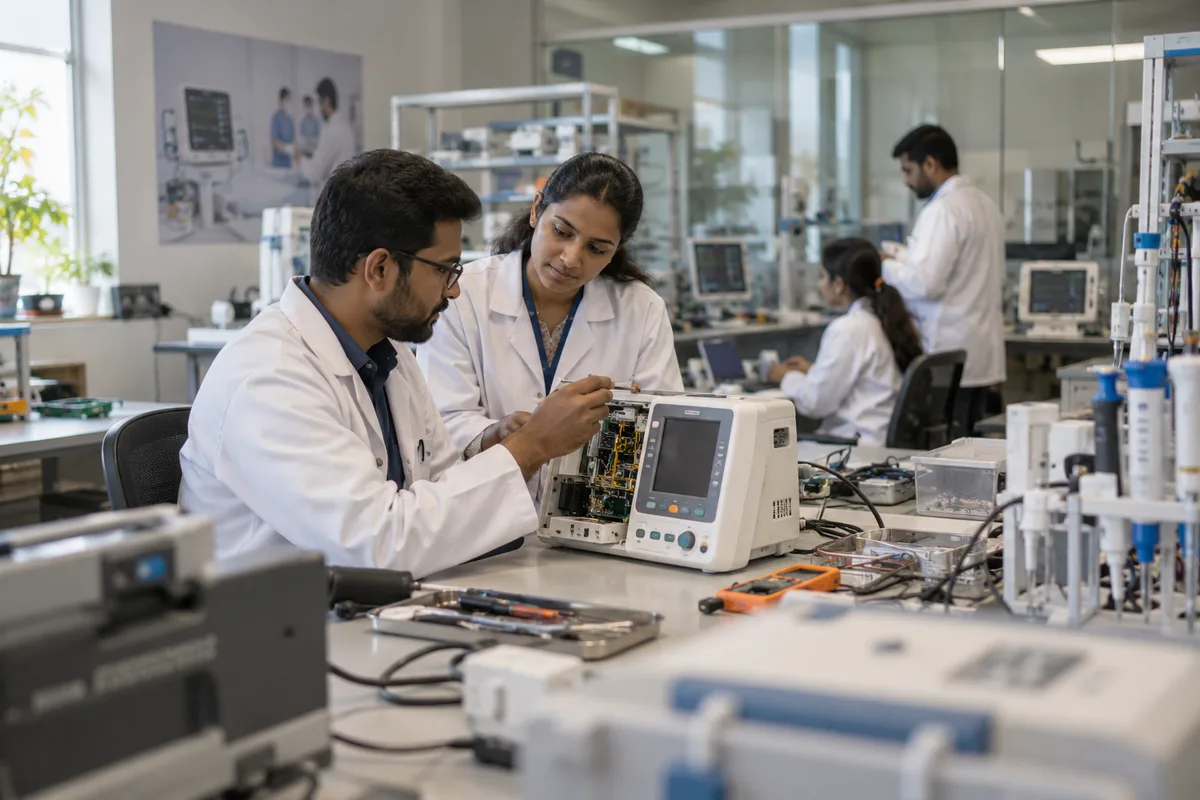
Explainer and product demonstration videos show how a product works or what a procedure involves, answering a specific question through a clear visual explanation. GullySales works with your technical or clinical specialist to write the script, plan the demonstration, agree production arrangements, and place the approved video where buyers or patients need that explanation.
Also for medical device manufacturers
- Content marketing for medical device manufacturers
- Influencer marketing for medical device manufacturers
- Social media for medical device manufacturers
- B2B buying committee content development for medical device manufacturers
- Capability presentations for medical device manufacturers
- Corporate profile development for medical device manufacturers
- Customer case studies for medical device manufacturers
- Whitepaper and long-form content for medical device manufacturers
Sales and marketing for medical device manufacturers, the overview.
Last updated 14 Nov 2026. Rules for this trade differ by state and professional body, and they change. We describe restrictions in general terms, so check the current position with your own council or adviser before you publish anything.
For medical device manufacturers
Where it usually goes wrong, and what we would do.
“A demonstration unit cannot be in every hospital”
Your device is one unit, your representative is one person, and a hospital committee wants to see it before it meets. A loan unit is expensive to move and slow to schedule, and a catalogue photograph shows nothing of the controls. A film that shows the device in operation lets a biomedical engineer in another city see the screen, the connections and the accessories, so the physical demonstration that follows begins from shared understanding.
“Different viewers need different films”
A purchase officer wants to see that the device exists and fits the room. A biomedical engineer wants installation, calibration points and the cleaning routine. A nurse or technician wants the steps of use in the order they happen at the bedside or bench. One long film built for all three satisfies none, and each viewer leaves the moment their own question has passed. The brief therefore names the viewer first.
“A video must not contradict the instructions for use”
The written instructions for use and the labelling are the authority on how a device is operated, and a film that shows a shortcut or implies a use outside them creates a compliance problem for the maker. Every scene is checked against those documents by your regulatory and clinical owners. Where a step cannot be shown safely or accurately on camera, it is left out rather than guessed.
“Hospital filming has its own rules”
A ward, an operating theatre or a laboratory has patient privacy, infection control and access rules that a visiting camera crew must follow. Footage with a patient, or a patient's records on a screen, needs written consent and the hospital's own permission. A demonstration is better filmed in your own facility with a trained operator and a simulated set-up, which keeps the film clean and keeps hospital staff out of it.
What we do
What we deliver for medical device manufacturers.
The work available for this need. We agree the deliverables and responsibilities for your engagement in writing.
Viewer and question brief
A written page naming the viewer, the question that film answers, where it will be shown and who in your company approves it. The brief is read by your sales lead and your specialist before anything is scripted, so the film starts from a real enquiry and not from a wish to have a video.
Result: The brief states one viewer and one question in a sentence each.
Specialist-led script
Spoken lines written from an interview with your product specialist or clinical applications trainer, covering one task such as set-up, use of a sensor, reagent loading or reprocessing. Your specialist corrects the terminology, and the script uses the names printed on your labelling.
Result: Every term in the script appears in your instructions for use.
Storyboard and shot list
A scene-by-scene sheet pairing each spoken line with what the viewer sees: the device in use, a close-up of a control, an on-screen graphic or a part being fitted. It shows before filming which points need a working unit and which are better drawn.
Result: You can mark each scene as filmed, animated or dropped before production.
Demonstration and production plan
A plan setting out where the device will be filmed, which unit and accessories are needed, who operates it, what is simulated and who handles camera and editing. It also names any hospital location, with the permission that location requires, so nothing is left to be settled on the day.
Result: Filming location, operator and permissions are listed before the shoot.
Review copy and claim check
The script and the rough film go to your clinical, technical and regulatory reviewers in a form that lets them mark corrections against a scene. No outcome or superiority statement is added. Advertising rules differ by profession and region, so your own adviser decides what wording may be published.
Result: Each correction is recorded and closed before approval.
Captions, language versions and sharing cuts
Caption files so the film reads with sound off in a noisy ward or a meeting room, versions in the languages your distributors need and a shorter cut for a representative to send in a message. A speaker of each language checks product names and technical terms before release.
Result: A distributor in another language can watch and recognise each part name.
How the result is measured
- Videos approved against the agreed script and storyboard
- Views, watch time, and viewer drop-off points where available
- Clicks from the video placement to the enquiry destination, where traceable
Recorded as a baseline before work starts, so every later report has an honest comparison.
Who it is for
This is written for these medical device manufacturers.
- Diagnostic equipment manufacturers
- Surgical instrument manufacturers
- Hospital furniture and equipment makers
- Disposable and consumable device manufacturers
- Implant and orthopaedic device makers
- Home healthcare device manufacturers
- In-vitro diagnostic kit manufacturers
- Export-focused medical device units
Before you decide
Agree the work. Know how to judge it.
Explainer and product demonstration videos for medical device manufacturers: use these checks to prepare, choose the scope, and review what changes.
Bring the right evidence
Identify the product, process, or buyer question the images or film must explain. Gather reference material and confirm permission for people, premises, and client work that may appear.
Make the scope clear
Agree the shot list, formats, usage rights, and approval stages before production. Separate filming or photography from editing, animation, and later adaptations.
Check the work in use
Check the finished asset in the place it will be used: a mobile page, presentation, advert, or product listing. Look at crop, captions, sound, and whether the important detail remains clear.
Know when to change course
Do not present an illustration or generated scene as evidence of client work. If a claim needs a real product demonstration, obtain that evidence before using the asset to support it.
These are discussion points, not a fixed package. GullySales confirms the deliverables, responsibilities, fee, and term in writing after reading your brief and speaking with you.
Before we start
What to have ready before the work starts.
The records, access and decisions this work needs from medical device manufacturers. Anything missing is noted in the written scope, with who will supply it.
- Instructions for use and labelling
- The current approved instructions, labels and any quick-start sheet for the device. The script is checked against these, and without them there is no reliable source for the steps, warnings and part names the film must show.
- A working unit and accessories
- A device in working order with the sensors, tubing, consumables or fixtures it normally uses. A film showing a missing accessory or a prototype case invites questions from the biomedical engineer, so the unit shown should match what is sold.
- A specialist who can approve
- A named engineer, applications trainer or clinician in your company who will give time for the interview and sign off the script. When nobody holds that authority, facts in the film cannot be confirmed and the project waits.
- Questions buyers keep asking
- A list from your representatives and your support desk of what hospitals and distributors ask before and after a demonstration. These questions decide the scope of the film, and a list built from guesses produces a polished film nobody needed.
- Hospital and consent permissions
- Written consent for any patient or staff member who appears, and the hospital's permission for any location used. If the film is made in your own facility this list is short, but without permission in hand no hospital footage can be used.
How it works
How the explainer and product demonstration videos work runs
The work itself, in order. How an engagement starts, from your brief to a written scope, is set out on our method page.
- 1
Enquiries your team repeats
Your sales team lists the explanations they give again and again to hospitals and distributors. We choose the one question that holds up the largest number of conversations and record how those enquiries are currently handled, so the film's effect can be read against something.
- 2
Specialist interview and facts
We interview the person who knows the device best and read the instructions for use alongside the notes. The facts are listed with their source document. Anything the specialist cannot confirm is held back, and nothing is added from memory or a competitor's material.
- 3
Script and compliance approval
We write the spoken script and send it to your technical, clinical and regulatory reviewers together. They approve wording, warnings and any claim. The script is not passed to production until each reviewer has recorded their approval in writing.
- 4
Storyboard and filming arrangements
We prepare the storyboard and the shot list, then agree with you who films, where, with which unit and which accessories. Hospital permissions or consent forms, where a hospital is involved, are obtained by you or your representative before any filming starts.
- 5
Cut review and language check
Your reviewers watch the cut against the approved script and list corrections. We apply them, add captions and prepare each language version. A speaker of each language reads part names and units before you authorise release of the final files.
- 6
Placement and enquiry comparison
The approved film is placed where your buyers look: the product page, quotations, your message groups for distributors and your demonstration visits. Enquiries are read against the starting record, and the way results are reported is agreed in writing before work begins.
Where this fits
Three pieces of sales work, in this order.
This work sits inside sales process design, at stage 1, prospecting and lead generation. The audit comes before it, and sales management keeps it running.
Step 1
Sales audit
Find where deals are being lost and what to fix first.
Start here if you cannot say where orders are lost.
Step 2 · you are here
Sales process design
One written way to sell, from first enquiry to repeat order.
Start here if every salesperson sells differently.
Step 3
Sales management
A target, a review routine and someone who owns the number.
Start here if the team has targets and no routine.
FAQ
Questions owners ask before they call.
Not here? More answers, or ask on WhatsApp.
Can a video replace a live demonstration?
Can we show clinical results or patient outcomes in the film?
Who films the device, and who owns the footage?
What if the device software changes after the film is made?
Do distributors get their own version?
How will we know whether the video is working?
How much does it cost?
How long is the contract?
Who will actually do the work?
What do you need from us?
From the blog
Further reading for medical device manufacturers.
 6 min read · 6 Oct 2026What healthcare buyers check before they choose youA patient, a referring doctor and a hospital purchase team each check different things before choosing a provider. See what each looks at.
 7 min read · 21 Sept 2026How to advertise to hospital ownersA hospital owner operates on Tuesday and signs cheques on Sunday. Sell to the consultant who starts the purchase, and lead with the finance structure.
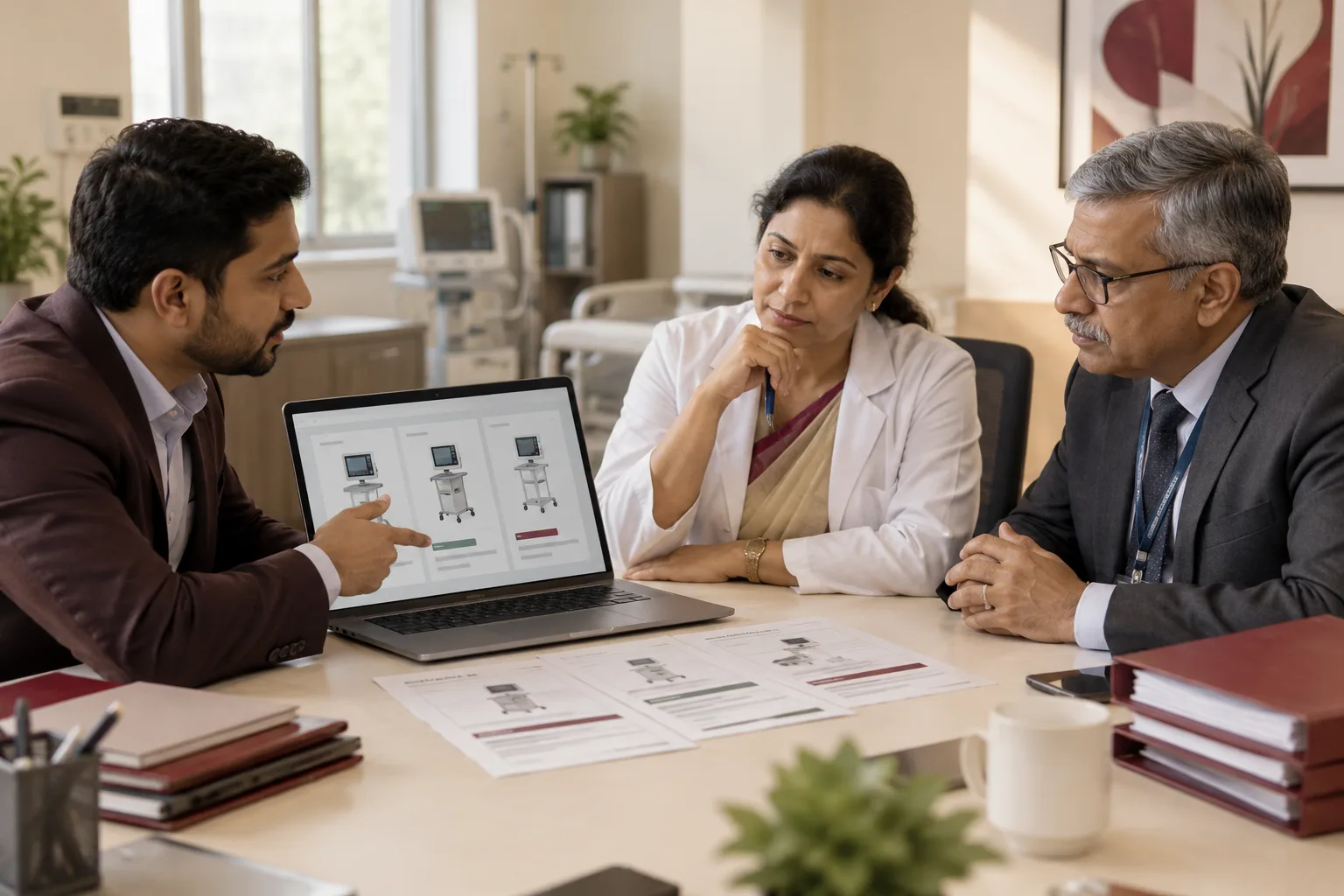 8 min read · 21 Sept 2026How to advertise to hospital administratorsThe administrator scopes the purchase, the head of department asks for it and the trust signs. Write the specification and be one of the three quotations.
More for medical device manufacturers
Related work to consider.
Closest to this: content and social
- Content marketing for medical device manufacturers
- Influencer marketing for medical device manufacturers
- Social media for medical device manufacturers
- B2B buying committee content development for medical device manufacturers
- Capability presentations for medical device manufacturers
- Corporate profile development for medical device manufacturers
- Customer case studies for medical device manufacturers
- Whitepaper and long-form content for medical device manufacturers
Also for medical device manufacturers
Or start from the overview: sales and marketing for medical device manufacturers.
Your next practical step
Tell us what you are trying to grow, and we will read it before we call.
Eight short steps, mostly taps. Skip anything you would rather answer on the call.