Packaging manufacturers · Product packaging copywriting
Write the words on the box your unit makes, so the first batch needs no rework.
Product packaging copywriting for a packaging manufacturer is the writing for the panels of the cartons, pouches, mailers and labels your unit prints, from the maker's mark on a stock box to the copy deck a small brand needs. GullySales writes it panel by panel and hands over a copy deck for your designer and press.
Scope, fee, reporting and term are agreed in writing after we have read your brief and spoken to you.
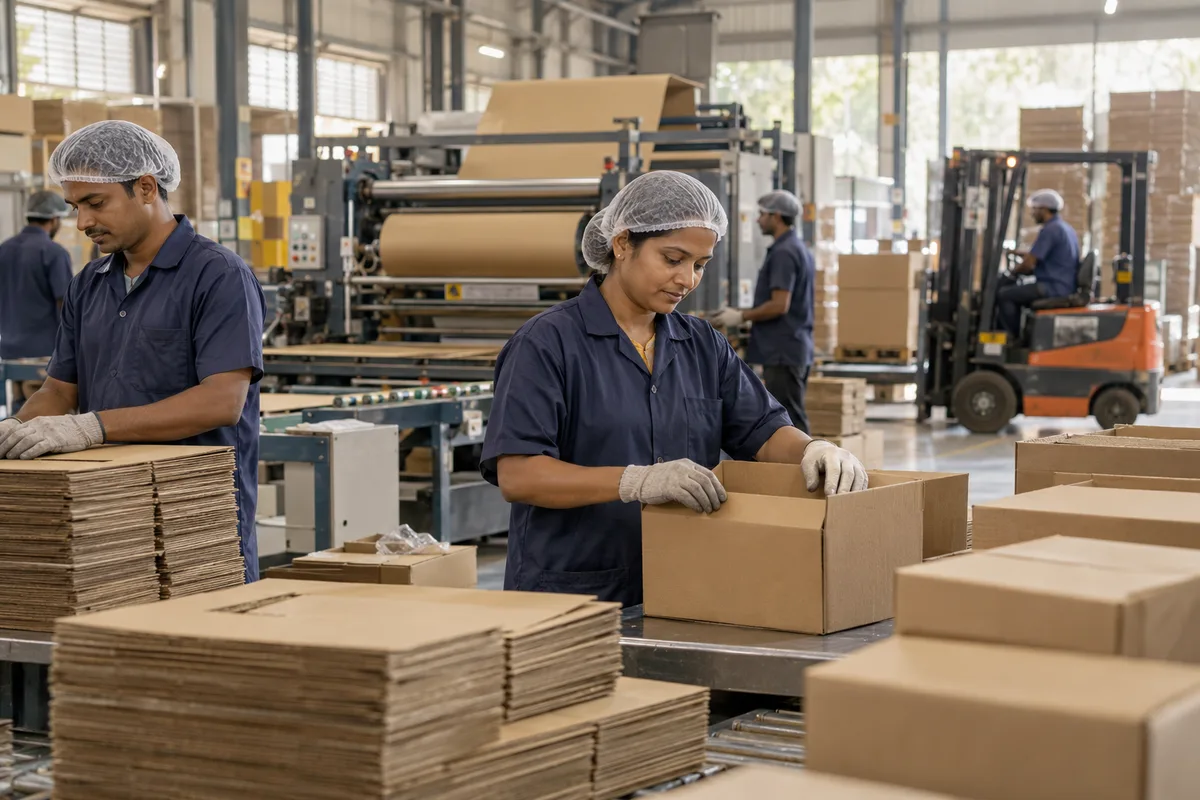
What product packaging copywriting means
Product packaging copywriting is the writing for the front, sides, back and inner parts of a pack: the product name line, benefit lines, usage directions and the wording around the mandatory declarations. GullySales writes it panel by panel against your brief and hands you a copy deck your designer and printer can work from.
Also for packaging manufacturers
- Branding for packaging manufacturers
- Product packaging and box design for packaging manufacturers
- SEO for packaging manufacturers
- PPC ads for packaging manufacturers
- Lead generation for packaging manufacturers
- Digital marketing for packaging manufacturers
- Reputation management for packaging manufacturers
- Local SEO for packaging manufacturers
Sales and marketing for packaging manufacturers, the overview.
Last updated 14 Nov 2026.
For packaging manufacturers
Where it usually goes wrong, and what we would do.
“Small brands arrive with a dieline and no words”
A bakery, a soap maker or an online seller asks for a printed box and then discovers there are six panels to fill. The packaging unit gets blamed for a first batch with a lopsided front, thin directions and a back panel that repeats the front. A copy deck written panel by panel, handed to the brand before the plates are made, spares both sides the rework.
“The unit's own stock boxes carry the unit's reputation”
A plain shipper or a ready-made carton carries print that a buyer reads before judging the product inside: handling marks, a stacking direction, a line about the board, a maker's mark. Those few lines are the unit's voice on its customers' shelves. Written carefully, they answer a store clerk's question without a phone call. Written carelessly, they contradict the carton.
“Mandatory wording belongs to the brand and its adviser”
Food, cosmetic, medicine, device and chemical packs carry declarations that the brand's own adviser decides. A manufacturer that writes those lines for a customer takes on a duty it cannot meet. The copy deck should hold marked spaces for them, sized to the dieline, so the brand can fill them in and the unit knows the print area will not change.
“A proof is read for colour and cut, but rarely for words”
At the press, the proof is checked for registration, colour and the position of the die. A changed word, a missing line or a variant name pasted on the wrong flavour passes through because nobody has the approved text beside the proof. A word-for-word comparison before the run is released is cheap beside a reprinted batch.
What we do
What we deliver for packaging manufacturers.
The work available for this need. We agree the deliverables and responsibilities for your engagement in writing.
A pack copy brief
One page names the pack type, the board or film, the buyer it is aimed at, the shelf or screen it sits on and the line it must win. You and the brand approve the brief before any panel is written, so every later line starts from agreed facts about the pack.
Result: The brief records who the pack is for and which job each panel does.
A panel map from your dieline
A simple diagram of every printed surface, from the front to the inner lid and the tuck flap, with the job of each panel and the order a buyer reads them in. Your designer or press room works from it, and it shows where the declarations will sit.
Result: Every panel on the dieline has a named job and a place for the marked spaces.
Front panel copy in options
A product name line, a descriptor, a variant line and one or two benefit lines, written in a few options. Any line that makes a claim about the product inside is marked, so the brand's own adviser reviews it before the line goes near the plates.
Result: The front panel has several written options and every claim line is flagged.
Stock box and shipper print copy
Handling marks, stacking directions, opening instructions, a short note on the material and a contact line for the unit's own cartons and mailers. Each line is short enough to read from a stack and written in plain words a warehouse worker understands.
Result: A stock carton can be read and handled correctly without anyone calling the unit.
A range copy deck
Every variant a brand sells in one table, so names, descriptors and directions match across flavours, sizes or models. A change made in the table carries to the rest, which removes the pasted-wrong-name errors that appear when a range is written panel by panel by different hands.
Result: Names and directions agree across every variant in the table.
A proof comparison against the approved deck
When the artwork proof returns, each word on it is compared with the approved deck, and every difference is listed for the designer. The list goes to the press room before the run is released, and the approval to print stays with the brand.
Result: The press room receives a list of differences, or a note that there are none.
How the result is measured
- Packs where the product name and use are readable from the front panel
- Claims on the pack that have a named evidence file
- Variants whose wording matches the range copy deck
Recorded as a baseline before work starts, so every later report has an honest comparison.
Who it is for
This is written for these packaging manufacturers.
- Corrugated box and carton manufacturers
- Mono carton and printed folding box makers
- Flexible packaging, laminate and pouch manufacturers
- Label and sticker printers
- Paper bag and paper cup manufacturers
- Rigid box and premium gift packaging makers
- Paper and paper products converters
- Industrial and export packaging suppliers
- E-commerce and courier packaging suppliers
Before you decide
Agree the work. Know how to judge it.
Product packaging copywriting for packaging manufacturers: use these checks to prepare, choose the scope, and review what changes.
Bring the right evidence
Bring questions from sales calls and examples of objections that delay a decision. Choose a subject expert who can check the substance, and identify evidence that can be published.
Make the scope clear
Agree the reader, buying question, format, and distribution route for each piece. Set the approval process and distinguish new research from rewriting material you already have.
Check the work in use
Ask a colleague to use the draft in a real buyer conversation. It should answer the question, support its claims, and make the next step clear without requiring a sales pitch to explain it.
Know when to change course
If the same unanswered question appears in several articles, improve the strongest page before commissioning another. More words are not a substitute for missing evidence.
These are discussion points, not a fixed package. GullySales confirms the deliverables, responsibilities, fee, and term in writing after reading your brief and speaking with you.
Before we start
What to have ready before the work starts.
The records, access and decisions this work needs from packaging manufacturers. Anything missing is noted in the written scope, with who will supply it.
- The dieline for each pack
- The dieline shows which surfaces exist and how much room each has. A file from your designer or press room is enough. Without it, the deck is written in order of priority and trimmed later, and the brand may find the back panel will hold half of what was drafted.
- A physical sample or clear photographs
- We need the surface sizes, the board colour and the space already taken by logos, barcodes and fold lines. A photograph of each side is enough. When it is missing, the panel map is drawn from guesses and the copy may not fit the finished box.
- The brand's product specification
- We cannot write directions, benefits or storage notes without knowing what the product is made of or built from. A supplier sheet or recipe card is enough. Without it, the copy stays at the level of general description and the brand's adviser rewrites it.
- Evidence for every claim
- A claim needs a test report, a certificate, a recipe record or an adviser's note behind it. A list of what the brand holds is enough. Claims without evidence are left off the pack or held until the brand's reviewer clears them, which can delay the plates.
- One named approver at the brand
- Pack copy goes to print and cannot be recalled by message. One person with the authority to ask an adviser keeps the deck from being edited in several places. When nobody is named, approval stalls and the press slot is lost.
How it works
How the product packaging copywriting work runs
The work itself, in order. How an engagement starts, from your brief to a written scope, is set out on our method page.
- 1
Read the brief and the sample pack
We read what the brand has sent, handle a physical sample or study clear photographs of every side, and note what a buyer sees first. If a shop assistant explains the product differently from the pack, we mark the gap, because the pack has to answer the same question.
- 2
Agree the facts and the claims with the brand
We list what can be said about the product and what the brand can prove. Any line touching health, safety, food contact, performance or comparison goes to the person who approves wording for the brand. Lines without evidence are held back from the deck.
- 3
Map the panels to the dieline
With the dieline from your designer or your press room, we draw the panel map: front, sides, back, flaps and any inner print. Each surface gets one job and a marked space for declarations, sized so a late addition cannot push the layout past the die.
- 4
Draft the front, then the remaining panels
The front is written first because it carries the weight of the sale. The side, back and inner panels follow, each answering the question the previous one raises. We keep lines short enough for the print size the board and ink can carry.
- 5
Review with the brand and its adviser
The copy deck goes to the brand with the claims sheet. Reviewers mark what changes and your account manager collects it in one list. We revise as the written scope sets out and keep a record of the approved final, so the press room works from one version.
- 6
Check the proof against the deck
When the press proof arrives, we compare it word for word with the approved deck and list the differences. After the run, the result is read against the rework noted at the start, such as how many proofs came back with a changed line.
Where this fits
Three pieces of sales work, in this order.
This work sits inside sales process design, at stage 1, prospecting and lead generation. The audit comes before it, and sales management keeps it running.
Step 1
Sales audit
Find where deals are being lost and what to fix first.
Start here if you cannot say where orders are lost.
Step 2 · you are here
Sales process design
One written way to sell, from first enquiry to repeat order.
Start here if every salesperson sells differently.
Step 3
Sales management
A target, a review routine and someone who owns the number.
Start here if the team has targets and no routine.
FAQ
Questions owners ask before they call.
Not here? More answers, or ask on WhatsApp.
Do you write the mandatory declarations?
Is this a service we offer our customers, or one we use for ourselves?
Can you write in more than one language?
What about recyclable or eco claims on the box?
Will the copy fit if the dieline changes later?
Do you design the artwork as well?
How much does it cost?
How long is the contract?
How soon will we see results?
Who will actually do the work?
From the blog
Further reading for packaging manufacturers.
 6 min read · 6 Oct 2026How industrial buyers decide which unit gets the RFQWhat industrial buyers check before sending an RFQ, across nine manufacturing trades, and where a unit drops off the shortlist.
 7 min read · 18 Aug 2026How to get printing orders that repeat every monthPrinting orders come from local search, reorder-minded business buyers and fast quotes. Show prices and chase the reorder before stock runs out.
 7 min read · 28 Jul 2026How to convert IndiaMART leads into ordersIndiaMART leads convert when you reply within minutes, qualify with one question, send a real quotation and follow up for weeks.
More for packaging manufacturers
Related work to consider.
Closest to this: brand and design
Also for packaging manufacturers
Or start from the overview: sales and marketing for packaging manufacturers.
Your next practical step
Tell us what you are trying to grow, and we will read it before we call.
Eight short steps, mostly taps. Skip anything you would rather answer on the call.