Packaging manufacturers · Product packaging and box design
Make your own sample carton the best proof of what your press room can do.
For a packaging manufacturer, product packaging and box design is the artwork on the cartons, pouches and boxes you show buyers, plus the artwork guidance your customers work from. GullySales designs your showcase packs and your artwork templates so a brand sees your finishing and your dieline discipline before it sends a file.
Scope, fee, reporting and term are agreed in writing after we have read your brief and spoken to you.
What product packaging and box design means
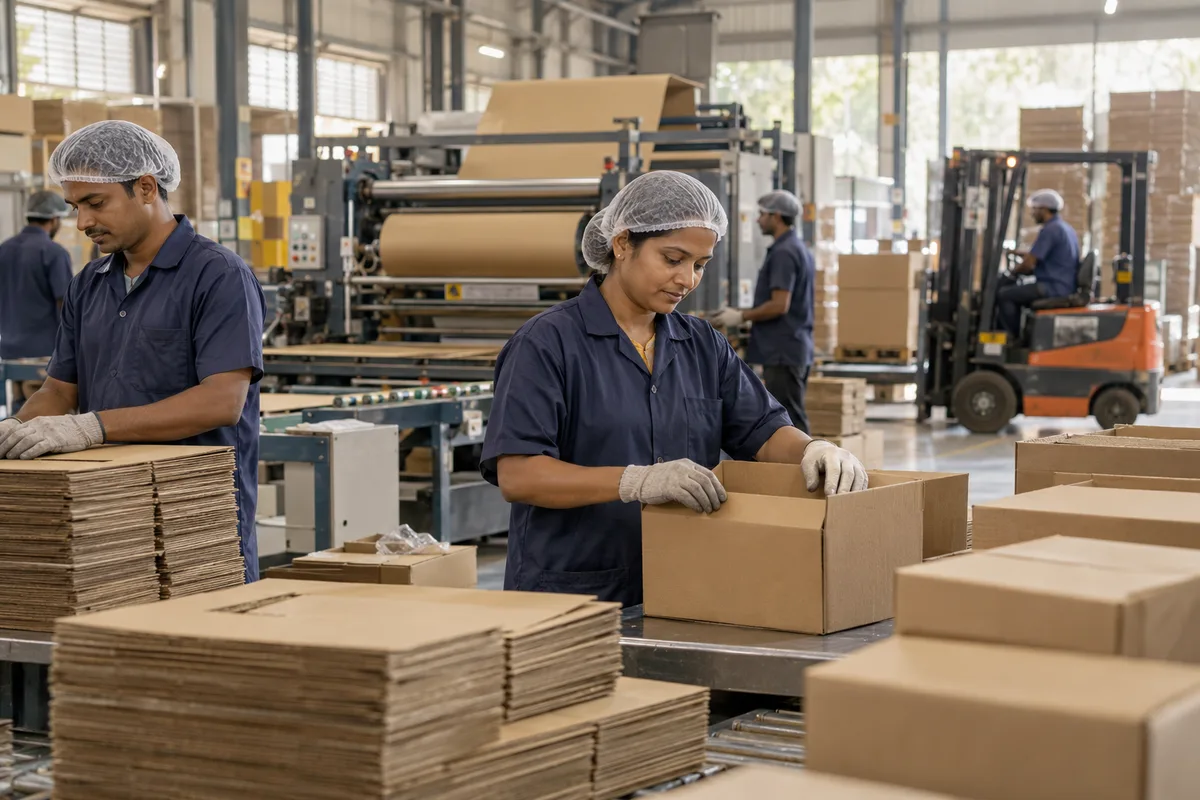
Product packaging and box design is the artwork for a pack, carton or box: the front panel, the sides, the structure's printed surfaces and the file the printer works from. GullySales designs the artwork from your brand and your supplied words, then hands over layered files and a specification sheet your printer can check before anything is made.
Also for packaging manufacturers
- Branding for packaging manufacturers
- Product packaging copywriting for packaging manufacturers
- SEO for packaging manufacturers
- PPC ads for packaging manufacturers
- Lead generation for packaging manufacturers
- Digital marketing for packaging manufacturers
- Reputation management for packaging manufacturers
- Local SEO for packaging manufacturers
Sales and marketing for packaging manufacturers, the overview.
Last updated 14 Nov 2026.
For packaging manufacturers
Where it usually goes wrong, and what we would do.
“The sample box is judged before the quotation is read”
A brand manager lifts the sample you posted and decides what kind of unit you are before opening the price sheet. A plain white carton with a logo says you can print. A pack built to show a fold, a window, a coating and a barcode panel says you understand what brands put on shelves. The artwork on your own sample is therefore a sales document, and it needs a brief like any customer job.
“Customers send artwork that breaks on your die”
A founder supplies a file drawn on a flat rectangle, with text running into the glue flap and the barcode sitting across a crease. Your prepress team repairs it or sends it back, and either way the customer feels delayed. Design for a packaging maker includes the guidance that stops this: marked templates, safe areas and colour notes the customer's designer can follow before the first proof.
“Finishing is hard to explain in words”
Foil, emboss, spot varnish, soft-touch lamination and a window patch are things a buyer must see against real artwork. A flat description in a brochure tells a small brand nothing about how it will look or what it will ask of their file. Showcase artwork that deliberately uses each finish, on a pack the buyer can hold, answers the question without a long call.
“One look cannot serve a corrugated plant and a rigid box line”
A unit that makes shipper cartons, folding boxes and gift packaging cannot show all three with one style of sample. Each buyer is looking for something different: a courier brand wants strength and a clean outer print, a gift brand wants a lid and a base that feel right in the hand. Design here means a small family of showcase packs, each built for one buyer and one pack type.
What we do
What we deliver for packaging manufacturers.
The work available for this need. We agree the deliverables and responsibilities for your engagement in writing.
A showcase pack brief
A one-page record of which buyer each sample is meant for, the pack type, the finishes to show and what the front must say at first glance. It stops the sample from becoming a collection of every trick the unit can do, and lets your team approve direction before drawing starts.
Result: You can read the brief and say which buyer each sample is for.
Front panel directions for each showcase pack
A small set of front panel ideas for each sample, drawn at the size a buyer sees when the parcel is opened. They show name, image, colour and hierarchy only, so the choice is about the idea. You pick one direction per pack and the choice is written down.
Result: Each showcase pack has one chosen front, recorded in the brief.
Full artwork for the sample cartons
The chosen front is carried across every face of the carton: sides, flaps, top, bottom and any inner print. Each face has a job, and the finishes you want to demonstrate are placed where a buyer will touch or tilt the pack. Colour references and finishing notes are added as the layout settles.
Result: A buyer can turn the sample and find every finish where the artwork says it is.
Dieline-based artwork templates for customers
Marked templates for your commonest cartons and boxes, with the glue flap, fold lines, bleed and safe area drawn on separate layers and labelled in plain words. A customer's designer can place artwork on them without guessing, and your prepress team receives files built on the right structure.
Result: Your prepress team can open a customer file and find the layers where the template says they are.
An artwork guidance sheet
A short sheet in plain language covering the file format your unit accepts, how to set colour for your press, how to treat black, small text, barcodes and varnish areas. It is written for a founder who has never sent a file to a printer, and sits beside the templates on your website or in a reply.
Result: A first-time customer can follow the sheet without calling your office.
A layered print file and specification sheet
Each showcase pack leaves with layered files and a specification sheet naming the board, the finishes, the colour references and the areas left clear for the barcode and batch details. The sheet is what your own press room works from, and what you hand to a buyer who asks how the sample was made.
Result: The press room can reprint a sample from the file and the sheet alone.
How the result is measured
- Enquiries from dealers that ask which carton is which
- Boxes or cartons returned or reprinted for artwork errors
- Printer queries raised after the files were sent
Recorded as a baseline before work starts, so every later report has an honest comparison.
Who it is for
This is written for these packaging manufacturers.
- Corrugated box and carton manufacturers
- Mono carton and printed folding box makers
- Flexible packaging, laminate and pouch manufacturers
- Label and sticker printers
- Paper bag and paper cup manufacturers
- Rigid box and premium gift packaging makers
- Paper and paper products converters
- Industrial and export packaging suppliers
- E-commerce and courier packaging suppliers
Before you decide
Agree the work. Know how to judge it.
Product packaging and box design for packaging manufacturers: use these checks to prepare, choose the scope, and review what changes.
Bring the right evidence
Identify the product, process, or buyer question the images or film must explain. Gather reference material and confirm permission for people, premises, and client work that may appear.
Make the scope clear
Agree the shot list, formats, usage rights, and approval stages before production. Separate filming or photography from editing, animation, and later adaptations.
Check the work in use
Check the finished asset in the place it will be used: a mobile page, presentation, advert, or product listing. Look at crop, captions, sound, and whether the important detail remains clear.
Know when to change course
Do not present an illustration or generated scene as evidence of client work. If a claim needs a real product demonstration, obtain that evidence before using the asset to support it.
These are discussion points, not a fixed package. GullySales confirms the deliverables, responsibilities, fee, and term in writing after reading your brief and speaking with you.
Before we start
What to have ready before the work starts.
The records, access and decisions this work needs from packaging manufacturers. Anything missing is noted in the written scope, with who will supply it.
- Your current dielines
- The structure drawings for the cartons, boxes and pouches you make. The artwork depends on the real fold lines and glue areas, and without them we draw from a stated plan and mark every assumption, which your prepress team then has to check.
- The finishes your press room offers
- A plain list of the coatings, foils, embossing and window options your unit can actually deliver, with any limits on board or size. Showcase artwork that promises a finish you cannot supply creates a dispute with the first buyer who orders it.
- Three samples you now post
- Physical samples or clear photographs of what a buyer receives today. We need to see how the current pack looks in the hand, so the new artwork improves on a known starting point and not on a guess.
- A record of enquiries by pack type
- A note, even a rough one, of which structures buyers ask about and which turn into orders. It decides which showcase packs to design first. If it is missing, the choice rests on what the unit prefers to make, not on what buyers ask for.
- A person who approves for the unit
- One owner or sales lead who can accept or reject a direction. Packaging artwork passes through several hands, and without one decision maker the brief changes every time a new person sees the proof.
How it works
How the product packaging and box design work runs
The work itself, in order. How an engagement starts, from your brief to a written scope, is set out on our method page.
- 1
Read the sample range and the dielines
We start with the cartons, pouches and boxes your unit actually makes, the dielines you hold for them and the samples you now post. We note which structures bring the greatest number of enquiries and which buyers ask for them, so the showcase packs match real orders.
- 2
Look at what a buyer lifts first
We handle your current sample as the buyer would, from the parcel to the shelf, and note what the eye finds first, what the hand finds and what the pack says about the unit. Where the sample is silent about finishes or structure, we mark the gap.
- 3
Agree which buyer each pack is for
With your team we choose the pack types to show and the buyer each is aimed at: a bakery, a cosmetics brand, a courier seller, a gift maker. The choice is written into the brief, because a sample aimed at everyone persuades no one.
- 4
Draw the front panel directions
Front panel ideas are drawn for each chosen pack, using your brand and the colour range your press holds. You and your sales lead choose or combine them, and the choice is recorded before any side, flap or inner face is designed.
- 5
Build the artwork and the customer templates
The chosen fronts are carried across every face, finishes are placed and the specification sheet is written. The customer templates and guidance sheet are built from the same dielines, so what a buyer sees on the sample matches what a designer is asked to supply.
- 6
Proof, print one and read the outcome
The artwork goes to your press room for a trial print, and we compare the printed sample with the file. We then read the result against the sample and enquiry records you noted before the work began, and record what to change on the next pack.
Where this fits
Three pieces of sales work, in this order.
This work sits inside sales process design, at stage 1, prospecting and lead generation. The audit comes before it, and sales management keeps it running.
Step 1
Sales audit
Find where deals are being lost and what to fix first.
Start here if you cannot say where orders are lost.
Step 2 · you are here
Sales process design
One written way to sell, from first enquiry to repeat order.
Start here if every salesperson sells differently.
Step 3
Sales management
A target, a review routine and someone who owns the number.
Start here if the team has targets and no routine.
FAQ
Questions owners ask before they call.
Not here? More answers, or ask on WhatsApp.
Why would a packaging manufacturer need packaging design?
Do you design customer packs for us to print?
Will the design change how we print?
Can you work from our existing dielines?
Who owns the template files?
How will we know the work helped?
How much does it cost?
How long is the contract?
How soon will we see results?
Who will actually do the work?
From the blog
Further reading for packaging manufacturers.
 6 min read · 6 Oct 2026How industrial buyers decide which unit gets the RFQWhat industrial buyers check before sending an RFQ, across nine manufacturing trades, and where a unit drops off the shortlist.
 7 min read · 18 Aug 2026How to get printing orders that repeat every monthPrinting orders come from local search, reorder-minded business buyers and fast quotes. Show prices and chase the reorder before stock runs out.
 7 min read · 28 Jul 2026How to convert IndiaMART leads into ordersIndiaMART leads convert when you reply within minutes, qualify with one question, send a real quotation and follow up for weeks.
More for packaging manufacturers
Related work to consider.
Closest to this: brand and design
Also for packaging manufacturers
Or start from the overview: sales and marketing for packaging manufacturers.
Your next practical step
Tell us what you are trying to grow, and we will read it before we call.
Eight short steps, mostly taps. Skip anything you would rather answer on the call.