Printing businesses · Follow up systems
Chase the rate you sent on WhatsApp and the proof nobody approved.
Most print enquiries die quietly: a rate sent on WhatsApp with no reply, a proof sitting unapproved, a sample posted and never mentioned again. GullySales builds the list of what is open, the wording that gets a reply, and the point at which a job is written off instead of chased forever.
Scope, fee, reporting and term are agreed in writing after we have read your brief and spoken to you.
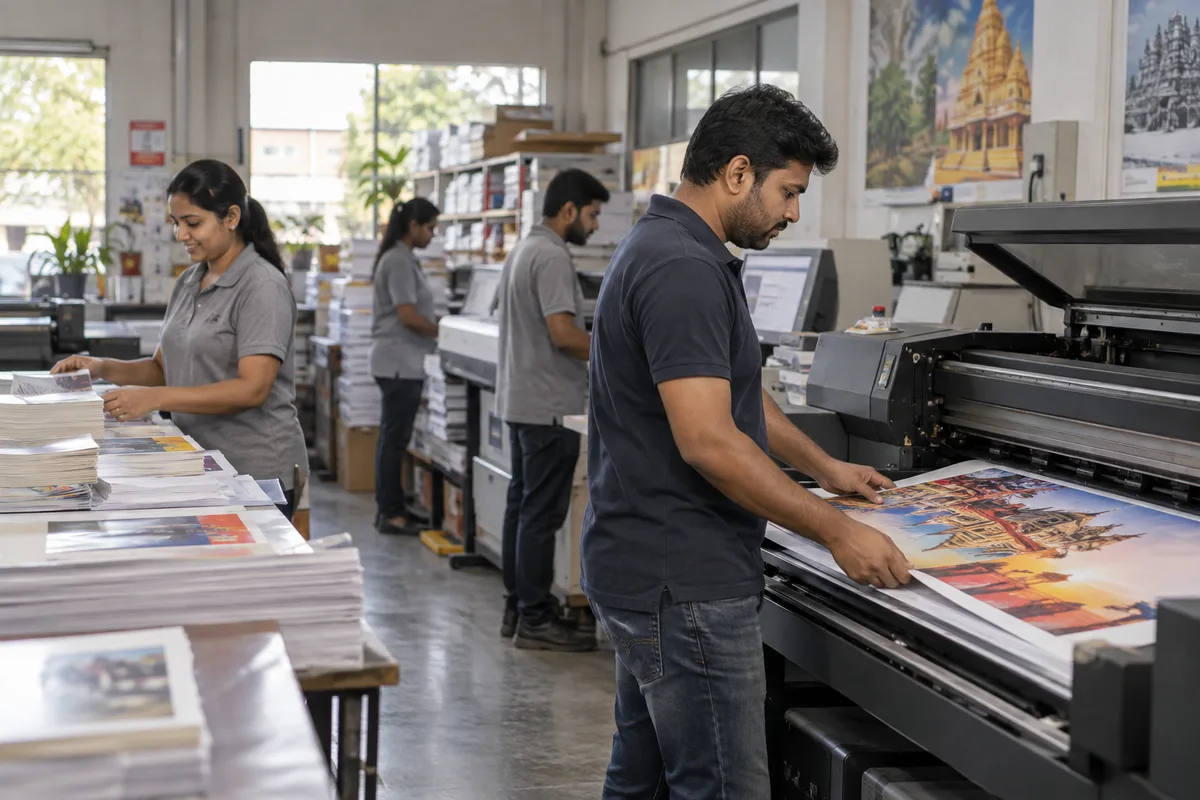
What follow up systems means
A follow-up system is the set routine for calling, messaging or emailing an enquiry more than once, since most buyers do not decide on the first conversation. GullySales sets the number and timing of follow-ups so an undecided buyer keeps hearing from you until they decide either way.
Last updated 5 Oct 2026.
For printing businesses
Where it usually goes wrong, and what we would do.
“Any update sir is why your rates go unanswered”
The buyer has three quotations open and cannot tell them apart. Send the specification again instead: size, GSM, board, lamination, the quantity slab and when you can deliver. A buyer can act on that.
“The unapproved proof is your problem even though it is their delay”
Your press slot is blocked and the delivery date is still the one you promised. Somebody has to ring the customer, find out who actually signs off, and get it in writing.
“A sample sent to a purchase department disappears into a drawer”
It was not rejected. It went into a cupboard and nobody circulated it. A call that asks whether the sample reached the person who decides is worth more than three messages asking for an update.
What we do
What we deliver for printing businesses.
Every deliverable, what it covers for you, and the result it is there to produce. Nothing here is an extra.
One list of everything open, by stage
Rates sent, samples out, proofs awaiting approval and confirmed jobs waiting on artwork, kept in one place rather than in four people's chat histories.
Result: You can see the whole shop's pending work in one screen.
A second quotation that restates the specification
The size, stock, finish, quantity slab, rate and delivery written out again and sent as a document, not as another message asking for a decision.
Result: Your quote is the one the buyer can put on the file.
Proof approval chased to a named person
Who signs off at each account, recorded once, with a call rather than a message when a proof has been sitting and the press slot is booked.
Result: Approvals come back from the person who can actually give them.
Sample follow-up aimed at the decision maker
A call that asks whether the sample reached the person choosing the supplier, and offers to send a second one directly to them.
Result: Samples get in front of the buyer instead of into a cupboard.
A written stop rule for dead quotations
How many contacts a rate gets, what each one carries, and when it is closed, so nobody is still chasing a tender that was awarded last season.
Result: Your staff work the live enquiries and drop the rest.
Reason lost recorded against every closed enquiry
Rate too high, delivery date, went to their regular printer, job cancelled: a word or two entered by whoever spoke to the buyer last.
Result: You find out whether you are losing on price or on delivery.
Recovered orders counted against the baseline
Work that came back from a second quotation or a chased proof, measured against the enquiry figures recorded before this started.
Result: You can see what the chasing is worth in orders.
How the result is measured
- Follow-up completion rate
- Average number of follow-ups before close
- Enquiries closed after repeat follow-up
Recorded as a baseline before work starts, so every later report has an honest comparison.
Follow-up routine for print shops
Every open rate, sample and proof is listed by stage with a person to call and a line to say.
- Rate sent on WhatsApp, no reply
- Send the specification again as one message: size, GSM, board, lamination, quantity slab and delivery. Ask which quantity they are leaning towards and record it.
- Sample posted to a packaging buyer
- Ring a few days after dispatch to ask if the sample reached the right person, and what they will test it for. Note the courier docket and the decision date.
- Proof sent, not approved
- Ring the person who has the file, ask who signs the proof and when. Tell them what date the press slot is held until and record the answer.
- Repeat customer's usual job due
- Look at the last order date and the run size, then message the buyer with the old specification and ask if anything changes. One reply should confirm the reorder.
- Wedding card enquiry
- Send two or three samples of paper and finish, and ask for the invitation wording and the date of the function. Record the delivery date and the family's budget comment.
- Quote never answered
- After the second message, mark the job lost with a reason if you have one, such as rate, delivery or sample. Keep it for the next season's reminder.
Who it is for
This is written for these printing businesses.
- Commercial offset printing businesses
- Digital and quick-print shops
- Packaging and label printing businesses
- Large format and signage printers
- Wedding and event stationery printers
- Corporate stationery and print suppliers
- Textile and garment printing businesses
- Print-on-demand and personalised merchandise printers
Not for
It is not the right fit if.
- You want a guaranteed Google ranking or a guaranteed number of leads. Nobody honest can promise either.
- You need enquiries by next week and have nobody to answer them.
- You want posts and reach reported, not enquiries and orders.
How it works
From your first message to the first report.
No open-ended retainer. Every step gives you something in writing.
First
Your brief
You tell us what you need in a few short steps: your business, what you want, where enquiries come from and how they are handled.
After the brief
A conversation and a written scope
We read it, then talk with whoever handles your enquiries. If you want our help, the scope, the fee and the reporting come in writing, and nothing starts before you have read them.
Before work starts
Baseline recorded
Enquiries by source, reply time, conversion and cost per order, written down so every later report has an honest comparison.
After the baseline
The first fix goes live
The fix we agreed to start with is put in place and measured against the baseline, whether that is reply time, a follow-up sequence, the page buyers land on or the handover between marketing and sales.
As agreed
Report against the baseline
What moved, what did not, and what changes next, in plain words. How often you get it is set in writing before work starts.
At renewal
Renew on the numbers
The term ends and you decide whether to continue from the results. The length is agreed in writing before anything starts.
How the follow up systems work runs
- 1
Measure today's reply time
From last month's enquiries, we measure how long each waited for a first reply and how many follow-ups it got.
- 2
Agree targets and the sequence
We set reply targets and the follow-up sequence with your team, based on its real hours and workload.
- 3
Set up templates, tasks and ownership
Templates, first-call questions, CRM tasks and named owners go live, with cover for leave and weekends.
- 4
Track and adjust every month
Reply time and follow-up completion are reported against the baseline, and the routine is changed where it is not kept.
Why us
Why owners pick GullySales over an agency.
Marketing and sales, as one job
Most agencies stop at the enquiry. We also fix what happens after it: the reply, the follow-up, the quote and the CRM.
The person on the first call does the work
No account managers in between. You are never handed to someone you have not met.
A baseline before anything starts
Your numbers are written down on day one, so every later report compares against something honest.
The fee in writing, split three ways
Our time, your media spend and production on separate lines. You always see what goes to us.
No guarantees we cannot keep
The term is agreed in writing and never a default twelve months. We never promise a ranking or a lead count, because nobody controls those.
One office, and we say so
Nagarbhavi, Bengaluru. We work across India by call and WhatsApp and travel when a session needs to be in person.
#257, 3rd floor, Sri Nanjundeshwara Complex, Nagarbhavi 8th Block, Outer Ring Road. How we work.
Your brief
Tell us what you need, and we will read it before we call.
Eight short steps about your business, what you want and who decides. Most questions are a tap, and you can skip any you would rather answer on the call.
FAQ
Questions owners ask before they call.
Not here? More answers, or ask on WhatsApp.
How many times should we follow up on a quotation?
Everything happens on WhatsApp and nothing is written down. Where do we start?
Should we ring the customer or just keep messaging on WhatsApp?
A customer approved the proof but has not paid the advance. What next?
Do we need to advertise?
Should we check the label text a food brand sends us?
How much does it cost?
How long is the contract?
How soon will we see results?
Who will actually do the work?
From the blog
Further reading for printing businesses.
 7 min read · 18 Aug 2026How to get printing orders that repeat every monthPrinting orders come from local searches, corporate and institutional buyers who reorder, and fast quotes. Pick the jobs you print best, show prices, and chase the reorder before the customer runs out.
 6 min read · 18 Aug 2026Why your business is growing but profit is notRevenue rising while profit stays flat usually means discounts, the wrong customers or an uncalculated acquisition cost, all visible in your own records.
 6 min read · 8 Apr 2025How to create a sales process for a small businessA sales process is the stages a real order already passes through, each with what must be true before a deal can leave it, reviewed weekly.
More for printing businesses
Everything else we would do for you.
Closest to this: leads and follow-up
Also for printing businesses
- SEO for printing businesses
- PPC ads for printing businesses
- Digital marketing for printing businesses
- Reputation management for printing businesses
- Local SEO for printing businesses
- Branding and identity for printing businesses
- Social media marketing for printing businesses
- Content marketing for printing businesses
- Email marketing for printing businesses
- Buyer journey mapping for printing businesses
- Review generation for printing businesses
- Customer retention for printing businesses
- Referral marketing for printing businesses
- WhatsApp marketing for printing businesses
Or start from the overview: sales and marketing for printing businesses.
Your next practical step
Tell us what you are trying to grow, and we will read it before we call.
Eight short steps, mostly taps. Skip anything you would rather answer on the call.