Rubber manufacturers · Sales training
Train your sales team to read a technical drawing, not just quote a price.
Sales training for a rubber manufacturer means preparing your sales or business development staff to understand technical specifications. They need this to hold a credible conversation with a design engineer, not just relay a price. GullySales runs this training around your own products and past RFQs.
Scope, fee, reporting and term are agreed in writing after we have read your brief and spoken to you.
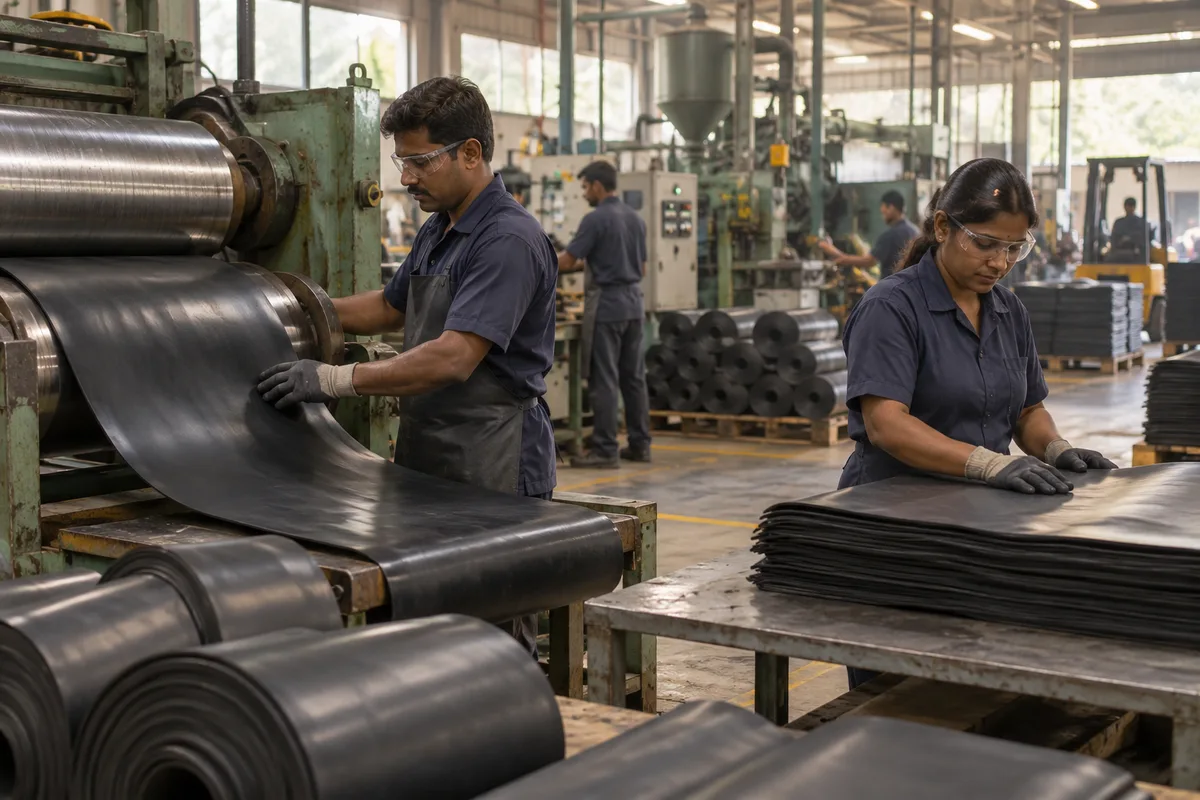
What sales training means
Sales training teaches a sales team a skill it does not yet have, such as handling a specific objection or running a proper site visit, usually through a structured session. GullySales runs these sessions around real objections and calls from your business rather than generic sales theory.
Also for rubber manufacturers
- Sales management for rubber manufacturers
- Sales metrics for rubber manufacturers
- Sales strategy for rubber manufacturers
- Answer engine optimisation for rubber manufacturers
- Branding for rubber manufacturers
- Content marketing for rubber manufacturers
- Digital marketing for rubber manufacturers
- Email marketing for rubber manufacturers
Sales and marketing for rubber manufacturers, the overview.
Last updated 5 Oct 2026.
For rubber manufacturers
Where it usually goes wrong, and what we would do.
“Technical fluency is the actual sales skill in this business”
A salesperson who can discuss material grade, tolerance and application confidently earns more trust from a design engineer than one who can only relay a quoted number.
“Handling a raw material price objection needs a prepared, factual answer”
A buyer questioning a price increase responds better to a clear explanation tied to raw material cost movement than to a defensive reaction.
“Following up during a long factory-audit process needs patience and structure”
A salesperson unfamiliar with this industry's long cycles may follow up too aggressively or give up too early, and training on a paced, appropriate rhythm avoids both.
What we do
What we deliver for rubber manufacturers.
The work available for this need. We agree the deliverables and responsibilities for your engagement in writing.
Technical fluency training on grades and application
Sessions building your sales team's confidence discussing material grade, tolerance and application, not just relaying a quoted price.
Result: A design engineer trusts a salesperson who understands the specification.
Prepared response for a price objection
A clear, factual explanation tied to raw material cost movement, practised for use when a buyer questions a price increase.
Result: A price rise is explained with fact instead of a defensive reaction.
Paced follow-up training for long audit cycles
Guidance on a paced, appropriate follow-up rhythm for a long factory-audit process, so staff neither chase too hard nor give up too early.
Result: A long sales cycle is handled with patience instead of guesswork.
Sessions run on your own products and RFQs
Training built around real past RFQs and product lines from your business, not generic sales examples from another industry.
Result: What is taught matches how your actual buyers decide.
Refresher sessions tied to new product lines
Shorter refresher sessions run after a new product line launches or after reviewing recent wins and losses.
Result: Training keeps up with what the business is actually selling now.
How the result is measured
- Skill assessment scores
- Objection handling improvement
- Conversion rate after training
Recorded as a baseline before work starts, so every later report has an honest comparison.
Situations to practise
Six conversations a rubber manufacturer's team should practise, and what good looks like.
- A design engineer asks which compound to use
- Ask the fluid, temperature range, pressure, movement and whether the part is static or dynamic. Then name a grade, such as EPDM, nitrile, silicone or FKM, with the reason.
- Your rate has gone up since the last order
- Explain the raw material basis, such as natural rubber, synthetic rubber and carbon black, with the old quote in hand. Practise a factual reply, not an apology.
- The buyer asks for test reports
- Know which tests you run in-house, such as hardness, tensile and compression set, and which go to an outside lab. Practise saying that clearly.
- A factory audit visit
- Decide who meets the auditors, what they see and which documents are ready. Practise the walk-through, including the question you hope will not come.
- An export enquiry
- Ask the drawing or standard (ASTM, DIN), quantity, packing and port. Practise a first reply that gathers all of these in one message.
- A sample went to the buyer's toolroom and nothing came back
- Ask who tested it and what they measured. Practise asking for the reason a sample failed, which is more useful than asking whether they liked it.
Who it is for
This is written for these rubber manufacturers.
- Custom moulded rubber component manufacturers
- Industrial gasket and seal manufacturers
- Conveyor belt manufacturers
- Tyre retreading material suppliers
- Rubber-to-metal bonded parts manufacturers
- Export-oriented OEM suppliers
Not for
It is not the right fit if.
- Your sales team changes every few months, so any training given would walk out of the door with the person
- Your quoting process is not written down anywhere, so there is no standard to train people to follow
Before you decide
Agree the work. Know how to judge it.
Sales training for rubber manufacturers: use these checks to prepare, choose the scope, and review what changes.
Bring the right evidence
Bring real questions, objections, and call examples that the team finds difficult. Agree which selling behaviour needs to change and how it will be observed at work.
Make the scope clear
Choose the roles and situations to practise. Separate a training session from coaching, manager follow-up, and any scripts or reference material to be produced.
Check the work in use
Use a realistic practice conversation, then review the same skill in live work with appropriate permission. Look for a change in behaviour before attributing a sales result to training.
Know when to change course
If the problem is an unclear offer, missing product knowledge, or no permission to make a decision, fix that first. A communication workshop cannot remove those barriers.
These are discussion points, not a fixed package. GullySales confirms the deliverables, responsibilities, fee, and term in writing after reading your brief and speaking with you.
How it works
How the sales training work runs
The work itself, in order. How an engagement starts, from your brief to a written scope, is set out on our method page.
- 1
Requirements and commercial agreement
Send the requirements brief, then discuss the roles and training problem with GullySales. The scope, fee, and term are agreed in writing before work starts.
- 2
Evidence review and skills agreement
We review available calls and CRM records with your manager, then assess the team against a proposed skills map. You approve which roles and gaps the programme will cover.
- 3
Content approval
Your nominated product expert checks the teaching material for accuracy. The sales manager approves the module order and session calendar around selling responsibilities.
- 4
Session delivery and practice
Reps work through the agreed modules and practise with scenarios from your sales conversations. Feedback records the skill demonstrated and the correction needed.
- 5
Readiness decision
Knowledge checks test product understanding; a live or recorded call check tests application. Your manager decides whether the rep is ready or needs further practice.
- 6
Manager handover
The manager receives assessment findings and the agreed refresher priorities. We show them how to continue practice, with any further delivery or individual coaching scoped separately.
Where this fits
Three pieces of sales work, in this order.
This work sits inside sales management. A target, a review routine and someone who owns the number.
Step 1
Sales audit
Find where deals are being lost and what to fix first.
Start here if you cannot say where orders are lost.
Step 2
Sales process design
One written way to sell, from first enquiry to repeat order.
Start here if every salesperson sells differently.
Step 3 · you are here
Sales management
A target, a review routine and someone who owns the number.
Start here if the team has targets and no routine.
FAQ
Questions owners ask before they call.
Not here? More answers, or ask on WhatsApp.
Who should attend this training?
How often should we run this?
Business development staff do not know rubber chemistry. How much do they need?
How do we avoid promising a price when raw material rates move?
How long is the contract?
How soon will we see results?
Who will actually do the work?
What do you need from us?
What if we are not happy with the work?
From the blog
Further reading for rubber manufacturers.

More for rubber manufacturers
Related work to consider.
Closest to this: sales craft
Also for rubber manufacturers
Or start from the overview: sales and marketing for rubber manufacturers.
Your next practical step
Tell us what you are trying to grow, and we will read it before we call.
Eight short steps, mostly taps. Skip anything you would rather answer on the call.