Window manufacturers · Content marketing
Write the guides a buyer reads before asking any maker for a window quote.
Content marketing for a window manufacturer means publishing guides, comparisons and site stories that answer what a buyer asks before choosing. GullySales works on the topics, the drafts you can check for accuracy, and the way each piece leads to an enquiry.
Scope, fee, reporting and term are agreed in writing after we have read your brief and spoken to you.
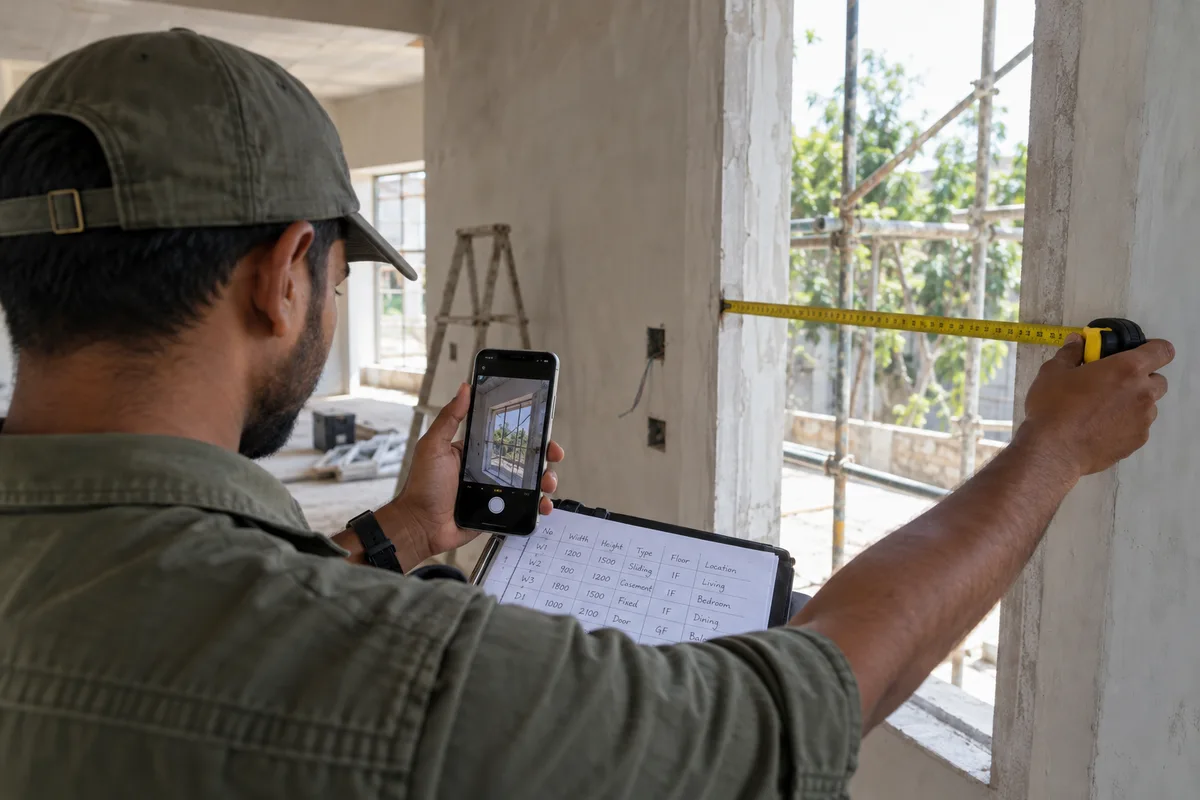
What content marketing means
Content marketing is writing articles, guides and pages that answer the questions buyers search before they are ready to enquire. This makes your business visible and trusted before the first call. GullySales plans this content from the first conversation onward, choosing topics that match real search demand rather than guesses.
Also for window manufacturers
- Social media marketing for window manufacturers
- Lead generation for window manufacturers
- SEO for window manufacturers
- Local SEO for window manufacturers
- Buyer personas for window manufacturers
- CRM for window manufacturers
- Follow-up systems for window manufacturers
- WhatsApp marketing for window manufacturers
Sales and marketing for window manufacturers, the overview.
Last updated 14 Nov 2026.
For window manufacturers
Where it usually goes wrong, and what we would do.
“The buyer reads before calling”
Someone planning windows has questions that nobody at home can answer: how thick should the glass be, does uPVC yellow in sun, what do the hardware names mean. A guide that answers them earns a call.
“Your staff already know the answers”
The person who measures, the fitter and the sales engineer answer the same doubts at every site. Their answers, written down and checked, are better source material than anything copied from a profile brochure.
“A comparison must admit trade-offs”
A page claiming that your material wins on every point is not believed. One that says where aluminium suits and where uPVC suits, and then says which you make, is the one a buyer forwards to the family.
“A guide that leads nowhere does no work”
A reader who finishes a page on noise and glass and finds no way to ask a question leaves. Each piece should end with a plain route to a measurement, a sample or a call.
What we do
What we deliver for window manufacturers.
The work available for this need. We agree the deliverables and responsibilities for your engagement in writing.
Topic list from real questions
A list of questions gathered from the sales, measurement and fitting staff, ranked by how many calls raised each.
Result: You hold a list of topics that come from your own site visits.
Buyer guides
Plain guides on choosing material, glass, hardware, mesh and window type for a new or replacement home.
Result: A homeowner has a reference to read before the showroom visit.
Builder and architect notes
Supply, sample and specification notes written for purchase teams and studios.
Result: A developer or studio can share a note with colleagues without calling you.
Site stories
Short write-ups of finished sites with the problem, the choice made and the fitting, with the owner's consent.
Result: Each story shows a real problem and how your team handled it.
Accuracy check with your engineer
Each draft read by your technical person before publishing, with corrections noted.
Result: No technical claim goes live without a named person approving it.
Reuse across channels
A guide cut into posts, a sales PDF and a WhatsApp reply.
Result: The sales team has a ready answer for each common question.
How the result is measured
- Pages published
- Organic traffic
- Enquiries from content pages
Recorded as a baseline before work starts, so every later report has an honest comparison.
Posts and pieces to plan
Guides a buyer reads before asking any maker for a window quote.
- uPVC or aluminium: how to choose
- A comparison that admits where each falls short, with a table on heat, rain, upkeep and frame size. It needs photographs of your own fitted work and a next step.
- How a window is measured
- A guide that explains what the measurer checks, why the final size is taken on site and what the buyer should prepare. It prevents the wrong-size window.
- Reading a window quote
- An explainer that breaks a quote into profile, glass, hardware, fitting and finish, so a buyer can compare two quotes on the same terms.
- Why a window leaks and how it is fixed
- A short case on the causes at the sill and the joint, written by your fitting lead, with a photograph and advice on what the owner should check.
- Windows for a builder's repeat flats
- A note for purchase heads on sample approval, repeat sizes and delivery to a site schedule, with a form asking the number of units.
Who it is for
This is written for these window manufacturers.
- uPVC window manufacturers
- Aluminium window and sliding door makers
- Aluminium extrusion system suppliers to fabricators
- Wooden window and teak frame makers
- Fixed glass, curtain wall and structural glazing fabricators
- Fire and acoustic window specialists
- Mosquito mesh and safety grille window makers
- Manufacturers with their own dealer and installer network
Before you decide
When this may not be the right fit.
- Your staff cannot spare time to explain a measurement or a quote to a writer, so guides would be generic and any maker could have printed them
- You have no photograph of a leak you repaired or a window you fitted, and a guide without a real example reads like the profile brand's brochure
Before you decide
Agree the work. Know how to judge it.
Content marketing for window manufacturers: use these checks to prepare, choose the scope, and review what changes.
Bring the right evidence
Bring questions from sales calls and examples of objections that delay a decision. Choose a subject expert who can check the substance, and identify evidence that can be published.
Make the scope clear
Agree the reader, buying question, format, and distribution route for each piece. Set the approval process and distinguish new research from rewriting material you already have.
Check the work in use
Ask a colleague to use the draft in a real buyer conversation. It should answer the question, support its claims, and make the next step clear without requiring a sales pitch to explain it.
Know when to change course
If the same unanswered question appears in several articles, improve the strongest page before commissioning another. More words are not a substitute for missing evidence.
These are discussion points, not a fixed package. GullySales confirms the deliverables, responsibilities, fee, and term in writing after reading your brief and speaking with you.
Before we start
What to have ready before the work starts.
The records, access and decisions this work needs from window manufacturers. Anything missing is noted in the written scope, with who will supply it.
- Test reports and technical notes you hold
- Gather certificates and notes for sound, sealing, glass and hardware, with their dates. Statements about performance draw on them. If you have none, the content is limited to how the window is made and fitted, which is honest but less persuasive.
- Recent quotes that were lost
- Bring a few quotes that did not convert, with the reason the buyer gave if known. They show which doubts need a guide. Without them, we choose topics from general window subjects, which may not be your buyers' worries.
- A fitting head's time for one site story
- Set aside a sitting with the person who supervised a finished job, so we can write its account. The details only they know make the story real. If they cannot be spared, the story waits and the pieces lean on general guidance.
- Customer permission for any named site
- Hold written or message consent for any customer or building we mention. Names and addresses are hidden unless the owner agrees. Without it, stories are written without identifying detail, which is less convincing to a buyer.
- The name of the person who approves drafts
- Choose one approver who can check accuracy and tone and release a piece. Drafts that wait on three people stay waiting. If the engineer is the approver, set aside the time for it.
How it works
How the content marketing work runs
The work itself, in order. How an engagement starts, from your brief to a written scope, is set out on our method page.
- 1
Collect the questions from measurement visits
We sit with the people who measure openings and quote, and write down the questions buyers actually ask: noise, heat, rain leaks, mosquito mesh, security, how the window opens. You add the ones we missed. What exists afterwards is a topic list in the buyer's own words, which is the only source for what we write.
- 2
Rank the topics by what stops a quote
From the list, you tell us which doubts have lost you a quote. Those topics come first. We group the rest under homeowner, builder and architect. Your sales head decides the order. The result is a short list of pieces, each tied to a doubt that costs you work.
- 3
Agree facts and sources with your engineer
For every piece we ask your engineer which statements are safe: sound reduction, glass options, sealing, hardware. You give us the test reports or technical notes you hold. We write only from them and mark any claim you cannot support. Nothing about performance enters a draft without a source.
- 4
Draft the buyer guide and the builder note
We write one guide for a homeowner choosing a material and one note for a builder planning floor-wise lots and a sample window. Your engineer and sales head correct them. Where uPVC and aluminium differ, the trade-off is stated. Each piece ends with a clear route to ask for a measurement.
- 5
Turn one finished site into a story
With your fitting head, we write a short account of a completed job: the opening problems, the choice of window, the fitting and the snag work. The customer's permission is on file. The story is checked against photographs. It gives buyers a real site to compare with their own.
- 6
Reuse the pieces and read what was opened
We cut each piece into replies for the sales desk, social posts and a download for professionals. Then we compare which pieces visitors reached and which your sales team sent, against the first record. You decide what to revise. No readership is promised. A good sign is a salesperson who sends the guide instead of explaining the point again.
Where this fits
Three pieces of sales work, in this order.
This work sits inside sales process design, at stage 0, foundation. The audit comes before it, and sales management keeps it running.
Step 1
Sales audit
Find where deals are being lost and what to fix first.
Start here if you cannot say where orders are lost.
Step 2 · you are here
Sales process design
One written way to sell, from first enquiry to repeat order.
Start here if every salesperson sells differently.
Step 3
Sales management
A target, a review routine and someone who owns the number.
Start here if the team has targets and no routine.
FAQ
Questions owners ask before they call.
Not here? More answers, or ask on WhatsApp.
Who writes the content, us or you?
How do we avoid copying the profile supplier's text?
How long should a guide be?
Can a competitor use our guide?
Should we publish the test reports we hold?
Do we need guides in the local language?
How much does it cost?
How long is the contract?
Who will actually do the work?
What do you need from us?
More for window manufacturers
Related work to consider.
Closest to this: content and social
Also for window manufacturers
Or start from the overview: sales and marketing for window manufacturers.
Your next practical step
Tell us what you are trying to grow, and we will read it before we call.
Eight short steps, mostly taps. Skip anything you would rather answer on the call.