Window manufacturers · Social media
Let fitted windows, close-ups and short explanations do the talking on social media.
Social media for a window manufacturer means showing finished windows, the way they open and seal, and the people who fit them, in places where homeowners and designers browse. GullySales works on the plan, the photography routine and the replies to messages.
Scope, fee, reporting and term are agreed in writing after we have read your brief and spoken to you.
What social media means
Social media is the ongoing posting your business does on platforms such as Instagram, Facebook and LinkedIn to stay visible to customers and prospects between purchases. GullySales plans a posting calendar, writes captions and designs the images so the page looks active and answers what a visitor would ask.
Last updated 14 Nov 2026.
For window manufacturers
Where it usually goes wrong, and what we would do.
“A window looks different once it is fitted”
A sample in a showroom is a frame on a stand. A living room with a sliding door open to a balcony is what a homeowner imagines. Fitted-work posts, with the room and the window type named, do more than a catalogue shot.
“Short demonstrations answer the usual doubts”
How does the tilt open? Does the mesh slide away? How tight is the seal when closed? A short clip of the mechanism answers these better than a paragraph, and gives the sales team a link to send.
“Installers are part of the story”
Homeowners worry about mess and damage at fitting. A post showing the team measuring, covering the floor and cleaning up answers a worry that no profile specification can.
“Messages arrive with photographs of an opening”
People send a picture of the wall and ask for a price. Without a reply routine, these sit unread. A set reply that asks for size, room and location moves the conversation to a proper measurement.
What we do
What we deliver for window manufacturers.
The work available for this need. We agree the deliverables and responsibilities for your engagement in writing.
Content plan by audience
A plan for homeowners, builders, architects and fabricators, with the kind of post each one responds to.
Result: Each post is planned for one audience and one question.
Fitted-work photography routine
A checklist for the fitter or supervisor to photograph each completed site, with window type, room and locality noted.
Result: Every finished site leaves behind usable photographs and notes.
Short mechanism clips
Brief videos of opening, locking, sealing and cleaning for each window type you make.
Result: A salesperson can send a clip in reply to a question.
Message and comment replies
Set replies for price, size and location questions, with a hand-off to the site-visit booking.
Result: Messages get a reply that asks the right next question.
Consent note for customer sites
A short form asking the owner's permission to photograph the home and share it.
Result: You hold permission for every home you have shown.
How the result is measured
- Posts published
- Engagement rate
- Enquiries from social profiles
Recorded as a baseline before work starts, so every later report has an honest comparison.
Posts and pieces to plan
Posts that show a window maker's fitted work to homeowners, builders and dealers.
- A window before and after fitting
- Two photographs of the same opening, with the type, the glass and the room named. Use it only with the owner's permission and without the address.
- Close-up of the corner and hardware
- A short video on the weld, the lock and the seal. Buyers judge quality from these, and a line on what each does explains the price difference.
- How a sliding window is drained in rain
- A simple demonstration of the track and the outlet. It answers a fear that homeowners have already and suits a short video.
- The installation crew at work
- A post on the crew fitting a frame level and sealing it, naming the installer. Reviews depend on this work as much as the window.
- A builder's sample flat
- A photograph of a sample window in a model flat, only if the builder agrees. It shows project buyers a reference they can walk through.
Who it is for
This is written for these window manufacturers.
- uPVC window manufacturers
- Aluminium window and sliding door makers
- Aluminium extrusion system suppliers to fabricators
- Wooden window and teak frame makers
- Fixed glass, curtain wall and structural glazing fabricators
- Fire and acoustic window specialists
- Mosquito mesh and safety grille window makers
- Manufacturers with their own dealer and installer network
Before you decide
When this may not be the right fit.
- You have no photographs of fitted windows that owners allow you to share, so a feed would rely on catalogue images that look like every other maker
- No one can reply to messages the same day, so a buyer who sends a wall photograph would get no answer
Before you decide
Agree the work. Know how to judge it.
Social media marketing for window manufacturers: use these checks to prepare, choose the scope, and review what changes.
Bring the right evidence
Review the posts that produced useful conversations, not only the ones with the most views. Gather buyer questions and decide which team member can contribute credible material.
Make the scope clear
Choose the audience and channel before setting a posting volume. Agree who supplies material, approves posts, and handles messages, including complaints or questions the agency cannot answer.
Check the work in use
Follow a post through to the profile, website, and response. A useful report explains the quality of conversations and enquiries, alongside reach and engagement.
Know when to change course
If publishing takes time away from unanswered buyer messages, fix the response routine first. Do not expand to another channel without a clear reason for being there.
These are discussion points, not a fixed package. GullySales confirms the deliverables, responsibilities, fee, and term in writing after reading your brief and speaking with you.
Before we start
What to have ready before the work starts.
The records, access and decisions this work needs from window manufacturers. Anything missing is noted in the written scope, with who will supply it.
- Access to the social accounts you have
- Give us the names of your pages and who administers each. Accounts opened by staff who left are common. Without access we cannot post or reply, and recovering control becomes the first job.
- Three finished jobs we may photograph
- Name three recent jobs whose owners agree to photographs and a short clip. Choose different window types. If no owner has agreed, we start with your showroom and a sample fitted on the shop floor, which is a weaker picture of the work.
- A fitter who can handle a phone camera
- Pick a fitter or site supervisor who will take photographs at handover using our short guide. Pictures taken by the person on site beat any shoot arranged later. Without one, posts depend on rare visits and run out.
- A rule on prices and offers in posts
- Decide whether prices, discounts or festival offers may appear in public. We follow your rule. When there is no rule, every message asking the price gets a different answer from a different person.
- A person to reply to messages
- Name who answers messages and comments, and what they may promise. A buyer sends a picture of a wall and expects an answer. With no named person, those messages wait, and the post that drew them has done nothing.
How it works
How the social media work runs
The work itself, in order. How an engagement starts, from your brief to a written scope, is set out on our method page.
- 1
Choose the platform each buyer actually uses
We ask your sales desk where homeowners, builders and designers send their questions, and which pages they say they looked at before calling. You tell us which accounts exist and who has the passwords. What exists afterwards is a short list of platforms with one purpose each, for instance showing fitted windows to homeowners and sections to designers.
- 2
Visit a fitted site and film the working window
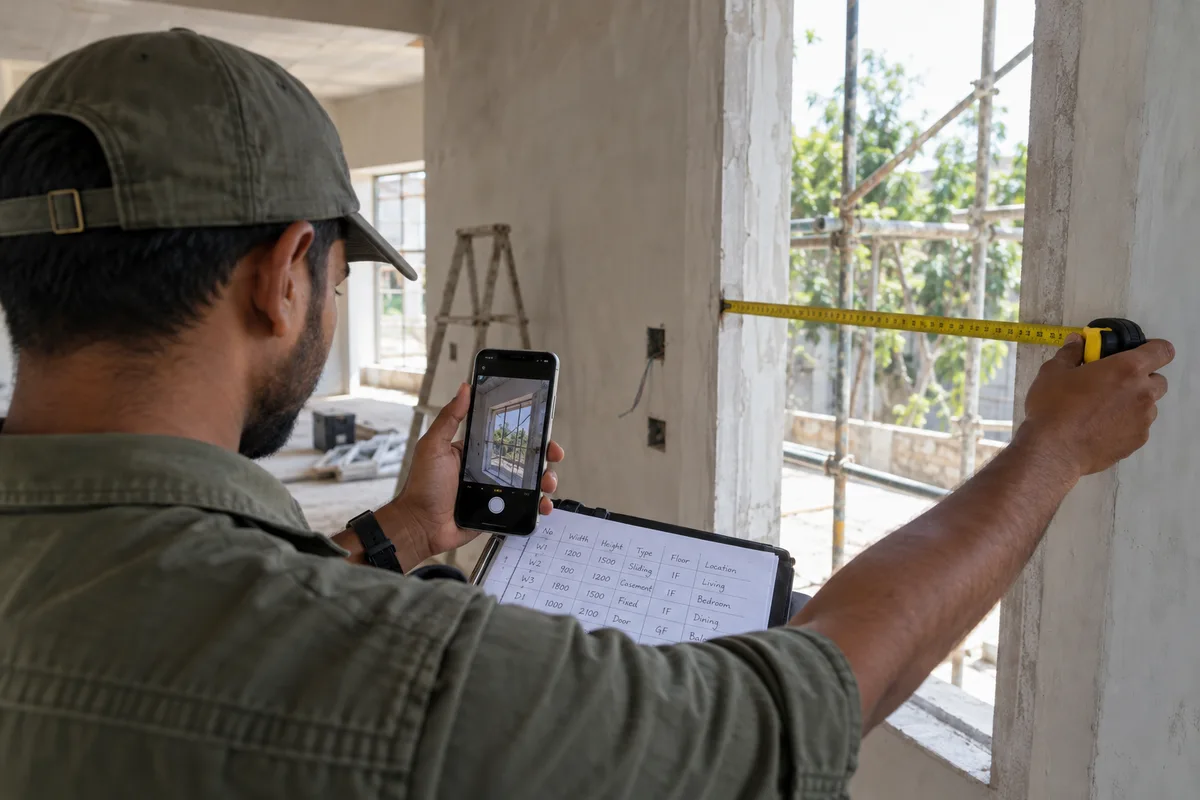
With your fitting team we visit one completed job and record how the window opens, closes, locks and seals, with the owner's permission. You choose the site. We shoot short clips on a phone and a few photographs. The clips become the stock from which the first posts are drawn.
- 3
Write the consent note for customer homes
We draft a simple note, in English and the local language, that a customer signs or confirms by message before a house or flat appears online. Your sales head decides what is asked, such as hiding the gate number or the street. The note is kept with the job file.
- 4
Plan posts by audience and window type
We lay out the posts: a fitted bedroom for homeowners, a sliding door detail for designers, a fitting day for builders' site teams. You approve the list and say which jobs may be shown. The plan follows jobs you have really finished, so nothing is shown that was not fitted by you.
- 5
Set the reply route for messages and comments
We write answers to the questions that arrive with a photograph of an opening, such as whether a window suits a sloping wall. Your measurement head corrects them. We agree who replies, how a message becomes an enquiry record, and what is never answered in public, such as a final price.
- 6
Look at enquiries from posts against the first record
We compare the messages, calls and visit requests that arrive from the posts with the record kept at the start. You decide which clips and formats to keep. We make no claim about reach or sales. The reading shows whether the people who watch the window close are the people who ask for a measurement.
Where this fits
Three pieces of sales work, in this order.
This work sits inside sales process design, at stage 0, foundation. The audit comes before it, and sales management keeps it running.
Step 1
Sales audit
Find where deals are being lost and what to fix first.
Start here if you cannot say where orders are lost.
Step 2 · you are here
Sales process design
One written way to sell, from first enquiry to repeat order.
Start here if every salesperson sells differently.
Step 3
Sales management
A target, a review routine and someone who owns the number.
Start here if the team has targets and no routine.
FAQ
Questions owners ask before they call.
Not here? More answers, or ask on WhatsApp.
Which platform should a window maker use?
Is it fine to post a customer's house?
How do we post a customer's house safely?
Should we show prices on social media?
Who films the work, our staff or yours?
What do we do with a complaint posted in the comments?
How long is the contract?
How soon will we see results?
Who will actually do the work?
What do you need from us?
More for window manufacturers
Related work to consider.
Closest to this: content and social
Also for window manufacturers
Or start from the overview: sales and marketing for window manufacturers.
Your next practical step
Tell us what you are trying to grow, and we will read it before we call.
Eight short steps, mostly taps. Skip anything you would rather answer on the call.